2-Day Florence Itinerary: Must-Sees, Hidden Gems + Map
This post may contain affiliate links, including from Amazon and other trusted partners. If you click a link and make a purchase, we may earn a small commission at no extra cost to you. That said, we only recommend products and services we genuinely use and love. Learn more in our Privacy Policy page.

You’ve only got two days in Florence and a long list of things you want to see. How do you fit it all in without turning your trip into a marathon?
We’ve been to Florence three times. On our first visit, we stayed five full days and still didn’t manage everything. So with just 48 hours, having a plan really helps.
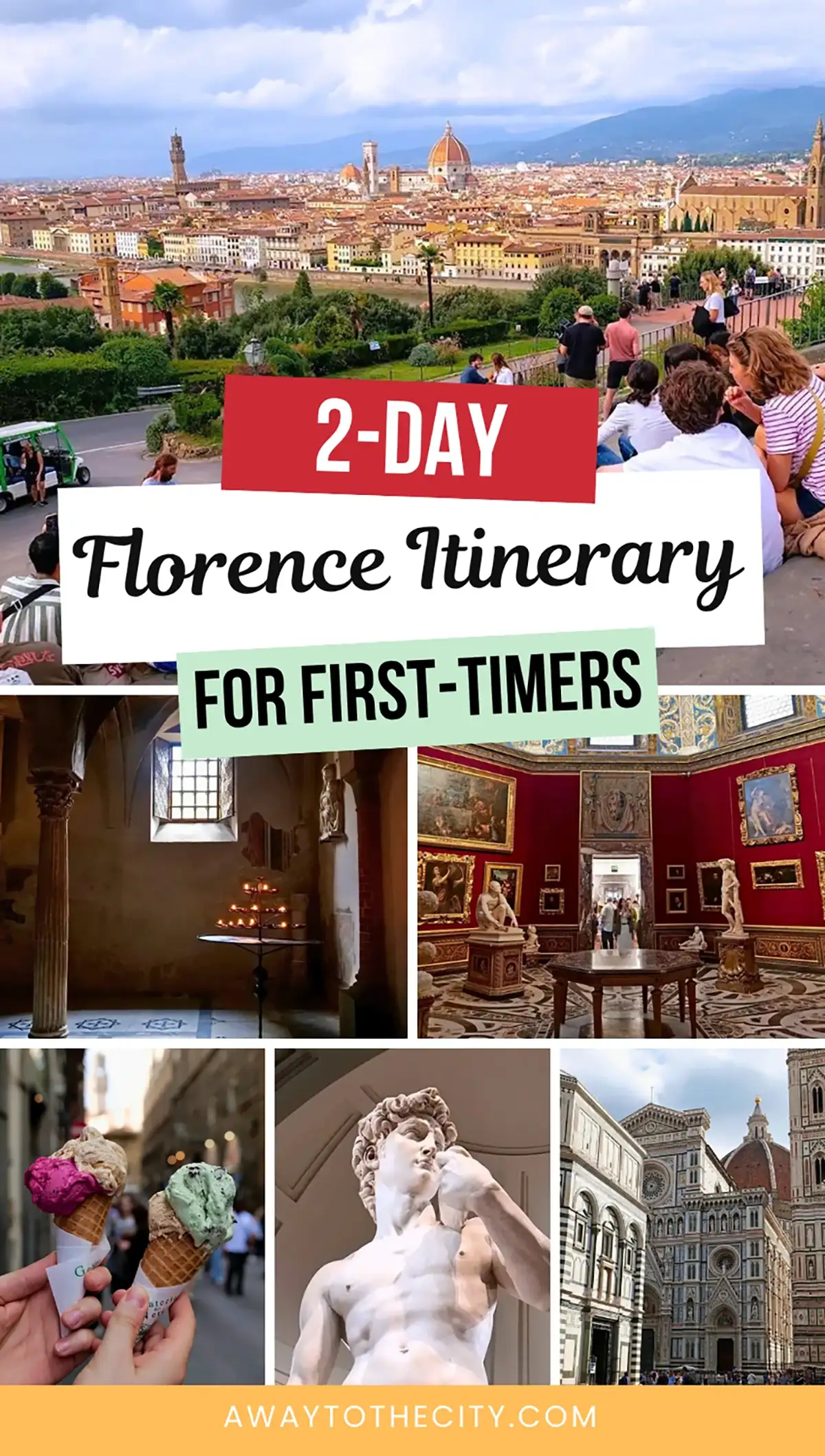
This 2-day Florence itinerary is perfect for first-time visitors who want to see must-see sights like the Duomo, Ponte Vecchio, and Michelangelo’s David, but also want a few lesser-known favourites that aren’t swamped with people, like a 13th-century pharmacy and our go-to spot for sunset views (and it's not Piazzale Michelangelo!).
You’ll find our full 2-day route, queue-skipping tips, where to stay and eat, and a Google Map with everything pinned. It’s exactly what we wish we had before our first trip.
Don't miss these!
Our Top Picks for Your Florence Trip
Florence is packed with Renaissance treasures and incredible food, but the best spots sell out fast. These are the ones we loved and would happily book again.
 Top tours and experiences in Florence
- Uffizi Gallery (top-seller and a must-see!)
- Small group highlights walking tour (the PERFECT intro to Florence)
- Day trip to Pisa, Siena & San Gimignano (best way to see Tuscany in one day from Florence)
 Best places to stay in Florence
- Flom Boutique Hotel (our top hotel pick; we loved their spacious rooms and brilliant breakfast)
- Hotel Adamas (a brand-new hotel just 30 seconds away from the Duomo)
 Looking for the best way to get around Italy? Click here to check rental car rates for Italy.
Florence Itinerary Overview
Florence is compact and perfect for a short trip. The entire historic centre is a UNESCO World Heritage Site and holds most of the major sights within easy walking distance.
2-day itinerary
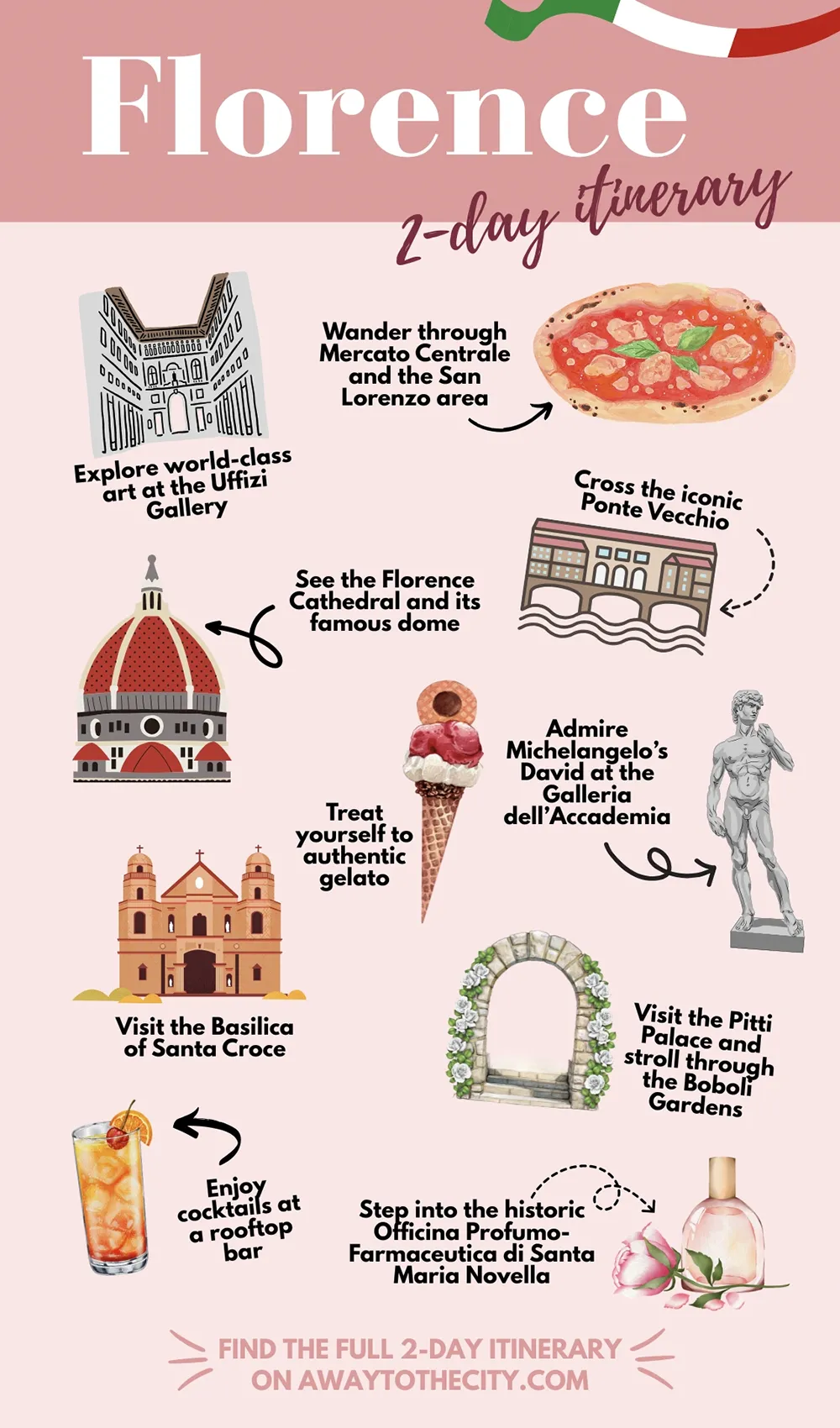
Here’s the overview of our 2-day Florence itinerary:
We’ve laid out each day in a logical walking route so you won’t waste time zigzagging across the city. If you’ve been wondering how to spend 2 days in Florence, this plan makes things a lot easier.
Day 1: Key Sights in Central Florence
If you’re looking for the right place to kick off your trip (probably during a weekend in Florence), start with the Uffizi Gallery. It gets crowded fast, so heading there first thing helps you avoid the worst of the queues.
Day 1 of this Florence in 2 days itinerary covers some of the city's most famous sights along with a few quieter favourites.
Expect world-class art, grand architecture, local food stalls and one of the oldest pharmacies in Europe… all within easy walking distance.
Morning: Uffizi Gallery
The Uffizi Gallery is one of the oldest museums in the world and still one of the most important for Renaissance art.
Inside you’ll find works by Michelangelo, Leonardo da Vinci, Botticelli, and Raphael. Among the most famous are Botticelli’s The Birth of Venus and Caravaggio’s Medusa.

Did you know? Uffizi means “offices” in Italian. The building was originally designed to house government offices for the city.

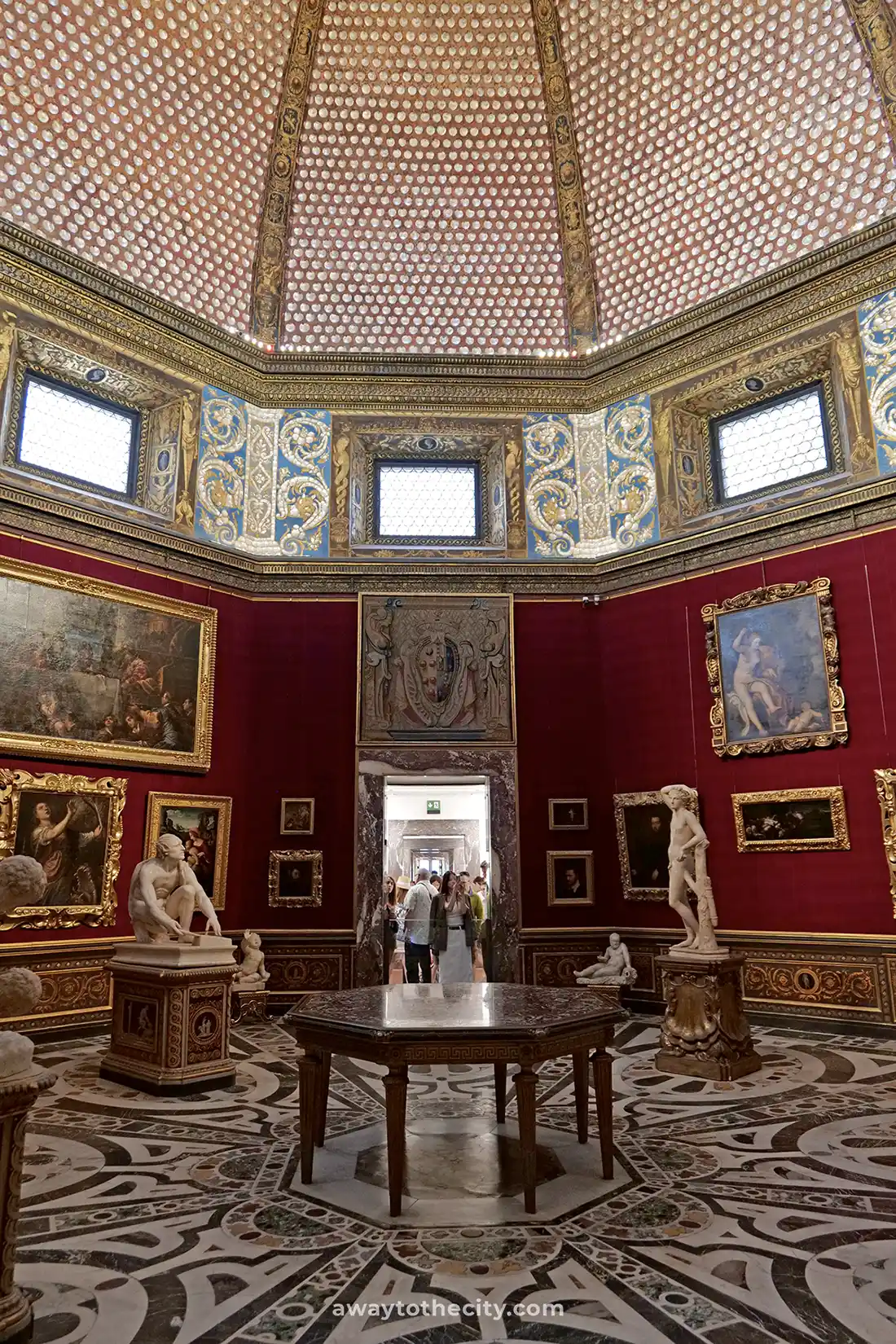
The long, U-shaped corridors themselves are impressive, and from the upper floors you get a great view over the Ponte Vecchio. With more than 100 rooms, it’s the kind of place you could spend all day in if you’re passionate about art.
We’re usually more into photography and illustration than classical painting, so we weren’t sure how much time we’d spend here. In the end we stayed far longer than expected and found it far more engaging than we’d imagined.
Our top tip: Book tickets in advance and arrive early, just as the gallery opens at 8:15am. Queues for the Uffizi were some of the longest we saw in Florence, often two hours or more, and every day we were there, tickets were sold out before 9am. We booked our Uffizi tickets through GetYourGuide for flexibility, since tickets can be cancelled up to 24 hours before for a full refund.
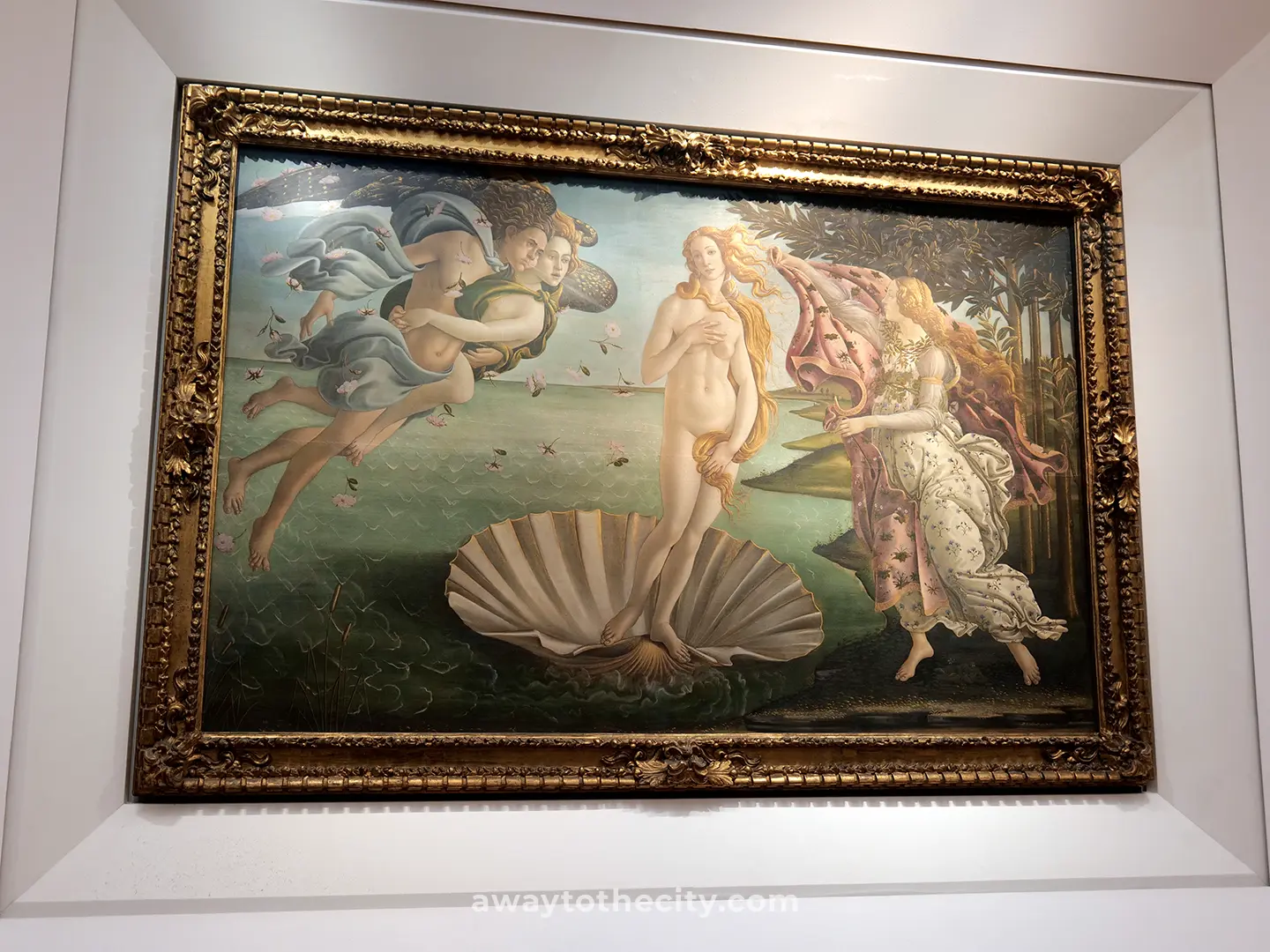
🔥 Uffizi is the most popular attraction in Florence. Grab your Uffizi ticket now before they sell out!
Morning: Ponte Vecchio (Florence’s Oldest Bridge)
No 2-day Florence itinerary feels complete without crossing the Ponte Vecchio. It’s not the only bridge across the Arno River, but it’s the most recognisable and one of the most photographed.
The bridge dates back to 1345, which makes it the oldest in Florence and the only bridge to survive World War II.

Did you know? The Vasari Corridor runs above it (built in 1565) so the Medici family could move between Palazzo Vecchio and Pitti Palace without using the street below.
It was once lined with butchers, fishmongers and tanners, but in 1593 the Medici replaced them with goldsmiths and jewellers. Many of those shops are still here today.
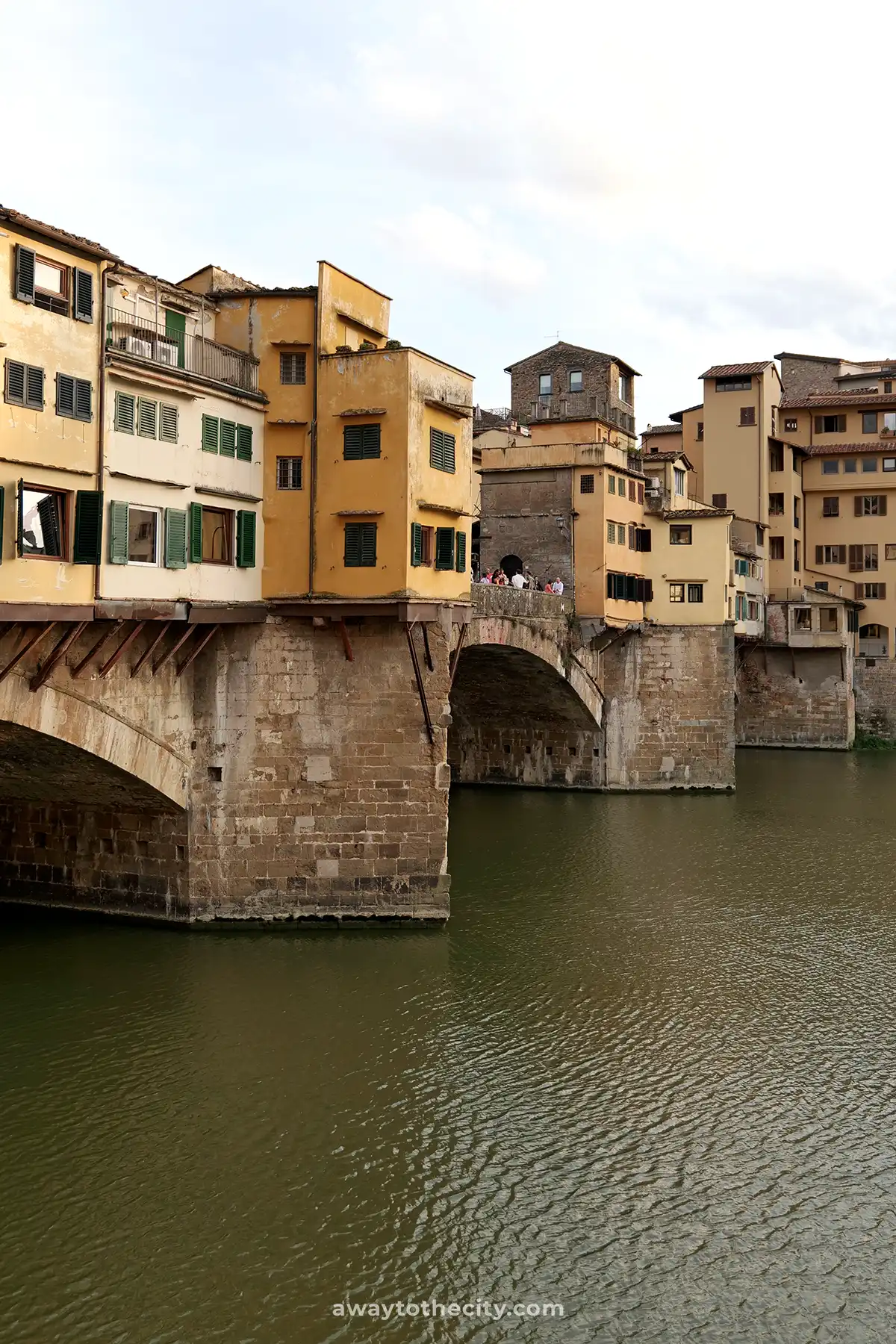
Our top tip: Ponte Vecchio can get extremely busy. If you want to enjoy it with fewer people, go early in the morning or later in the day. We also think it’s much better seen from a distance, especially from the nearby riverbanks or one of the other bridges.
Morning: Florence Cathedral (Duomo)
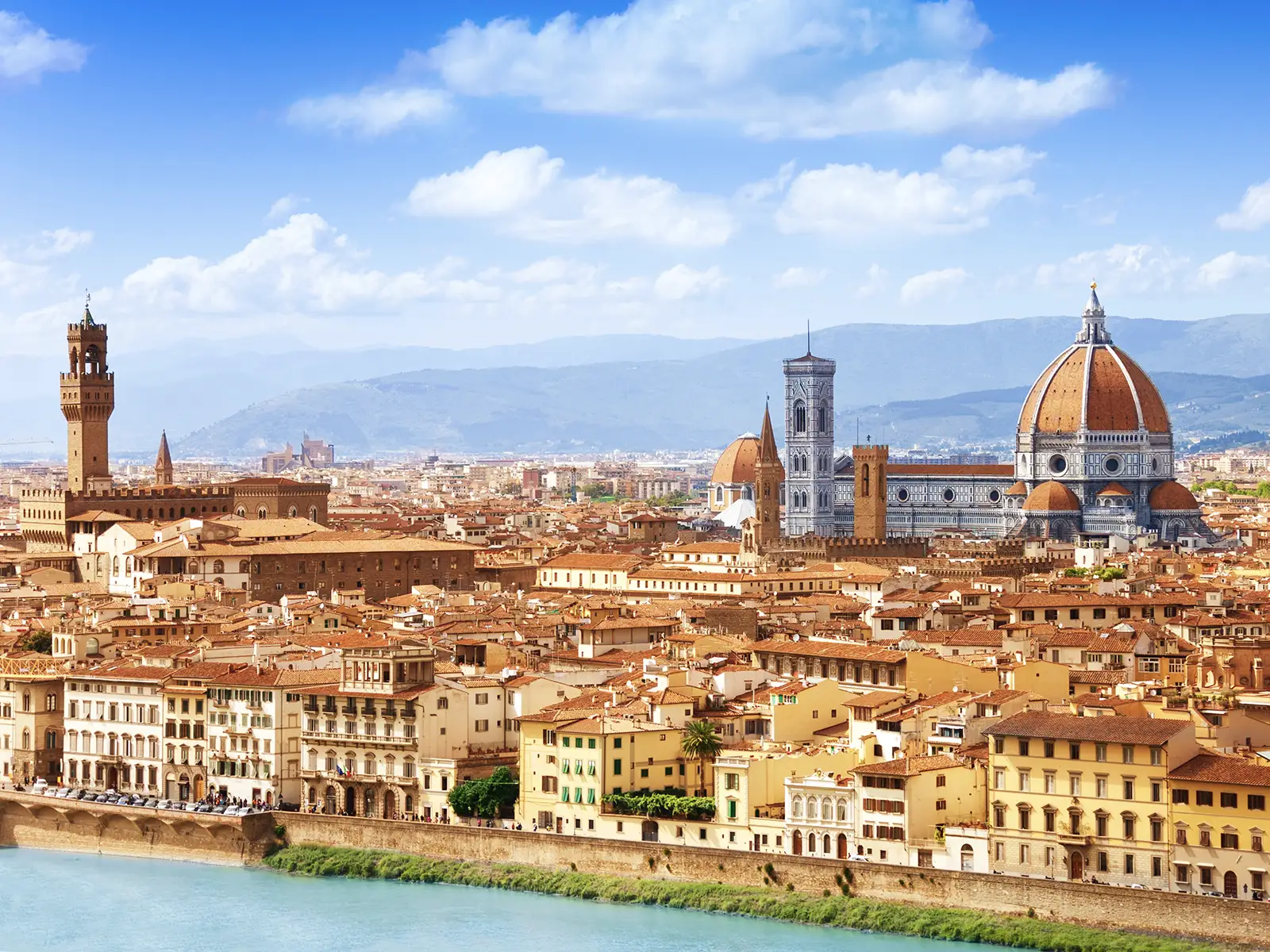
You might hear this one called by a few names: Duomo di Firenze, Florence Cathedral, Cathedral of Santa Maria del Fiore or Saint Mary of the Flower. It’s all the same grand structure, crowned by the largest brick dome ever built.
Construction began in 1296 and wasn’t completed until 1436 (yes, it really did take over 140 years from start to finish).
We climbed the dome on our first trip, but skipped it later. The 463 steps are doable, but it’s crowded, and once you’re on top, you can’t see the cathedral itself (the part of Florence most people come to photograph).
For us, the view from Arnolfo Tower was the one worth keeping.

Our top tip: With only 2 days in Florence, admire the facade and move on. The interior feels underwhelming compared to Santa Croce (Day 1, late afternoon). And for panoramic views, Arnolfo Tower (Day 2) is the better choice.
Here’s what’s included in the Duomo complex if you have extra time:
- Cathedral – One of the largest churches in the world. Entry is free, but queues often wrap around Piazza del Duomo.
- Dome – Designed by Brunelleschi. A steep 463-step climb, but you can’t see the cathedral itself from the top.
- Bell Tower – Giotto’s Campanile, with 414 steps and views over the cathedral. Usually less crowded than the dome.
- Opera del Duomo Museum – Displays original sculptures and architectural details. Small but worthwhile.
- Baptistery – Opposite the cathedral, known for its bronze doors and octagonal interior.
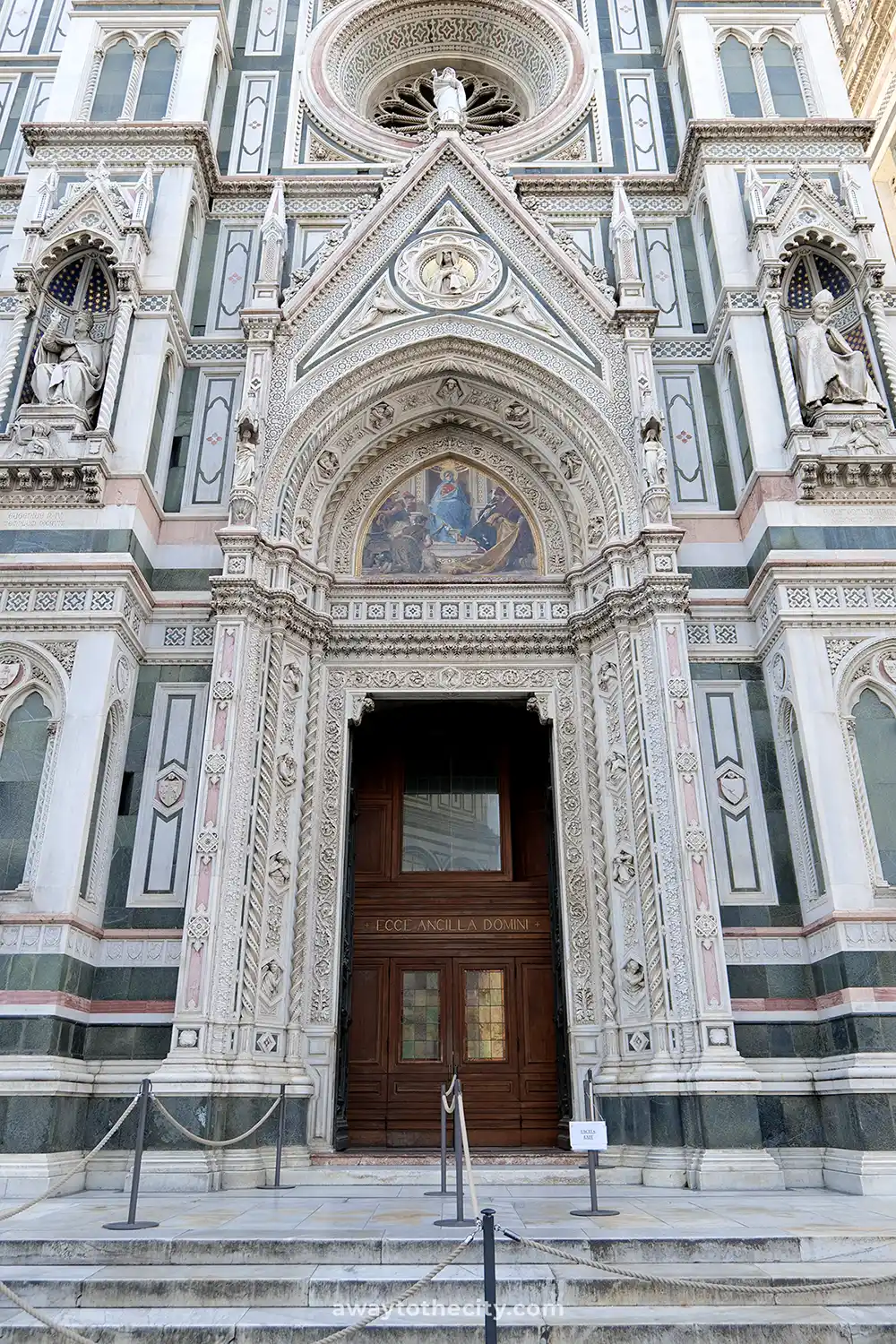
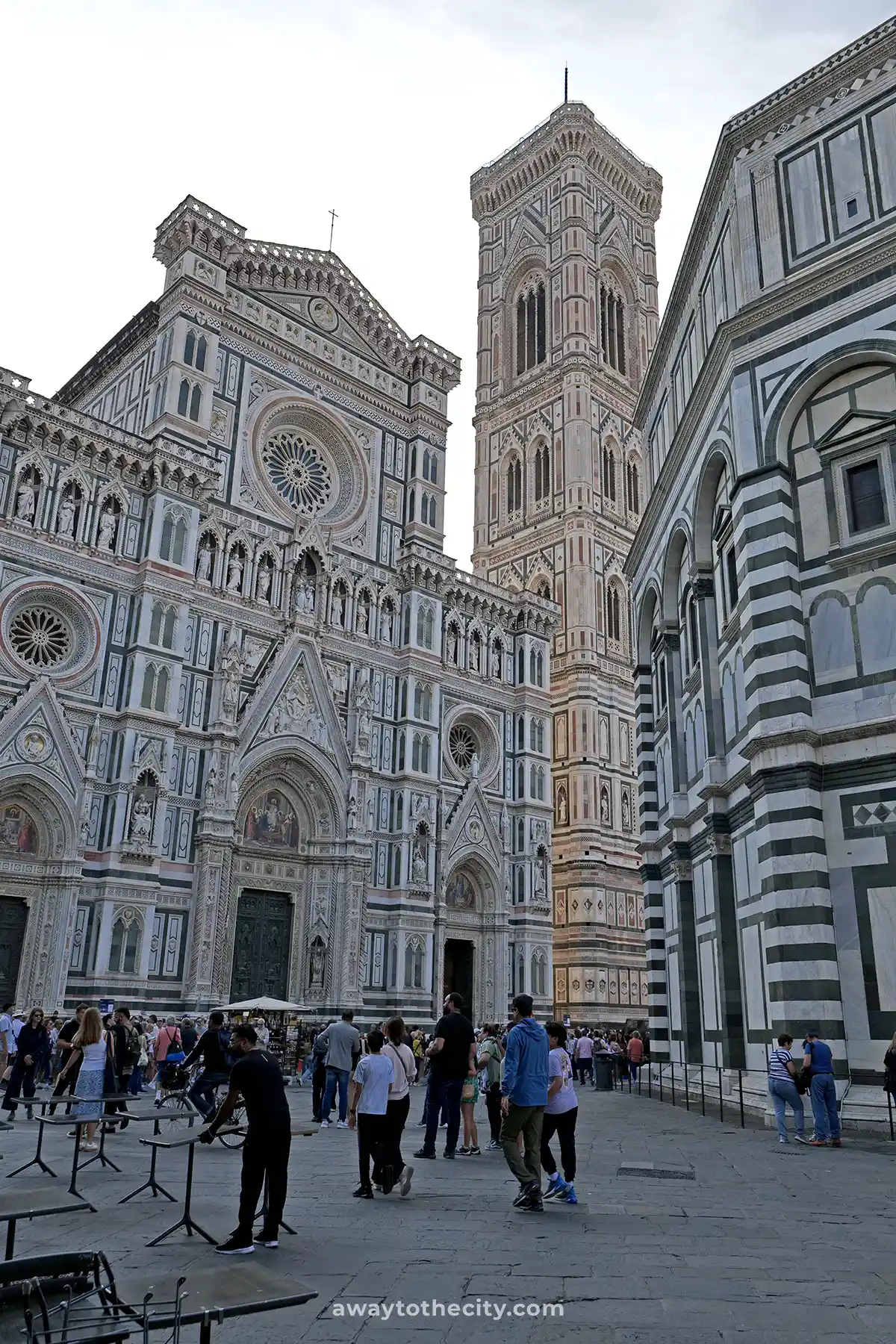
The marble facade is stunning up close, with every inch covered in detail. Even without going inside, it’s one of the most memorable sights of Florence in 2 days.
The best place to buy Duomo tickets is the official website. We found that prices for the Duomo are often inflated on third-party sites (sometimes 60% above the official price), so book direct if your heart is set on seeing the interior.
Lunch at Mercato Centrale & San Lorenzo
From the Duomo, it's a 10-minute stroll over to the San Lorenzo area for lunch. There, you’ll find Mercato Centrale, a big indoor food market split across two levels.
The ground floor has fresh produce stalls with cheese, meats, and pastries, while the upper floor is home to a lively food hall packed with options for a quick and casual bite.

There’s a good mix of choices, from Tuscan favourites like lampredotto to wood-fired pizza, pasta and even sushi. There’s also a wine bar if you fancy trying something local.
If you’re after a fast lunch, the food hall is a great pick. But if you’d rather sit down with a proper menu, the surrounding San Lorenzo neighbourhood has a few reliable spots that we’ve tried and liked:
- Trattoria Sergio Gozzi – A straightforward, family-run place with hearty Tuscan dishes. Great value and usually busy at lunch.
- Osteria Pepò – Cosy and relaxed with generous servings. Their beef stew and pastas are always a solid choice.
- Trattoria Zà Zà – It leans a bit touristy, but the food holds up. The truffle pasta is a favourite, and it’s good for groups or a slower lunch.

Next door is the San Lorenzo market, an outdoor market with mostly leather goods. The smell of leather will hit you before you even see the stalls.
The outside market is a bit hit-or-miss. We passed on the leather bags (felt a little mass-produced), but if you’re into haggling, it’s an experience.
Once you’ve eaten, have a bit of a wander through San Lorenzo itself. It’s a good area to take a breather from the crowds, and there’s always a chance you’ll come across a quiet café or a nice view down a side street.
Afternoon: Santa Maria Novella Pharmacy
Even if you’re not into perfume, this is still one of the most fascinating places we visited in Florence. Housed in a former monastery, it feels more like a grand palace than a pharmacy.
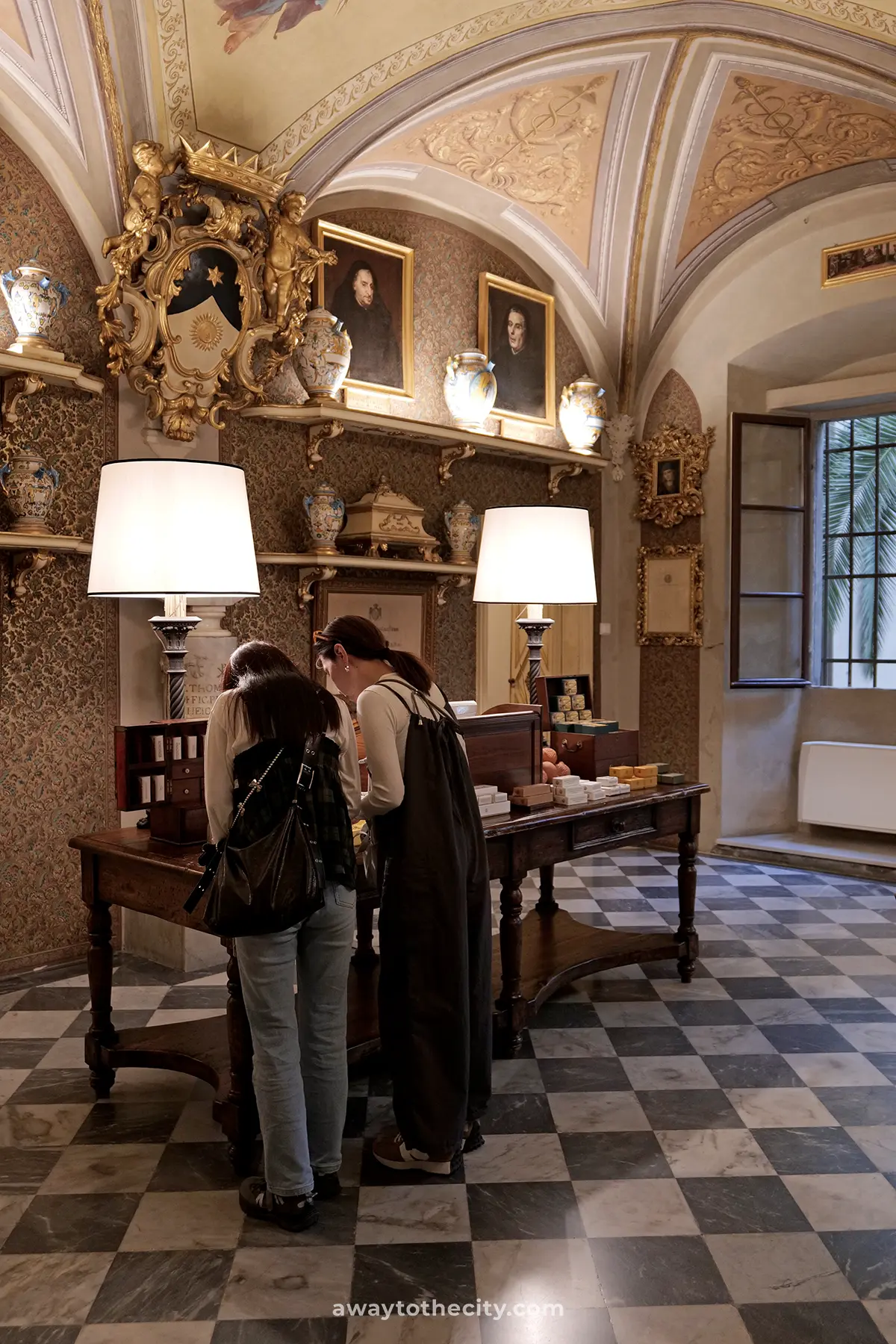
The rooms are beautifully preserved, with vaulted ceilings, frescoes, and a quiet atmosphere that makes you want to stay longer than you need to.
The Officina was founded by Dominican friars in 1221, which makes it one of the oldest pharmacies in the world.
They originally made herbal remedies and skincare using ingredients grown in the monastery garden, and many of the products are still based on those recipes.
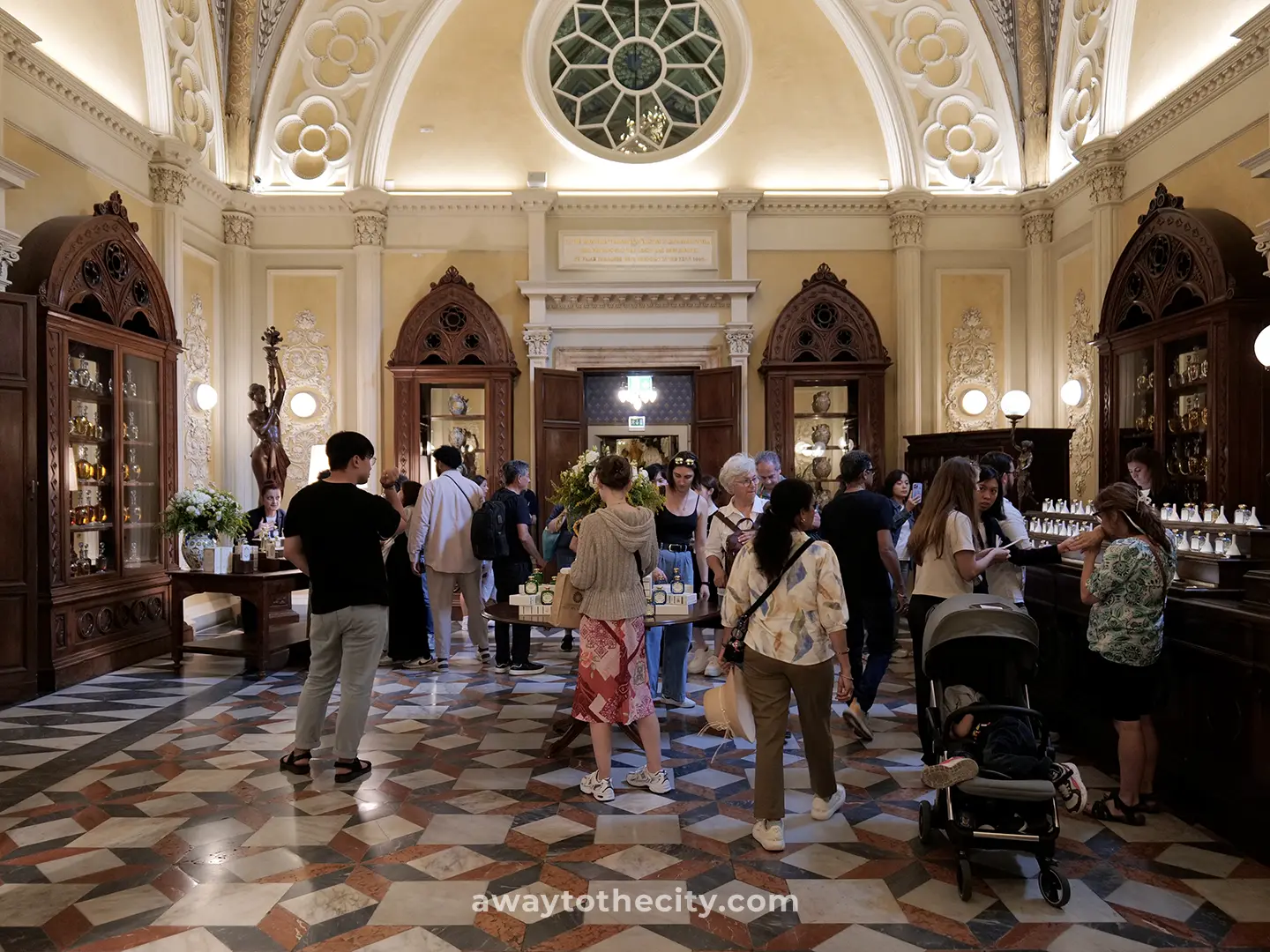
Our top tip: Look up! The ceilings in this place are stunning, especially in the main sales room.
There’s a small museum inside with historic tools and old recipe books (it’s only one room, so it won’t take long), but the real joy is just walking through the space and taking it all in.
We popped in thinking we’d stay five minutes and ended up browsing for over half an hour.
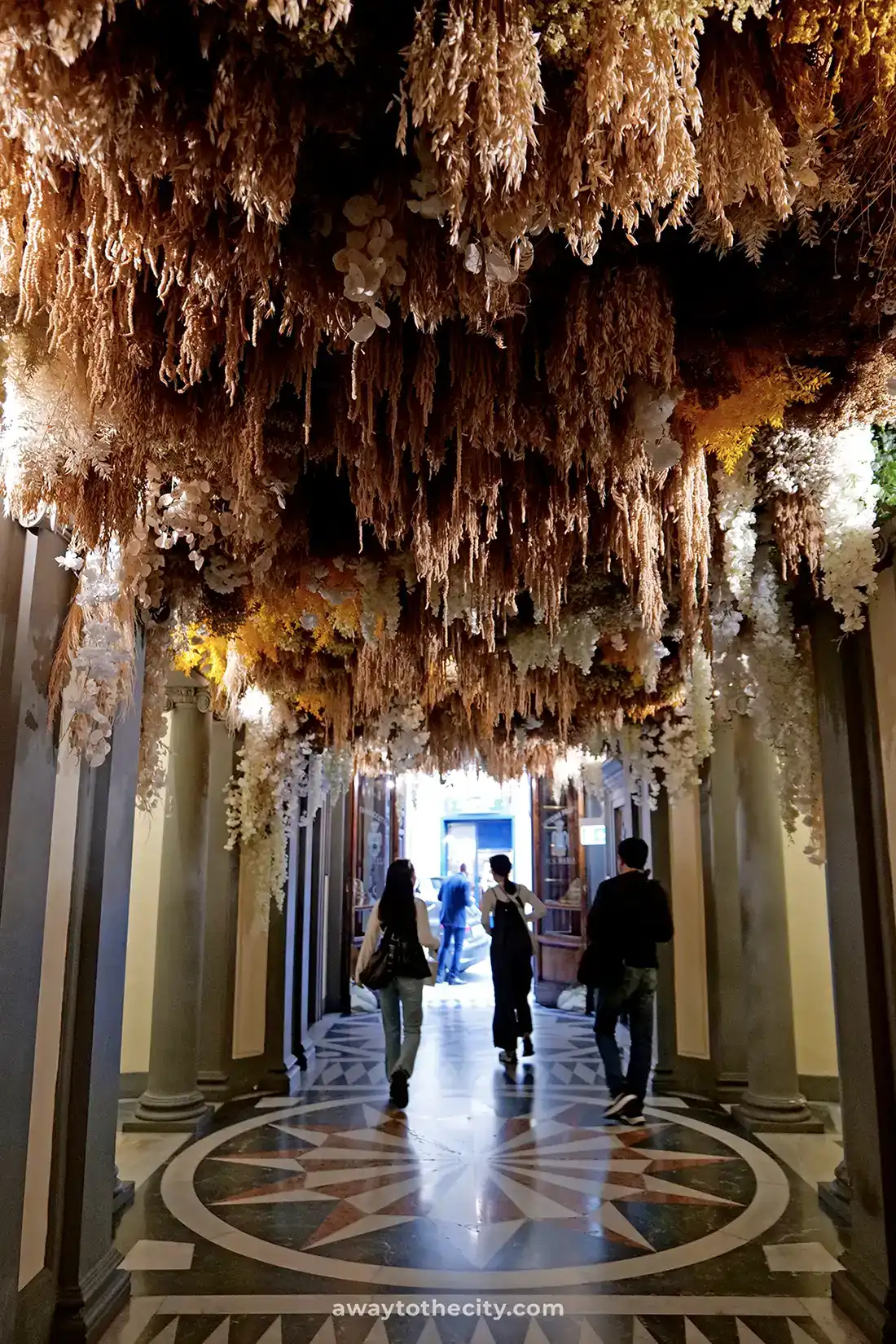
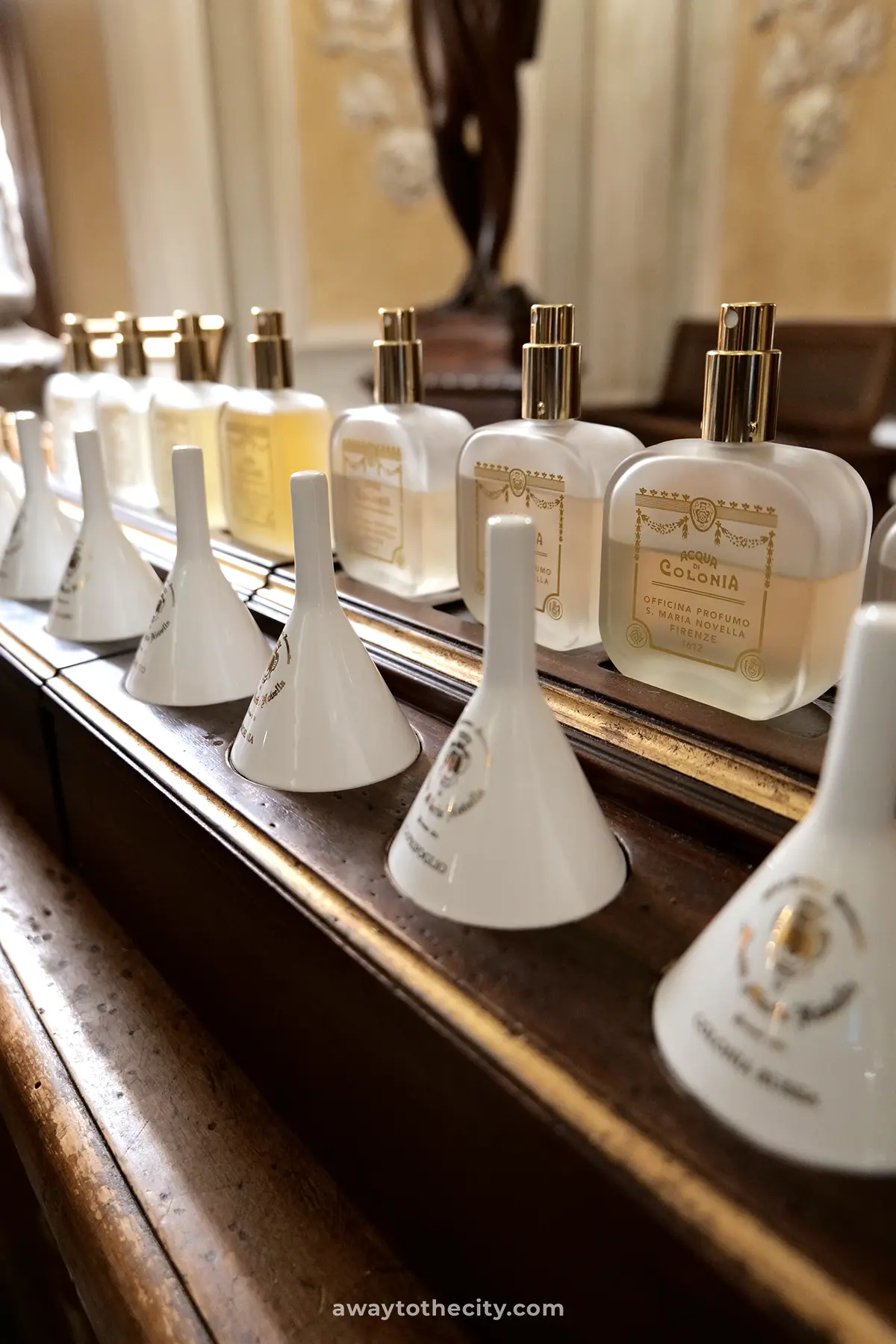
We brought home a bottle of their rose water, and every time we use it, it smells like Florence.
Evening: Basilica of Santa Croce
We know this might stir some debate, but if you’ve only got two days in Florence, we’d honestly recommend skipping the inside of the Duomo and heading into Santa Croce instead!
We’ve done both, and while the Duomo is impressive from the outside, Santa Croce left more of a mark on us once we stepped inside.

Our top tip: We visited Santa Croce late in the day, and it was almost empty. After the crowds at the Duomo, it felt surprisingly calm. That’s why we’ve slotted it in for the evening in this itinerary.
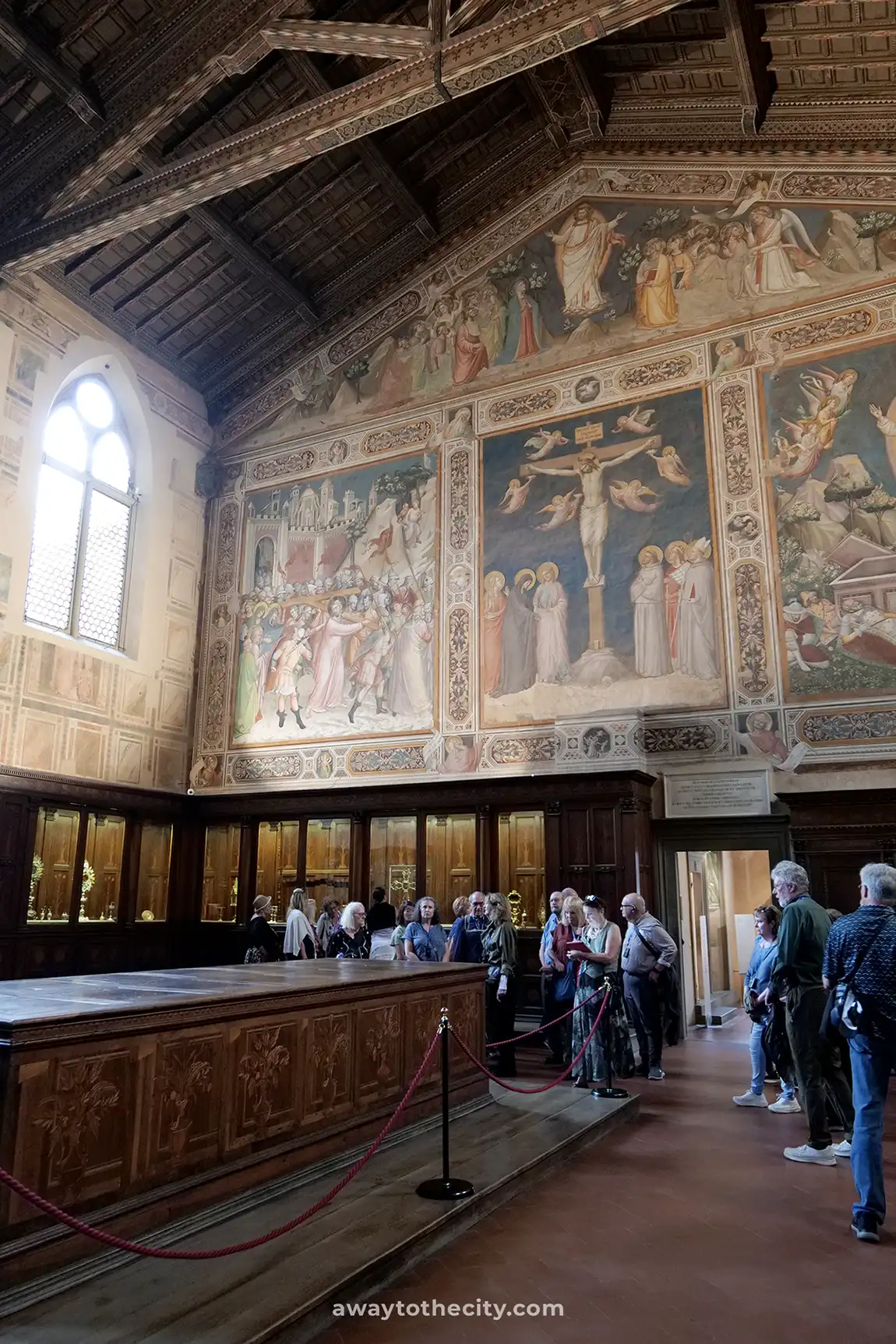
Construction started in 1294, and the Gothic design is absolutely striking! The pointed arches, stained glass, and high vaulted ceilings give the whole place a sense of calm and scale that’s hard to put into words.


It’s also the burial site of some of Italy’s most celebrated figures: Michelangelo, Galileo, Machiavelli and Rossini are all laid to rest here. That’s why you’ll sometimes hear it called the temple of Italian glories.
Dinner: Picks Near Santa Croce
If you're still in the mood to explore after Santa Croce, the surrounding streets are great for dinner or a pre-dinner drink.
We had a brilliant meal at Osteria Caffè Italiano. It's relaxed, not too pricey, and just a short walk from the basilica. Alternatively, head to Note di Vino Firenze nearby for a glass of wine and a light bite before calling it a day.
Day 2: Art, Views, and Quieter Neighbourhoods
Start your day early at the Accademia Gallery before the queues pick up (this is where Michelangelo’s David lives, and everyone wants a photo).
From there, you’ll head up Arnolfo Tower for a full view of Florence, cross the river for a wander through royal gardens, and wrap up at one of our favourite viewpoints in the city.
Morning: Accademia Gallery and Michelangelo’s David
The Accademia Gallery (Galleria dell'Accademia) is best known for housing Michelangelo’s David, probably one of the most recognisable sculptures in the world.
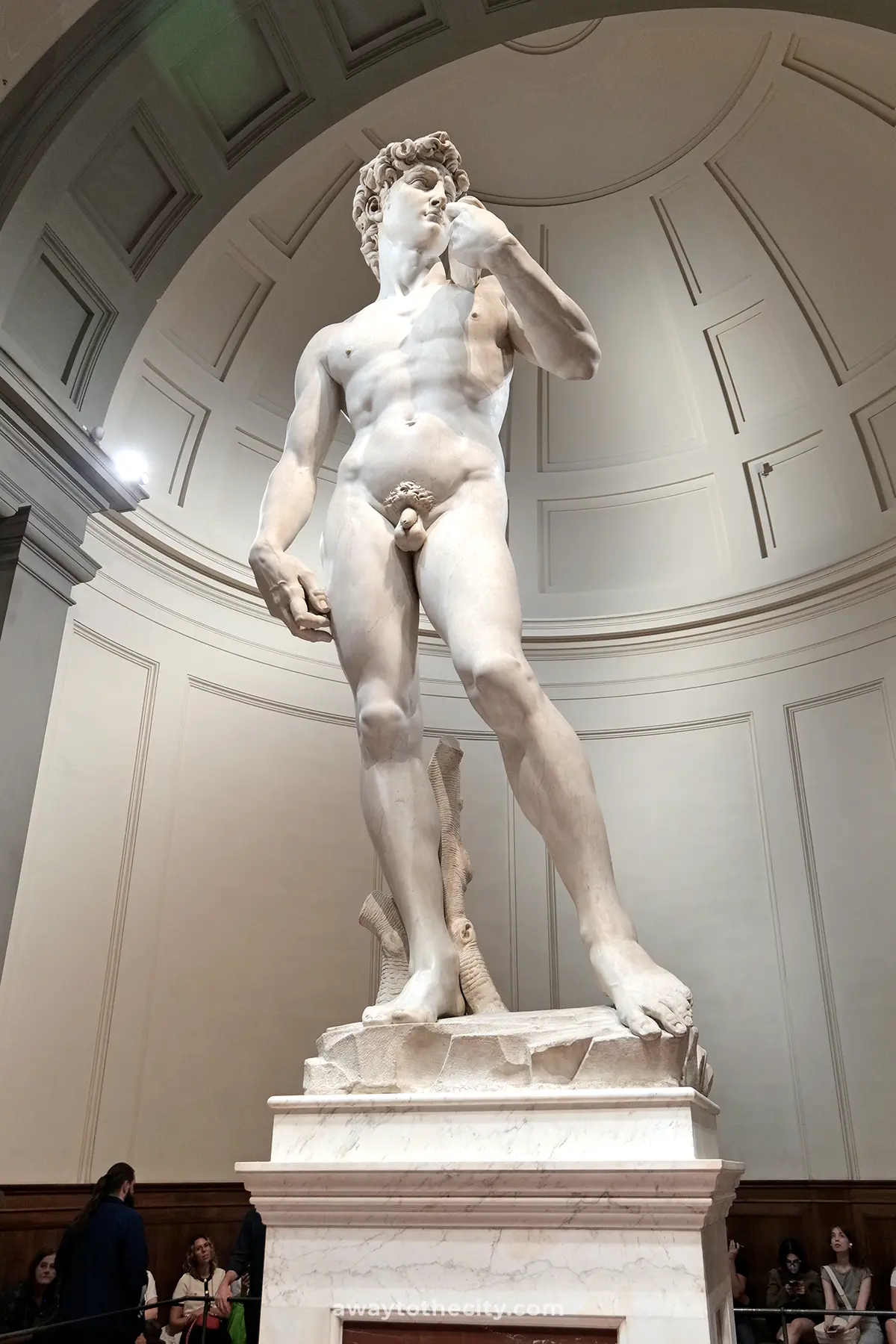
Did you know? David originally stood outside in Piazza della Signoria, right in front of Palazzo Vecchio. It was moved to the Accademia in 1873 to protect it from the weather.
The gallery itself was founded in 1784 by Grand Duke Pietro Leopoldo as a teaching space for students from the nearby Academy of Fine Arts.
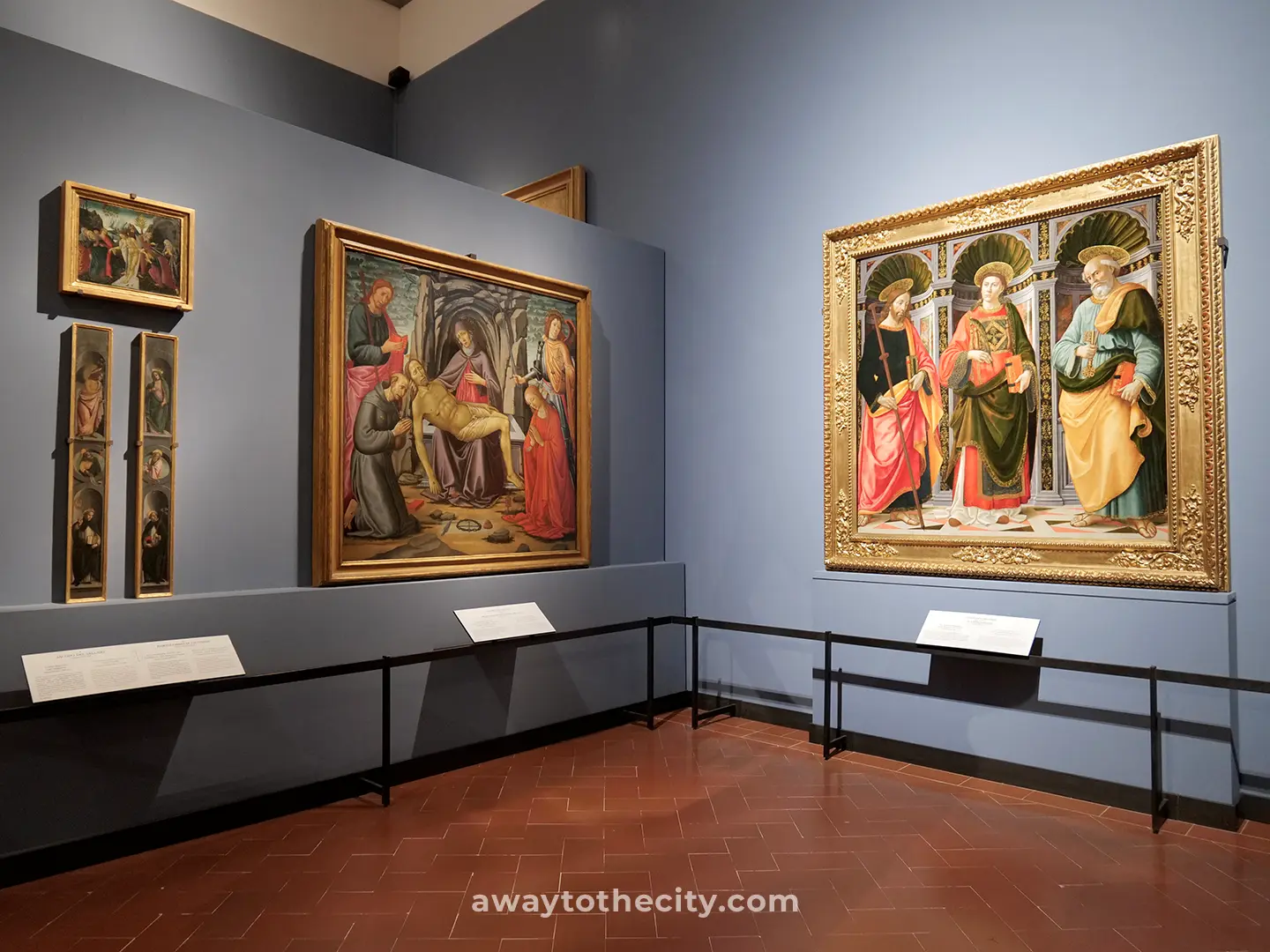
Our top tip: We’ve been to the Accademia twice; once on our own and once with this guided tour. The difference was huge. On our first visit, we admired David. But with a guide, we finally understood the history, the techniques Michelangelo used, and even the unfinished works in the hall that show his process. The tour was easily one of the highlights of Florence for us!
We didn’t go in with massive expectations (we’re not usually that into sculptures), but seeing David in person is really impressive… far more so than we expected from the photos!
The size, detail, and sheer presence of the statue are hard to appreciate until you’re standing right in front of it.
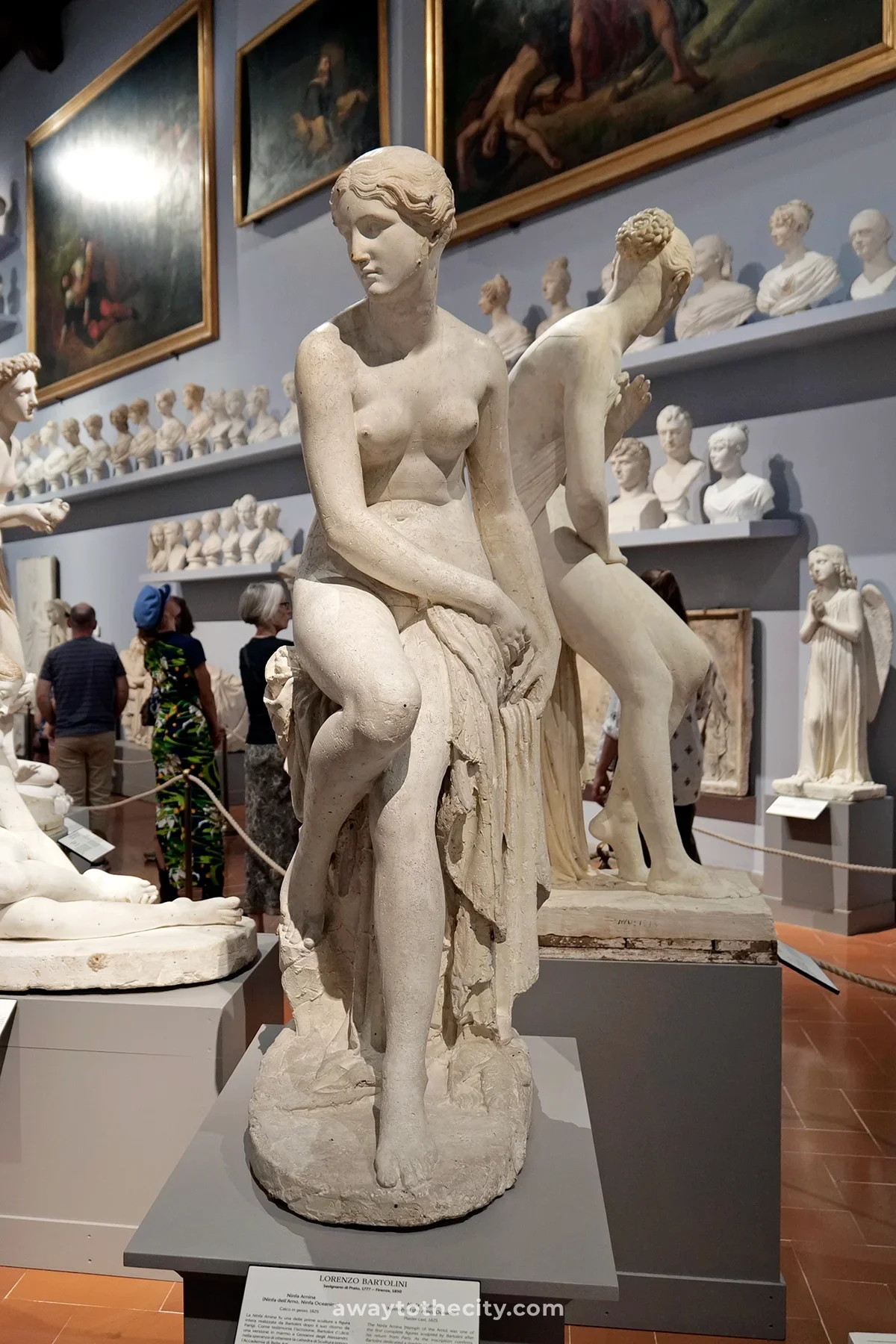
 See Florence’s most famous resident, Michelangelo’s David. Book the guided tour we loved that brings the art to life.
Optional: Gelato Break Near Accademia
Before heading off to climb Arnolfo Tower, it’s a good moment to grab a gelato. It might seem early, but Florence doesn’t follow strict gelato hours, especially when the weather’s warm.
Here are two we liked the most:
- Gelateria dei Neri – About a 15-minute walk from the Accademia and one of our favourites in the city. Loads of choice, with proper pistachio and dark chocolate that actually taste like what they’re meant to.
- My Sugar gelato artigianale – Much closer (around 4 minutes on foot), and their small-batch gelato is top quality. Their Crema Fiorentina flavour was a standout.
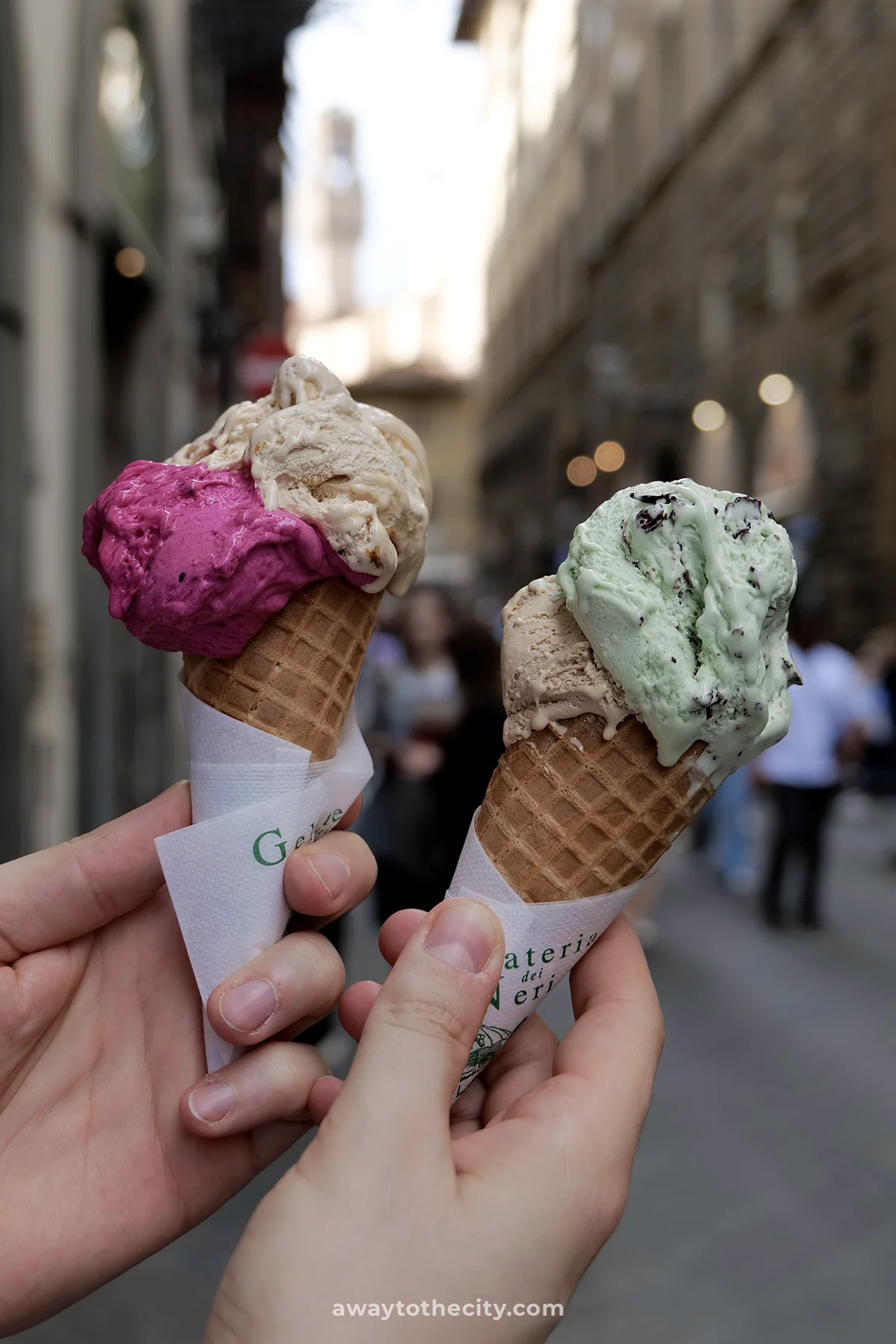
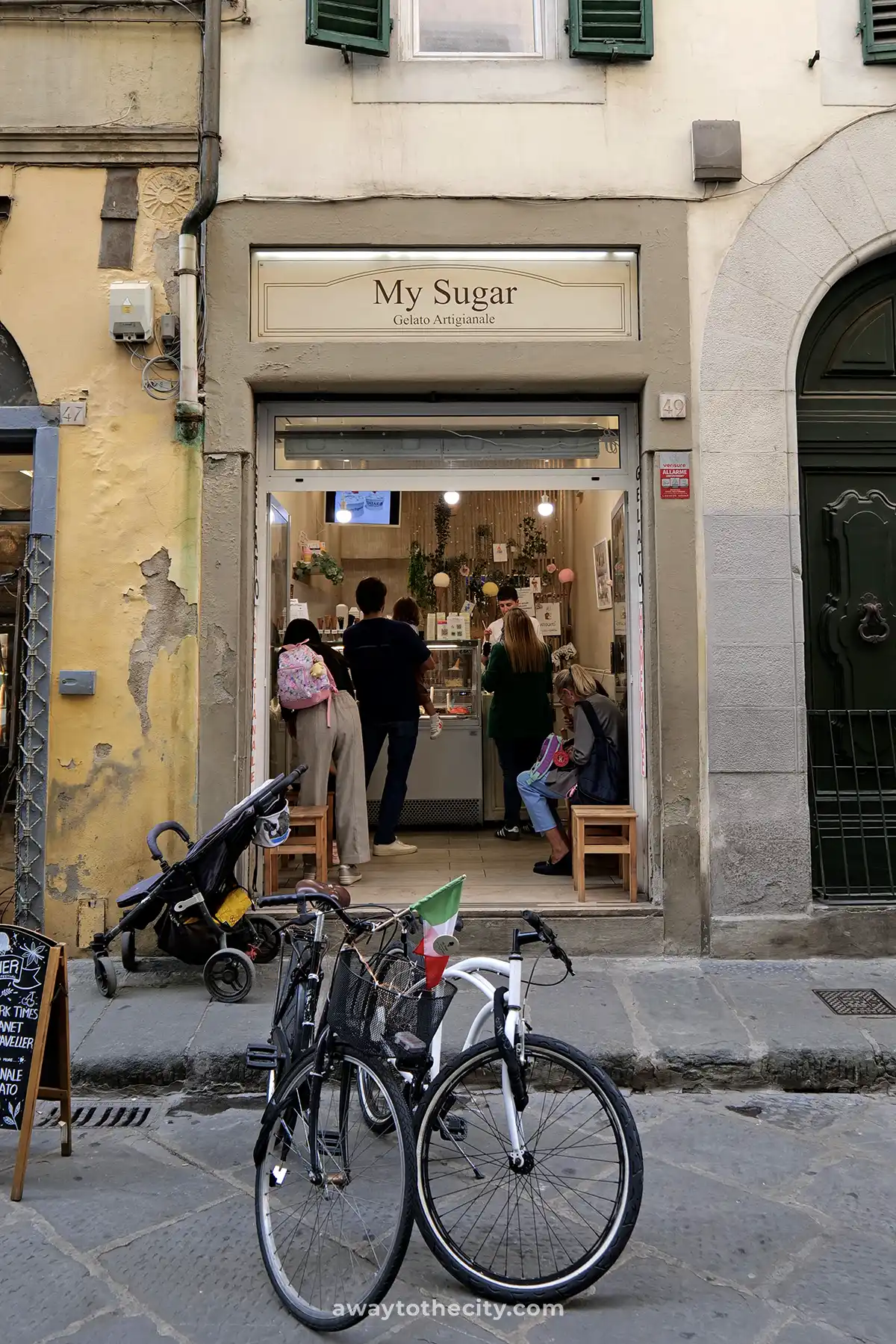
You can always save gelato for later, but if you’re tempted now, you’re not alone! We’ve had mid-morning gelato in Florence more than once. In fact, we had gelato at least once a day, sometimes twice.
Late Morning: Arnolfo Tower Viewpoint
We’ve tried a few different viewpoints in Florence, but Arnolfo Tower (Torre di Arnolfo) was our favourite. It’s still off most tourist itineraries, so you won’t face the same crowds you get at Piazzale Michelangelo.

The tower is on top of Palazzo Vecchio, Florence’s town hall since 1299.
Designed by Arnolfo di Cambio (who also worked on the Duomo), the building later became a Medici residence before they moved across the river to Pitti Palace.
The climb is 223 steps, and while it’s narrow in places, the view at the top (especially of the Duomo) is incredible!
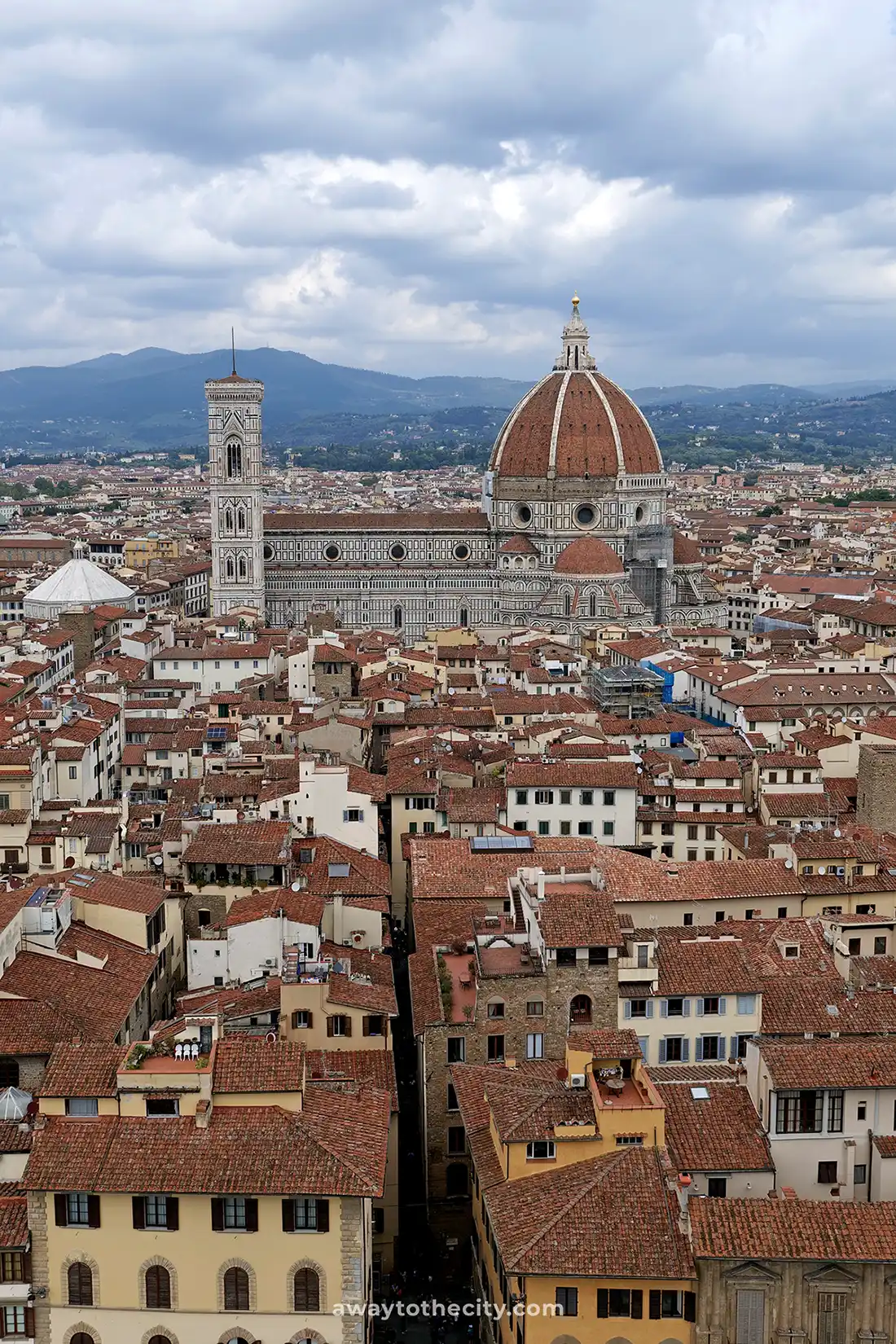

If you’ve got extra time, step into the Palazzo Vecchio museum. We liked the Hall of the Five Hundred and the Hall of Maps, but if you’re short on time, the tower alone is enough.
Our top tip: You’ll need separate tickets for the tower and the museum. The tower requires a timed slot, so we recommend heading there first and booking your spot before exploring anything else. Only 25-40 people are allowed up at a time, and it closes when it rains, so it’s best not to leave this one too late in the day.
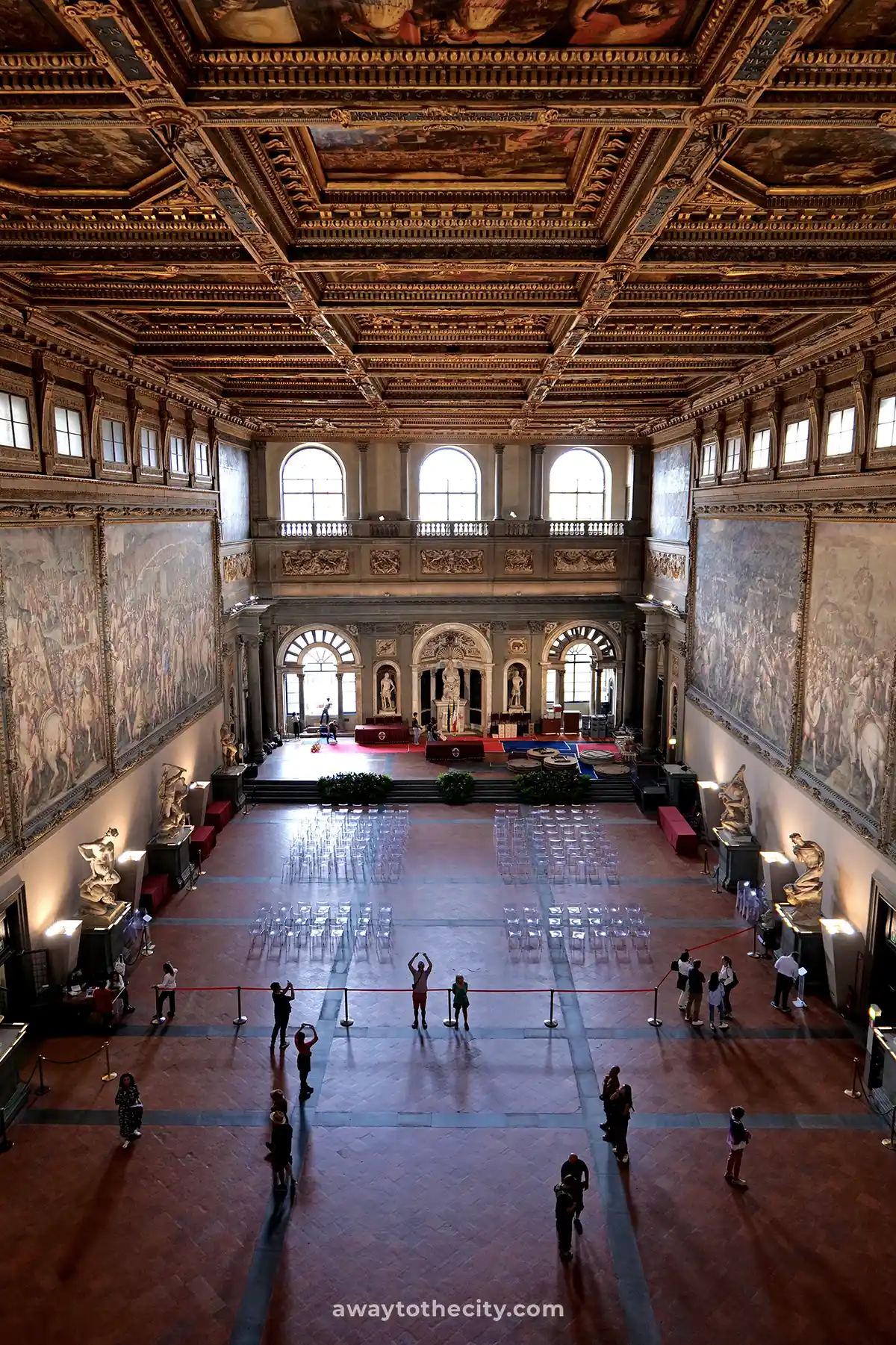
After your visit, take some time to walk around Piazza della Signoria, the square in front of Palazzo Vecchio. It’s home to the Fountain of Neptune and the open-air sculpture gallery known as Loggia dei Lanzi.
Similar to the Duomo, the best place to buy tickets for Arnolfo Tower is the official website. We found that Arnolfo Tower prices on third-party sites are often 40% higher than the official rate.
Lunch: Where to Eat in Oltrarno
By now, you’ve crossed the river and are in the Oltrarno area. This part of the city runs from Santo Spirito to San Frediano, and it's one of our favourite parts of Florence.
It’s a little less polished than the historic centre, but that’s what makes it so good… fewer crowds, more locals, and some excellent food spots.
After the tourist crush around the Duomo, it felt good to just sit with a glass of wine and watch locals go about their day.
For lunch, you’ve got a few solid options nearby:
- Trattoria La Casalinga – Old-school, no-frills and full of locals. It’s ideal if you’re after proper Tuscan dishes at fair prices.
- Osteria dell’Enoteca – A bit more polished, with an excellent wine list and beautifully cooked mains. Good if you’re in the mood for something a little slower and more relaxed.
- Pizzium Firenze – Laid-back and great for pizza. It’s not a hidden gem, but it’s reliable, quick, and the dough is spot on.
You’re also not far from Santo Spirito Square, where there are a few cafés and restaurants to choose from if you want to sit out in the sun. We didn’t initially plan to stop there, but ended up staying for an hour just people-watching.
Afternoon: Pitti Palace & Boboli Gardens
Pitti Palace (Palazzo Pitti) was once home to the powerful Medici family, then the Italian royals when Florence briefly became the capital in the 19th century.
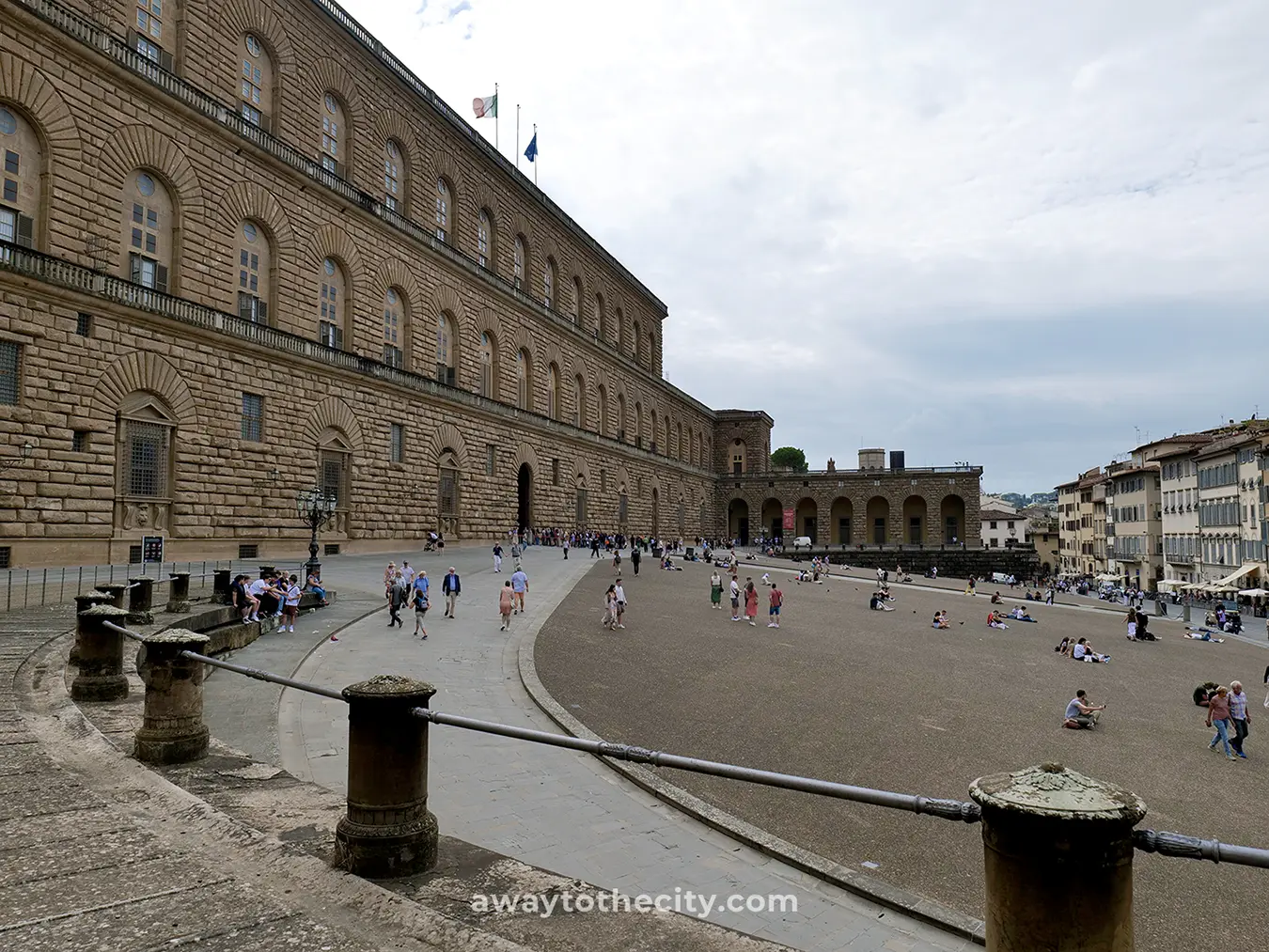
What started as a modest building in the 15th century was turned into the massive structure you see today once the Medici took over. To be honest, we weren’t wowed by the exterior (it looks very plain), but the inside is worth a look.
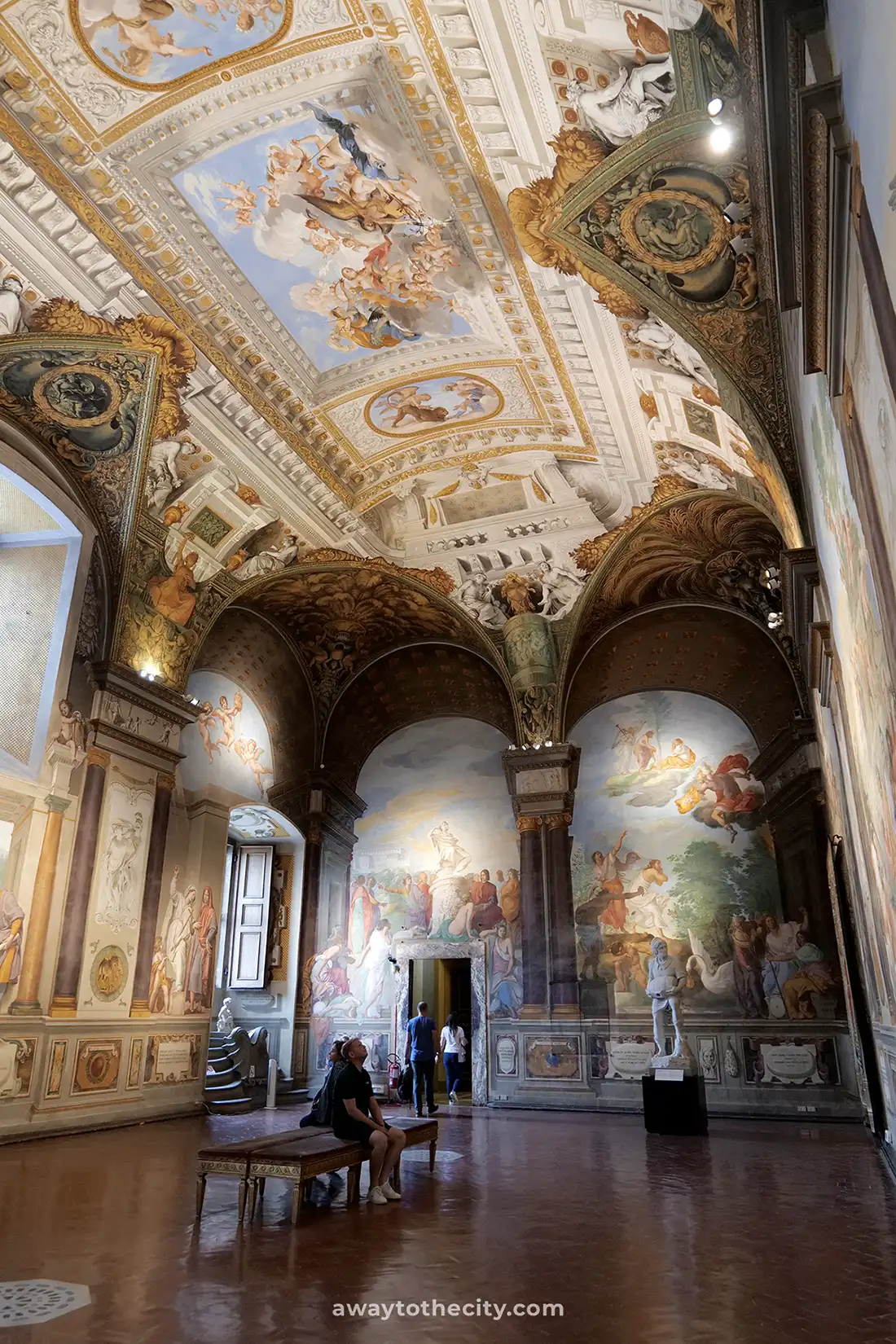
Our top tip: The palace holds five separate museums. Our favourite ones were the Museum of Costume and Fashion and the Royal Apartments, which had just reopened in 2025 after being closed for five years. We visited the other museums too, but we didn’t find them all that memorable, so you could easily skip them.
The real reason to come here is the Boboli Gardens. They stretch out behind the palace and feel like a proper escape from the busy city streets.
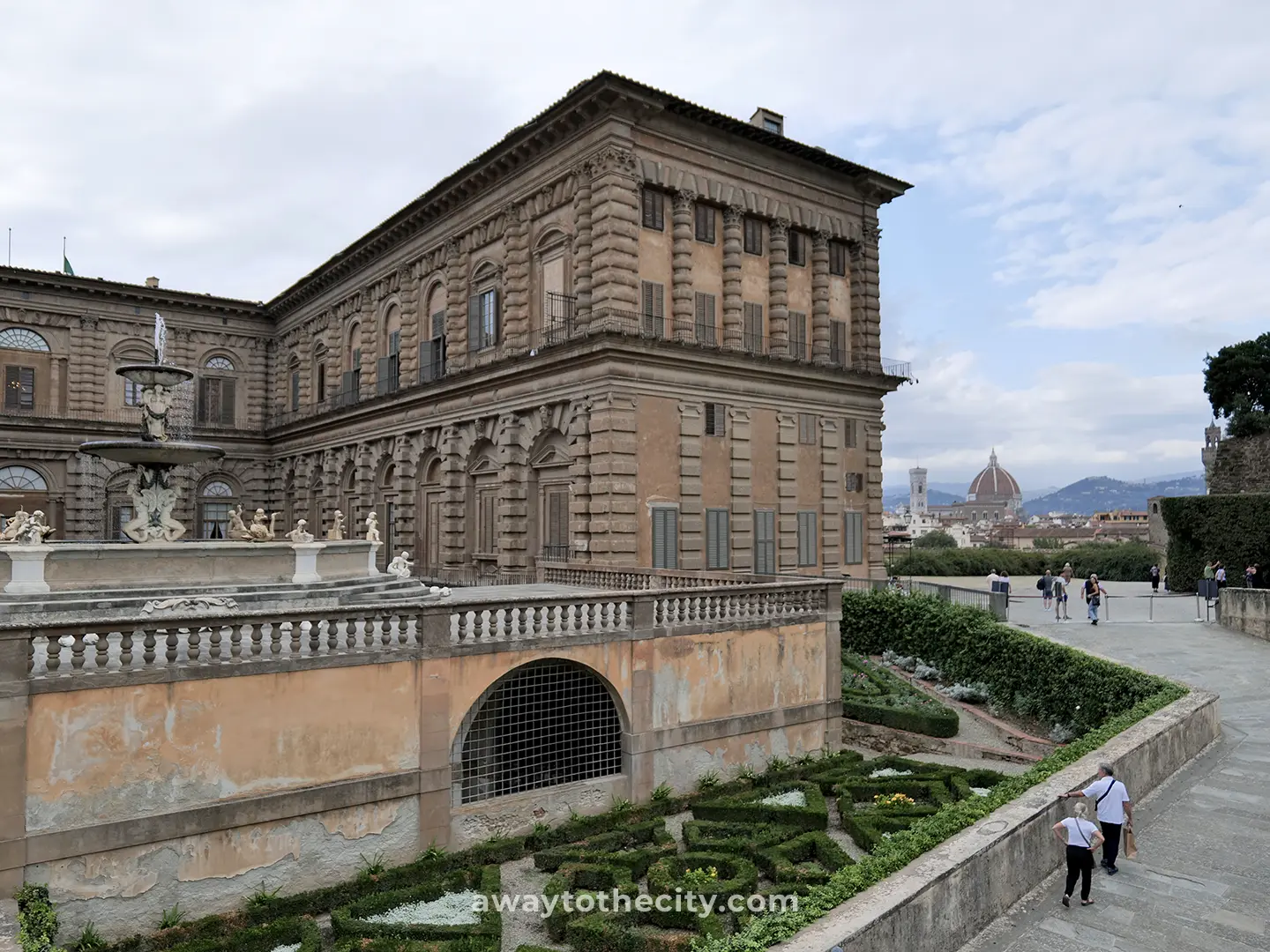
Did you know? The layout of the Boboli Gardens inspired lots of royal gardens across Europe, including Versailles. It set the standard for what’s now known as the “Italianate” style of garden design.

Late Afternoon: San Miniato al Monte
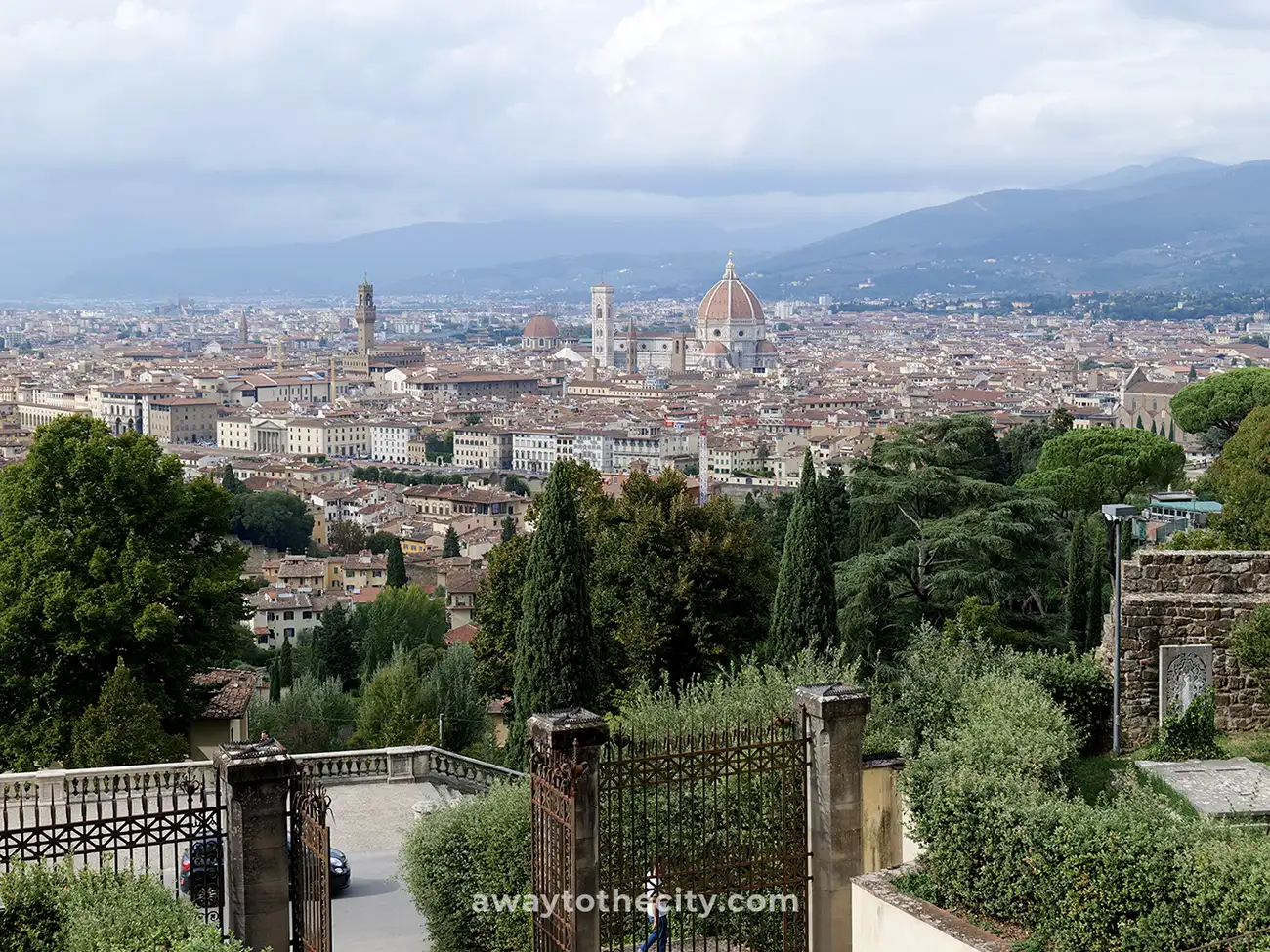
San Miniato al Monte is one of Florence’s oldest churches, with construction beginning in 1013. It’s just far enough from the main tourist trail to feel peaceful, and it quickly became one of our favourite places in the city.
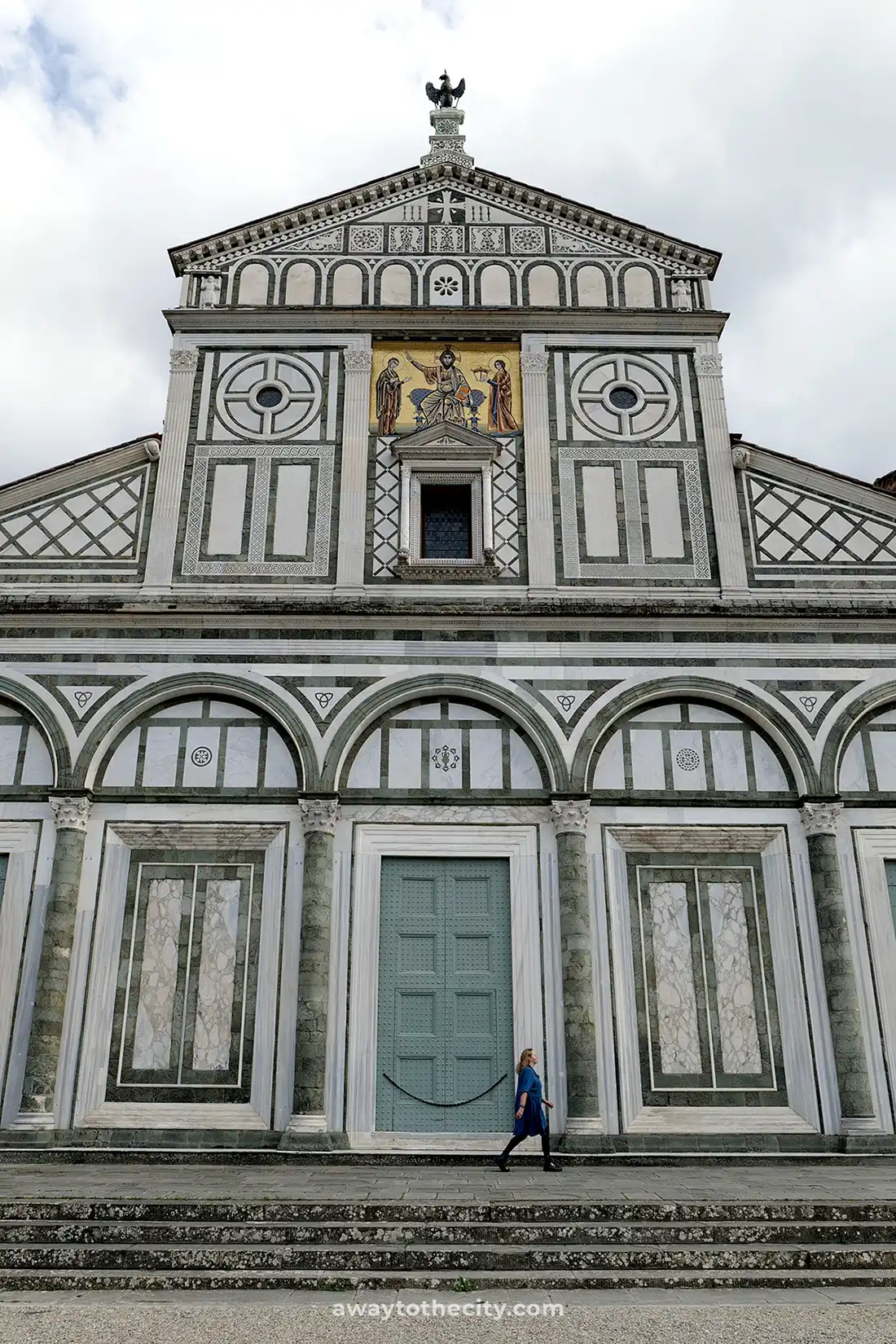
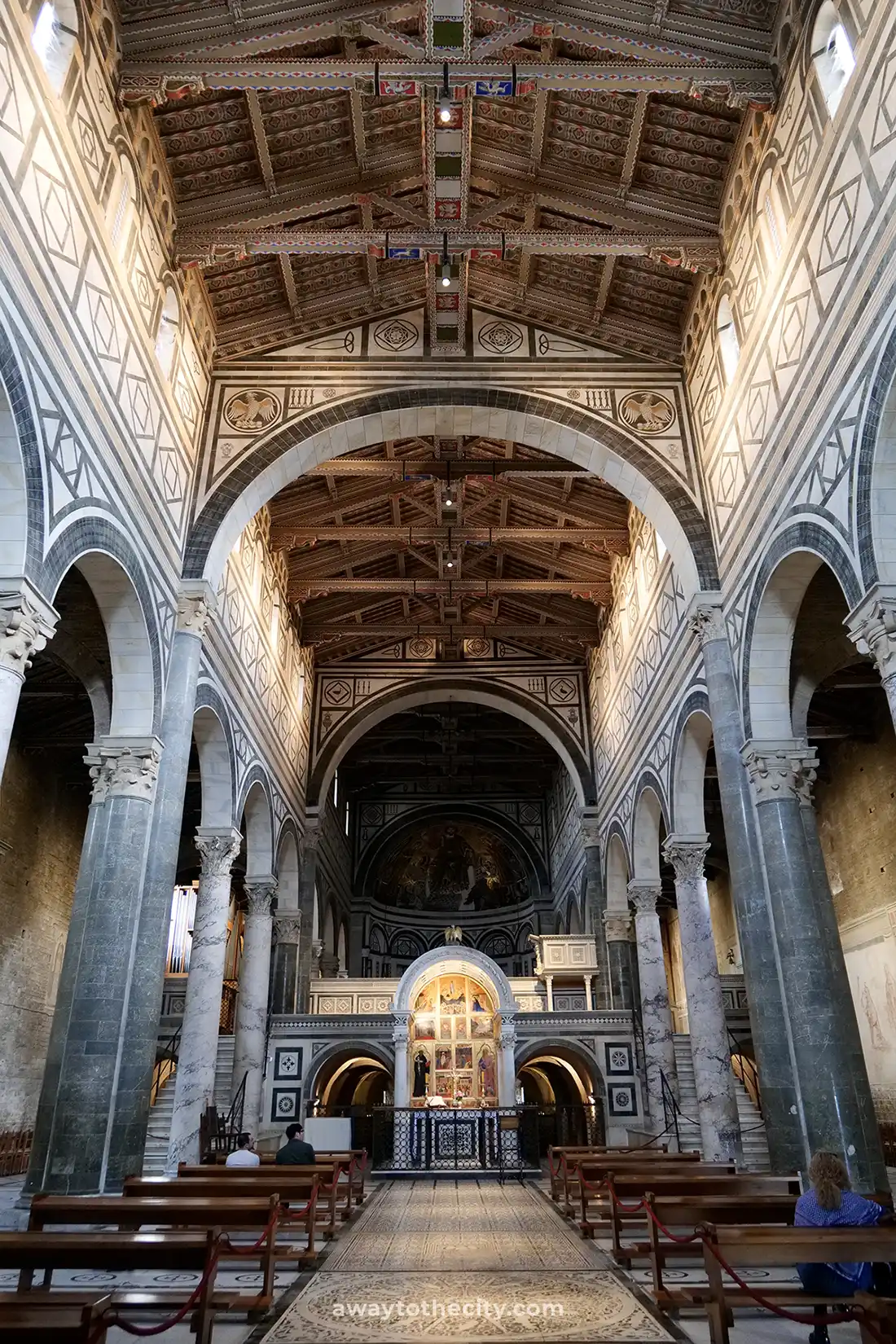
The church sits on a hilltop just above Piazzale Michelangelo and looks out over the entire historic centre.
It’s about a 35-minute walk from Pitti Palace (mostly uphill, so take your time), but the views at the top more than make up for the climb. You can also just take a taxi if you don't want to walk.
The Romanesque architecture is striking, and some of the original frescoes inside have survived for centuries.
Just behind is a cemetery that’s both beautiful and atmospheric. We spent some quiet time walking through it, and it felt like a proper break from the rest of the day.
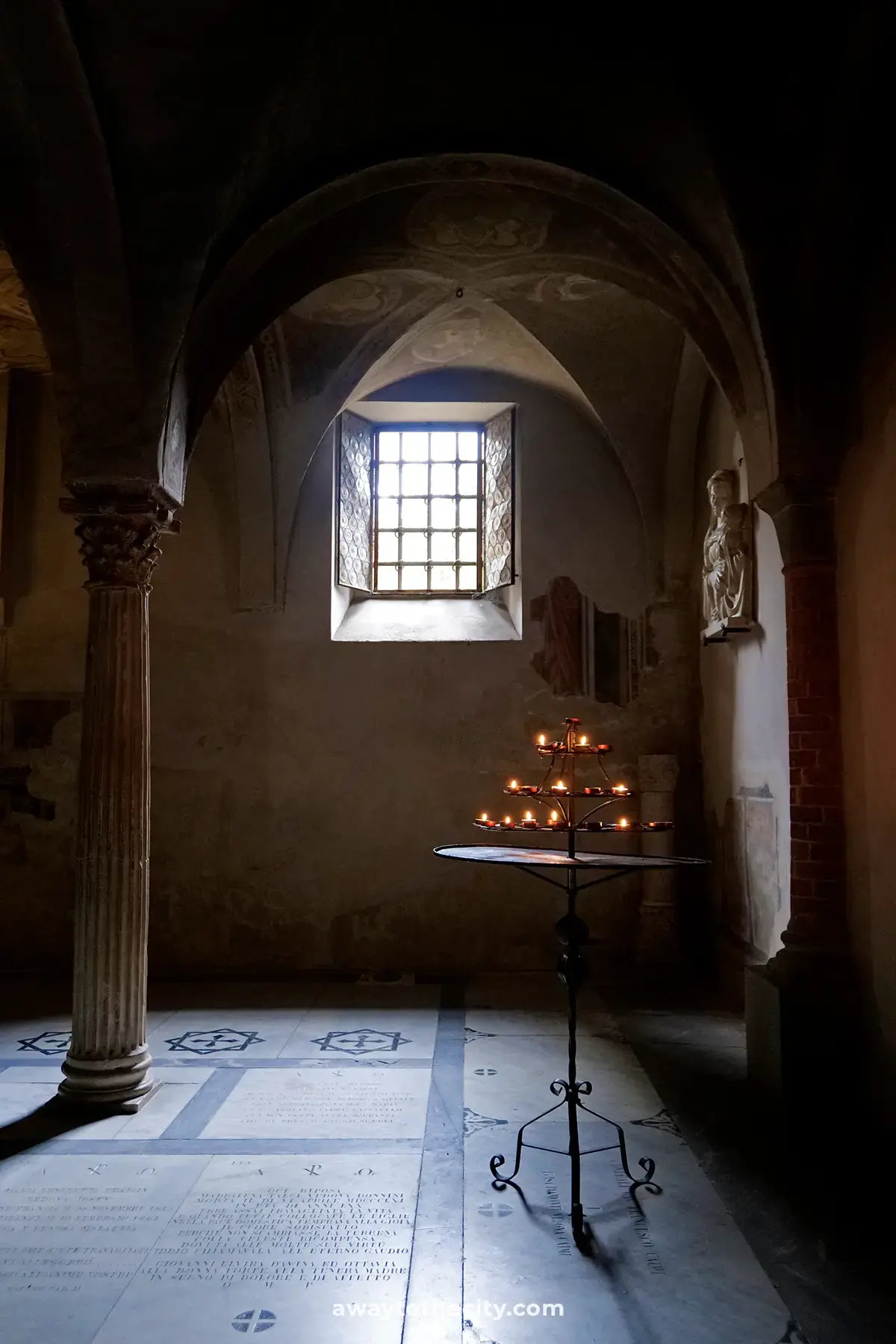
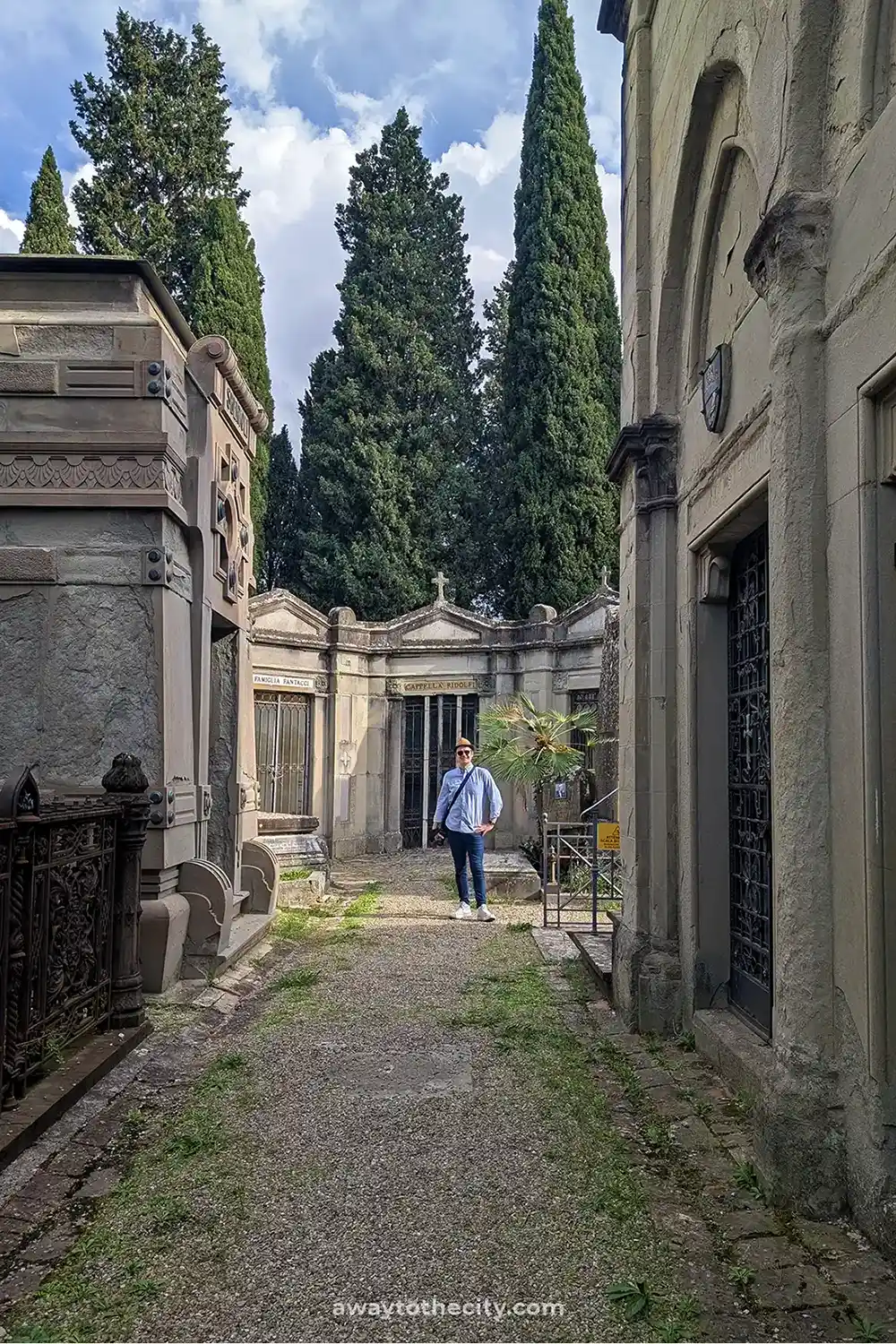
Our top tip: Aim to arrive before sunset. That gives you time to explore the church and cemetery while it’s still light, then enjoy one of the best sunset views in Florence right from the steps. It’s a much calmer experience than Piazzale Michelangelo, which is just a few minutes downhill and usually packed.
Dinner & Rooftop Bars
After a full day exploring Florence, here are some dinner spots we think you'll enjoy:
- Regina Bistecca – Located near the Duomo, this restaurant is renowned for its Florentine steak (bistecca alla Fiorentina). The setting, once an antiquarian bookshop, adds a unique charm to your dining experience.
- La Giostra – A romantic spot known for its pear ravioli and warm ambience. It's a favourite among both locals and visitors.
- Il Grande Nuti Trattoria – A relaxed and welcoming spot just outside the busiest part of the centre. We liked the pasta: unfussy, well-priced, and very good.
Our top tip: Popular restaurants in Florence book up quickly, especially in the evening. We tried showing up without a reservation on our first night and couldn’t get a table anywhere we actually wanted to eat… lesson learned! If there’s a place you’ve got your eye on, make sure to book ahead.
If you’d rather keep things more casual or want a drink with a view afterwards, a rooftop bar is a great shout.
We really liked 701 Rooftop Bar on the 7th floor of the Gallery Hotel Art, which is relatively new (opened in June 2024). B-Roof on the 5th floor of the Grand Hotel Baglioni is another solid option if you're after a full skyline experience.
Interactive Map: 2-Day Florence Itinerary
Florence is wonderfully walkable, but it’s easy to zigzag across the city without realising how close (or far) things actually are.
That’s why we made this interactive map. It pins every sight, restaurant, and gelato stop from this 2-day Florence itinerary, laid out in the exact order we recommend.
With it, you can follow the route on your phone, avoid backtracking, and know exactly where to grab lunch or a coffee along the way.
Green = Day 1, Purple = Day 2

How to use this map: Click the icon in the top left to see the full list of locations. For a bigger view, open it in a new tab via the top-right icon. You can also save it to your own Google Maps by clicking the star next to the map title.
If You Have More Time in Florence
This guide sticks to what we think are the best things to see in Florence in just two days. But if you’ve got extra time or fancy swapping something out, here are a few other places to keep in mind:
Medici Chapels – Also known as Cappelle Medicee, this is where many members of the Medici family are buried. The interiors are lavish, and the ceilings are stunning, but we’d only recommend it if you’ve got more than two days in the city.
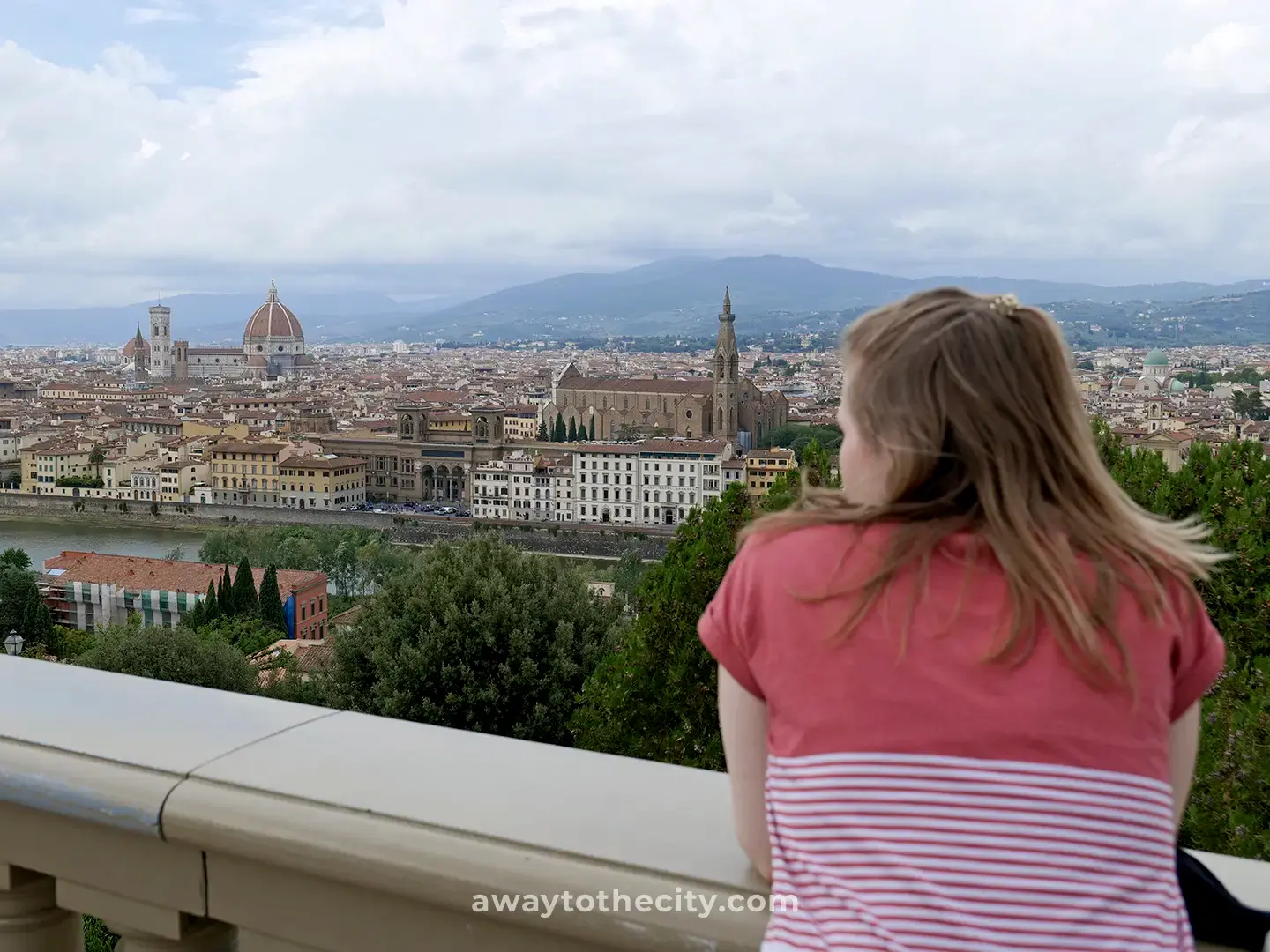
Piazzale Michelangelo – You’ll get classic views of Florence’s skyline: the Duomo, Palazzo Vecchio, and Ponte Vecchio are all clearly visible. That said, the square itself feels a bit like a car park with souvenir stalls. It’s very popular, but we thought Arnolfo Tower gave a better view and a better experience.
The Bargello – Another museum (yes, there are loads), this one focuses on Renaissance sculpture. The building and inner courtyard are beautiful, but with limited time, you’re probably better off sticking with the Uffizi or Accademia.
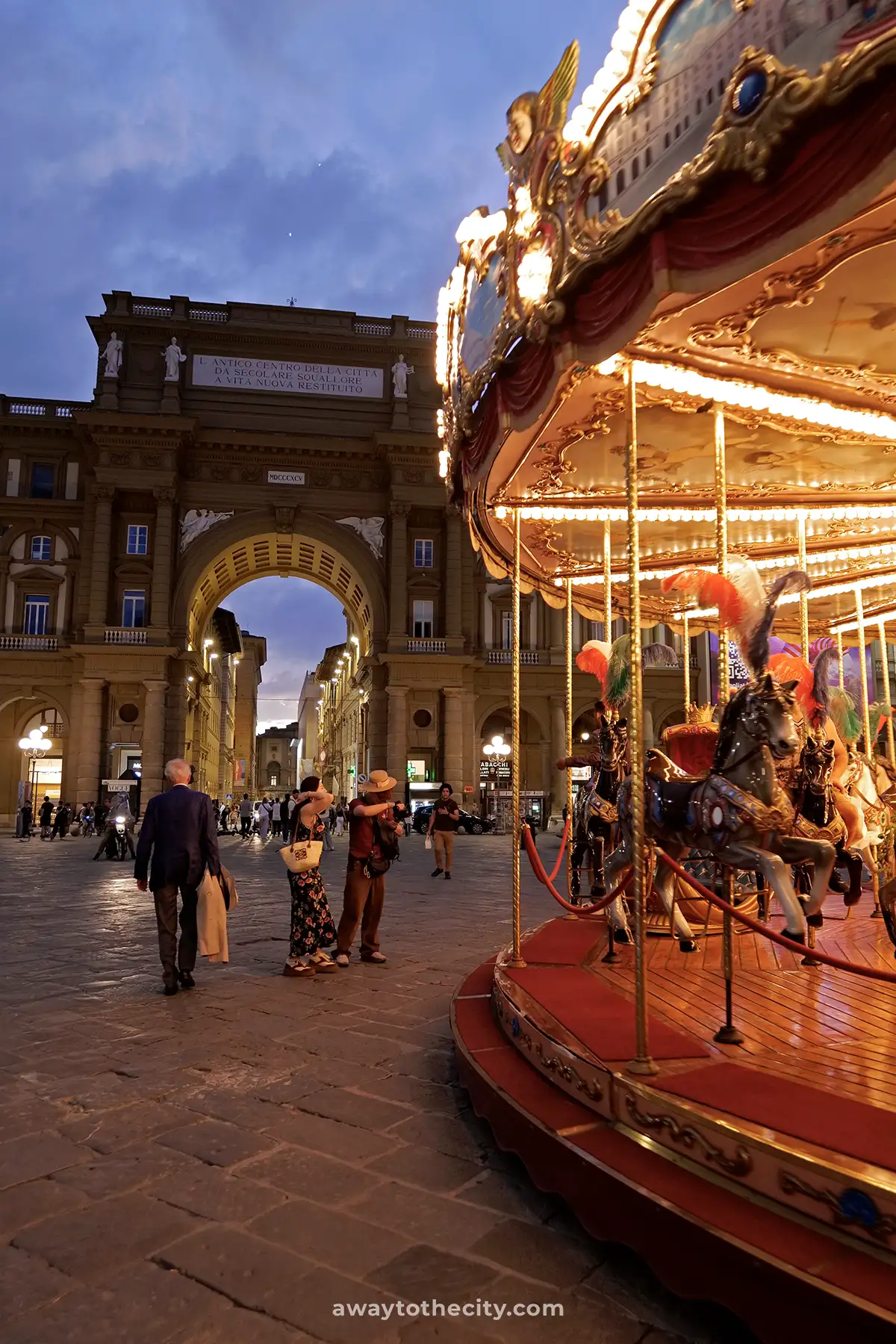
Repubblica Square (Piazza della Repubblica) – A grand square in the city centre with high-end shops, cafés, restaurants and a carousel. It’s okay for a quick stop if you’re nearby, but aside from the arch and carousel, there’s not much to linger over.
Bardini Gardens (Giardino Bardini) – These gardens are a 5-minute walk from Boboli Gardens. If you’ve got time and want fewer crowds, they’re a quieter alternative to Boboli (and the wisteria tunnel in spring is stunning).
Is the FirenzeCard Worth It?

The FirenzeCard is a city museum pass that gives you access to over 60 museums and cultural sites across Florence. It’s valid for 72 hours from first use and is designed to make sightseeing easier with a single payment.
You can check the full list of included museums and sites here.
We did the maths for this itinerary and here’s how it breaks down:
- Uffizi – €25 (reservation of a specific time slot is required)
- Accademia – €16 (reservation of a specific time slot is required)
- Palazzo Vecchio Museum – €12.50 (reservation of a specific time slot is required)
- Pitti Palace & Boboli Gardens – €22
Total if bought individually: €75.50
Cost of FirenzeCard: €85
So for this exact itinerary, the FirenzeCard doesn’t save you money. But if you plan to visit more paid sights or switch anything around, it might work out better. Just total up your planned entries and compare before you decide.
🎟️ Planning to visit more museums than our 2-day itinerary? Check out the FirenzeCard for 72-hour access to 60+ sites.
Best Time to Visit Florence
If we had to pick one month to visit Florence, it would be May. The weather is warm but not too hot, the crowds haven’t hit their summer peak yet, and everything’s open.
If May doesn’t work for you, March is a close second. It’s cooler and quieter, with fewer crowds and often lower prices on places to stay. The weather can still be a bit fresh, but it’s generally dry and sunny enough to enjoy being outside.
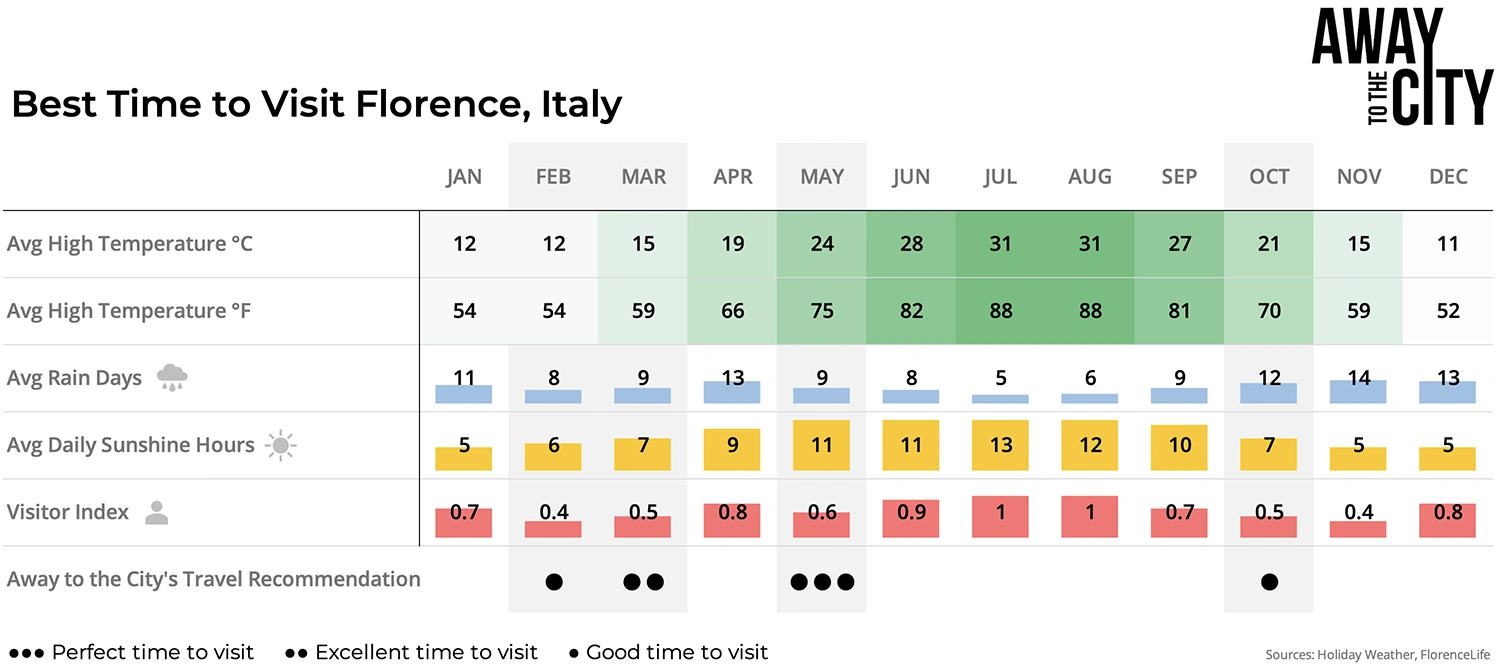
February and October are also good options. February is colder but very calm, while October still has pleasant temperatures and fewer visitors than summer.
We’d personally avoid July and August. Temperatures in these summer months are regularly in the mid-30s°C (mid-90s°F), and it’s not unusual for them to climb past 40°C (104°F) during heatwaves.
The crowds are at their peak, and even many locals leave the city to escape the heat. If you don’t fancy queueing under a baking sun, these months are best skipped.
Where to Stay in Florence
Florence is compact, so as long as you stay somewhere central during your two days in Florence, you’ll be able to reach all the major sights on foot.
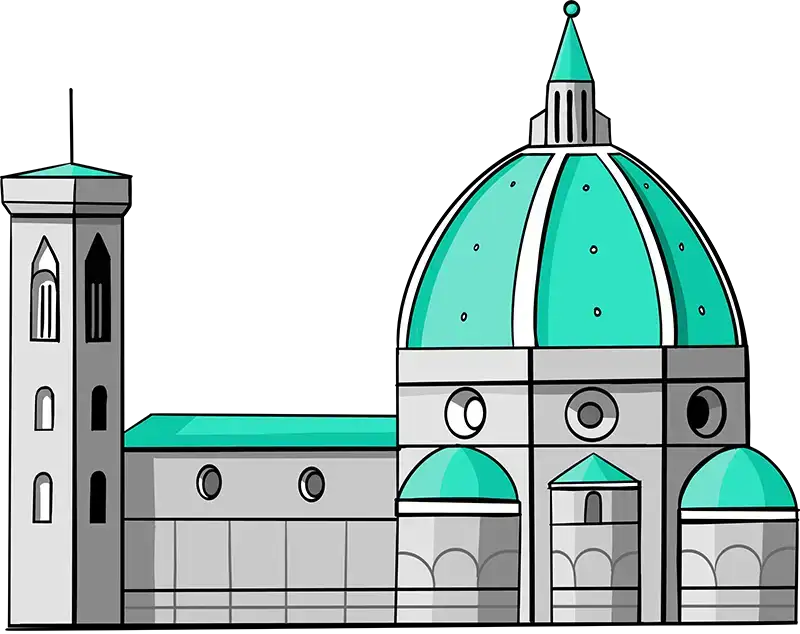
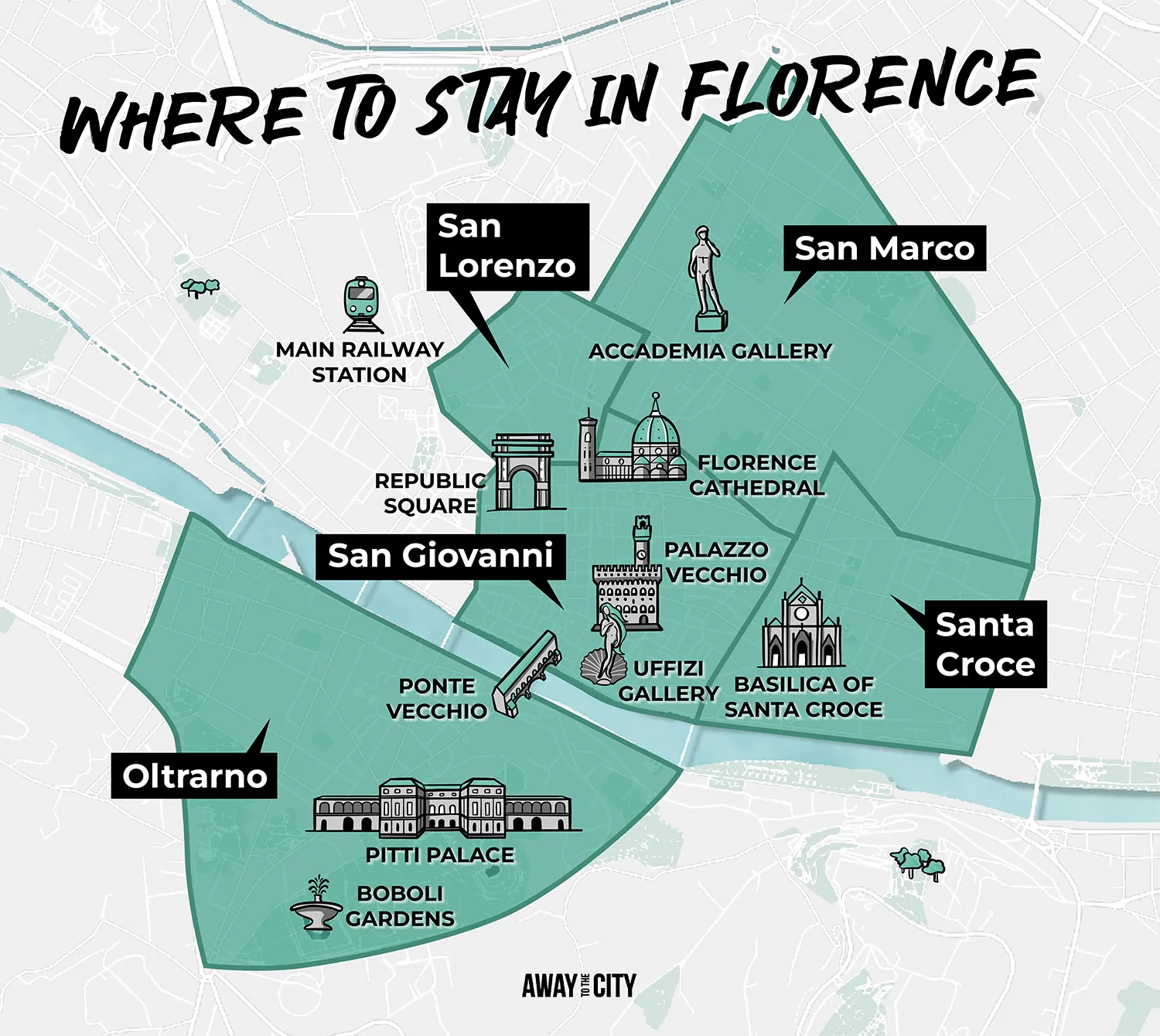
For a first visit, we recommend these areas: San Giovanni, Santa Croce, San Lorenzo, San Marco and Oltrarno.
Check out our illustrated map below to see where these areas are located:
Here are two hotels we recommend in Florence:
For more about what each neighbourhood is like (and more hotel suggestions), see our full Florence area & hotel guide.
Florence FAQ
Here are some quick answers to the questions we get most often about planning a trip to Florence.
Is 2 days enough to see Florence?
Yes, if you plan it well. Two days give you enough time to see the main sights like the Duomo, Uffizi, and Michelangelo’s David, plus fit in a few quieter favourites. You won’t see everything, but you’ll leave with a real feel for the city.
Is Florence a walkable city?
Absolutely! Florence is very compact, and you can get to most places in the historic centre within 15-20 minutes on foot. You won’t need taxis or public transport unless you're staying further out.
What is the most visited place in Florence?
The Duomo and the Uffizi Gallery top the list. Michelangelo’s David at the Accademia Gallery is also one of the most visited artworks in Italy.
How do tourists get around in Florence?
Mostly on foot. Buses and taxis are available, but unless you're heading into the hills or out of town, walking is usually the quickest and easiest way.
What is the best area of Florence to explore?
The historic centre is the most popular (and for good reason), but we also love exploring the Oltrarno. It’s full of character, local cafés, and artisan shops, and it’s only a short walk from the main sights.
Where should I stay in Florence for the first time?
Stay somewhere central, like the Historic Centre, San Lorenzo, Santa Croce, or the Oltrarno (San Frediano and Santo Spirito). All are walkable and well located for sightseeing.
What is the scenic route in Florence?
For a lovely walk, start at the Duomo, head south through Piazza della Signoria, cross Ponte Vecchio, wander through Santo Spirito, and finish at San Miniato al Monte in time for sunset. It’s a mix of landmarks, quiet streets, and spectacular views over the city.
Ready to Book Your 2-Day Florence Trip?
Florence has a way of leaving a strong impression, even on a short visit. In just two days, it offers more beauty, history, and atmosphere than many places do in a week.
If you follow this itinerary, you won’t tick off every sight (it’s impossible, really, with so much to see!). But you’ll catch the highlights that are genuinely worth your time, plus a few special spots we really loved.
Still looking for somewhere to stay? Our guide to the best neighbourhoods and hotels in Florence will help you find the perfect base.
Save this post for later: