
Where to Stay in Florence: Ultimate 2026 First-Timer’s Guide
This post may contain affiliate links, including from Amazon and other trusted partners. If you click a link and make a purchase, we may earn a small commission at no extra cost to you. That said, we only recommend products and services we genuinely use and love. Learn more in our Privacy Policy page.



Florence is small enough to walk almost everywhere, but that doesn't mean every neighbourhood is equally good to stay in.
We've visited Florence three times and stayed in several different neighbourhoods, even switching hotels during one trip to experience more of the city. That trial and error taught us quickly that some neighbourhoods are simply much better bases than others.
If we were planning our first trip to Florence again, we'd book a hotel in San Giovanni without hesitation. Staying just steps from the Duomo, Piazza della Signoria, and many of the city's biggest sights really makes exploring effortless, especially if you're only in Florence for a few days.
In this guide, we'll compare the five best neighbourhoods for where to stay in Florence, explain the pros and cons of each, and recommend the hotels we'd book ourselves.

Just need a hotel you can't go wrong with?
Our personal Florence hotel picks
Quick comparison of Florence's best areas to stay
Prefer to choose by area? All five neighbourhoods below sit within the centro storico, Florence's UNESCO-listed historic centre, so you're never far from the main sights.
But San Giovanni is our top pick for first-timers. It puts you right next to the Duomo and the major landmarks, with great restaurants and cafés on the doorstep.
Here are the top 5 areas to stay in, plus the hotel we'd pick:
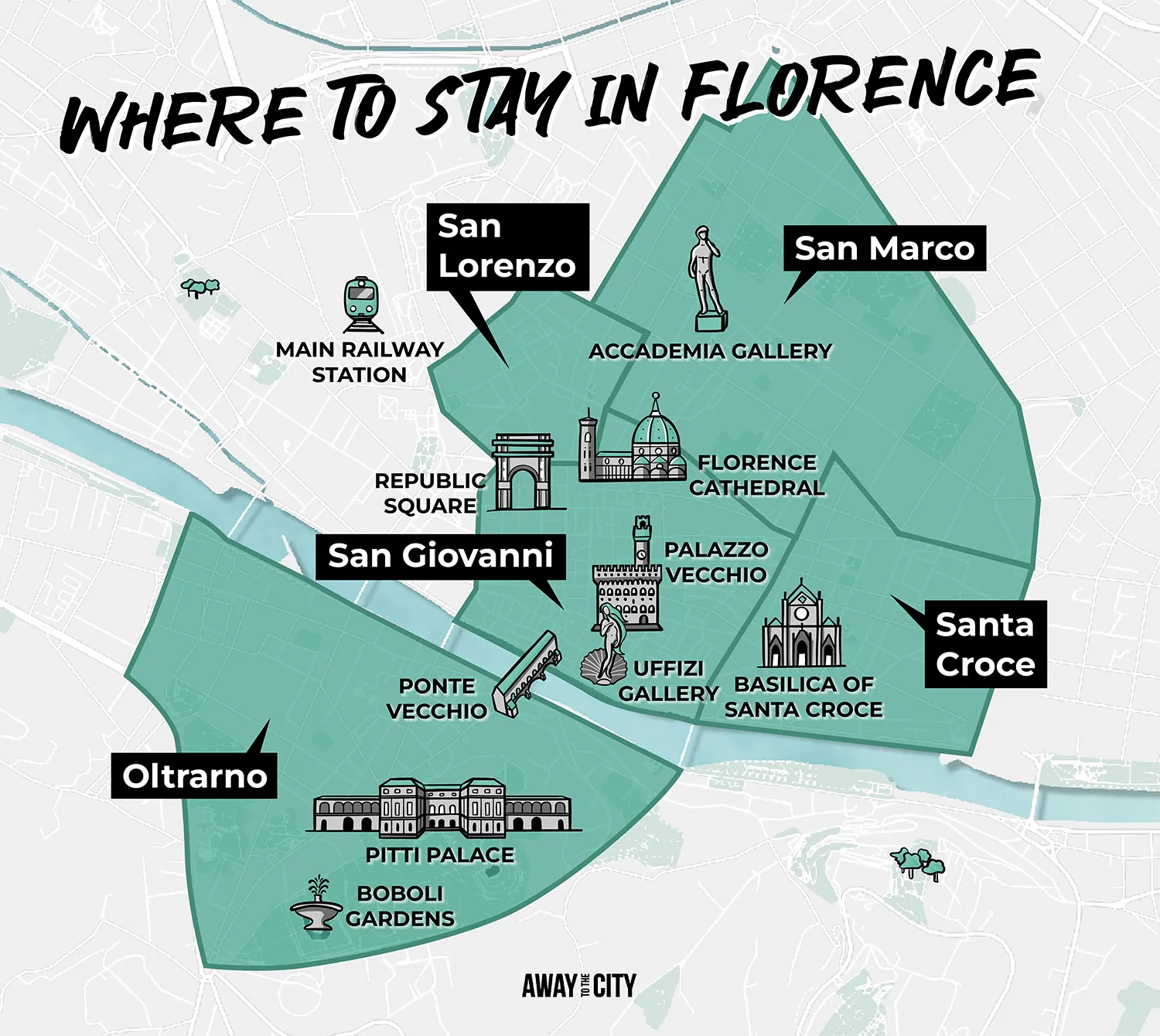
You can see where all five neighbourhoods sit on our illustrated map below:

What to expect from accommodation in Florence: Florence tends to be pricier than many European cities when it comes to places to stay. Most accommodation is made up of small guesthouses and apartments in centuries-old buildings, often without lifts, room service, or big lobbies. But in exchange, you get character, history, and the bonus of staying right in the middle of everything.
1. San Giovanni
Best area for: first-time visitors, iconic landmarks, and walkability.
Pros
Cons
San Giovanni was where we stayed on our very first trip to Florence, and it’s still our top pick for a first visit. It’s the area of Florence most people picture when they think of the city. It really is the heart of the city!

From the moment we stepped outside our hotel, we were surrounded by Florence’s most famous landmarks. The Duomo, the Uffizi Gallery, Piazza della Signoria, and the Ponte Vecchio were all just a few minutes away.
Did you know? The dome of Florence Cathedral is the largest brick dome ever built. It’s been part of the Florence skyline since the 1400s and is still one of the city’s most recognisable features.


This part of the centre of Florence is ideal if you’re only in town for a couple of days and want to pack in as much as possible.
We loved being able to walk everywhere from San Giovanni without needing to think about taxis or buses.

Our top tip: Wake up early and visit Piazza della Signoria and Piazza del Duomo before 8am! We’ve done it a few times, and the squares are wonderfully quiet, beautiful, and free of tour groups. Or visit them late at night (after 10pm) to see a different vibe in this area.

There’s also plenty of shopping here. Via dei Calzaiuoli and Via Roma are the big-name streets, and while some shops are definitely more high-end, you’ll also spot little leather goods stalls and smaller fashion boutiques tucked down side streets.
Yes, it can feel busy and a bit touristy, especially in peak season. But for a first visit, the central location is a massive plus. If we were coming to Florence for the first time again, this is exactly where we’d start!


Top Things to Do in San Giovanni
Florence Cathedral (Duomo): Climb the dome or the bell tower for great views across the city.
Uffizi Gallery: See world-famous works like Botticelli’s The Birth of Venus and pieces by Da Vinci.
Ponte Vecchio: Cross this historic bridge lined with goldsmiths and watch shops.
Piazza della Signoria: One of Florence’s most iconic squares, with Palazzo Vecchio and plenty of impressive open-air sculptures.
Palazzo Vecchio: Head up Arnolfo Tower for some of the best views over Florence, then explore the old chambers and rooms inside the palace.
Piazza della Repubblica: A busy square with cafés, live music in the evenings, and a carousel if you're in the mood.


Our recommended stays in San Giovanni
Hotel Adamas ($$) – Our readers' favourite hotel ⭐️ in Florence. The ceilings are unusually tall for a city-centre hotel, the rooms are spotless, and it's a 30-second walk from the Duomo.
Palazzo Della Nave ($$) – Apartment-style suites in a historic palazzo with a private courtyard that looks directly onto Brunelleschi's Dome. Full kitchens and self-check-in make it a great pick for longer stays.
Relais Piazza Signoria ($$$) – We stayed here for our anniversary and love it! Enormous rooms, windows that open onto street musicians and church bells, and the cafe downstairs was our first stop every morning.
2. Santa Croce
Best area for: culture lovers, nightlife, local bars, and artisan boutiques.
Pros
Cons
Santa Croce mixes historic charm with everyday local life. It’s full of artisan boutiques and traditional wine bars, and the pace here feels different to the busier Duomo area.
You’re still close to the major attractions, but it’s less chaotic during the day and much livelier at night, especially around Via dei Benci.

Did you know? The Basilica of Santa Croce is the burial site of Galileo, Michelangelo, and Machiavelli.
Piazza Santa Croce in front of the Basilica of Santa Croce (picture below) is the centre of the neighbourhood and one of our favourites in the city.
It often hosts open-air concerts, local events, and markets, which gives the area a proper neighbourhood feel.


Unlike parts of the Duomo area, this part of Florence still has a decent number of full-time residents and Italian families, which keeps it grounded and a bit more lived-in.
Our top tip: Stop by the leather school behind the basilica. You can watch artisans at work and even take home a handmade piece.
There aren’t as many large hotels in the area, but you’ll find lovely guesthouses tucked along the quieter streets.

If you’re after great food, cultural spots, and a proper local atmosphere, Santa Croce is a brilliant choice.
Plus, Piazza di Santa Croce is just a short stroll from the Duomo and everything else you'd want to see.
Top Things to Do in Santa Croce
Basilica di Santa Croce: Visit the tombs of Michelangelo, Galileo, and Machiavelli in this beautiful Franciscan church.
Scuola del Cuoio (Leather School): Just behind the basilica, this is a great spot to see artisans crafting handmade leather goods.
Piazza Santa Croce: Grab a coffee and relax in the square, especially in the morning before it fills up.
Via de' Benci: This lively street is a great spot for an aperitivo, with small bars and a buzz around sunset.
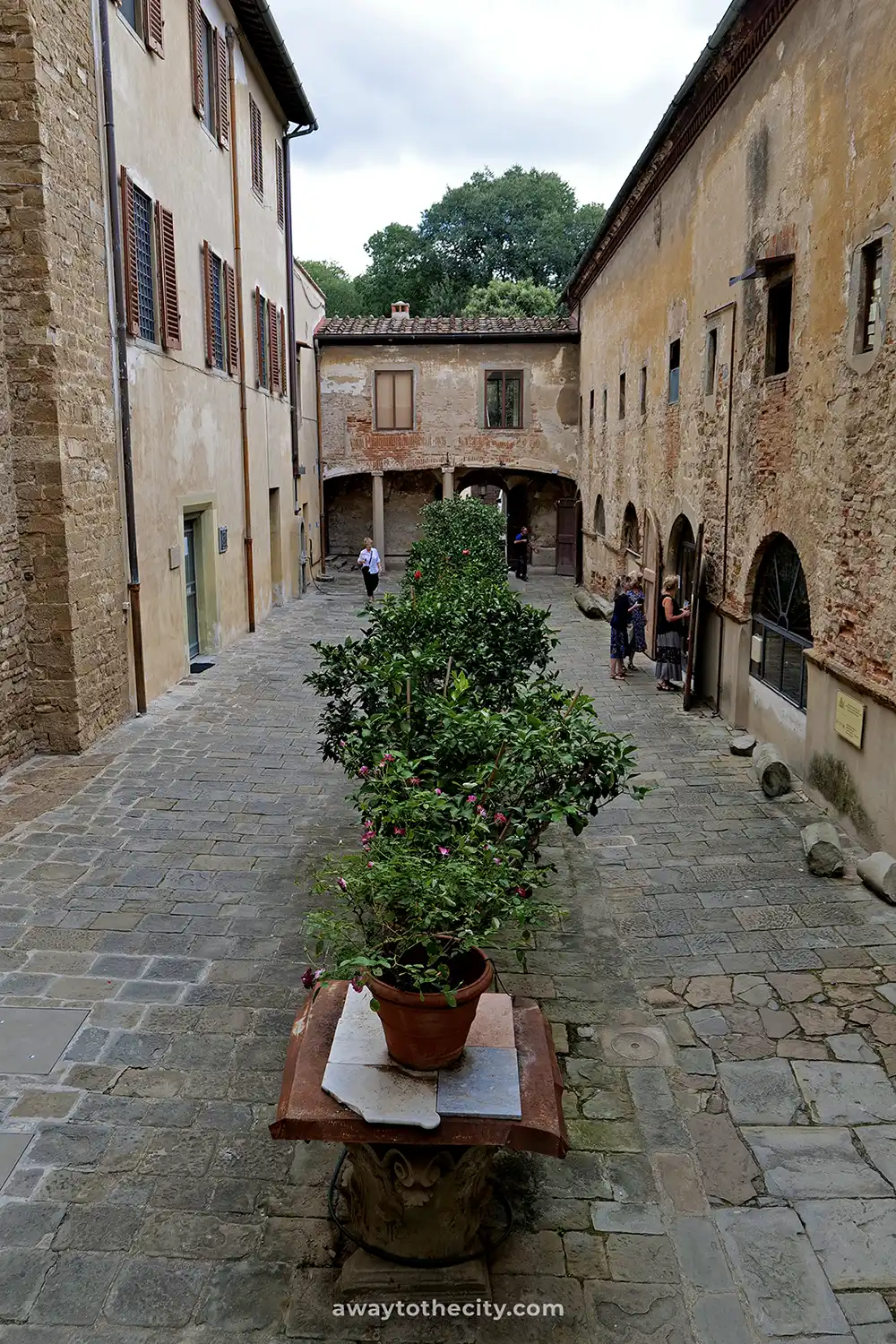

Our recommended stays in Santa Croce
Pietrapiana Boutique Apartments ($$) – Our third-floor room had skylights that filled it with natural light all day, a small balcony, and a courtyard perfect for an evening glass of wine. Highly recommended!
Bob W Santa Croce ($$) – We love, love, love the interiors here! Sage green walls, herringbone parquet floors, and botanical prints give it a feel that's very different from a standard Florence hotel.
Palazzo Firenze by Baglioni ($$$) – Only 24 rooms, so it feels more like a private residence. You can have your aperitif in a Music Room with a grand piano and live classical performances beneath original frescoes.
3. Oltrarno
Best area for: creative travellers, local experiences, and cool aperitivo spots.
Pros
Cons
The Oltrarno district is Florence’s creative, more lived-in side. It sits just across the Arno River from central Florence, but it really does feel like a different city.

Locals actually live, work, and hang out here, which gives it a very different energy compared to the Duomo or Uffizi area. If you want a proper taste of local life, this is where you’ll find it.
Two of the best-known neighbourhoods in the Oltrarno district are San Frediano and Santo Spirito, which sit just southwest of the river, across from the historic centre.


Did you know? Oltrarno literally means “beyond the Arno”, and during the Renaissance, it was filled with artists, stonemasons, and craftspeople. Even now, you’ll still spot artisans at work behind unmarked doors.
San Frediano has more of a laid-back, slightly gritty edge. It’s full of vintage shops, traditional workshops, and cool little bars.
Santo Spirito is a bit more bohemian, with a buzzing square that’s perfect for an aperitivo or a glass of wine as the sun goes down.

Our top tip: Piazzale Michelangelo draws a crowd for its panoramic terrace, but if you’re willing to keep climbing, San Miniato al Monte is worth the extra effort! It’s one of the highest points in Florence, and the view from up there is unbeatable.
If you're after a different pace and want to get to know the local side of Florence, the Oltrarno district is the place to be.
It's still close to everything, but the atmosphere is relaxed and full of personality. Plus, you're right by the Arno River, which doesn't hurt either.


Top Things to Do in Oltrarno
Piazzale Michelangelo: One of the city’s iconic viewpoints. Sunset is the popular time to go, but expect it to be veeery busy.
Pitti Palace (Palazzo Pitti): Once home to the Medici family, this massive palace now houses several museums.
Boboli Gardens: A great place to take a break among fountains, sculptures, and tree-lined paths.
Basilica di Santo Spirito: A peaceful church with a proper local feel and some lovely artwork inside.
Brancacci Chapel: Home to early Renaissance frescoes by Masaccio and Lippi that are well worth a look.
Piazza Santo Spirito: The heart of this part of Oltrarno. It’s relaxed by day and buzzing in the evenings.

Our recommended stays in Oltrarno
Palazzo Ridolfi ($$$) – Our readers love this one! Breakfast is served in a dining room with original 15th-century paintings on the ceiling, and the suites have frescoed ceilings and hardwood floors throughout.
Bob W Ponte Vecchio ($$) – Spacious apartments a block from Ponte Vecchio, right on the Arno. A solid pick if you want more space than a standard hotel room without paying luxury prices.
Althea Rooms ($) – A small, family-run guesthouse two minutes from Pitti Palace. One of our readers told us that Antonio (the host) went above and beyond, including helping with restaurant reservations.
4. San Lorenzo
Best area for: budget travellers, street food lovers, and quick train access.
Pros
Cons

San Lorenzo gives you a proper taste of local life without pulling you too far from the big sights.
It’s home to Mercato Centrale, one of the best places for casual eats in Florence. We’ve grabbed truffle panini, fresh pasta, and the odd espresso here between sights, and it’s always been a solid choice.


The area around the market is busy and has a bit of a scruffier edge. There are loads of leather stalls outside, but they’re mostly aimed at tourists (not where you’ll find the best value or craftsmanship).
Still, if you’re after something central and affordable, this part of the city makes a lot of sense.

Our top tip: Look up! The streets in this area are full of hidden Medici symbols. Keep your eyes peeled for stone coats of arms, iron rings, and strange carvings high on the buildings.
San Lorenzo is one of the best areas if you’re watching your budget but still want easy access to everything.
It’s just a short walk from Santa Maria Novella Station, which is ideal for day trips to Lucca, Pisa or Bologna. And even though it’s right by the train station, you can still reach the Duomo and other major sights in under 15 minutes on foot.

Top Things to Do in San Lorenzo
Mercato Centrale: Eat your way through fresh produce, truffle sandwiches, and Italian sweets.
Medici Chapel: See Michelangelo’s sculpted tombs and explore the richly decorated interiors.
San Lorenzo Basilica: One of Florence’s oldest churches. It’s plain on the outside but full of history and art once you’re in.
Library of San Lorenzo: A peaceful, historic space designed by Michelangelo. Great for a quiet moment away from the crowds.

Our recommended stays in San Lorenzo
Flom Boutique Hotel ($$) – Our favourite hotel in Florence ⭐️! The beds are some of the best we've slept in anywhere, breakfast is excellent, and from our window we could see Brunelleschi's Dome.
Tivoli Palazzo Gaddi ($$$) – A 5-star stay in a 16th-century palazzo, with rooms that look directly onto the Duomo. Breakfast is served in a secret garden-style courtyard, with homemade pastries on the buffet.
Hostel Archi Rossi ($) – The walls are covered in frescoes painted by local art students, which gives it a character most hostels don't have. Three minutes from the main train station and free breakfast.
5. San Marco
Best area for: quiet stays and student life
Pros
Cons
San Marco sits just north of the Duomo and feels a bit more local than the centre of Florence.
We’ve stayed here once when we wanted somewhere quiet but still within walking distance of everything. It’s ideal if you want to be close to the sights without being in the thick of the crowds.

Thanks to the nearby university, it’s got a younger, more laid-back feel. During the academic year, you’ll spot students in the cafés and bookshops, but in summer, it quietens right down.
To be honest, it’s not the most scenic part of Florence, but it’s practical and much less hectic.

We like how easy it is to get around from here. The grid layout makes walking a breeze, and it’s one of the best areas to cut through the city without getting stuck in the tourist bottlenecks near the Duomo or Piazza della Signoria.
Our top tip: If you’re staying in San Marco, you’re minutes away from a hidden green space! There’s a lovely botanical garden (Giardino dei Semplici) behind the university. In fact, it’s the third most ancient botanical garden in the world, being more than 500 years old. Most tourists never make it here, but it’s such a lovely break from sightseeing.
If you’re after a slower pace, better value, and somewhere that still lets you walk everywhere, San Marco is a smart choice (especially if you don’t mind swapping views for a bit more peace!).


Top Things to Do in San Marco
Accademia Gallery: See Michelangelo’s David up close, along with Renaissance paintings and sculptures in this must-visit museum.
San Marco Museum: A quieter stop with frescoes by Fra Angelico and peaceful cloisters inside a former monastery.
Piazza San Marco: This local square isn’t flashy, but it’s central and good for people-watching as students and locals pass through.
Botanical Garden (Giardino dei Semplici): One of the oldest botanical gardens in Europe and a lovely spot for a peaceful walk.

Our recommended stays in San Marco
Pergola35 ($$) – Spacious, modern apartments on a quiet historic street, a short walk from the Accademia. Host Lorenzo walks you through the apartment on arrival and sorts restaurant reservations on request.
Arte' Boutique Hotel ($$$) – Some rooms have balconies with direct views of the Duomo. Every evening between 6pm and 8pm, you get a free aperitivo with wine and snacks included.
Piccolo Apart Residence ($) – Friends and family of ours have stayed here and absolutely loved it. Spacious apartments two blocks from the Duomo, great for longer stays.
FAQ: Areas in Florence
Here’s a quick look at some frequently asked questions about staying in Florence to help you plan your trip.
What’s the best area for first-time visitors to stay in Florence?
The best areas for first-time visitors in Florence are San Giovanni, San Lorenzo, Santa Croce, San Marco, and Oltrarno. These neighbourhoods are central, walkable, and full of great food and sights.
What is the city centre of Florence?
San Giovanni is considered the city centre of Florence. It includes the Duomo, Uffizi Gallery, Piazza della Signoria, and most major attractions – all within easy walking distance.
Is Florence walkable?
Yes, Florence is a very walkable city. You can cross the historic centre on foot in under 30 minutes.

Is 3 nights in Florence too much?
Three nights in Florence is not too much. It’s a good amount of time to see the main attractions, visit museums, and enjoy local food at a relaxed pace.
Is it safe to walk around Florence at night?
Florence is generally safe to walk around at night, especially in the central areas. Just avoid quiet alleys and keep an eye on your belongings, as you would in any city.
What is Florence famous for?
Florence is famous for its Renaissance art, stunning architecture, and world-class museums. Highlights include Michelangelo’s David, Botticelli’s Venus, and Brunelleschi’s Dome.
How many days are ideal for a trip to Florence?
The ideal number of days for a trip to Florence is at least three full days. This gives you time to explore the centre, visit museums, and enjoy local food without rushing.
Where would we stay?
Next time we're in Florence, the answer is easy: Flom Boutique Hotel. The beds are some of the best we've slept in anywhere, breakfast is excellent, and we woke up to Brunelleschi's Dome from our window. We'd go back without a second thought.
If you're still working out how to spend your days, our 2-day Florence itinerary has everything you need to make the most of the city.
Hope you love it as much as we do!
Save this post for later: