How to Avoid Jet Lag: What We’ve Learned After 50+ Countries
This post may contain affiliate links, including from Amazon and other trusted partners. If you click a link and make a purchase, we may earn a small commission at no extra cost to you. That said, we only recommend products and services we genuinely use and love. Learn more in our Privacy Policy page.
Jet lag has cost us more than a few good vacation days. We’ve stumbled around foreign cities in a zombie state, woken up completely alert at 3am in Australia, and once even fell asleep while eating in a restaurant in Singapore.
After travelling to more than 50 countries, we’ve learned that avoiding jet lag starts before you even land. A few small changes before your flight, on the plane, and during that first day can make a huge difference.
We now start adjusting before we fly, switch to destination time the second we board, and NEVER let ourselves crawl into bed after a morning arrival.
That first day can still be rough… but it’s a lot better than spending half your trip wondering why your body thinks 3am is breakfast time.
These are the tips we use ourselves to avoid jet lag and adjust to a new time zone faster.
Before you travel
Most people don't think about jet lag until they're already on the plane. These two steps are about getting ahead of it before you even leave home.
1. Gradually shift your sleep schedule
Did you know that your body needs about one day to adjust for every time zone you cross? For a nine-hour time difference, that's over a week of feeling off… by which time you'll probably head back again.

After our first trip from London to Tokyo left us completely wiped out, a frequent traveller friend recommended that we start adjusting our bedtime routine BEFORE we fly.
We tried it before our second trip to Japan and shifted our sleep by 45 minutes each day for the five days beforehand. When we landed in Tokyo, those first mornings felt so much better.
If you're travelling east, go to bed and wake up earlier. For westbound flights, simply do the opposite.

Our top tip: Jet lag apps like Timeshifter build you a personalised day-by-day plan covering when to sleep, when to seek light, and when to cut caffeine. We tried it, and it works. At US$24.99 (about €23 or £20) a year for unlimited trips, it's worth it if you're doing several long-haul flights a year. For one or two, you can get a very similar result for free by simply shifting your schedule by 45 minutes a day yourself.
2. Leave home well rested
Leaving home well rested sounds obvious, and yet it's so easy to get wrong.
You end up packing at midnight, you squeeze in a farewell drink, you throw on one last load of laundry. Before you know it, you're boarding the plane already running on empty.
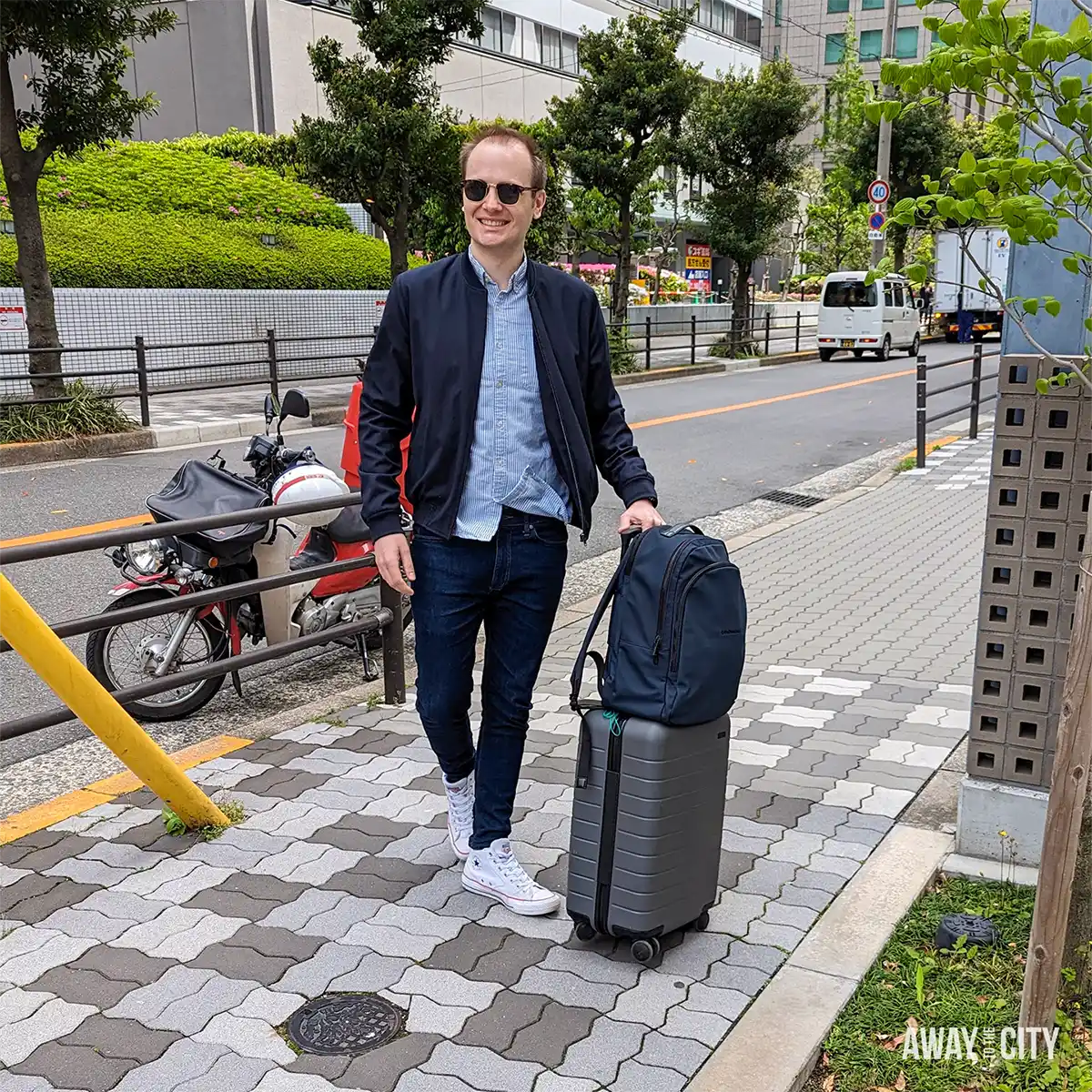
We try to have everything packed the day before we fly and keep those last 24 hours as calm as possible. We don't always manage it, but when we do, we feel so much better when we land.
Flying tired makes jet lag hit harder and last longer. You can't always control what happens on the plane, but controlling how you show up at the airport is one of the best ways to avoid jet lag before it even starts.
During the flight
During long-haul flights, a few small habits make a real difference to how you feel when you land. These are the ones that have worked best for us.
3. Set your clock
As soon as you board, change your phone and watch to your destination's time zone. We do this on EVERY long-haul flight, and it's one of our most important tips to avoid jet lag.

Knowing what time it actually is where you're headed changes every small decision you make on the plane. It stops you from mentally resisting the time change, which is exactly the mindset that keeps jet lag going.
We forgot to do it once on a flight to Seoul and spent half the journey calculating time differences. Now it's the first thing we do after finding our seats.
4. Skip alcohol and caffeine
We've happily accepted the free drinks on a long-haul flight before. By the time we landed, we were headachy, our throats were dry, and we felt worse than the flight justified.
Alcohol dehydrates you faster than almost anything else at altitude, and it wrecks the kind of deep sleep your body needs to adjust. It might be fun mid-flight, but your body is already fighting dry cabin air… adding alcohol just makes that harder.
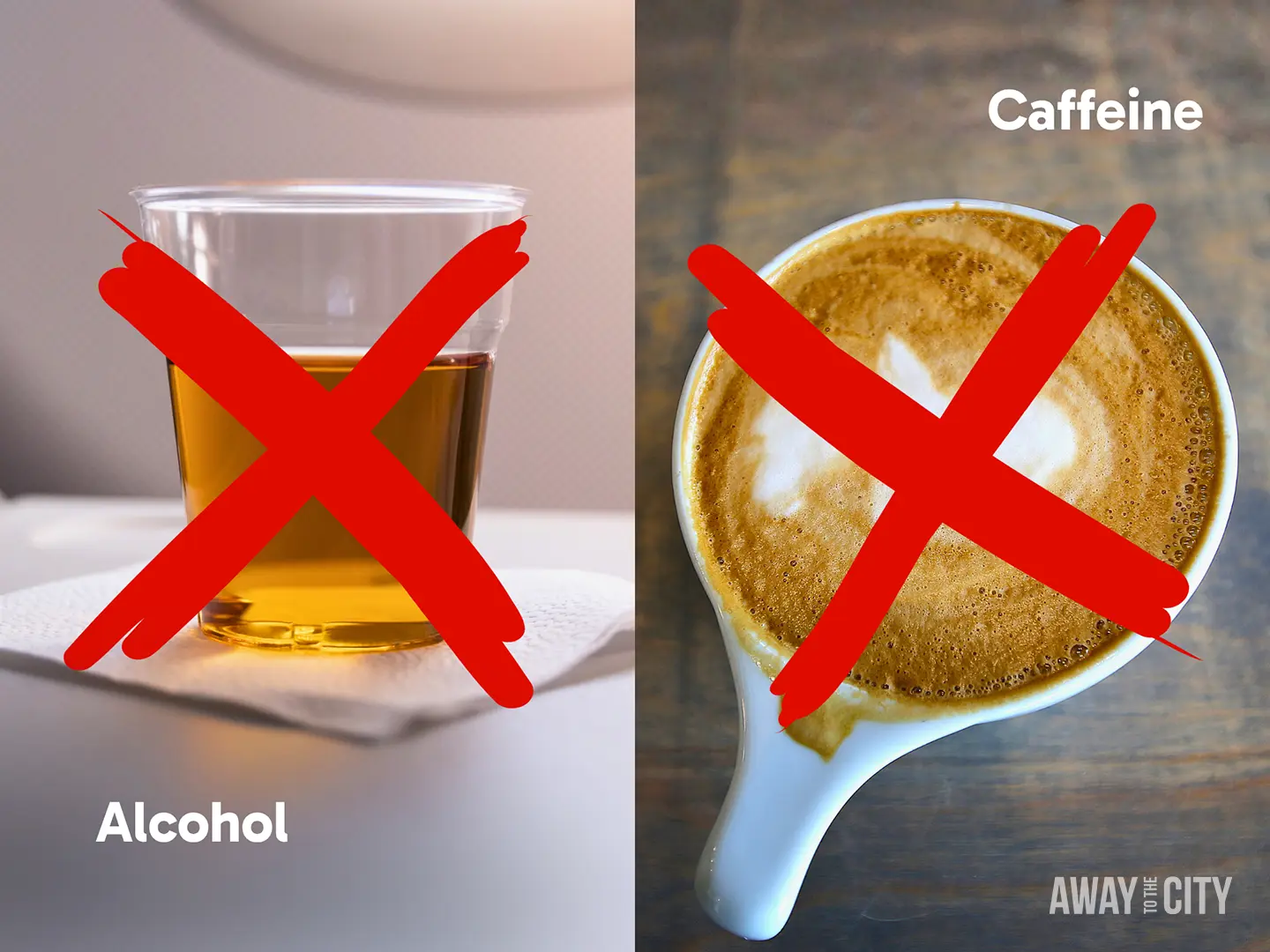
The same goes for caffeine, and it's the easier one to forget. You grab a coffee at the gate out of habit on an early morning flight, board the plane, and then lie there wide awake for six hours when you should be sleeping.
We cut both from about 12 hours before we fly now. Water only. Boring, yes. But the difference is real.
5. Stay well-hydrated
It’s no secret that cabin air is dry… we once read that the humidity levels on a plane are comparable (or sometimes even lower) to that in the Sahara Desert 😲.
You won't feel it right away, but after a few hours your throat gets scratchy, your skin dry, and by landing you feel like you haven't had water in days.

We used to sip whatever small cup the flight attendants handed out and assume that was enough. It wasn't. Now we take a reusable bottle on board and make a point of drinking plenty of water… roughly about 250 ml (8 oz) per hour.
We always keep that bottle in our hand luggage so it's right there throughout the flight.
6. Follow destination rhythms
Once your clock is set (see tip 3), the next step is to actually live by it. Try to sleep when it's nighttime where you're heading, and stay awake when it's daytime there, even when your body is begging to close your eyes.
We try to match our eating to destination time too. If it's breakfast time where we're headed, we eat breakfast. If it's late evening there, we skip the meal entirely and start winding down.
Your airline usually follows destination time with meals and lighting anyway, so you're not fighting it alone.
Our top tip: For sleeping on the plane, noise-cancelling headphones (we love our AirPods) and a decent neck pillow are the two things we won't fly long-haul without. We've never got on with eye masks, but if they work for you, add an eye mask to your in-flight sleep kit.
7. Move around regularly
After about three hours in an economy seat, our legs start to feel heavy and our lower backs begin to ache. And after six hours, everything is stiff.

We try to get up every couple of hours, even if it's just a walk to the back of the cabin. It's not always easy to stay active on a long flight in economy, but even standing in the galley for a minute helps.
Even small things help while you're seated. Ankle circles, heel raises, and shifting your position regularly all keep the blood moving.
After you arrive
After a long-haul flight, the temptation is to collapse. These last three steps are what actually get your body back on track.
8. Seek natural daylight
The single best thing you can do after landing is to get OUTSIDE. And it’s the first thing we do (right after having checked into our hotel) in every city we land in… not to sightsee, not to tick anything off. Just to be in daylight.

Sunlight and bright light exposure is what actually reset your inner clock, and no amount of coffee or sheer willpower does the same job.
We've made the mistake of spending our first hours indoors after landing (a dark Taipei museum once, a shopping centre another time), and it always made the jet lag drag on longer.
Now we'll walk through the neighbourhood, sip a coffee somewhere with outdoor seating, or just wander. As long as our faces get actual daylight, we know we're giving our bodies a fighting chance.

9. Adopt the local schedule immediately
On our very first long-haul trip to Singapore, we made the one mistake everyone warned us about!
We arrived at 10am, but our bodies were convinced it was 3am. We told ourselves there was no harm in napping for an “innocent” 15-20 minutes… We woke up at 6pm!

By the time midnight came around, we were wide awake and simply couldn't fall asleep until the early hours. It was a vicious circle and the jet lag dragged on for days longer than it needed to.
The lesson was as painful as it was simple: eat when the locals eat, stay awake when they're awake, and don't go to bed until it's a normal bedtime at your destination, even if you're exhausted. Don't even LOOK at the bed 🙅!
10. Consider melatonin
If you've followed everything above, there's a good chance you'll sleep fine. That's been our experience most of the time.
But occasionally, even with the best preparation, you still wake up in the middle of the night and can't get back to sleep. That's when melatonin has helped us a lot.
Melatonin is a hormone your body produces naturally to signal that it's time to sleep. It’s a commonly used natural sleep aid for jet lag that’s available over the counter in the US but generally only by prescription in Europe.

Taking a low-dose supplement about 30 minutes before bedtime can help recalibrate your internal clock when it's still confused about the time zone.
We don't take it as a default, but having it in our bag as a backup has saved us more than once.
One thing worth noting: start with a small dose, and check with a doctor first if you're on other medication.
Ready to beat jet lag this time?
Jet lag is not inevitable. Most of the effects of jet lag come down to a handful of decisions made before you even board the plane, and a bit of discipline on that first day after landing. The Singapore nap taught us that. So did the Tokyo trip when we finally got it right.
Before your next long-haul trip:
A bit of preparation before you leave home goes a long way. Your future self (wide awake on day one) will thank you!
Travel smarter with our city travel tips
✈️ Planning, packing & prep
🧠 Smart travel hacks