This post may contain affiliate links, including from Amazon and other trusted partners. If you click a link and make a purchase, we may earn a small commission at no extra cost to you. See our Privacy Policy for more information.
18 Tips for Surviving Long Flights in Economy Class

See our posts more often

We recently did a 15-hour flight from London to Seoul in economy and somehow landed feeling surprisingly refreshed. Most people stumble off flights like that looking like zombies, so we took that as a win.
If you’re wondering how to survive long flights in economy without arriving completely wrecked, we’ve had A LOT of practice. We’ve travelled to more than 50 countries and spent 300+ hours each on long-haul flights, all in economy.
We know… economy sucks. But unless you’re dropping thousands on business class, we’re back here with the rest of humanity trying to sleep upright.
Over the years, we’ve figured out 18 things that make these flights easier. We’ll show you why we wear our seatbelts over our blankets, switch to destination time as soon as we board, and never do a long-haul flight without a few very specific comfort items.
1. Select the aisle seat (specifically in the middle section)
On short flights, we're window seat people. On long-haul, comfort wins and we always book an aisle seat, specifically in the middle section of the plane.
The reason is simple: when flying economy class on a wide-body aircraft with a 3-3-3 layout, your neighbour can exit to the opposite side instead of climbing over you.

You can sleep, get up, and move around without the awkwardness of waking a stranger.
Avoid seats near the bathrooms if you're a light sleeper. You'll hear doors, conversations, and the occasional passenger who thinks 2am is a perfectly reasonable hour for a loud chat with the flight attendant.
Once you've found a cheap flight, don't leave your seat to chance. Select it at booking, even if it costs a little extra. Leaving it to check-in is how you end up in the middle.
Exit rows offer extra legroom, but airlines typically charge US$70–200 (about €63–180, or £54–154) extra per person each way for the privilege.
2. Wear your seatbelt over your blanket
If you're sleeping with a blanket, jacket or anything else, ALWAYS buckle your seatbelt over the top.
When turbulence hits, the cabin crew have to visually check that everyone is buckled in. If they can see yours, they'll let you sleep. If they can't, they'll wake you up.
And in our experience, getting back to sleep on a plane after being nudged awake at 3am is anything but easy.

3. Adjust to destination time once you board
As soon as we board an international long-haul flight, we set our watches and phones to our destination’s time zone.
Sounds almost too simple, but it's actually one of the things that has a surprisingly big impact on how we feel during the flight (and when we land).
Once you've switched, try to follow that new time.

If it's nighttime at your destination, try to sleep. And if the crew serves food, eat, even if you're not hungry… they are basically already trying to sync you with your destination's schedule. For more tips, check out our guide on how to avoid jet lag.
It’s more about a mental shift than anything else. Knowing what time it actually is where you're headed helps your brain with when to sleep, when to stop eating, and when to put the screen away.
4. Elevate your feet with a foot hammock
If you're on the shorter side (like Viola), economy seats can be a problem.
When your feet don't fully reach the floor, the edge of the seat presses into your thighs. After a few hours, you'll notice poor circulation and uncomfortable pressure.
This is where a foot hammock can help a lot.
It loops over your tray table and keeps your feet elevated, which takes the pressure off your legs and lower back. Viola uses a foot hammock similar to this, and it's made a noticeable difference, especially when flying long-haul. 👇

If you'd rather not buy one, your under-seat luggage/bag works well enough as a footrest. It's not as comfortable, but propping your feet up on it still relieves a lot of that lower back strain.
5. Stand up, move, and stretch regularly
We'd both say that we're reasonably fit, but after ten hours in an economy seat, our bodies still feel the strain.
Your body simply wasn’t designed to stay in one position for that long, and blood clots are a real risk, no matter how young or healthy you are.

On a flight to Singapore a while back, a really lovely flight attendant noticed us both stretching in the galley area. She showed us a few really good exercises we could do right in our seats.
We liked them so much that we later put together a little PDF with those exercises and a few more, saved it to our phones, and have used it on every long-haul flight since.
Ankle circles, heel raises, and foot pumps all work well and are subtle enough that nobody around you will notice. We try to get up every 2 hours anyway, and that's a good time to do the few exercises that need standing up.
6. Shield your airways against recycled air, drafts, and germs
Let’s face it, after several hours in a metal tube with recycled air, you're going to feel groggy and a bit gross.
Your nose is your body's first line of defence against viruses and bacteria.
But since cabin air is extremely dry, your nasal membranes dry out quickly, which makes them a far less effective filter. Using a saline nasal spray helps keep them moist and working properly.
The air itself is actually circulated through HEPA filters, so it's cleaner than most people assume.

Turning on the small vent above your seat also creates a flow of filtered air around you. Just don't point it directly at your face, as that only adds to the dryness.
On that note, a scarf is also worth packing to avoid that scratchy feeling in your throat from all the aircon draft.
Btw, did you know that while most people worry about the air, your luggage is arguably the bigger hygiene risk?
7. Drown out ambient noise with ANC headphones
Between engine noise, crying babies, and snoring passengers, economy cabins are loud, unfortunately. Active noise-cancelling (ANC) headphones make a big difference, but not all types work equally well on a plane.
We've tried both over-ear and in-ear, and we always fly with our AirPods now. Over-ear headphones like the Sony WH-1000XM5 have outstanding ANC too (we really LOVE them!), but they can be slightly more difficult to wear along with a neck pillow.

Our AirPods are comfortable for sleeping, and the noise-cancelling is absolutely good enough (btw, they also make a great gift for any frequent flyer).
We also like putting on an audiobook once we're ready to sleep. It helps switch the brain off and drown out whatever's happening around you.
Simple foam earplugs do the job too when it comes to sleeping. They won't cancel as much noise, but they're lighter and cheaper.
8. Wear compression socks
No, compression socks are not glamorous or particularly comfortable.
But if you're wondering how to survive long-haul flights without hobbling off the plane with swollen ankles and legs that feel like they've aged twenty years, compression socks are the answer. 👇
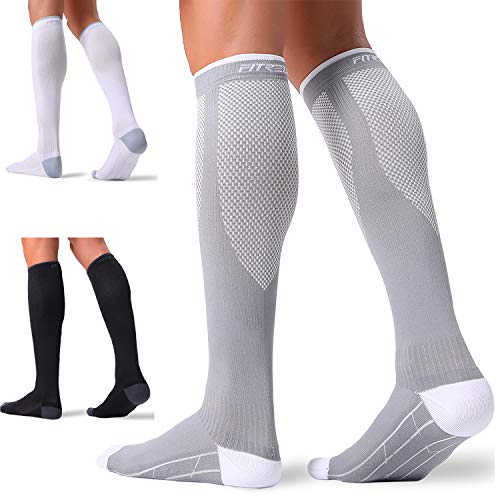
They increase your blood circulation, reduce the risk of blood clots and swelling, which after 8+ hours in a seat makes a real difference. Look for 20-30 mmHg compression socks for the best results.
9. Dress in comfortable, adjustable layers
We're normally not the type to wear loungewear in public. But on long-haul flights, comfort wins over style every time.
Cabin temperatures are unpredictable. One minute you're freezing, the next you're overheating.
Loose, comfortable clothing with zippered layers is the way to go. Zippers let you adjust without the awkward struggle of pulling something over your head in a cramped seat.
Viola learned the price of wearing a pair of initially comfortable jeans on a flight to Seoul. By hour seven, it was tight and very uncomfortable… and she was miserable. Neither of us has made that mistake since.
We also love our zipper hoodies with a couple of pockets and a large enough hood we can pull over our eyes. It add a surprising amount of felt privacy when we’re trying to sleep.
10. Avoid alcohol, sodium, and fizzy drinks
Knowing how to survive long flights is partly about what you DON’T consume. Free alcohol on your long-haul journey is tempting, but it dehydrates you faster than almost anything else and makes jet lag noticeably worse.
The same goes for salty food and carbonated drinks. The lower altitude pressure already causes bloating, and sodium and fizz don’t help.

We're not saying skip the overpriced airport fries entirely (sometimes we too need them for emotional support), but going overboard will catch up with you mid-flight.
Caffeine is worth thinking about strategically, too. If it's nighttime at your destination when you board, skip the coffee. It'll work against everything you're trying to do with adjusting your body clock.
11. Prepare your own entertainment in advance
Think about what you actually want to do on a long flight BEFORE you board. A few hours of films, sure. But staring at a screen for 13 hours straight will leave your eyes aching by the time you land.
We usually mix it up. We download a series or two from Netflix or Apple TV to our tablets, but we also load up a few audiobooks and playlists for when we want to switch off.


If you're travelling as a couple, the AirFly adapter is worth its money. It lets us connect both of our headphones to the same device. That way we can watch our favourite series together without having to share one pair of headphones.
Prefer using your phone to watch a movie? We really like this phone holder clip on Amazon that clips onto your tray table (and it’s the perfect gadget for short-haul flights as well!). 👇

Whatever you bring, pack a portable charger too, as it’s likely your devices will need some extra juice during your long-haul flight.
Aeroplane outlets are unreliable at best, and it's one of the essentials we never leave home without for exactly that reason.
12. Pack plenty of backup snacks
One of our favourite travel hacks for long flights in economy is bringing your own (healthy) snacks.
Meal service comes at set times, and the snacks you can buy on board are usually just sweets and crisps. Neither will keep you full for long, and neither will do your body any favours on a long flight.
Your body is already under stress from the cabin pressure, the dry air, and sitting still for hours. What you eat during that time actually does matter.
Snacks with decent nutritional value, like dried fruit, banana chips, nuts, or granola bars, give you sustained energy and are much easier on your stomach than processed alternatives.
13. Optimise your support with pillows
A commonly known tip for long flights is to bring your own neck pillow and repurpose the airline pillow.
We use a memory foam travel pillow to keep our heads from flopping around while sleeping upright, and put the airline one behind our lower back for lumbar support. 👇

14. Prioritise hydration and bring a reusable bottle
Cabin air is incredibly dry, which means your body loses moisture much faster than normal. So you’ll need to drink a lot more, and relying on those tiny plastic cups the crew hand out means you'll dehydrate before you hit cruising altitude.
We always bring a reusable bottle and fill it up right after passing through security. When the crew comes around, we ask them to fill the whole bottle instead of accepting a cup. Most are happy to do it.

Honestly, a reusable bottle is one of the best travel investments full stop… not just for flights.
15. Eat light, wholesome foods before boarding
If you're wondering how to make a long flight more comfortable, it starts before you board. High altitude is already tough on your digestive system, so a heavy, greasy airport meal at the terminal right before take-off won’t play in your favour.
We stick to lighter options like salads, fruit, soups, or simple sandwiches. And we eat things we know our stomachs can handle. A long-haul flight is not the time to experiment with that sketchy airport sushi.
Also, if you normally take vitamins or probiotics, bring them in your carry-on. Missing your usual routine on top of everything else doesn't help.
16. Swap your shoes for slippers on board
Did you know that your feet swell during long flights? And being stuck in tight shoes for hours gets uncomfortable real fast. So, we always pack a pair of slippers and swap into them once we're on board.
Changing your sitting position regularly is important on a long flight, and slippers make that much easier.

The idea isn’t exactly revolutionary, but we became slipper converts after a trip to Tokyo. It's standard for Japanese hotels to provide slippers, and after wearing different pairs across every hotel we stayed in, we were sold.
We picked up our own pair of super-comfy travel slippers on the way home from Japan. Luckily, you don't have to fly to Tokyo to find good ones though. 👇

17. Assemble a custom toiletries kit
Nothing makes you feel more human again than brushing your teeth and freshening up after a long international economy flight.
We keep a small toiletries bag in our hand luggage in the overhead bins, which includes a toothbrush, toothpaste, deodorant, lip balm, moisturiser, and a few body wipes. That's it.
Go for biodegradable single-use wipe packets rather than a big pack. They don't dry out as quickly, and you're not carrying around half-used wipes for the rest of the trip.
18. Pack a fresh change of clothes in your carry-on
It's amazing what a clean T-shirt can do for your mental state after 16 hours on a plane. That’s why we always have a change of clothes in our carry-on, not our checked bag.

If you've got a long layover, changing into something fresh halfway through the journey feels like a proper reset. Even if you don't, having clean clothes ready when you land makes those first few hours in a new city so much better.
The rest of your clothes are almost certainly in your checked bag.
Ready to make your next long-haul bearable?
With the right preparation, economy seats on international flights don't have to be the ordeal most people dread. We know because we used to skip half of these things.
Some of these tips and tricks took us years to figure out. A few came from other travellers, one came from a flight attendant somewhere over the Indian Ocean, and some we just learned the uncomfortable way.
Wherever you're heading next:
Safe travels. You've got this.
Save this post for later:
Travel smarter with our city travel tips
✈️ Flight & travel planning
🧳 Packing & essentials
💡 Other travel tips & hacks