
3 Days in Singapore Itinerary: What to See and Do in 2026
This post may contain affiliate links, including from Amazon and other trusted partners. If you click a link and make a purchase, we may earn a small commission at no extra cost to you. That said, we only recommend products and services we genuinely use and love. Learn more in our Privacy Policy page.


Planning to spend 3 days in Singapore and wondering what to do? Here’s our 3-day Singapore itinerary to help you make the most of your trip.

Three days in Singapore sounds like plenty, but once you start listing everything you want to eat, see and do in 72 hours, it fills up fast. From Gardens by the Bay to chilli crab and Chinatown, the time goes quickly.
Singapore is one of our favourite cities in Asia. It’s clean, efficient and incredibly easy to get around, especially if you speak English. Over the years, we’ve spent more than three months exploring the city.
This itinerary reflects the best way to spend three days here. It’s been tried and tested not just by us but also by friends, co-workers and readers who’ve followed it and come back raving. It’s a mix of popular attractions and offbeat favourites, with a balance of culture, green spaces, skyline views and street food worth queueing for.
In this post, you’ll find a 3-day itinerary broken down day by day with the spots and attractions that are actually worth it, where to eat and what to try, plus practical tips for your first visit to Singapore.
Short on time?
Here’s your quick-start guide to our 3-day Singapore itinerary:
 Itinerary at a glance: Over 3 days, you’ll cover major highlights like:
 Essentials to Book Ahead: To skip the queues, we recommend booking tickets in advance for the following attractions:
 Getting Around: Singapore is easy to explore on foot and by public transport. Grab a NETS or EZ-Link card for MRT and buses, or use the Grab app for short rides (the “Uber of South East Asia”).
 What to Eat: If you only have time (or stomach space!) for three iconic dishes in Singapore, prioritise chilli crab, laksa, and chicken rice.
 Where to Stay: We enjoyed staying at Holiday Inn Express Clarke Quay (view on Booking.com / Agoda) and lyf Funan Singapore (view on Booking.com / Agoda). For more details, have a look here.
What to Do in Singapore for 3 Days
Singapore packs a lot into a small space, so we recommend giving yourself at least three days to take it all in. It’s enough time to cover the big sights without feeling rushed, while still leaving room for a few personal favourites along the way.
This itinerary includes a mix of iconic landmarks, cultural districts, green spaces and a look at the city’s history, both old and new. We’ve planned each day in a walkable, logical order so you can make the most of your time without criss-crossing the map.
Trip Overview
3-day itinerary
Here’s the overview of our 3-day Singapore itinerary:
Day 1 – Big Sights and Skyline Views
Breakfast
Start your day the Singaporean way with a delightful serving of Kaya Toast near your accommodation. This delicious treat consists of crispy toast spread with sweet coconut jam known as Kaya. Pair it with soft-boiled eggs and a coffee, and you’re in for a delightful, Singaporean breakfast experience.
Our top tip: We recommend Ya Kun Kaya Toast or Toast Box for your Kaya Toast. They have branches throughout the city.
Morning: Gardens by the Bay
After breakfast, make your way to Gardens by the Bay. Whether you’re staying nearby or taking the MRT (the closest stations are Bayfront and Gardens by the Bay), this is the perfect place to kick off your three days in Singapore.
In our opinion, Gardens by the Bay is one of the most impressive urban gardens anywhere in the world.


Did you know? The gardens are built on reclaimed land, which means the area was once part of the sea. Through large-scale reclamation, it was transformed into the lush, green space you see today.
There are over 1.5 million plants here, and while you could spend a whole day exploring, we recommend focusing on two highlights: the Cloud Forest and the Supertree Grove. The park itself is free to enter, but these attractions require a ticket – and they’re absolutely worth it.
Gardens by the Bay Highlight #1: Cloud Forest
The Cloud Forest is an indoor botanical garden housed in a striking glass dome. Its standout feature is a 35-metre (115-foot) tall waterfall, one of the tallest indoor waterfalls in the world.
Elevated walkways guide you through different ecological zones, with misty views and dense greenery all around.

Our top tip: Try to visit early, as the Cloud Forest is one of Singapore’s most popular attractions and tends to get busy later in the day. Booking your tickets online ahead of time will save you queuing at the entrance. Klook often has them slightly discounted, so it’s worth having a look there first.
Gardens by the Bay Highlight #2: Supertree Grove
Head over to the Supertree Grove, one of Singapore’s most recognisable landmarks. Here, 12 of the Garden’s 18 towering structures reach up to 50 metres (164 feet) tall. That’s about the height of a 16-storey building.
These futuristic trees are impressive to look at, and they’re covered in over 160,000 plants.

You can stroll around at ground level or buy a ticket for the OCBC Skyway, an elevated walkway that links two of the Supertrees. It only takes a few minutes to walk across, and while the view is nice, we don’t think it’s worth the money. The Supertrees look just as impressive from below, so if you’re watching your budget, it’s an easy one to skip.
Lunch
By this point, you’ll probably be ready for a break. One easy option is Satay by the Bay, an open-air food court right inside Gardens by the Bay. It’s casual, convenient and great for a quick local bite.
If you’d rather cool off in air-con, head over to The Shoppes at Marina Bay Sands. In the basement, you’ll find Rasapura Masters, a food court offering a wide range of dishes from across Asia (and one of our favourite places for lunch in the area!). It’s in a fancy setting, but the prices are surprisingly reasonable.
Afternoon: Sands SkyPark Observation Deck & Marina Bay
Sands SkyPark Observation Deck
Make your way up to the SkyPark on the 57th floor of Marina Bay Sands, one of Singapore’s most iconic buildings. The observation deck offers stunning panoramic views of Singapore’s skyline, including the Marina Bay area, Gardens by the Bay, and Singapore’s Business District.
It’s a brilliant spot to take a few photos or simply enjoy the skyline from above.

Did you know? Marina Bay Sands is home to the world’s largest rooftop infinity pool, but it’s only accessible to hotel guests.
Marina Bay
Marina Bay really is one of those places you’ll keep hearing about if you’re spending any time in Singapore. It’s the heart of the city’s sleek transformation and has a bit of everything you’d want if you’re in town for a few days.
Start off at Marina Bay Sands. Once you’ve taken in that skyline (and maybe popped up to the observation deck), head over the Helix Bridge. It’s designed to look like a strand of DNA, and while we’re not architects, it’s pretty impressive to walk across.

From there, make your way to the Merlion Park. Yes, that Merlion! It’s probably the most photographed thing in Singapore and, to be fair, it does feel quite iconic once you’re standing next to it. Half lion, half fish, it’s the city’s mascot and ties back to Singapore’s past as a fishing village and the legend of the ‘lion city’.
Now, before you reach the Merlion, there’s the Esplanade right along the way. Locals call it The Durian, which makes total sense once you spot those spiky domes. Inside, there’s a full line-up of live performances, many of them free, from artists around the world. It’s worth checking out what’s on while you’re nearby.

Our top tip: Durian is one of those things that divides people, but if you’re up for trying something new, Singapore is the place to do it. The smell can be quite strong, but if you’re curious, go for it! It’s definitely one to tick off your list in Singapore.
Evening: Lights, Music and Riverside Views
Singapore by day is striking, but once the sun sets, the city really knows how to put on a show. If you’re still full of energy in the evening, there are a couple of brilliant things you can do that won’t cost you a thing.
Free Light Shows
One of the best things you can do at night is visit one of Singapore’s light shows. Here are the two light shows we recommend:

Clarke Quay
After that, keep things going with a walk along the river. Clarke Quay is about a 20-minute walk from Marina Bay, and the riverside views are worth it.
Clarke Quay itself has quite the atmosphere once it gets dark. What used to be a trading port is now full of colour, noise and energy.
There are loads of restaurants and bars to pick from, so it’s a great spot for dinner, especially if you fancy something with a bit of buzz. With live music and DJs most nights, it can get lively, but even if that’s not your thing, it’s still a fun place to stroll around.

Our top tip: If you fancy seeing the city lights from the water, a Singapore River Cruise in the evening is a great shout. It’s a different way to see the skyline and the bridges lit up, and it’s usually cheaper if you book in advance.
Day 2 – Culture, Street Art, and Seriously Good Food
Singapore’s mix of cultures is part of what makes it such an exciting place to explore. Most people here have Chinese, Malay or Indian roots, and that diversity runs through everything – from the architecture to the food.
So on your second day, it’s all about hopping between some of the city’s most vibrant neighbourhoods: Kampong Glam, Little India and Chinatown. Expect colourful streets, historic buildings, and some properly good food. Oh, and we’ll round things off with a classic Singapore Sling at Raffles.
Morning: Kampong Glam and Little India
Kampong Glam
Start your day in Kampong Glam (sometimes spelled “Campong Gelam”), which once served as the royal seat of the Sultan of Singapore and is still full of heritage. It’s one of the best places to learn about the city’s Malay and Arab roots.
But these days it’s also known for its creative edge, with indie shops, bold murals and a good dose of personality.

Make a stop at Sultan Mosque first. With its golden domes and grand structure, it’s hard to miss and plays a huge role in the area’s identity. It’s one of Singapore’s most important religious landmarks and makes a stunning backdrop for a few early morning photos.
Just around the corner is Haji Lane, a narrow little street full of colourful shopfronts, cafes and street art. Next to that, Arab Street brings in a more traditional vibe, with textiles, rugs and Middle Eastern eateries spilling out into the lanes. It’s a great area to explore slowly, especially if you’re into finding unique souvenirs or places to sit down with a coffee.

Little India
Next up is Little India, where everything seems to burst with colour, energy and the scent of spices in the air. It’s one of the most vibrant parts of Singapore and gives you a real sense of the city’s Indian heritage.
Start with a visit to Sri Veeramakaliamman Temple. This Hindu temple is dedicated to Goddess Kali, a powerful figure known for both her fierce and protective nature.
The temple’s exterior is covered in brightly coloured statues, each more detailed than the last. It’s easily one of the most striking temples in the area.

Then make your way to Tan Teng Niah’s house. It’s one of the few remaining Chinese villas in Little India and it really stands out with its rainbow-painted woodwork and quirky design.
Built by a Chinese businessman in the early 1900s, it’s a mix of Chinese and European influences and now probably one of the most photographed buildings in the area.

If you’re up for something a bit different, pop into Mustafa Centre. It’s open 24/7 and sells pretty much everything you can think of. One of our friends once called it a “shop on steroids” (and honestly, that’s not far off!). It’s chaotic, fascinating and nothing like your usual shopping experience.
Afternoon: Chinatown
Chinatown is one of those places that always feels full of life. Traditional shophouses line the streets, red lanterns hang overhead, and stalls are packed with everything from herbal remedies to handmade trinkets and souvenirs.
Start with the Buddha Tooth Relic Temple. It’s a grand four-storey building inspired by Tang Dynasty architecture and is said to hold a tooth relic of the Buddha.
The temple is open to visitors, and we’d recommend stepping inside to see the prayer halls and rooftop garden. It’s a peaceful spot in the middle of all the activity.

Just down the road is Sri Mariamman Temple, the oldest Hindu temple in Singapore. Built in 1827, it’s known for its vibrant facade covered in detailed sculptures of Hindu gods. It really stands out against the more subdued tones of the shophouses nearby.
You should also stop by Thian Hock Keng Temple, the oldest Chinese temple in the city. It dates back to 1839 and was once a key place of worship for Chinese immigrants arriving by sea. Now it’s surrounded by bars and restaurants, but the temple itself is a quiet space filled with beautiful carvings and traditional detail.
Evening: Culinary Delights
After a full day of exploring, it’s time to eat… and there’s no better place to do that than one of Singapore’s famous hawker centres (i.e. outdoor food courts).
Maxwell Food Centre
Right across the road from the Buddha Tooth Relic Temple is Maxwell Food Centre. It’s open from 11am to 11pm, but we reckon it’s especially good in the evening when the air cools down and the food stalls get busy.

It’s known across the city for Hainanese Chicken Rice, and it’s where locals go for a proper plate. Tian Tian Chicken Rice usually draws the longest queue, but most stalls here are excellent. It’s casual, affordable and seriously tasty.
Singapore Sling at Raffles Hotel
If you’ve still got some energy left (and room for a cocktail), end your night with a classic Singapore Sling at Raffles Hotel.
The drink was first mixed here in the early 1900s, and while the recipe is still a bit of a secret, the mix of gin, cherry brandy and tropical fruit juices gives it a sweet kick. It’s served at the Long Bar, which has kept its colonial-era charm, complete with wicker fans and peanut shells on the floor.

We had ours for S$37 (≈ £21 or €24 or US$28), which definitely makes it a treat, but one that comes with plenty of history. Over the years, Raffles has hosted everyone from writers to royals, and sipping a Singapore Sling in the bar where it all began feels like a small nod to that.
Our top tip: Even if you’re not up for a cocktail, it’s worth visiting Raffles just to have a look around. Built in 1887, the hotel is full of charm and you don’t need to be a guest to walk through and take it all in.
Day 3 – Lush Nature & A Stylish Send-Off
It’s your final day, but there’s still plenty to seem, starting with a proper stretch of the legs through some of Singapore’s greenest spaces. After that, we’ll give you a few options for something cultural or a bit of shopping, before finishing at Jewel Changi for a rather grand airport send-off.
Morning: Southern Ridges Nature Trail
After breakfast, head to the Southern Ridges for a bit of fresh air. This elevated trail connects several of Singapore’s parks and green spaces, offering a completely different view of the city. The full walk runs for around 10 kilometres (6.2 miles), but you don’t need to do the whole thing to enjoy it.

Here are the two highlights you shouldn’t miss:
- The Forest Walk (pictured above) sits 25 metres (82 feet) above ground and leads you through the treetops with open views across the city and parkland. It’s peaceful and a real contrast to the bustle of the last couple of days.
- Henderson Waves is a beautifully designed pedestrian bridge that flows in gentle curves and rises 36 metres (118 feet) above the ground.

Our top tip: Bring water and wear proper shoes. The trail includes some steep sections, and with Singapore’s heat, sunscreen is essential if you’re heading out late morning.
Afternoon: Museums or Retail Therapy
Your final afternoon in Singapore is the perfect time to explore a bit more culture or take it easy with some shopping. We’ve done both, so here are a few ideas depending on what you’re in the mood for.
Museums We Love
Singapore has plenty of excellent museums. Here are our top three picks:

Prefer to Shop?
If museums aren’t really your thing, head to Orchard Road. It’s Singapore’s shopping hotspot, lined with huge malls and air-conditioned arcades. It’s easy to spend a couple of hours browsing the shops here before heading to the airport.
Evening: Jewel Changi Airport’s Farewell
If you’ve got a flight out tonight, we’d suggest getting to the airport earlier than usual. Not because of long queues, but because Changi Airport is genuinely worth spending time in. It was just voted the best airport in the world again, and after visiting, you’ll totally get why.
The star of the show is the Rain Vortex, the world’s tallest indoor waterfall. When the light comes through the glass dome, it feels like you’re in a garden rather than an airport terminal.
Our top tip: Plan to eat at Jewel Changi Airport. Whether you’re after something quick or want a proper sit-down meal, there’s plenty of choice before you fly!

There’s loads to see and do across Jewel’s levels, from shopping and restaurants to free movie screenings, spa treatments, and even a butterfly garden. You’ll also find massage chairs, a swimming pool and quiet corners to relax in if you’ve had a long day.
Most of it doesn’t cost a thing to enjoy, which is always a bonus. There are a few ticketed areas like the Canopy Park and Hedge Maze, but to be honest, we didn’t think they were worth the extra spend.
Where & What to Eat
Singapore is one of the best food cities in the world, and eating your way through it is part of the fun. In this section, we’ll walk you through some of the most popular local dishes and share our favourite spots to try them.
Popular Local Food to Try
Singapore is a foodie’s dream, and these are the dishes you’ll want to look out for:
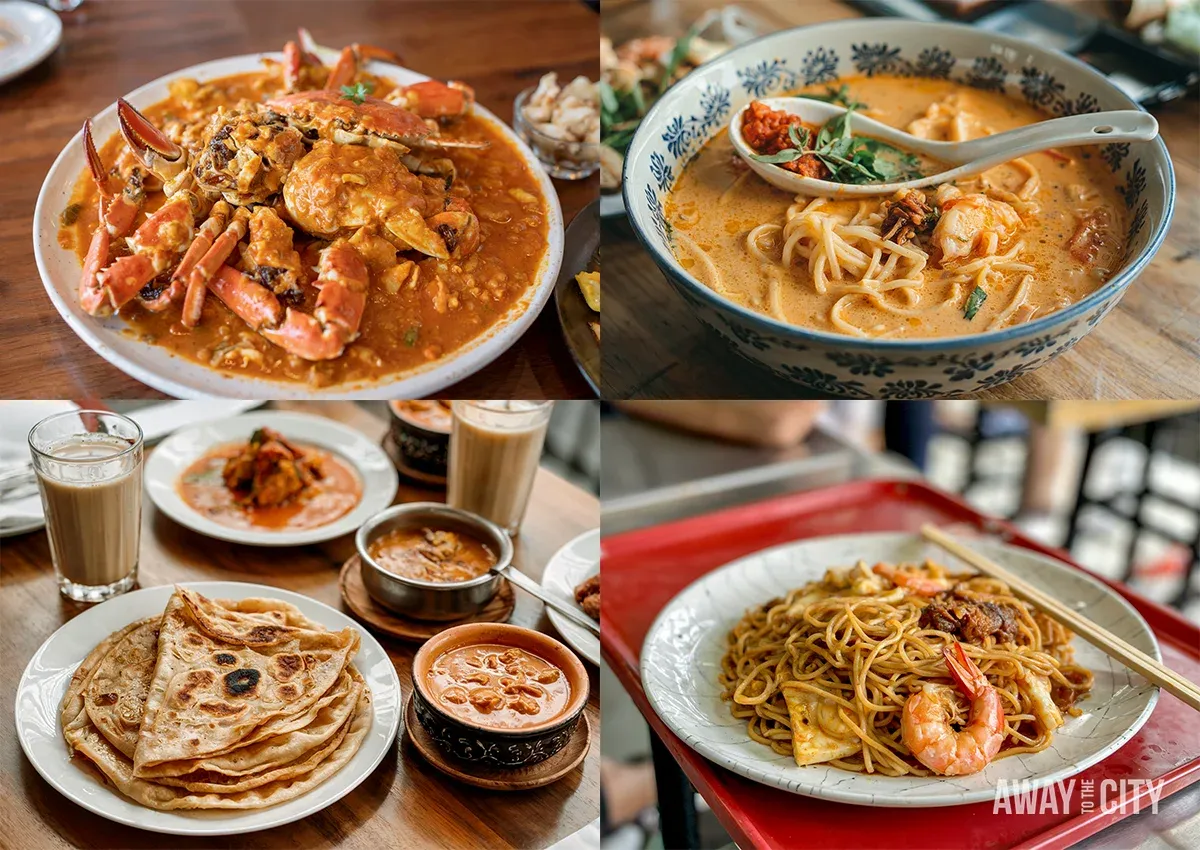
Our Favourite Spots to Eat
Here’s where we head when we’re hungry in Singapore. It’s a mix of street food stalls and casual restaurants, with something for every budget.

Singapore Travel Tips for First-Time Visitors
Heading to Singapore for the first time? Here are some useful tips to help you make the most of your trip:
- Get a rechargeable travel card: Public transport in Singapore is clean, efficient and affordable. When you land, grab a NETS card or EZ-Link card for pay-as-you-go travel on MRT trains and buses. If you plan to take a lot of public transport, the Singapore Tourist Pass gives you unlimited rides for 1, 2 or 3 days.
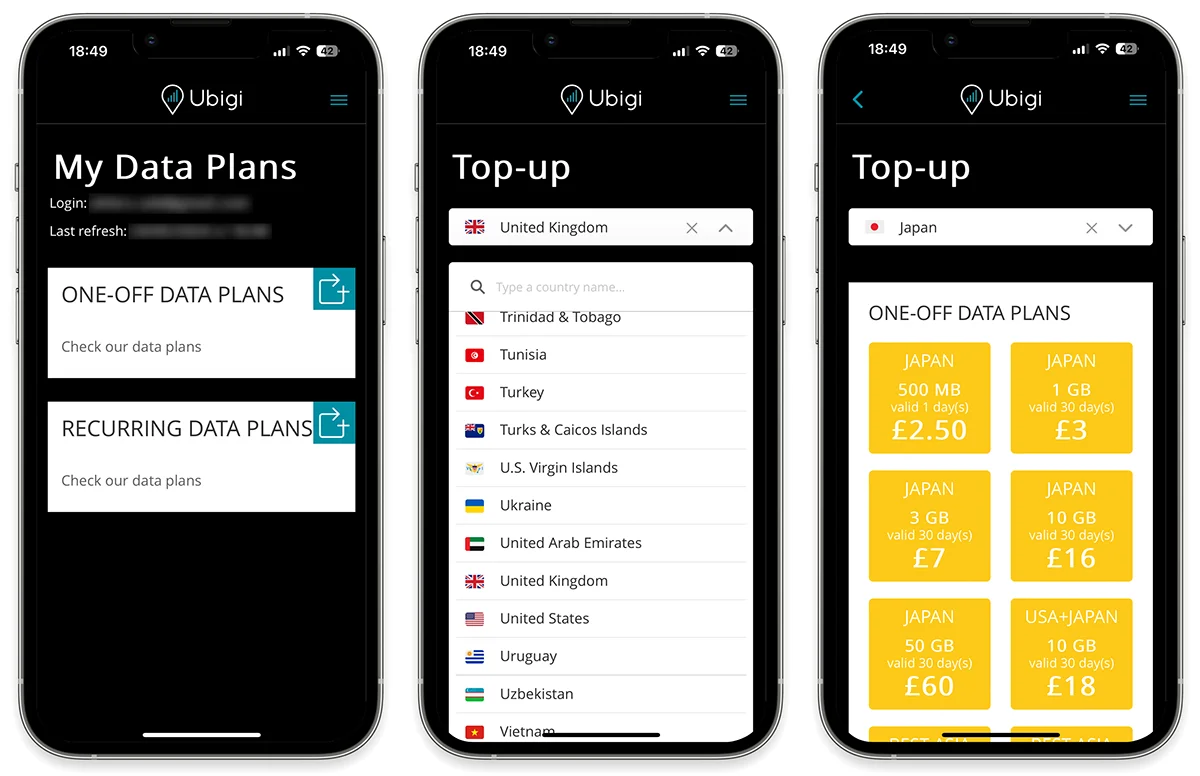
- Go eSIM: Skip the hassle of buying a physical SIM card and get an eSIM for mobile data during your trip. It’s quick to activate and means you can stay connected without swapping out your SIM. Our go-to is Ubigi. We’ve used it in Singapore and had a great experience. You can read our Ubigi eSIM review here.
- Use Google Maps or Citymapper for getting around: Both apps work well in Singapore and will show you how to get from A to B using trains, buses or a mix of both.
- Use cash or card (both are fine): Most places accept contactless payments, but keep a bit of cash on hand for hawker centres or small shops. During our three months in Singapore, we used cash fewer than five times. ATMs are easy to find and work without any issues.
- Dress for heat and humidity: It’s hot and humid year-round, with average humidity between 70% and 90%. Lightweight clothing, sunscreen and a refillable water bottle are your best friends, especially for outdoor spots like Gardens by the Bay or the Southern Ridges.
- Download the Grab app: Grab is Southeast Asia’s version of Uber (Uber doesn’t operate here) and it’s super handy for getting around when you’re too tired or it’s too hot to walk. With a few taps, you can summon a car, and fares are reasonable for the convenience.

- Consider an attraction pass: If you’re planning to visit several paid attractions, look into passes like the Klook Singapore Pass, the Go City Singapore Pass, or the Sentosa Discovery Pass. They can help you save money, especially if you’ll be spending a lot of time on Sentosa Island.
- Keep it clean: Singapore is famously spotless, and the rules are strict. Littering can lead to fines of up to S$1,000 (≈ £580 or €667 or US$758). Chewing gum isn’t sold or imported either, so pack mints instead. Use the bins, follow the signs, and you’ll be fine.
- Queue patiently: Singaporeans are champion queuers – cutting in line is a huge no-no. Whether you’re waiting for satay or the zoo tram, join the queue and wait your turn.

- Respect “chope” culture: At hawker centres, a packet of tissues or an umbrella on the table means it’s taken. You can do the same – just leave something small (but not valuable) to reserve your seat while you grab your food.
- No tipping needed: There’s no tipping culture in Singapore. Hotels, restaurants and cafés already include a service charge in the bill.
FAQ: Visiting Singapore
Here are the answers to some of the most commonly asked questions about visiting Singapore.
Is it easy to get around in Singapore?
Yes, it’s very easy to get around Singapore. The city has an excellent public transport system, including clean and efficient MRT trains, frequent buses, and easily available taxis. It’s also pedestrian-friendly, with walking and cycling paths that make exploring simple and convenient for visitors.
Are 3 days enough in Singapore?
Yes, 3 days are enough to see Singapore’s main highlights like Marina Bay Sands, Gardens by the Bay, and Kampong Glam. However, if you enjoy slower travel or want to explore local neighbourhoods and cultural spots, staying 4 to 7 days will give you a deeper experience.
With a bit more time, you can add places like Sentosa Island, the Singapore Zoo and Night Safari, or even take a walk around MacRitchie Reservoir. We’d also suggest checking out Haw Par Villa (it’s one of those weird and wonderful spots that’s hard to forget). An extended stay means you’ll get to see more sides of Singapore beyond the main sights.
Is Singapore expensive for tourists?
Yes, Singapore can be expensive, especially for accommodation and dining in central areas. However, you can save money by eating at hawker centres, using public transport, and exploring free attractions. Staying in budget-friendly neighbourhoods also helps make a trip to Singapore more affordable.
What is the best way to tour Singapore?
The best way to tour Singapore depends on your travel style. Use the MRT for fast and affordable transport, or try hop-on-hop-off buses for a scenic overview. Guided tours are great for deeper insights, while walking or themed tours offer flexibility.
Wrap-Up
Singapore is one of those cities that really has it all. From sky-high views and futuristic buildings to peaceful gardens and cultural gems, it’s an easy place to fall in love with. The mix of greenery, heritage and modern convenience makes it a city that’s as relaxing as it is exciting.
We hope this itinerary has given you a clear idea of how to make the most of your three days here.
If you want to swap out a few stops or try something different, check out our full guide on what to do in Singapore for more ideas. We genuinely love this city, and we think you’re going to feel the same.
If you’ve got a bit more time to spare, consider hopping over to Kuala Lumpur. It’s just a 1-hour flight away and packed with iconic sights, great street food and colourful neighbourhoods. Our KL guide has everything you need to plan your visit.
🇸🇬 Plan Your Singapore Trip with Our Guides