
Best European Christmas Markets: Our Top Picks (and 3 We’d Skip)
This post may contain affiliate links, including from Amazon and other trusted partners. If you click a link and make a purchase, we may earn a small commission at no extra cost to you. That said, we only recommend products and services we genuinely use and love. Learn more in our Privacy Policy page.
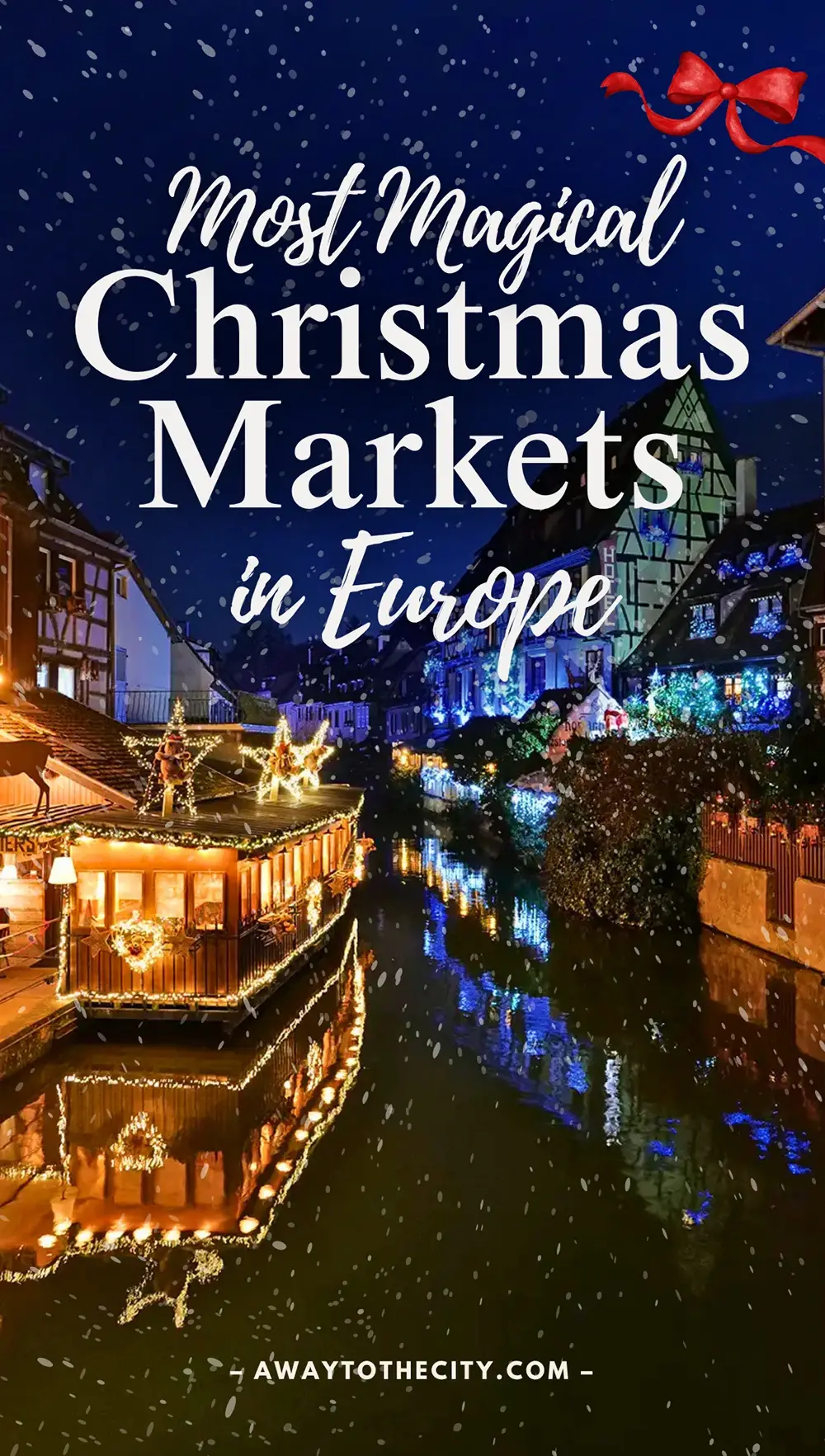
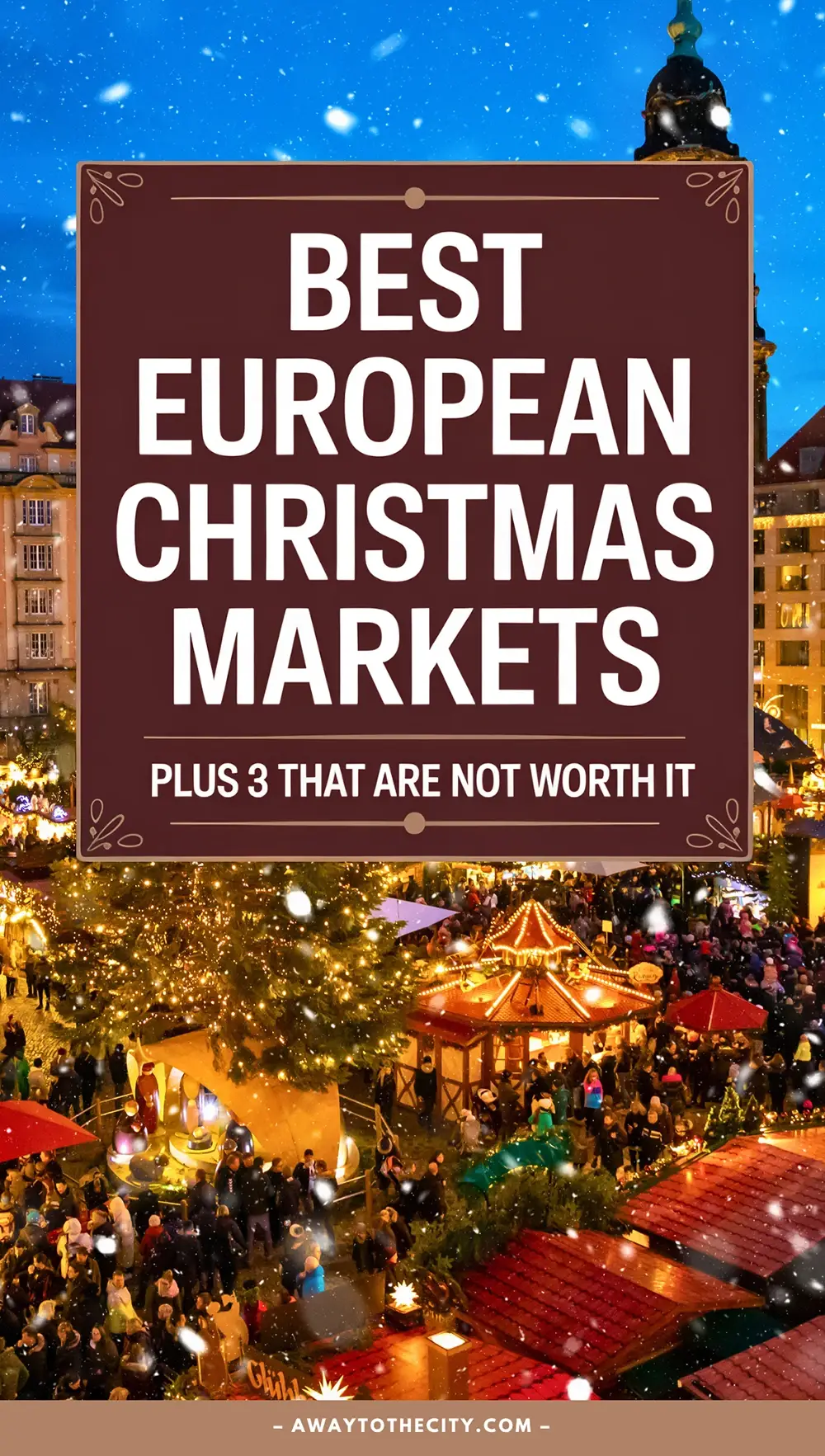
As two Germans, we grew up with Christmas markets. After visiting more than 40 across Europe, we’ve finally found our favourite. It might surprise you. It’s not in Germany, but in France.
For us, the best European Christmas markets come down to four things: a setting that actually feels special, decoration that goes beyond the basics, local food that reflects the region, and an atmosphere that feels genuinely festive rather than commercial.
This post covers the markets we’d recommend to a close friend, chosen for their atmosphere, setting, and that feeling you get when a place is truly committed to Christmas.
Our top pick is Colmar, a small medieval city in the Alsace region. And if you’ve never heard of Esslingen (our second favourite market in Europe), you’re not alone… we hadn’t either before our 2025 Christmas Market trip.
We’ve also included three markets that underwhelmed us, including Cologne, a city we lived in for three years.
Don’t miss these!
Our Top Picks for A European Christmas Market Trip
We’ve visited 40+ Christmas markets across Europe. These are the ones worth booking a trip around.
 Our favourite markets
- Colmar, France – our number one, and the most beautiful Christmas market we’ve ever seen
- Esslingen, Germany – the hidden gem that surprised us most, with a medieval market unlike anything else in Europe
- Strasbourg, France – the “Capital of Christmas”, and it earns the title
 Getting around: Our preferred way to visit multiple Christmas markets is by rental car. This will give you the flexibility to explore at your own pace. But every market on this list is reachable by rail too, and Europe’s train network makes it very easy. You can search train connections here if you’d rather go by train.
Our favourite European Christmas markets
These are the markets we’d book a trip around. Our top three are ranked, and the rest are ones we’d recommend without hesitation.
Our top three
1. Colmar, France
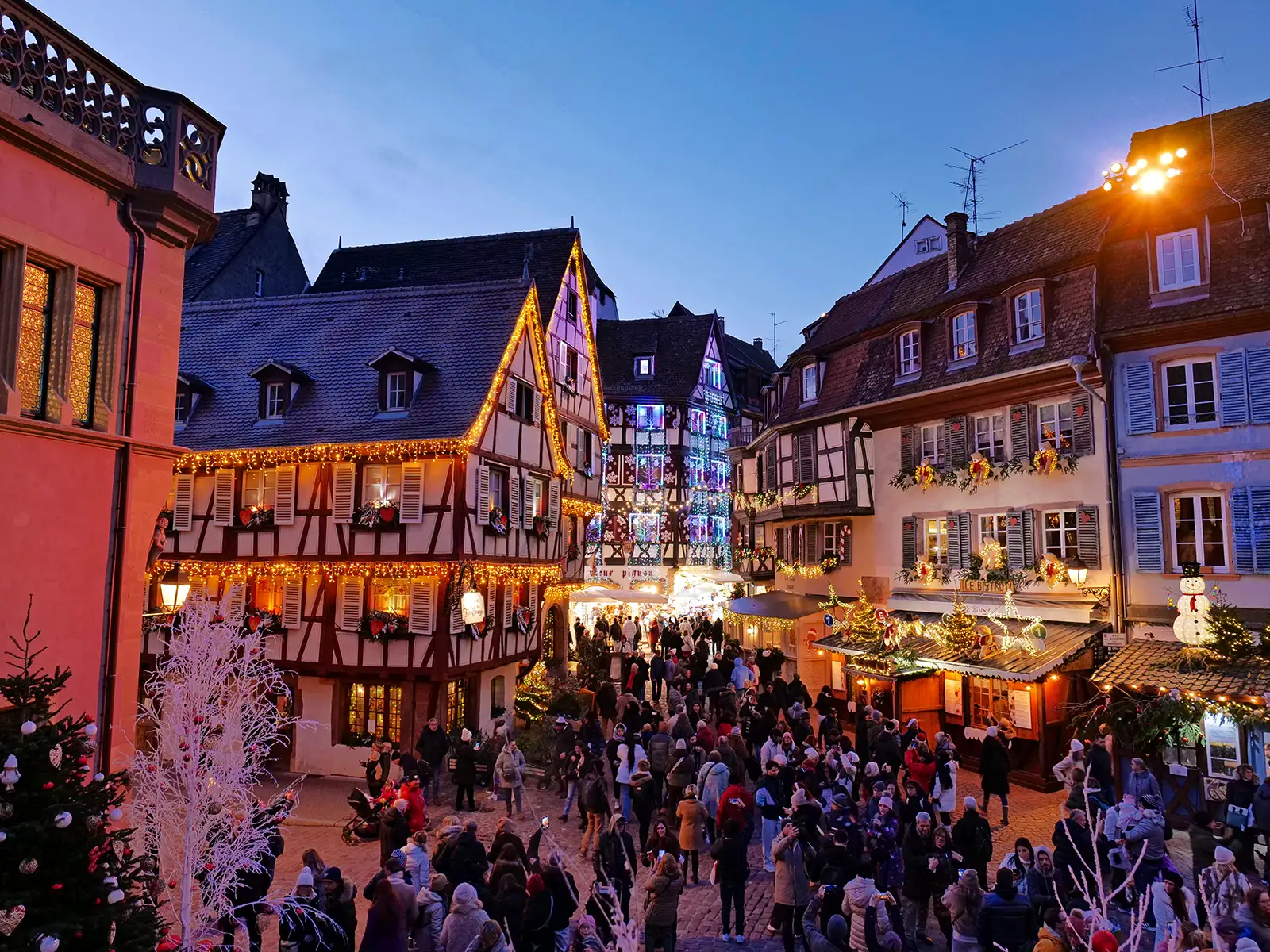
We visited in December 2025 on a two-week Christmas market tour, and Colmar left every other market we’d seen that trip far behind.
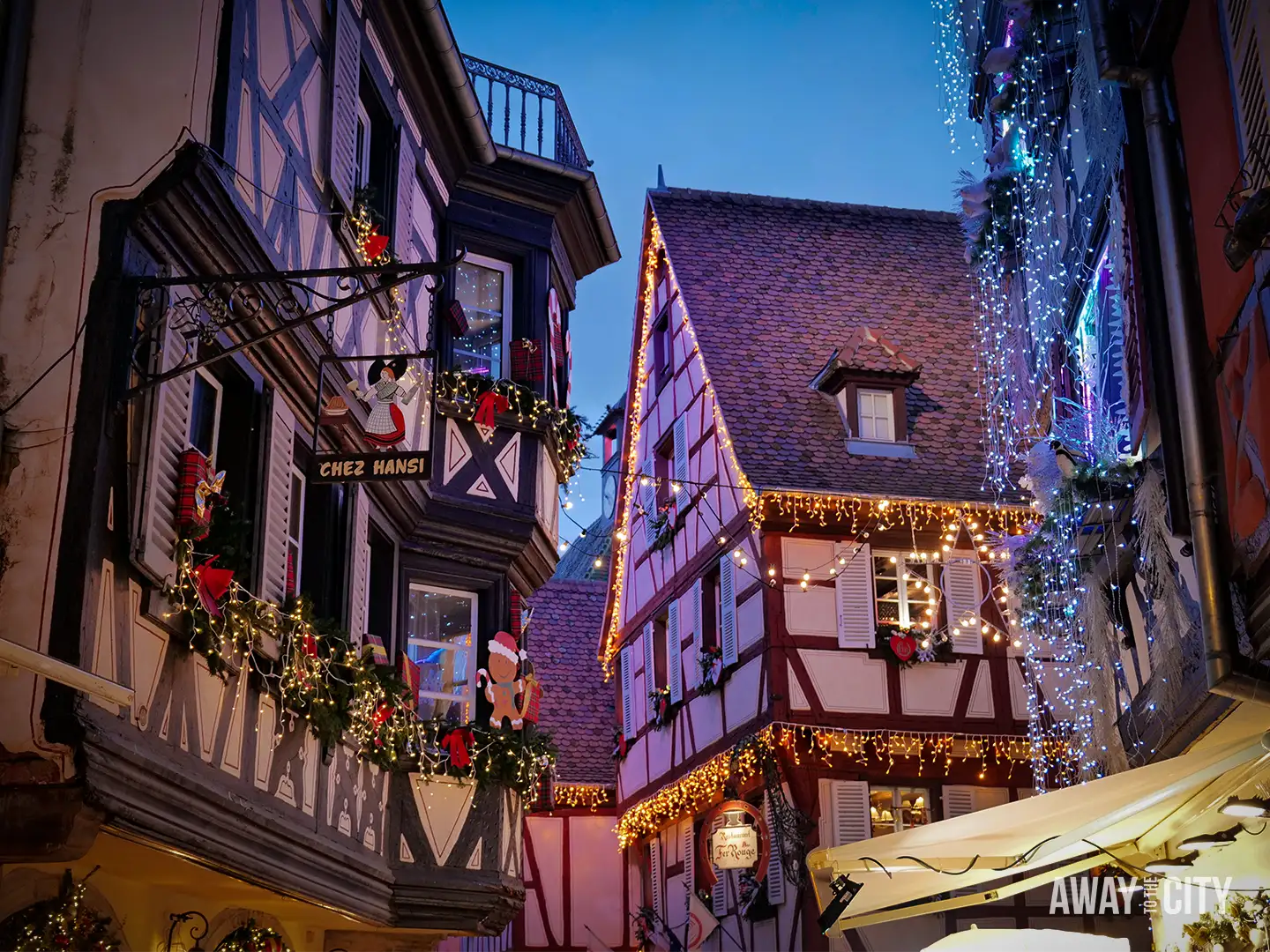
Colmar is a small medieval city in France’s Alsace region, right on the border with Germany. At Christmas, the whole city feels deeply committed to creating something magical, and it shows in every detail.
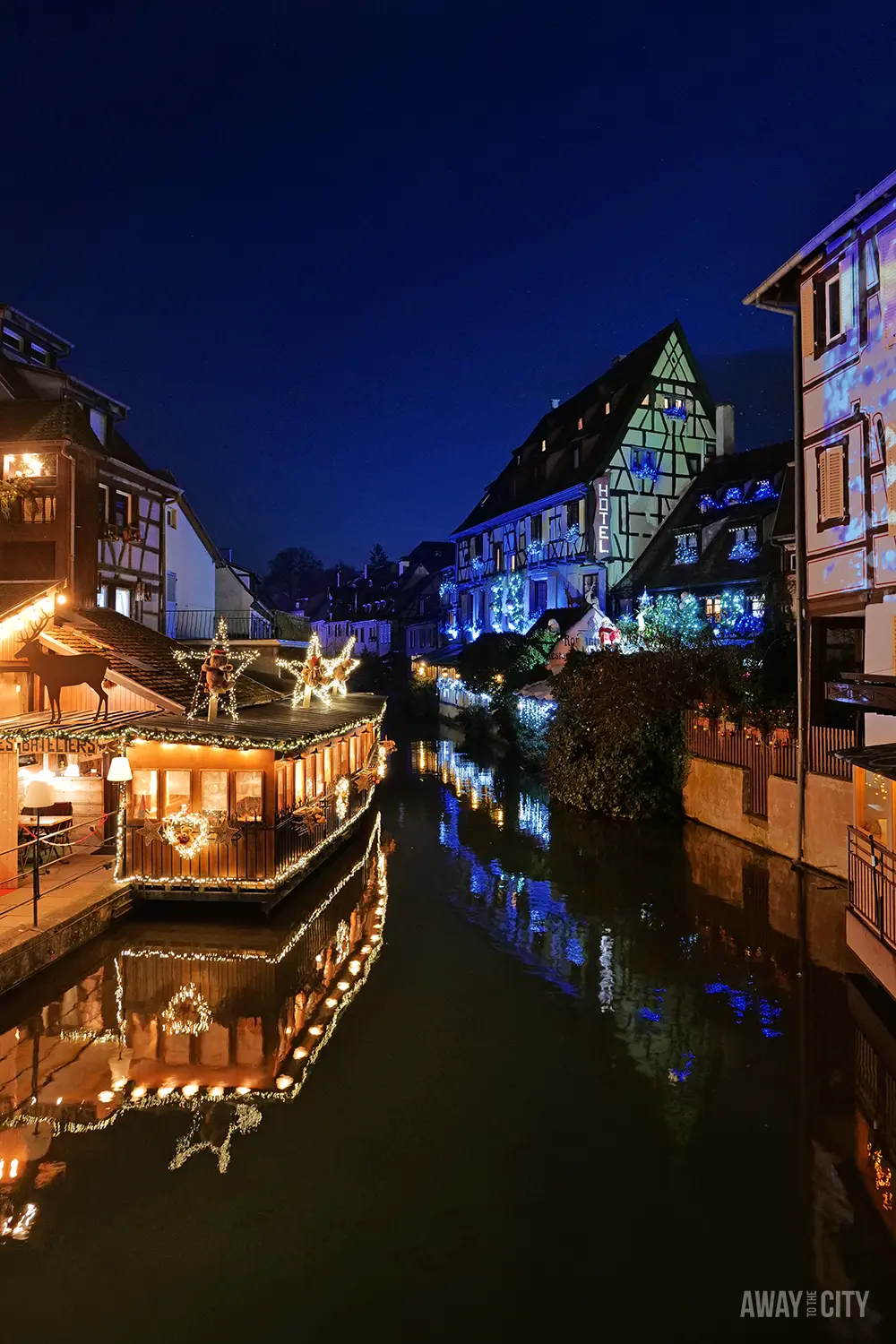
The colourful half-timbered houses are wrapped in fairy lights, the cobblestone streets are decorated from top to bottom, the canals glow, and every single corner offers something worth stopping for.
It’s also said that Colmar inspired the town in Beauty and the Beast, and once you’re walking through it, that’s completely easy to believe. We ran out of camera storage before we ran out of things to see!
There are six smaller markets spread across Colmar’s old town, so you’re constantly weaving through the medieval streets and discovering each one as you go.
It feels far more like exploring a Christmas fairy tale than fighting through a single crowded plaza (though be prepared, because even on a weekday it was packed).
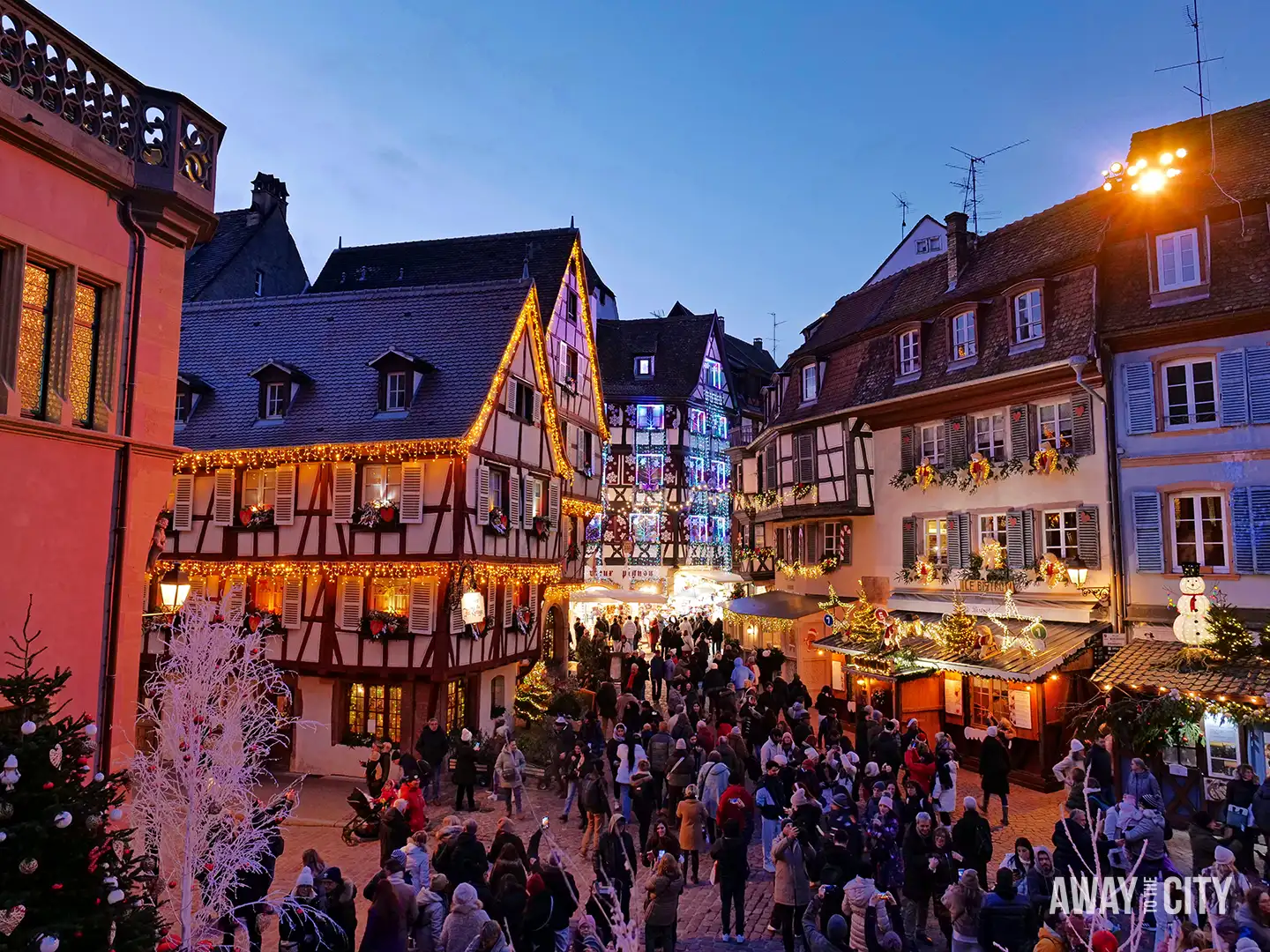
The food is the icing on top. Alsace has its own regional dishes, and eating them here, where they actually come from, is a different experience entirely.
We can proudly say we ate our way through Colmar, and the prices, while not cheap, were noticeably more reasonable than Strasbourg.
Our top tip: Make sure you see Colmar both during the day and after sunset. The lights only come on around 4:45pm, and the whole town transforms when they do.
Colmar is just a 30-minute train ride from Strasbourg, so visiting both on the same trip is very easy to include in your itinerary.
2. Esslingen, Germany
We’d never heard of Esslingen before researching Europe’s best Christmas markets for our 2025 trip, and the reason we added it was simple.
We saw pictures of a medieval-themed Christmas market online and immediately wanted to go.
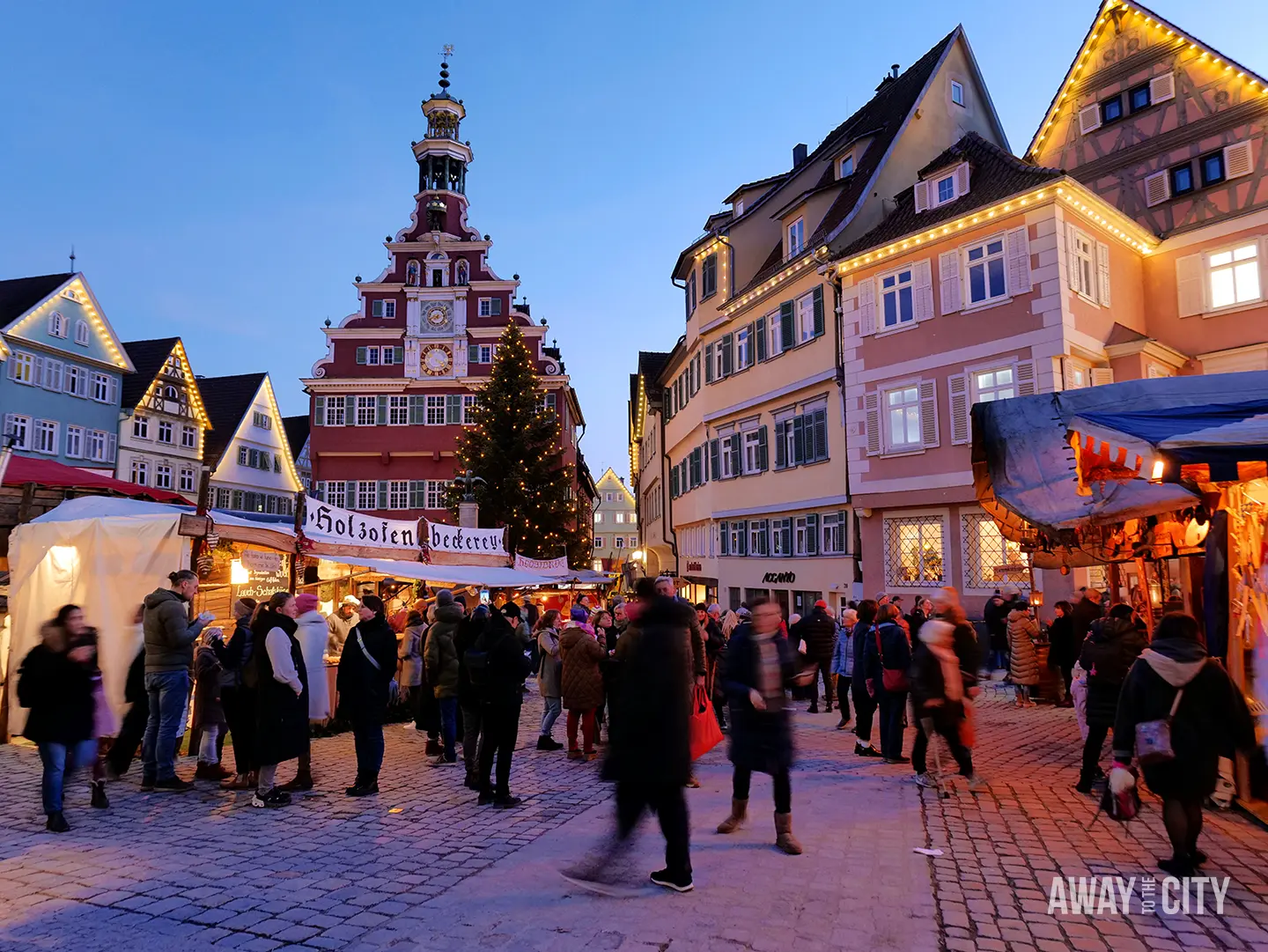
Esslingen is a small medieval city just 20 minutes from Stuttgart (whose Christmas market, for the record, you can skip).
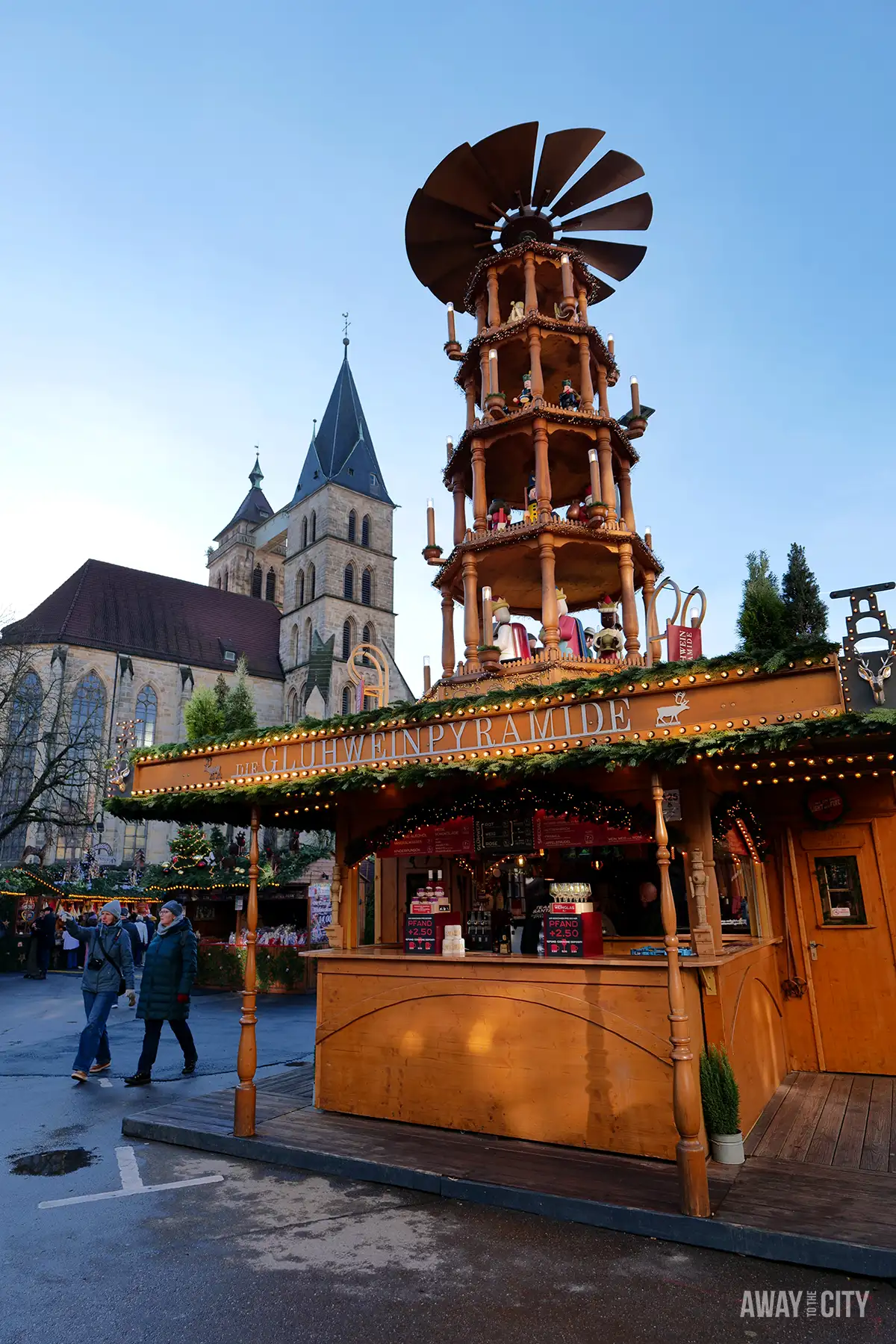
It’s three markets in one: a traditional Christmas market, a Christmas island, and the medieval market. That last one is the reason to come.
The medieval market is unlike anything we’ve seen at any other Christmas market.
The stalls are built to look medieval, every vendor is dressed in costume, and there are live performances including fire breathers and a joke-telling juggler. We completely forgot we were in the modern world walking around there.
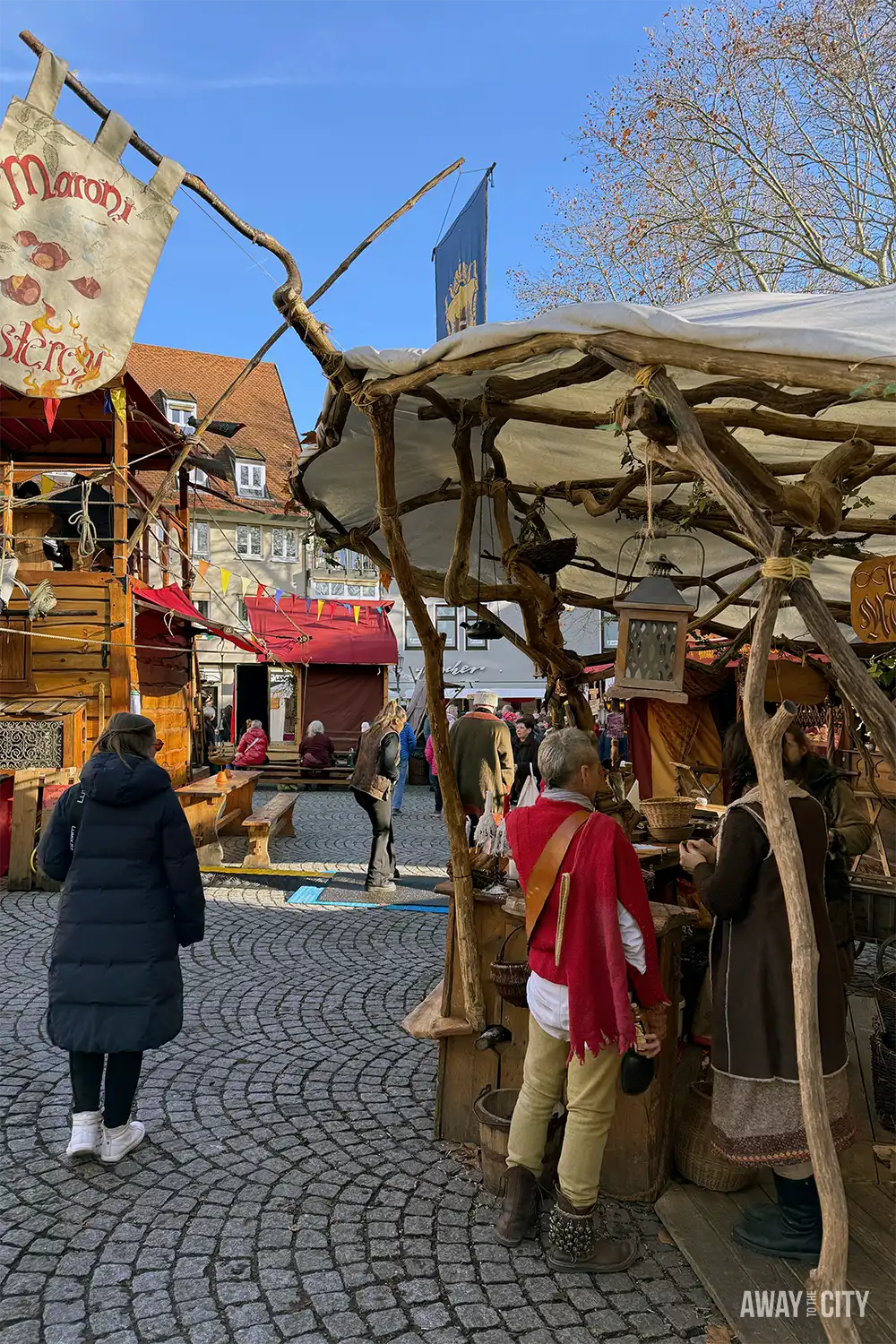
There’s even a small human-operated medieval ferris wheel for children, which somehow felt completely at home next to the fire breathers.
We planned to stay for two hours and ended up there for eight… mulled wine helped, as did the Stockbrot (a stick bread roasted over an open fire, and a childhood memory for both of us growing up in Germany).
One thing we didn’t like was that most signs are in German, which makes it a bit tougher to navigate for international visitors. It won’t ruin the experience, but it’s worth knowing.
3. Strasbourg, France
Strasbourg calls itself the “capitale de Noël” (capital of Christmas)… and after visiting, we’d say that’s completely true!
The old town sits on an island surrounded by water, and you cross bridges over the canals just to get into it. Once you’re inside, the streets are a labyrinth of half-timbered Alsatian houses with medieval architecture around every corner.
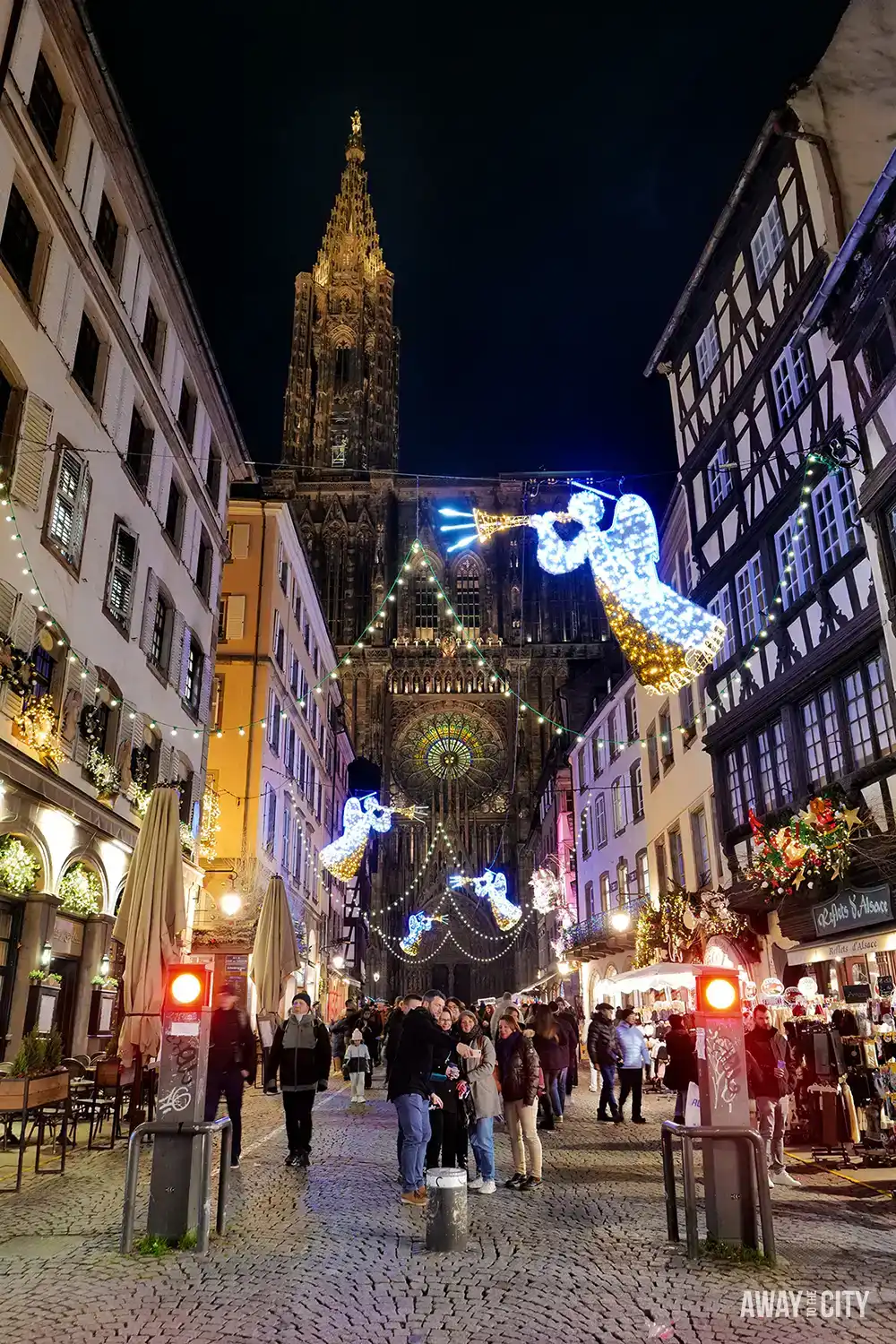
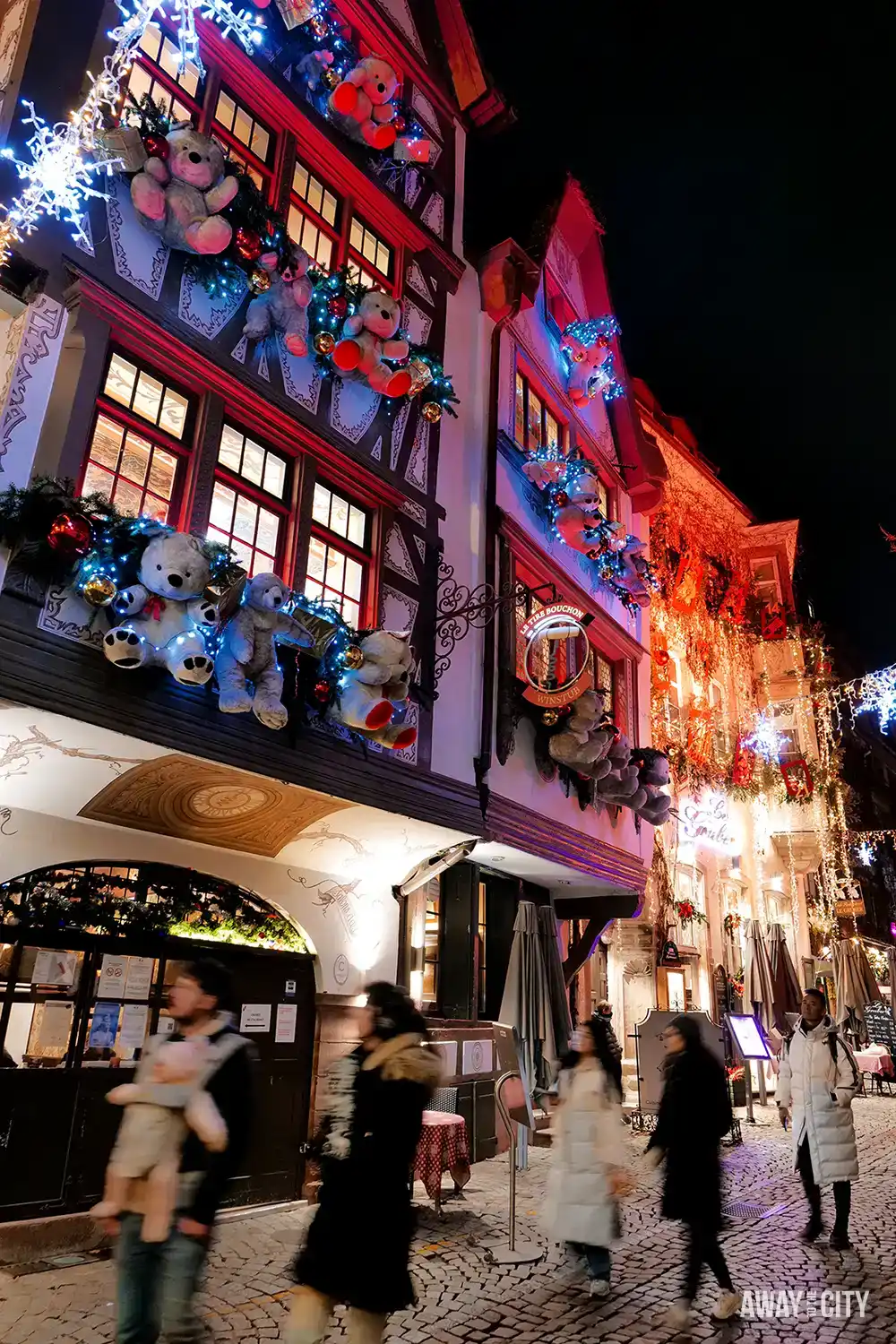
We wandered down streets with no particular destination in mind and kept finding more astonishing houses, new squares, lovely cafes, and new reasons to constantly stop.
We’ve never seen so much Christmas decoration all in one place! Twinkling lights everywhere, on every building, every street. It was beautiful.
The Christmas markets are scattered across several squares throughout the old town, and because they’re so spread out, you could easily miss an entire one without realising it.
We were glad we’d taken a photo of the market map at the entrance so we knew which parts we were still missing.
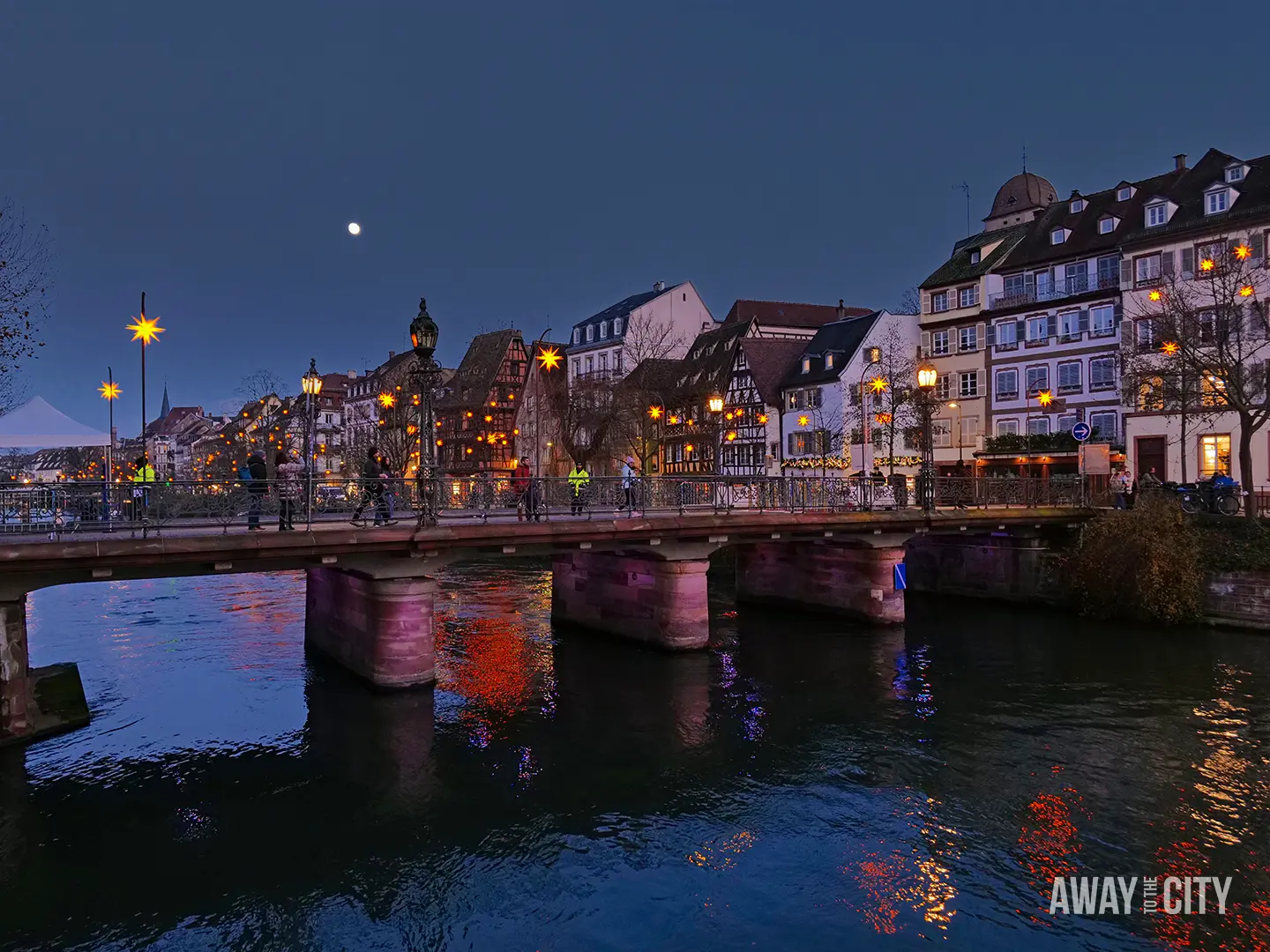
Like Colmar, Strasbourg looks even more beautiful after sunset. Standing by the canal with a vin chaud in hand, with the lit-up buildings reflecting in the water, that’s the image we came home with. The ONLY thing missing on our visit was snow.
Compared to Colmar, Strasbourg is bigger, busier, and a touch more commercial. But its scale, history, and medieval atmosphere make it absolutely worth visiting on its own terms.
Strasbourg absolutely deserves its reputation as one of the top Christmas markets in Europe. We’d go back.
Other markets we loved
Nuremberg, Germany
Nuremberg’s Christkindlesmarkt is the largest and most famous Christmas market in Germany (possibly in the world), and it took us until 2025 to finally go. We should have gone sooner.
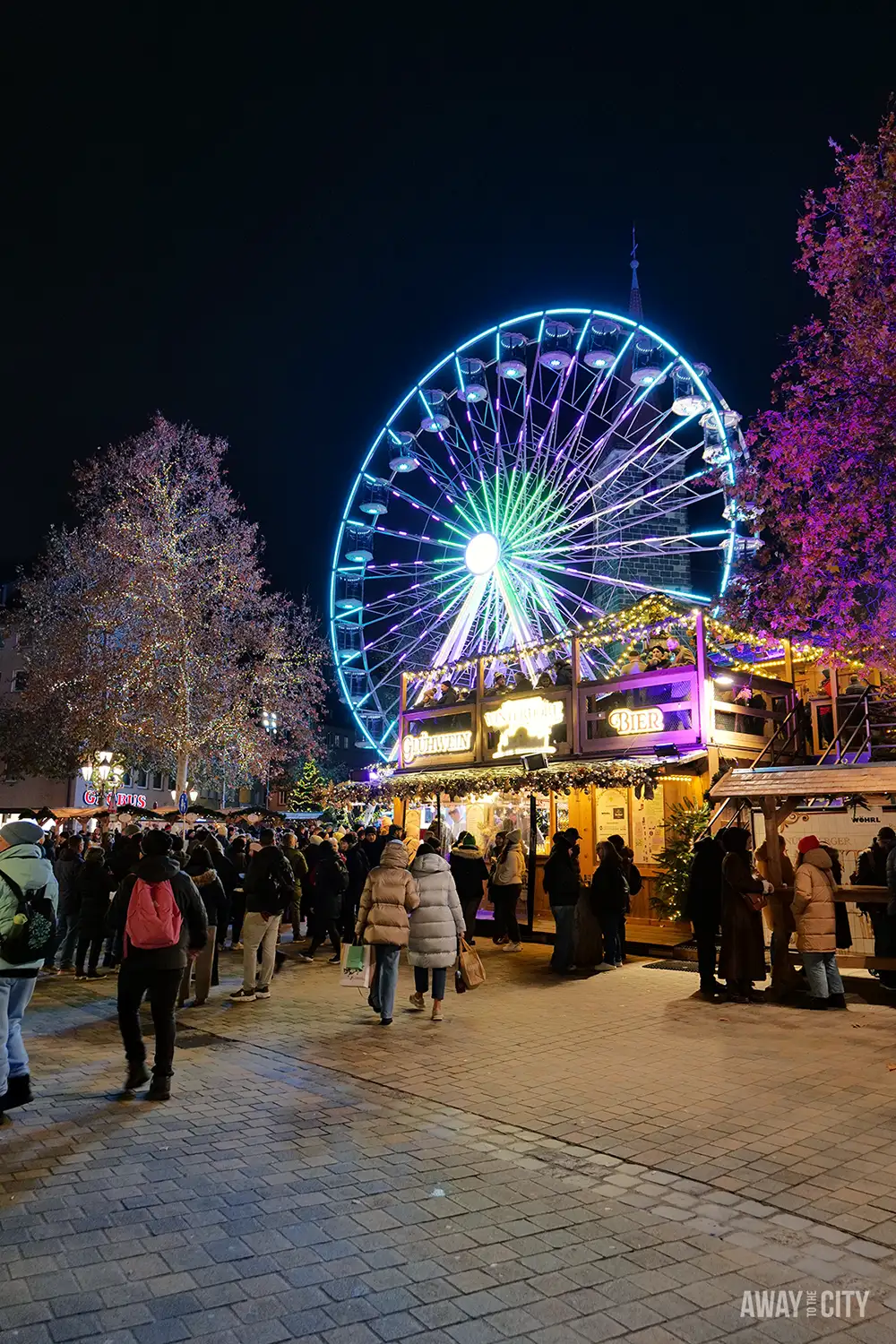
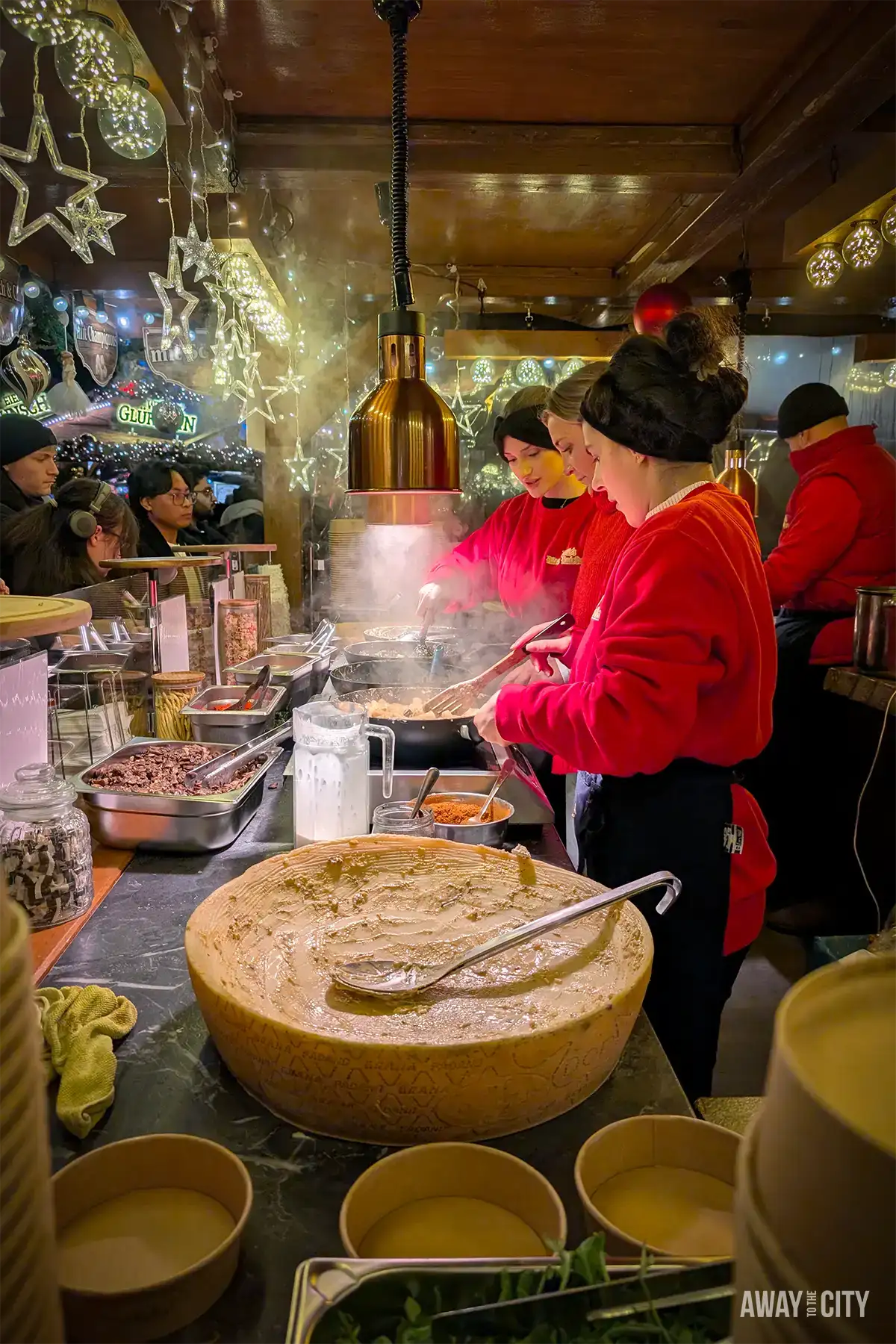
The smell of roasted almonds and grilled bratwurst hits you before you even reach the stalls. It’s the most German thing imaginable.
If you’re looking for the dreamy, romantic atmosphere of Colmar or Rothenburg, this isn’t quite that.
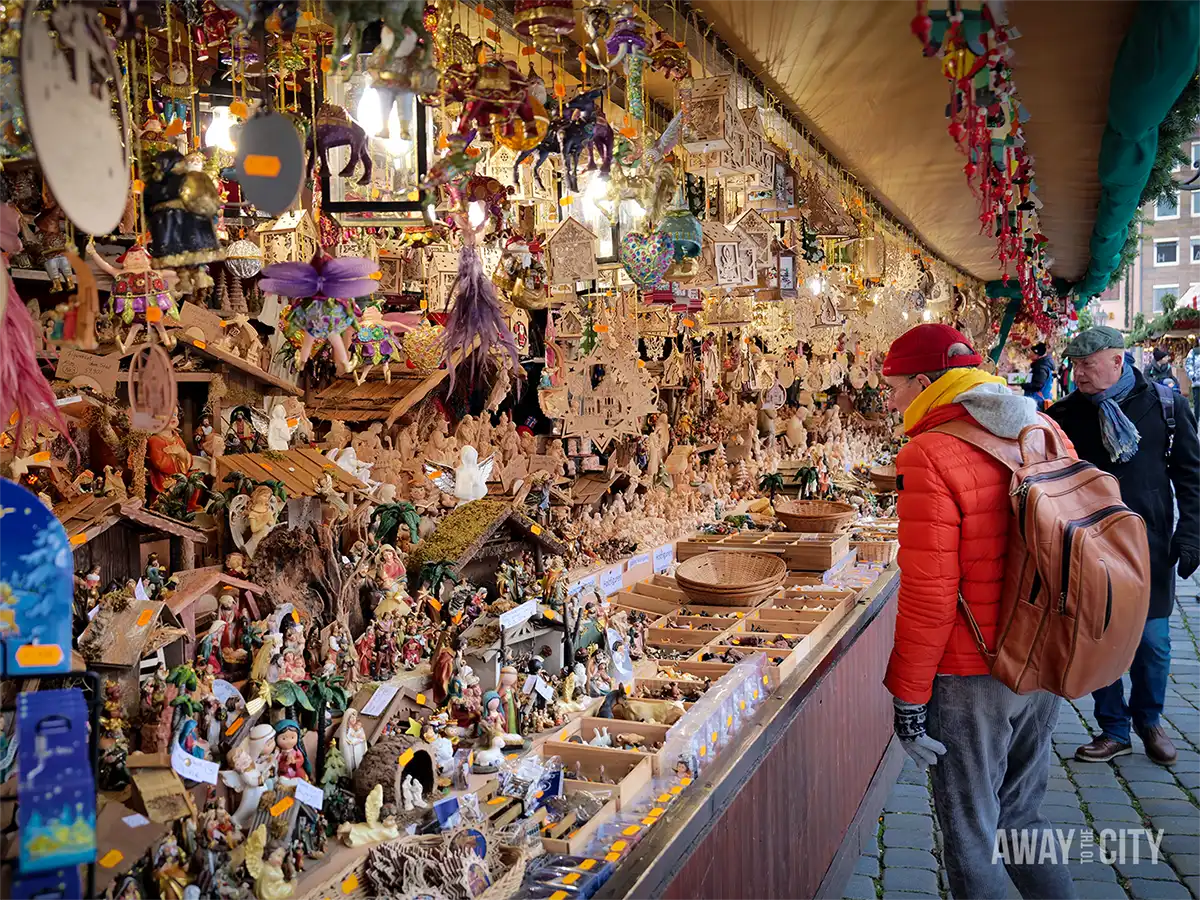
Nuremberg is bigger, more classic, and a touch more practical in its layout. The stalls have a lot of wood craftsmanship, which we found very impressive, with hand-crafted wooden ornaments, glass-blown decorations, and tiny Christmas figurines.
We’re not usually buyers of these types of items, but we could have spent hours just looking.
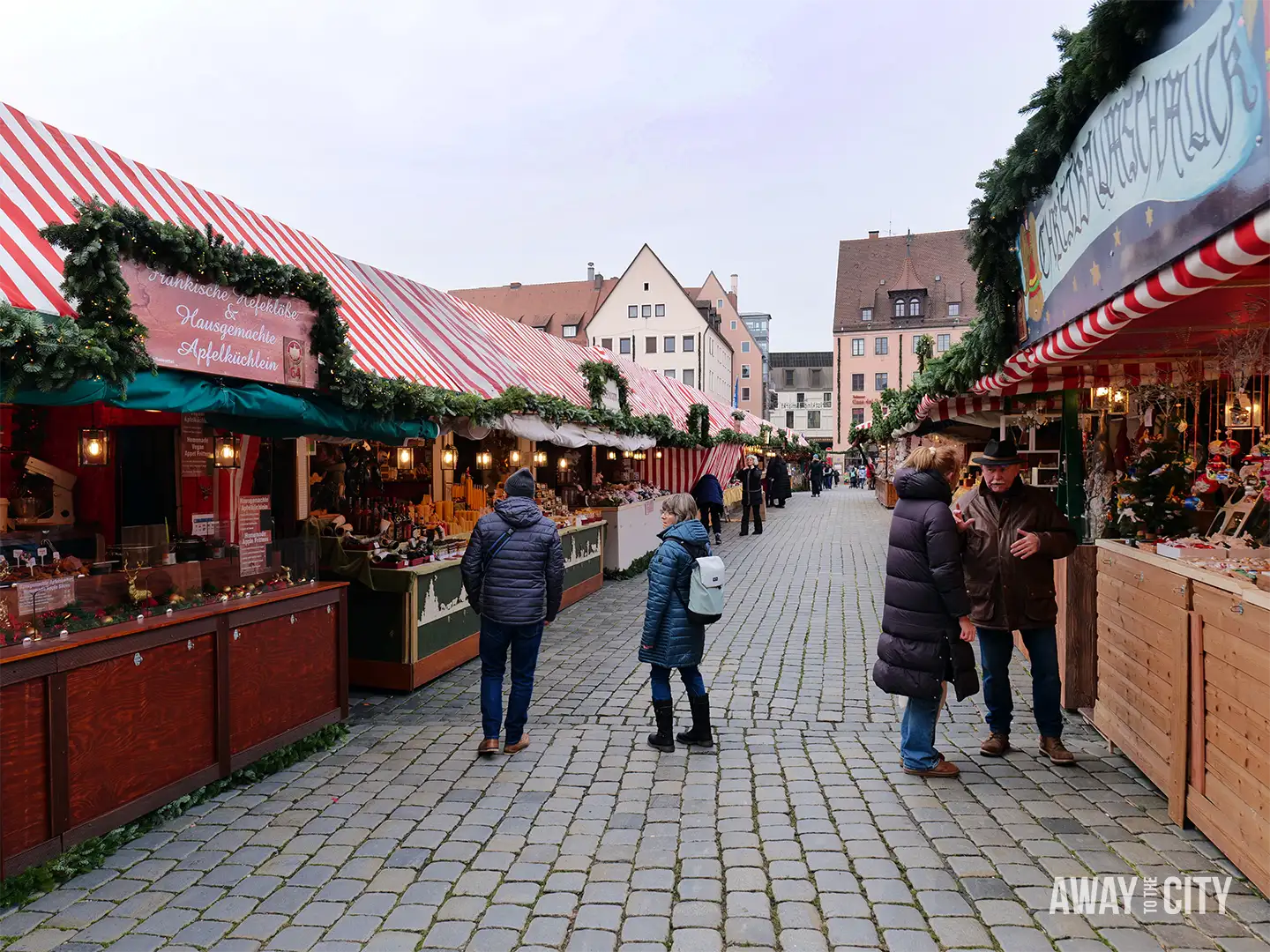
We were there for the opening night ceremony, where the Christkind (a local teenager dressed as an angel) opens the market. Festive and special, but the crowds were completely overwhelming.
We went back on other days, and the difference was night and day. Skip the opening night.
Nuremberg also has a lot going for it beyond the market, like the castle, the Art Bunker, and the Albrecht Dürer Museum. Would we visit just for the Christmas market? Probably not. Come for both, and give yourself a few days.
Rothenburg ob der Tauber, Germany
Rothenburg ob der Tauber is one of the best-preserved medieval walled cities in the world. And at Christmas, this market in Bavaria totally earns a spot on your bucket list.
The city wall is 2.5km (1.6 miles) long and you can walk the entire thing in around 2 hours. We managed around 70% of it, and as we got closer to the old town, the Christmas lights and decorated rooftops started coming into view.
We kept stopping and smiling at each other because it felt so unreal walking on the 700-year old wall.
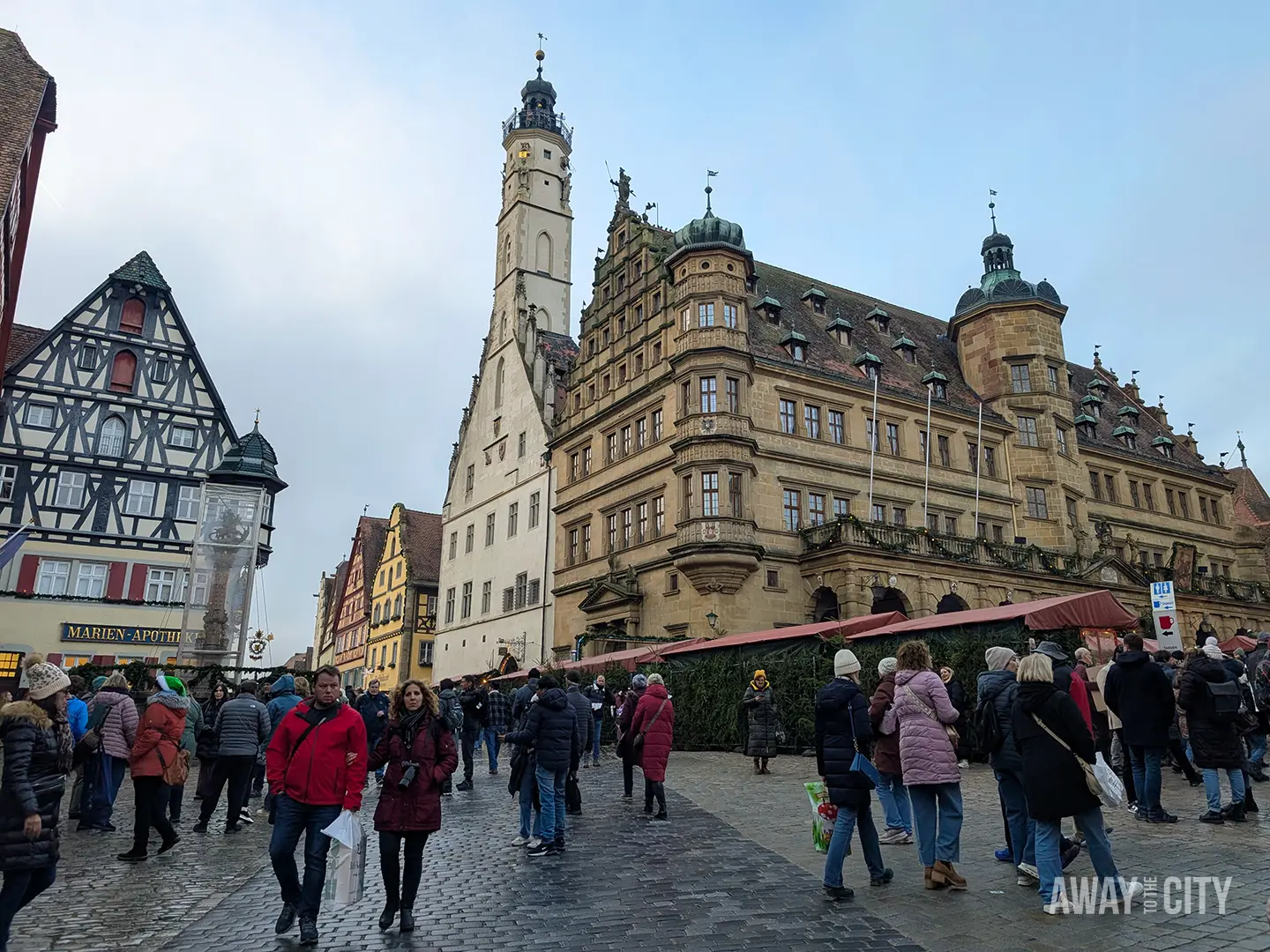
The Christmas market itself is fairly small, dotted in little patches across the city, with everything you’d expect from a traditional German Christmas market but on a small scale.
What elevates it is the combination of the market with the medieval streets and the unique local shops lining the colourful half-timbered houses. This includes Käthe Wohlfahrt, the famous German Christmas shop that originated right here in Rothenburg and always has a long queue outside.
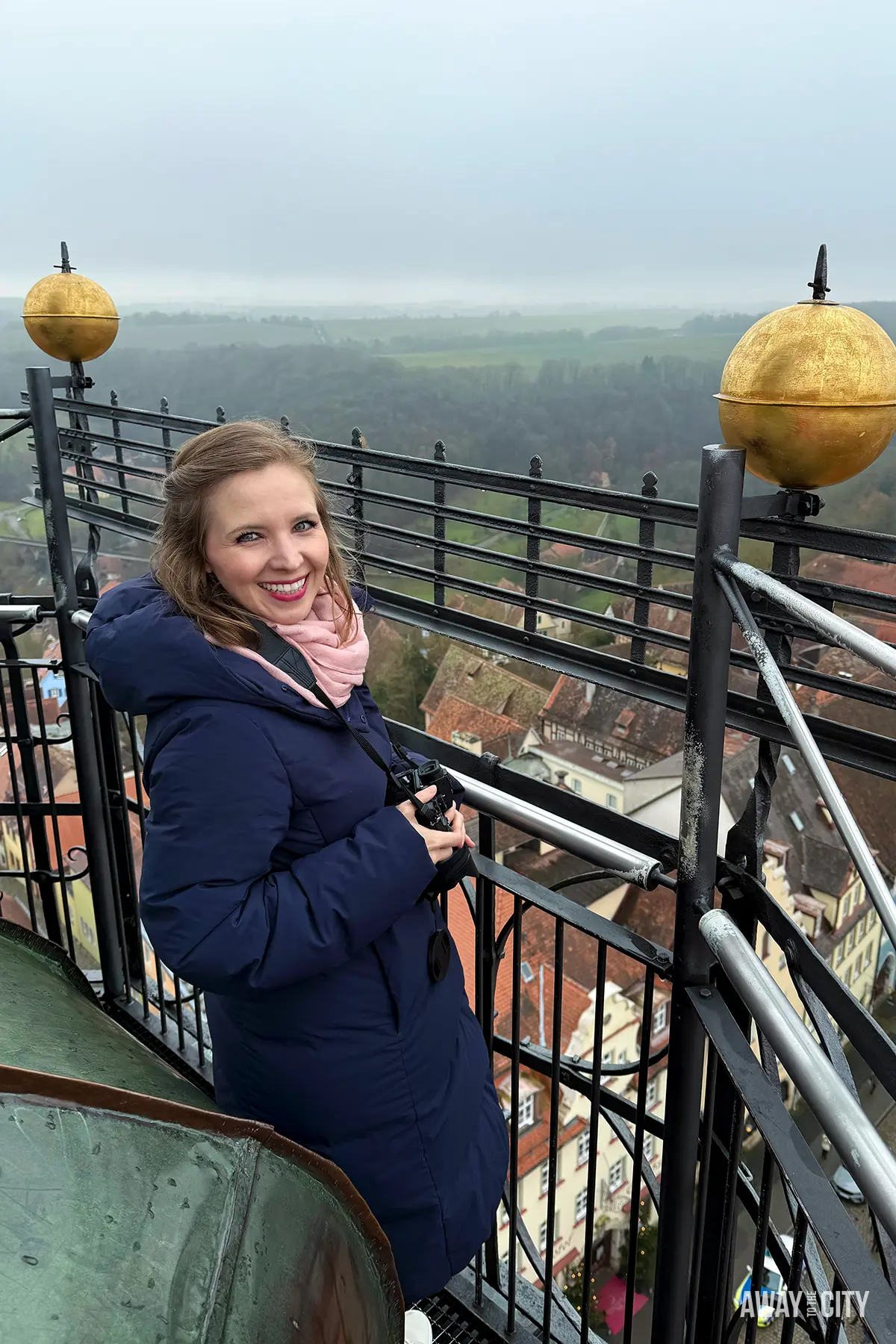
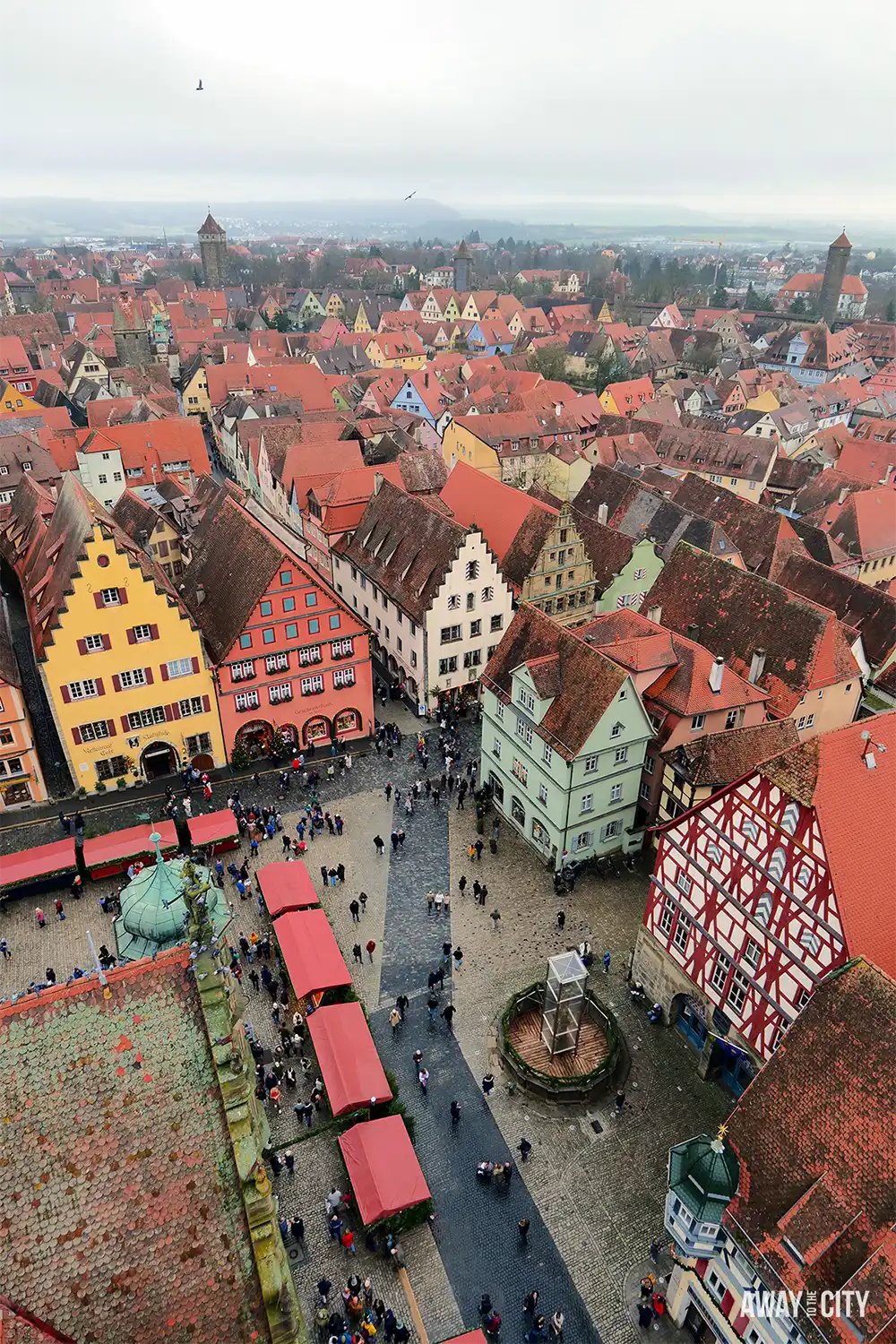
For the best view over the market, climb the town hall tower. The stairs get narrower as you go up, and we had to squeeze ourselves through a tiny hatch at the very top to get there. Worth every slightly undignified moment!
This isn’t the market to visit if you want scale. But if you want to feel like you’ve walked into a medieval German fairy tale with a mug of mulled wine in hand, Rothenburg delivers completely.
You wouldn’t be surprised to spot Rapunzel looking out of one of the towers.
Dresden, Germany
We got Dresden’s Striezelmarkt on our radar because it’s the oldest Christmas market in Germany, dating back to 1434. Of course we had to check it out. It became one of our favourites.
The market fills the historic Altmarkt square, surrounded by baroque architecture on every side, with the Frauenkirche beautifully lit behind it. It’s one of the most spectacular backdrops of any market we visited.
When we arrived, there was a choir performing on the stage. You could hear it from the other side of the market, and it immediately set the tone for the whole visit.
Not many Christmas markets have a daily stage programme like this, and it makes a real difference to the atmosphere.
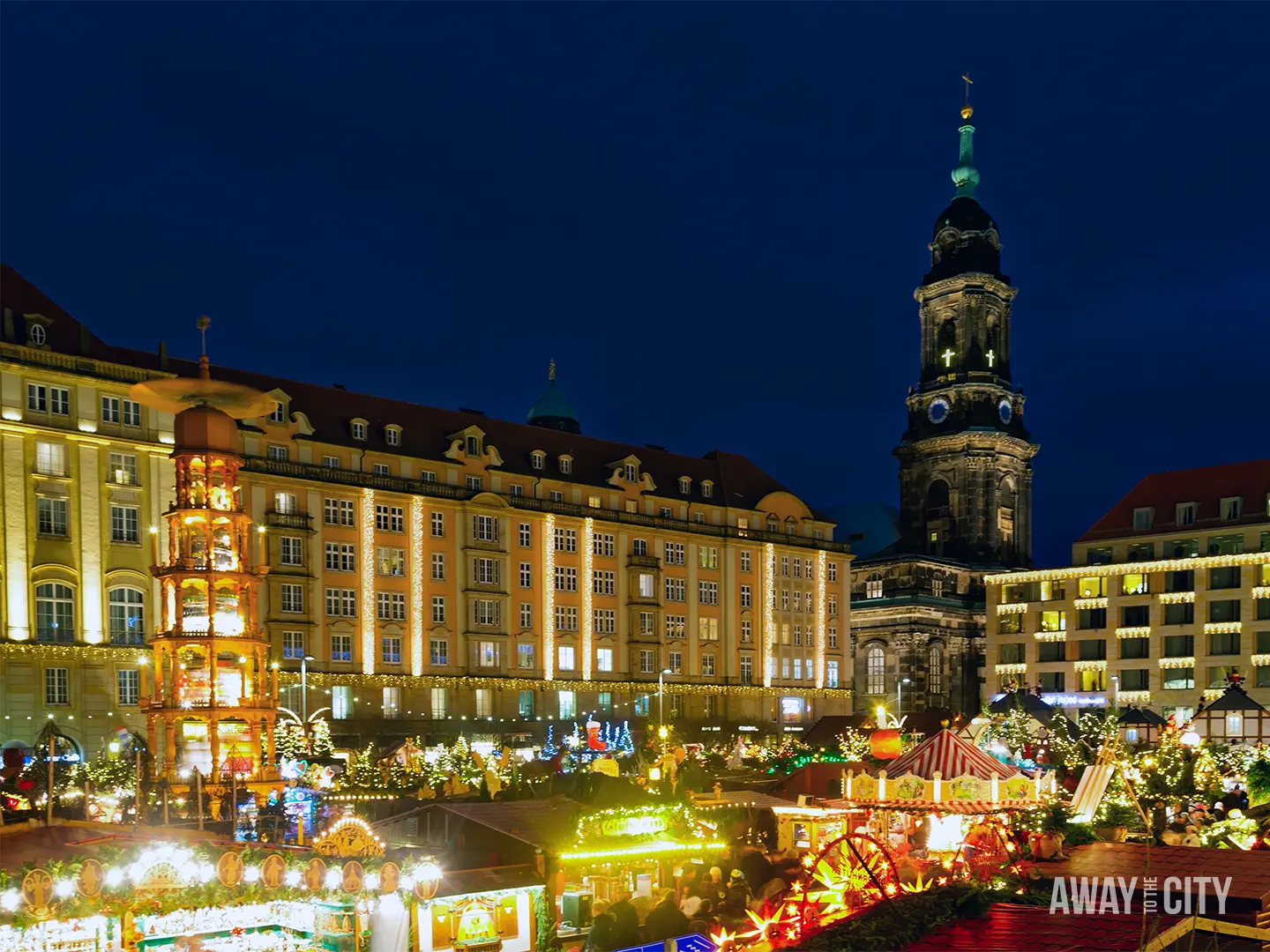
There’s also a medieval market inside the Royal Stables, which was a lovely surprise for us on top of an already excellent day. The giant wooden pyramid carousel in the centre of the square is worth seeing too. Nothing quite like it.
The market takes its name from stollen (called Striezel in the local dialect), a traditional sweet German Christmas bread, dense and buttery, filled with dried fruit and dusted in powdered sugar, that we both grew up eating at Christmas.
The Dresden version tasted different from any other we’ve tried… and we loved it! When we asked one of the stall holders why, they said it was a secret. We may have to go back to taste the stollen again.
Vienna, Austria
We’ve been to Vienna several times and could totally see ourselves living there. But at Christmas, it’s at its most beautiful.
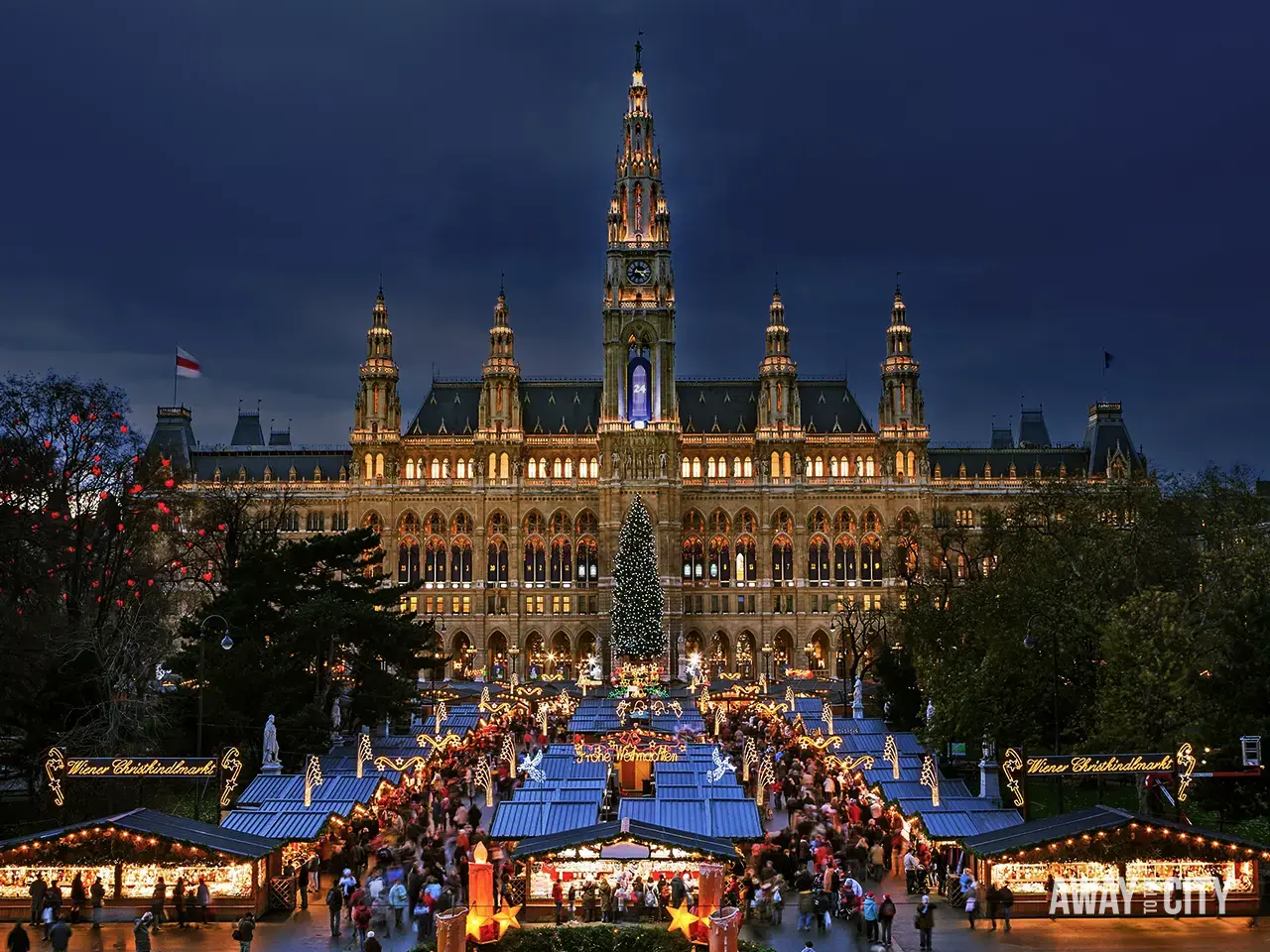
Vienna has multiple Christmas markets spread across the city’s beautiful neighbourhoods, and the main market at Rathausplatz is the most spectacular.
The gothic city hall glows behind thousands of lights, and the square fills with market stalls selling glass baubles, handmade wooden toys, and enough snacks and sweet treats to keep dentists across Europe busy.
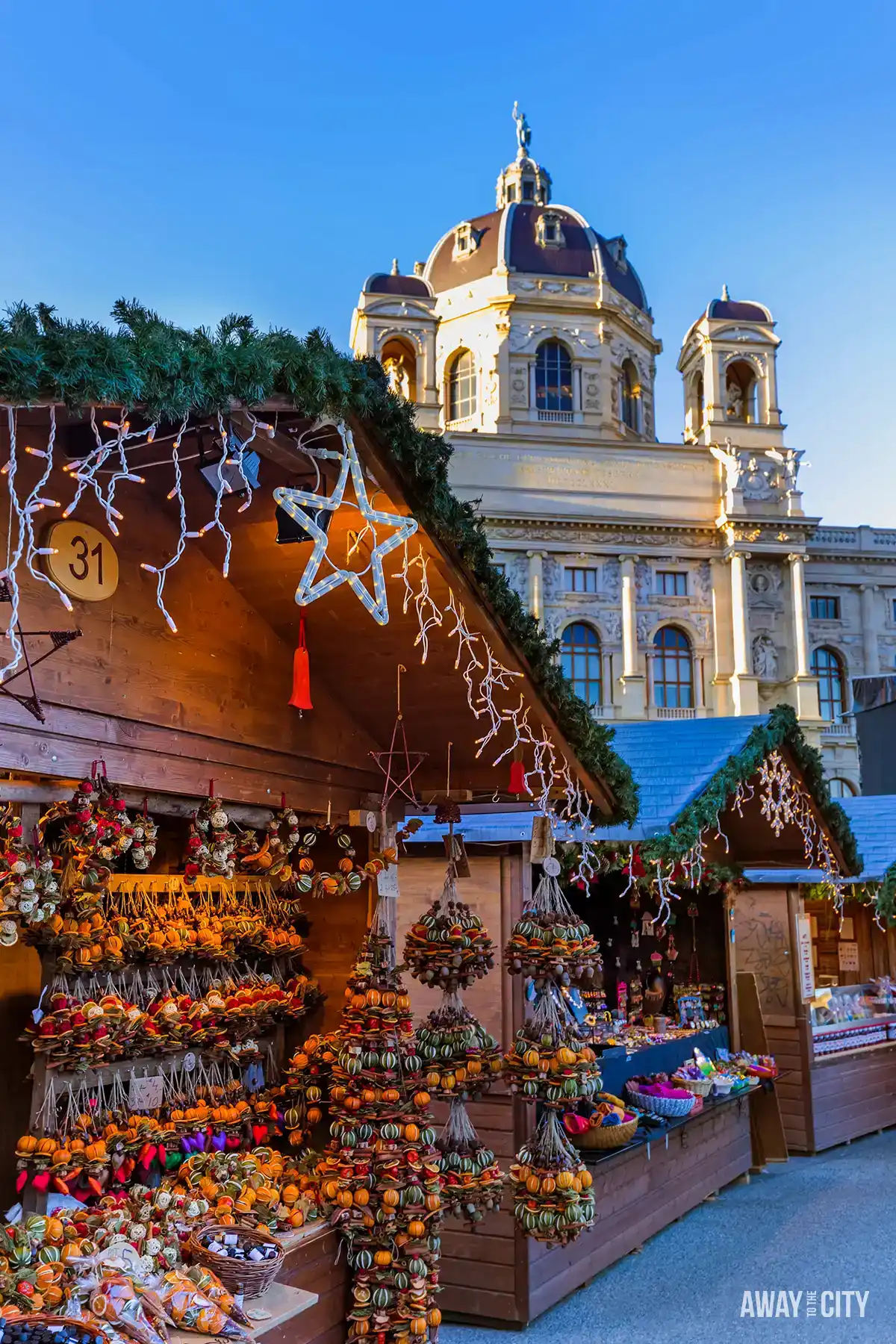
What we loved most was the ice skating trail that winds through the park around the market.
We go ice skating every year and the festive ones are always our favourite… there’s no better atmosphere for it. This is one of the few Christmas markets in Europe that has one.
Schönbrunn Palace is one of our favourite palaces in the world, and seeing it dressed for Christmas takes it to another level entirely.
Prague, Czech Republic
We spent a week in Prague in early December one year, catching the Christmas market in full swing.
We do love Prague, and the Old Town Square is one of Europe’s most beautiful spaces all year round. But at Christmas, with the market filling every corner of it, it reaches another level.
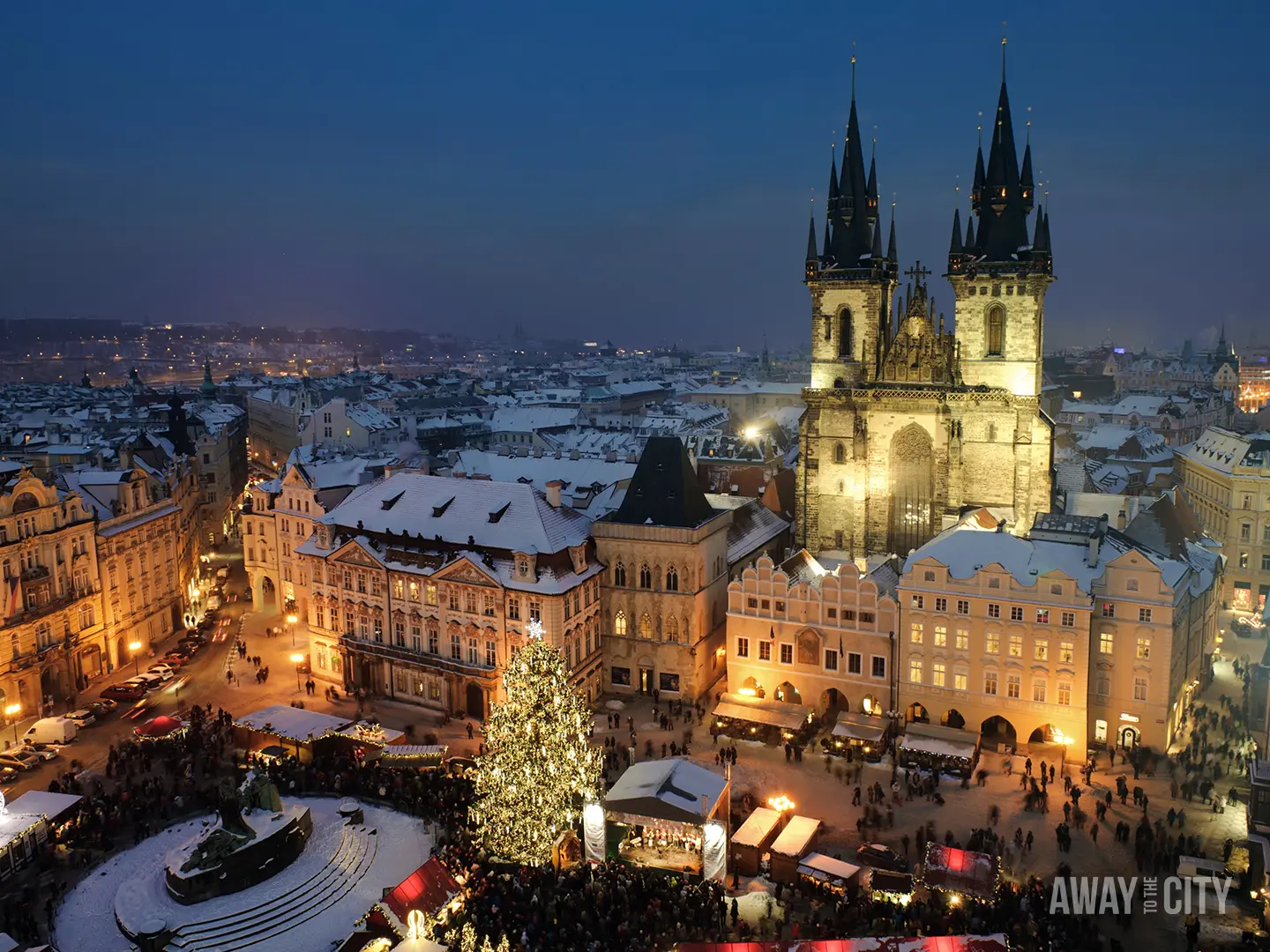
Standing there with a warm drink in hand, looking up at the Gothic spires and the lit Christmas tree, we kept thinking: this is EXACTLY what a European Christmas should look like.
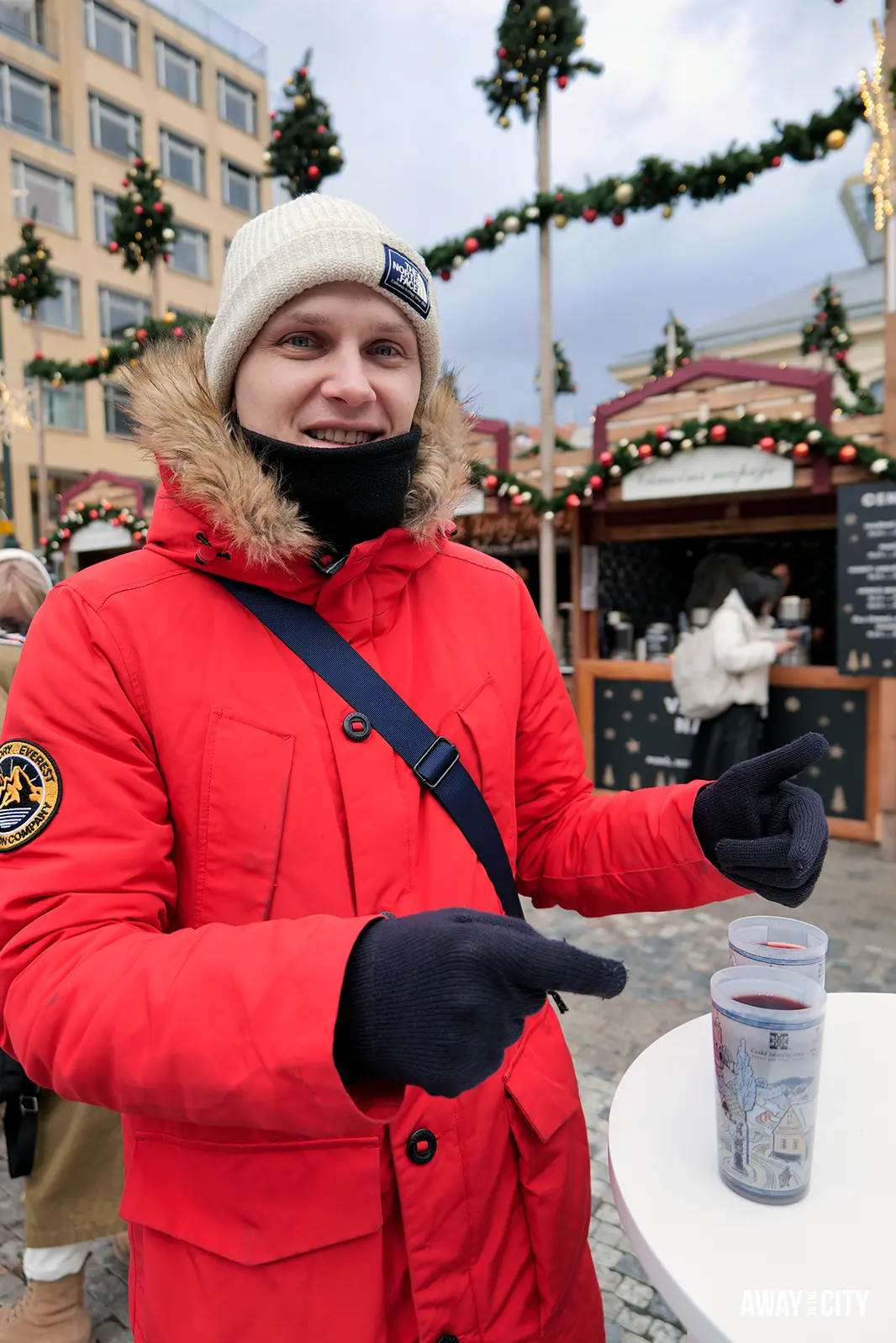
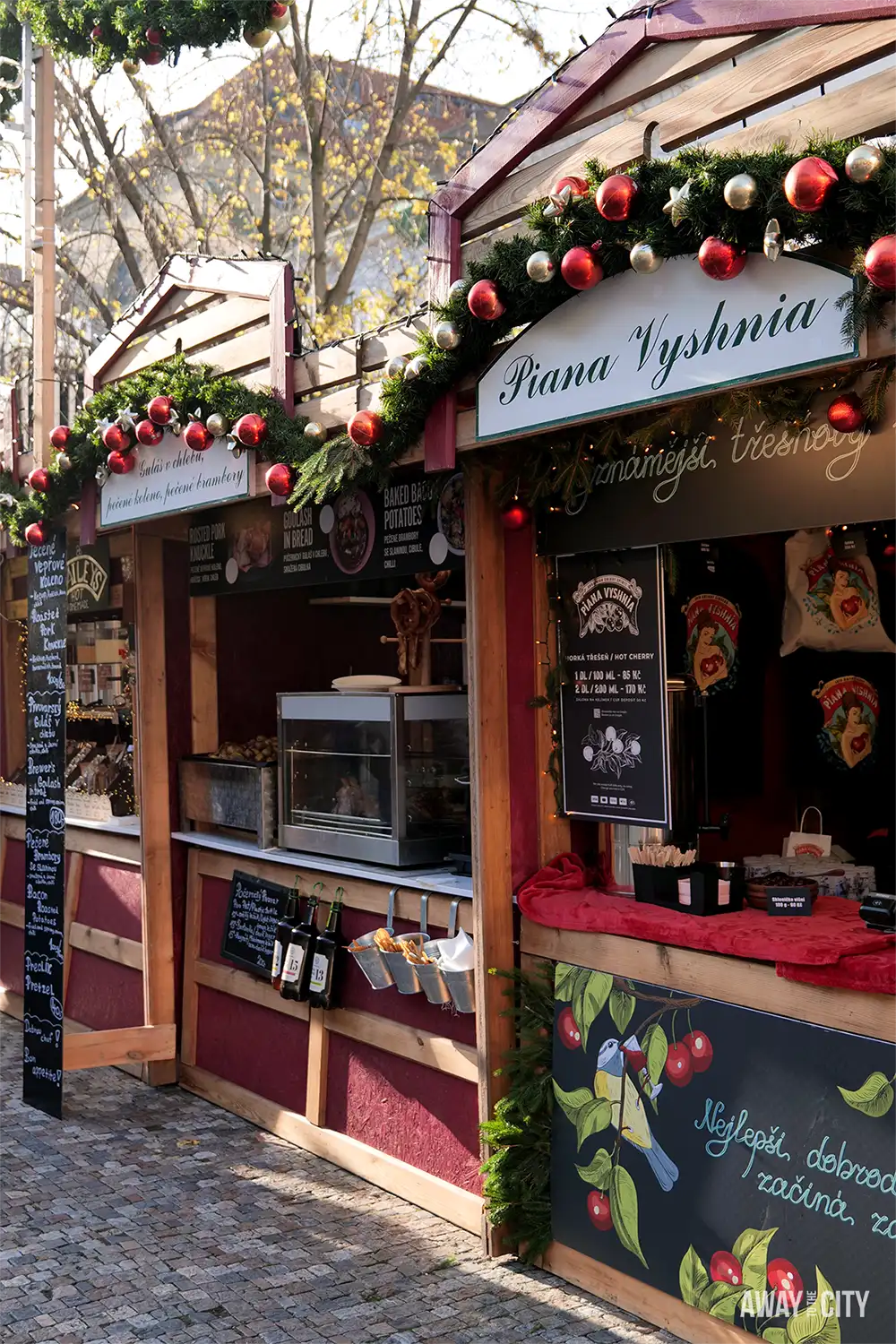
The trdelník are sweet chimney-shaped pastries served warm, filled with things like Nutella, ice cream, or pistachio cream. We tried more flavours than we’d like to admit. But Nutella remains our number one.
Go up the Old Town Hall tower for the best views over the market. Our Prague guide covers everything else worth seeing.
Budapest, Hungary
We arrived on a freezingly cold, clear evening and the city looked incredible. Budapest has a grandeur that not many cities can match, and in winter that feeling is even stronger.
Budapest is divided by the Danube, with Buda on one side and Pest on the other.
The main Christmas markets are on the Pest side, with the Advent Basilika market at St. Stephen’s Basilica being particularly spectacular, especially for the light show projected onto the cathedral facade.
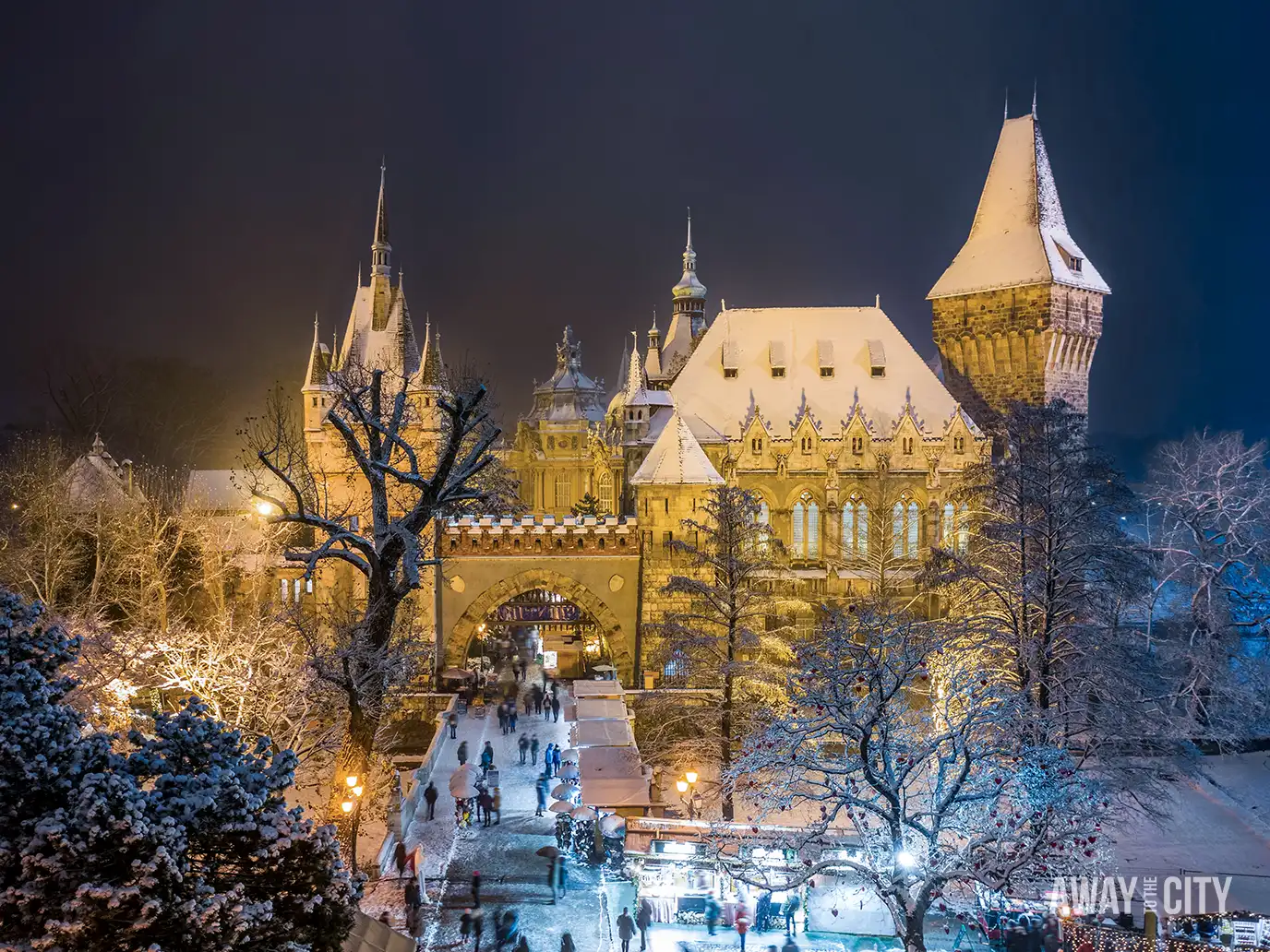
On the Buda side, the Castle Advent market is smaller and cosier, with a lovely local vibe that feels quite different from the busier Pest markets.
Budapest in December is cold, and the food leans into that perfectly.
We tried the lángos, a Hungarian fried dough topped with cheese, straight from the stall while it was still warm. Filling, greasy… and we still prefer Italian pizza. Worth trying once though.
The thermal baths are what make Budapest in winter truly special. Going into warm water when it’s freezing outside, with fog all around you, feels exactly like our experience at the Blue Lagoon in Reykjavik.
If you’ve done that, you’ll know exactly what we mean. And Budapest has plenty more highlights beyond the markets too.
London, United Kingdom
We live in London, so we might be biased. But London really does deserve a spot among the best European cities to visit in December, even if the reasons are different from every other entry here.

London doesn’t have traditional German-style Christmas markets. What it has instead is Winter Wonderland in Hyde Park, with ice skating, fairground rides, arcade games, sausages, crêpes, candyfloss, hot chocolate, and mulled wine.
As Germans, we can confirm it bears little resemblance to an actual German Christmas market. It’s closer to a giant Christmas-themed fun park, and honestly, we love it for being exactly what it is.

Beyond Winter Wonderland, the Christmas experiences in London go well beyond the markets, though. The streets, shop windows, and entire neighbourhoods (like Soho and Covent Garden) go into full Christmas mode in a way that few cities match.
Compared to Paris, which gets a lot of credit as a festive destination, London looks more magical and feels more alive. We’ll take London over Paris at Christmas every time.


Three European Christmas markets that underwhelmed us
We’ve visited enough markets to know that reputation doesn’t always match reality. These three didn’t live up to ours.
Paris, France
We ended the London section by saying we’d take London over Paris at Christmas every time. Here’s why.
Paris is a city we visit regularly (the Eurostar from London makes it almost too easy) and we enjoy it a great deal in spring and autumn. But at Christmas, it disappointed us.
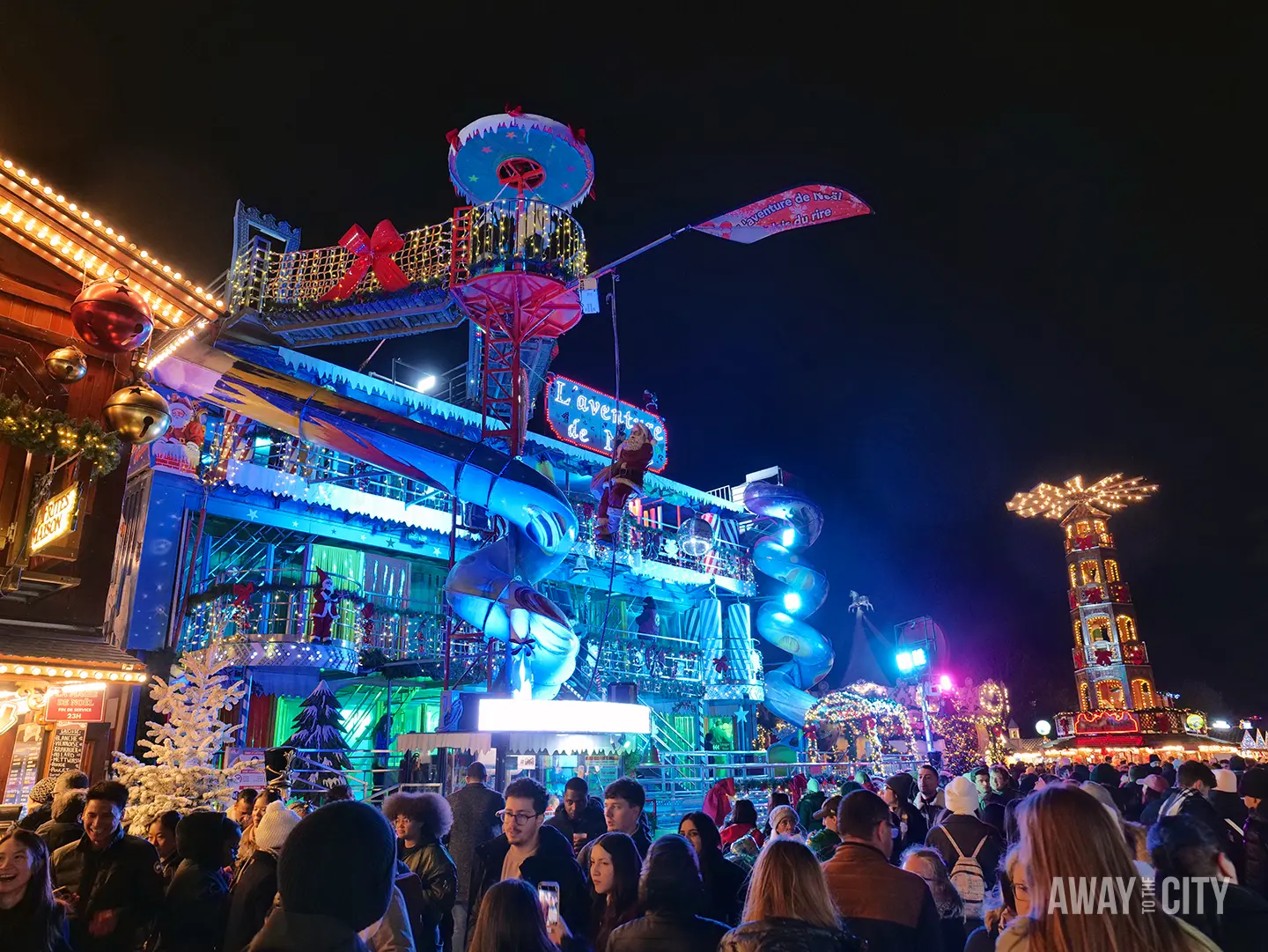
The markets are scattered across the city with no overarching festive atmosphere connecting them. The main one in Tuileries Garden has a Ferris wheel, carnival rides, and a funfair atmosphere, which sounds fun on paper.
In reality it felt like a narrow strip of stalls, too small and WAY too packed to enjoy. The others are tiny squares with a handful of uninspired Christmas stalls that aren’t worth going out of your way for.
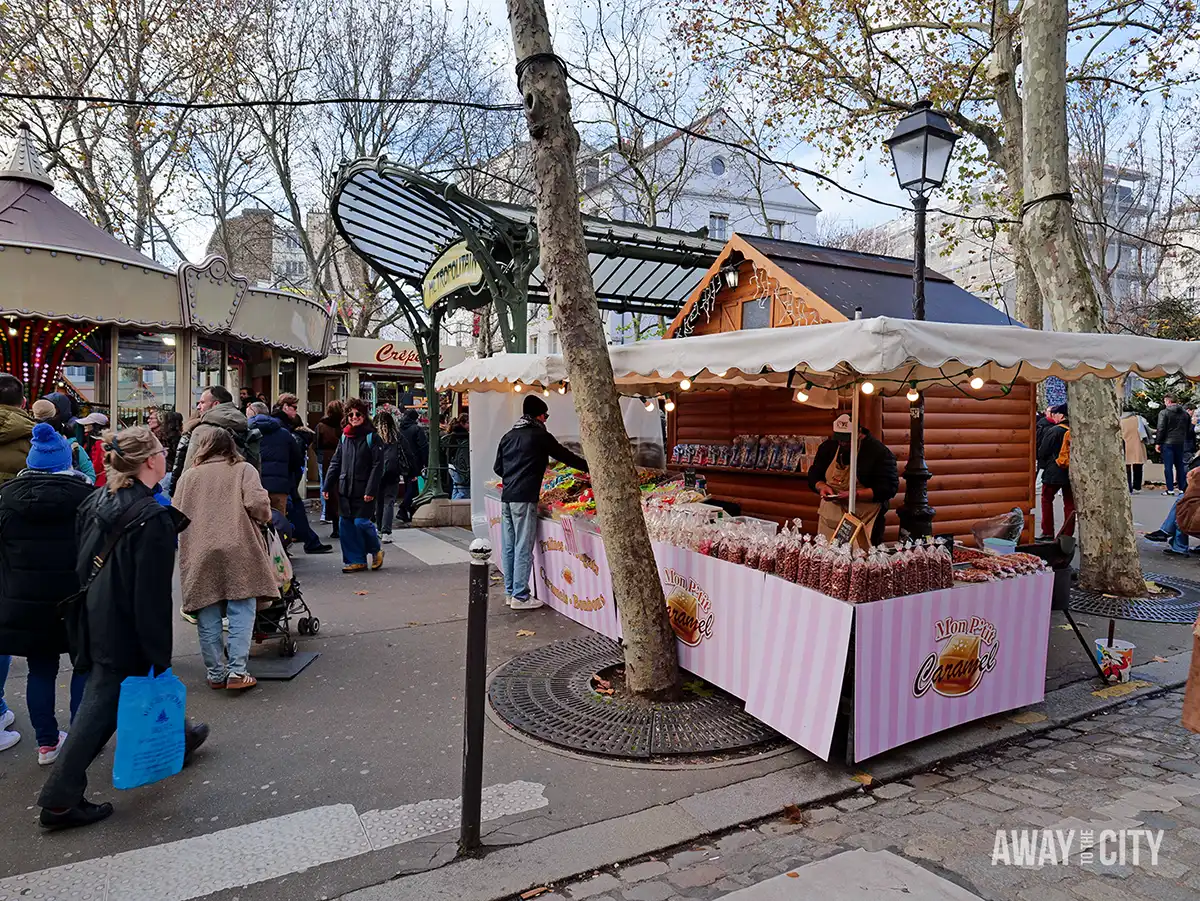
The iconic Galeries Lafayette department store has spectacular Christmas decorations inside, and the building itself is beautiful.
But getting through the door means battling some of the most intense tourist crowds we’ve experienced anywhere.
If you’re visiting one of Europe’s most iconic cities, go in spring or autumn. Christmas is not Paris at its best, at least not for us.
Heidelberg, Germany
Heidelberg is popular with American visitors… we noticed that immediately walking around. Having lived in New York ourselves, we know how much Americans romanticise the idea of a European Christmas market.
We understand the appeal, but we’d gently suggest looking elsewhere.
Yes, the castle ruin is impressive. But the old town simply doesn’t compare to other cities on this list, like Rothenburg or Nuremberg.
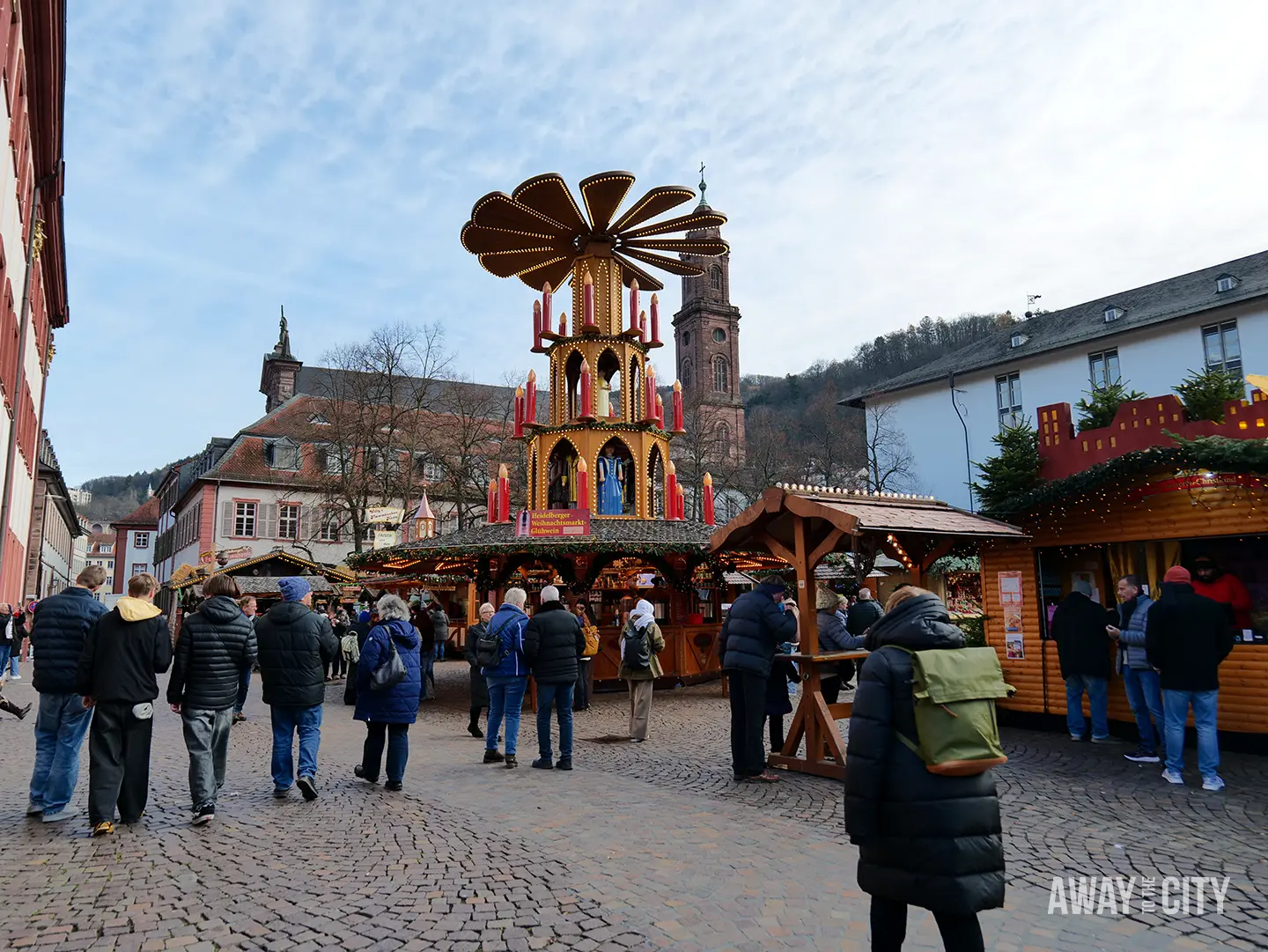
The Christmas market didn’t deliver for us either. The buildings in the old town weren’t dressed for Christmas. The decoration felt let’s say ‘practical’ rather than lovingly done. Compared to Strasbourg or Colmar, the Christmas magic just isn’t there.
The old town is also a significant walk from the main train station, and the route there isn’t very scenic. We mention this so you can mentally prepare.
There are so many more magical Christmas markets in Germany, Austria, and France alone. We’d point you to those instead.
Cologne, Germany
We lived in Cologne for many years, and in our opinion, the Christmas markets there are overrated when compared to everything else on this list.
Cologne has six themed markets, and the setting around the cathedral is undeniably impressive.
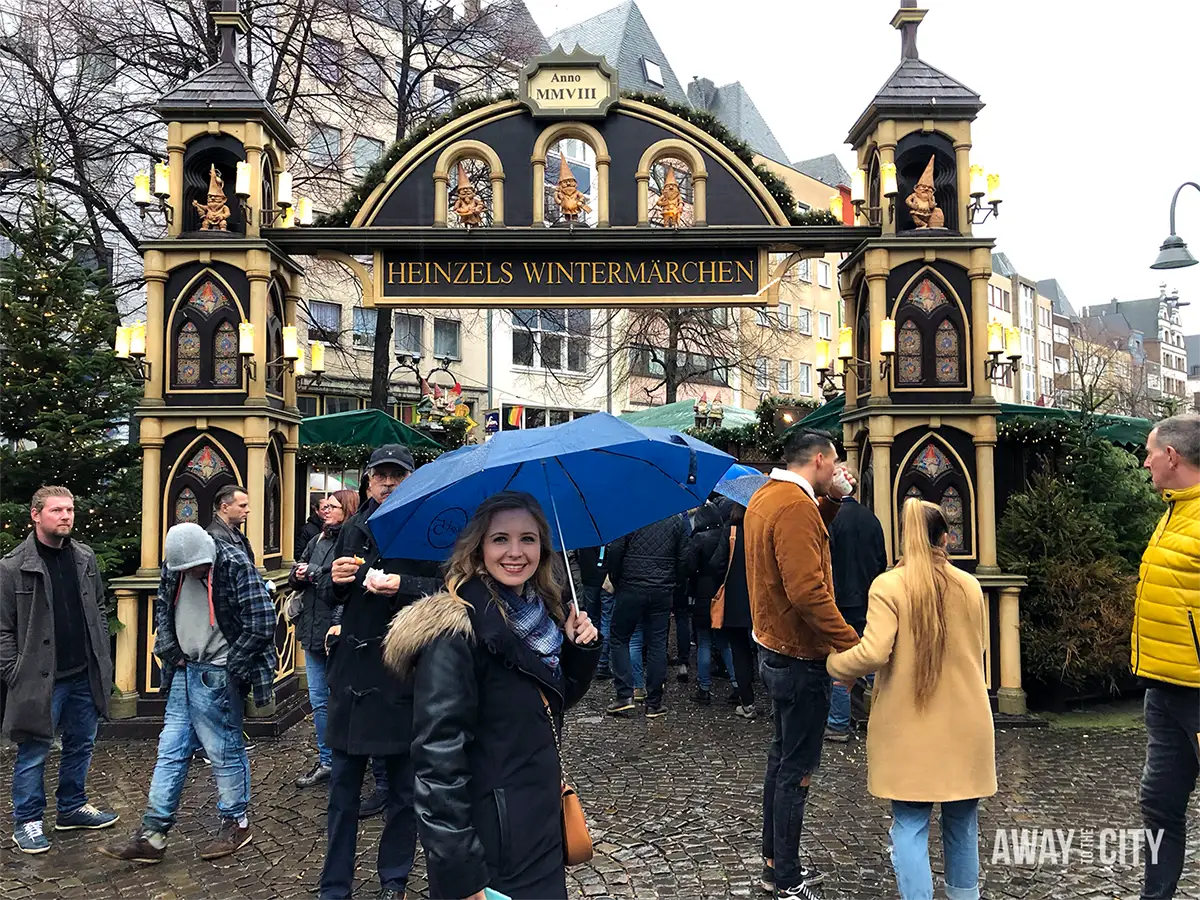
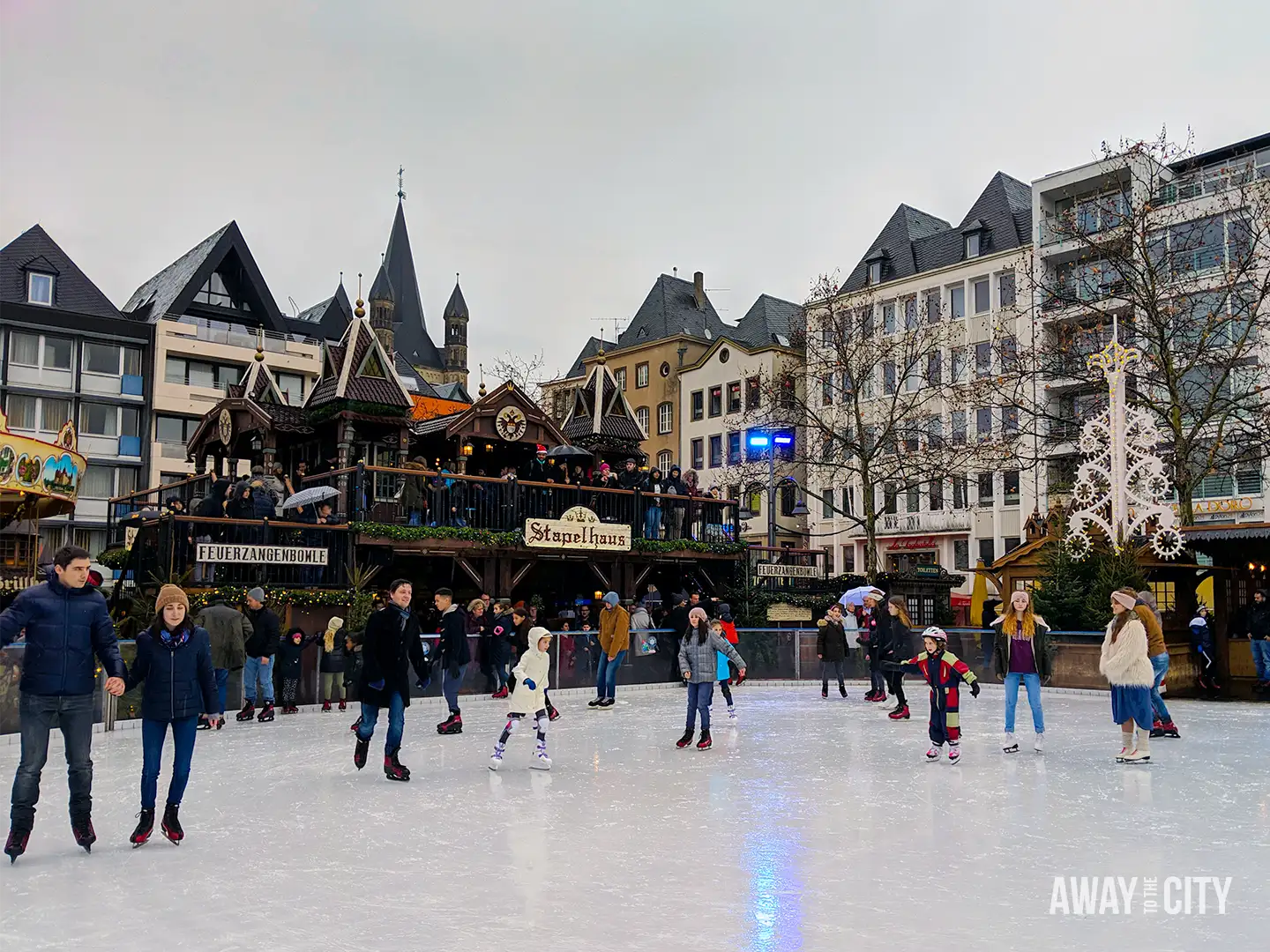
Our favourite is the Gnome Market at Heumarkt, where gnomes are quite literally everywhere. On top of the stalls, inside the stalls, woven into every decoration.
It’s charming, committed, and unlike anything else we’ve seen at a Christmas market. The ice skating rink there adds something special too.
But across the markets as a whole, the charm has been replaced by scale. The wooden chalets have become a lot more commercial and repetitive, the crowds are intense, and outside the cathedral area, Cologne isn’t a particularly attractive city.
It lacks the festive soul that makes markets like Esslingen or Rothenburg so memorable.
If this is your first time in Germany at Christmas, there are better places to start. If you’ve already done the great ones, Cologne might be worth adding. But it wouldn’t be our first recommendation.
When is the best time to visit European Christmas markets?
Most European Christmas markets run from late November through 23 or 24 December, with some extending into early January. The sweet spot is the first two weeks of December: markets are fully open, decorations are at their best, and crowds are more manageable than in the final week before Christmas.
One thing worth knowing is that from opening day onwards, markets get progressively busier right through to Christmas Eve.
The earlier in the season you can go, the better your experience will be. Skip the opening day itself though, as it tends to draw big crowds.
Opening dates vary more than most people expect. On our 2025 Christmas market tour, Rothenburg and Vienna opened as early as 21 November, while Nuremberg didn’t open until 28 November and Dresden not until 30 November.
If you’re visiting multiple cities, check each market’s opening date individually before booking anything.
London is the exception. Christmas markets there typically start opening from early November, several weeks before most European cities get going.
Our advice is simple. List the cities you want to visit, check their opening dates, and plan your trip around those. Don’t assume they all follow the same schedule.
Which country has the best Christmas markets in Europe?
Based on our experience visiting 40+ Christmas markets across Europe, France comes out on top, and it comes down to two cities: Colmar and Strasbourg. Both are in the Alsace region and deliver a level of decoration, atmosphere, and setting that we haven’t found anywhere else.
Germany comes a very close second though (and no, we’re not biased as Germans here!).
The variety of markets across the country is extraordinary, and cities like Esslingen, Nuremberg, Rothenburg, and Dresden each offer something genuinely different.
If you’re planning a multi-city Christmas market trip, Germany gives you more options than any other country.
Is it worth visiting multiple Christmas markets in one trip?
Visiting multiple Christmas markets in one trip is absolutely worth it. Each market has its own personality, and combining several lets you compare what makes each one special. Cities in the same region, like Colmar and Strasbourg in Alsace or Nuremberg and Esslingen in southwest Germany, are easy to combine in a single trip.
We’ve done a few dedicated Christmas market tours where we covered 7+ cities in one go. On our 2025 tour, we found our favourite Christmas cities (Colmar and Esslingen). And we’re already planning our next dedicated tour for 2026.
What should you eat at a European Christmas market?
The most iconic European Christmas market foods are mulled wine (Glühwein), bratwurst, roasted almonds, gingerbread (Lebkuchen), and chimney cakes (trdelník). Most markets across Germany, Austria, France, and Czech Republic serve variations of these. Other staples include roasted chestnuts, potato pancakes, and stollen, the traditional German Christmas fruit bread dusted in powdered sugar.
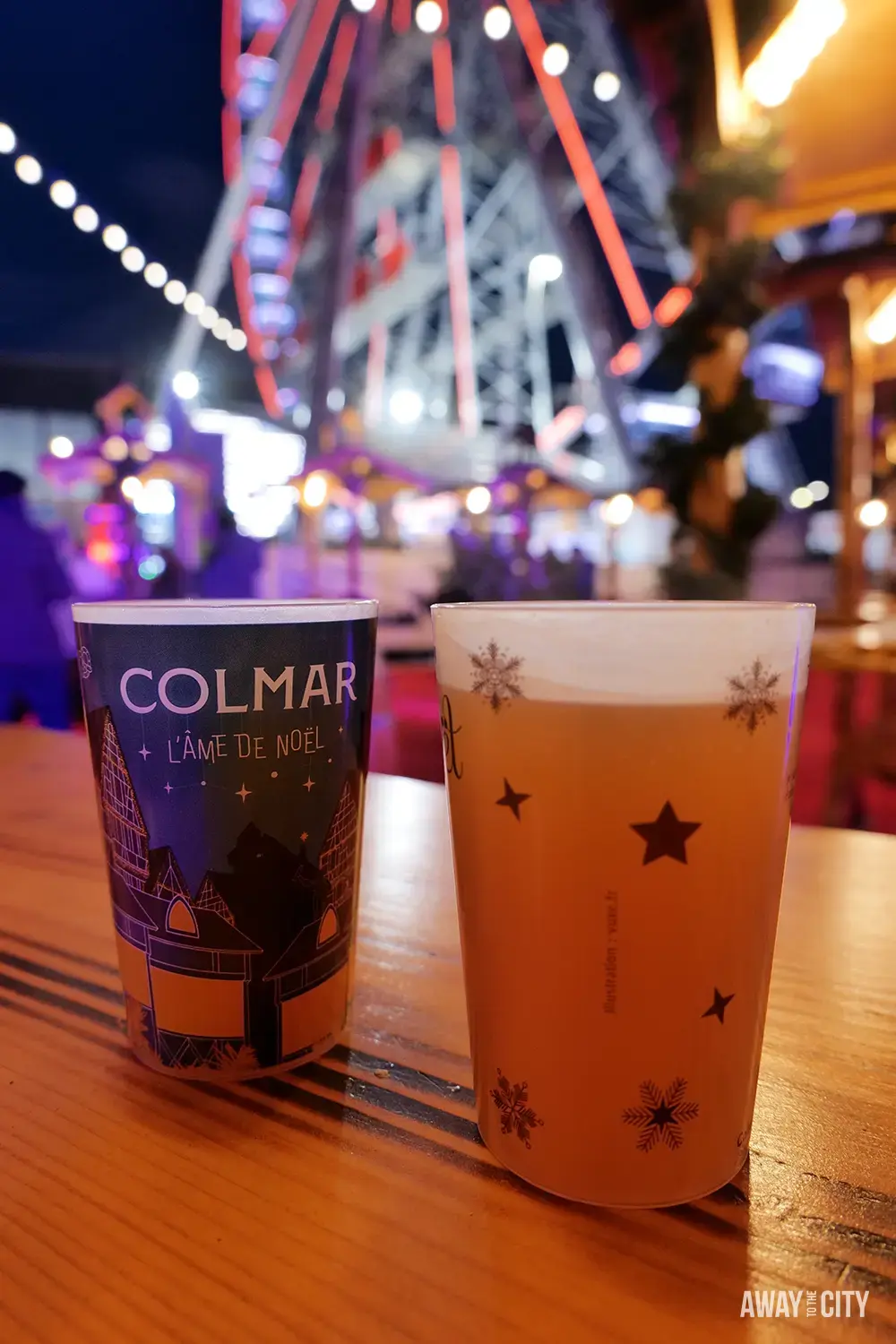
Oh, most markets serve mulled wine in their own branded ceramic mug. You pay a small deposit, and if you don’t return it, the mug is yours to keep. They make for a great gift or souvenir. Our kitchen cupboard is running out of space.
So, which market is calling your name?
If there’s one thing two decades of Christmas market visits have taught us, it’s that reputation doesn’t always match reality. Cologne and Paris disappointed us. Heidelberg didn’t deliver.
But Colmar exceeded every expectation we’d ever had of a Christmas market, and Esslingen came out of nowhere to become one of our all-time favourites.
Not every famous market is worth your time. But the right ones are worth travelling across Europe for.
If any of the cities on this list caught your attention, we have full guides to help you plan. Our things to do in Prague and things to do in Budapest cover both cities well beyond the Christmas season.
And if London’s festive side surprised you, our London Christmas guide goes deeper into everything the city has to offer over the festive period.
Now go find your Colmar.