
Budapest Travel Tips: 27 Things We Wish We Knew Before Visiting
This post may contain affiliate links, including from Amazon and other trusted partners. If you click a link and make a purchase, we may earn a small commission at no extra cost to you. That said, we only recommend products and services we genuinely use and love. Learn more in our Privacy Policy page.

After visiting more than 450 cities around the world, we've become pretty good at knowing which places we'll happily tick off the list after one visit… and which ones we'll keep coming back to. Budapest easily falls into the second category. We've been three times now, and it's become one of our absolute favourite cities in Europe.
Like every city though, Budapest has a few quirks that can catch first-time visitors out. Some are practical, like why you should never hail a yellow taxi on the street. Others are more subtle, like the fact that reserved service isn't rudeness, or that the city's most iconic photo spot is almost empty if you arrive at the right time.
These are the 27 Budapest travel tips we wish we'd known before our first trip. Some will save you money, some will save you time, and a few completely changed how we experienced the city.
1. Make time for Budapest at night.
Budapest puts a lot of effort into its lighting. The Parliament Building, Buda Castle, and the Chain Bridge are all beautifully illuminated after dark, and the whole skyline reflects off the Danube River.

Walking along the river promenade at night is one of those simple things we'd happily do every evening.
We also really liked this Buda Castle Vampires & Myths night tour, where we learned about Hungary's dark and bloody past.

But the absolute HIGHLIGHT was this night sightseeing cruise we did. The boat was the perfect size (not one of those massive tour boats packed with people) and the atmosphere was very relaxed… and we even had unlimited drinks included.
It was probably the best night cruise we've ever done in any city (and we’ve seen more than 450 by now).
2. Take the 100E Airport Express from the airport to the city centre.
Budapest Airport is about 20 km (12.5 miles) from the city centre. The cheapest way to get to the city centre is the 100E Airport Express bus, which costs 2,500 HUF (about US$7, €6, or £5), and it took us about 40 minutes to get into the city.
You can just tap your contactless card on the 100E bus to pay for the journey, which was very convenient. That said, the bus can get quite crowded during peak times.


We’ve also taken the shared shuttle bus, and that was easy too. It costs roughly double but drops you at your hotel door. We'd go for that one if you're arriving late or want to avoid a crowded bus.
If you'd rather not share, an Uber or Bolt will run you around 11,000-14,000 HUF (about US$30-38, €27-35, or £23-30).
3. Book popular attractions and activities in advance.
Budapest is mostly walk-in friendly, but a handful of experiences sell out days or even weeks ahead, and missing out is SO frustrating.

We'd sort these three before arriving:
Check out our full list of what you need to book before your Budapest trip.
4. Always pay in Hungarian Forints (HUF), not Euros.
Since Hungary is part of the European Union (EU), our first instinct was that we’ll pay in Euro. But that wasn't the case.
You'll often see prices displayed in both HUF and Euros, and some places will happily accept Euros. Don't be tempted though… the exchange rate they offer is almost always poor.
This goes for card payments too. If the terminal asks whether to charge you in local currency (HUF) or your home currency, always pick HUF. Your own bank's rate will be better every time.
5. Try authentic Hungarian food.
We’re big foodies, and Budapest kept us very well fed. Hungarian food is hearty and rich, and it reminded us a lot of the German cuisine we both grew up with.
When in Budapest, you definitely have to try goulash (hearty beef and vegetable soup), lángos (deep-fried dough with cheese and sour cream), chimney cake (sweet spiral pastry with sugar), and rétes (thin flaky fruit or cheese strudel).

And if someone offers you pálinka (a Hungarian fruit brandy), say yes! We go into a lot more detail in our guide to Hungarian food to try in Budapest.

Our top tip: It's easy to eat well in Budapest, but a local guide makes a real difference. On this 3-hour Foodapest food tour, you'll taste 12+ Hungarian dishes and drinks across multiple stops, from goulash to chimney cake and local wines. The guides are brilliant at explaining the history of the foods and have great recommendations on what to try after the tour. And if you'd rather get hands-on, this chimney cake workshop is a fun alternative.
6. Use the BudapestGO app for public transportation tickets and passes.
Budapest's city centre is quite walkable, so you can cover most on foot. But the sights are also spread across two sides of the river (the Buda and Pest sides).
So if you only have one or two days in Budapest, the public transport system is really good… and also quite affordable.
Before your trip, download the app BudapestGO. You can buy single tickets and passes (24-hour and 72-hour travel cards) for public transport in the app, which we found much more convenient than buying them at the ticket machines.

The Budapest Card also includes unlimited public transport on top of museum entries and discounts.
On our first trip we only had two days, so we bought two 24-hour travel cards, which give you unlimited trips on the public transport network.
It helped us to see a lot of ground in a short amount of time. If you're staying 3 days or more, single tickets will probably do.
If you do use single tickets, always validate them in the machines on the bus, tram, or at the metro entrance. Budapest runs on an honesty system, but inspectors check regularly, and you don't want to pay fines.
One thing that confused us at first was that most buses let you board through any door, but some open the front door only. If you see passengers queuing at the front, join them and have your ticket ready to show the driver.
7. Beat the crowds and visit Fisherman's Bastion at sunrise.
Fisherman's Bastion was actually the first photo we ever saw of Budapest, and it's easy to see why it's on everyone’s bucket list.
The fairy-tale-like structure is located on Castle Hill, and the views of the Parliament across the river from there are absolutely stunning.

It's also without a doubt the busiest spot in the city. By 10am, the entire complex is PACKED.
After three visits to Budapest, we’ve found that the best version of Fisherman's Bastion is at sunrise. The light is beautiful, and you'll have the place almost to yourself. If sunrise feels too early, aim to arrive before 9am at the latest.
If you want to make the most of the setting, a private photography session there is a brilliant idea. You get professional shots from someone who knows all the top spots up there.
8. Beware of common scams.
Budapest is generally a safe city, but there are a few scams you should know about before you go.
The most common scam targets tourists in the bar and nightlife areas (especially around the 6th and 7th districts).
If an attractive stranger approaches you on the street and insists on taking you to a specific bar, be very cautious. These places charge extortionate prices for a single drink, and if you refuse to pay, things can turn threatening.

Street sellers in the same areas will offer you phones, perfume, and other goods. They're almost always fake.
And if someone approaches you near a train station with a sob story about stolen luggage and needing money for a ticket home, keep walking.
9. Do the maths before buying the Budapest Card.
City cards can be awesome value. We've had great ones in Prague, Lisbon, and Bruges. But the Budapest Card is one we'd think twice about, especially on a first visit.

It starts from 17,990 HUF (about US$49, €44, or £37) for 24 hours and includes free public transport and entry to a range of museums and a few attractions.
The price is pretty high for only one day but the bigger issue is what's NOT included. For example, top attractions like the Hungarian Parliament tour, Széchenyi Baths, and St Stephen's Basilica (which we think you should definitely see!) are all not part of the card.
The museums that are included are interesting, but honestly most of them feel more like second or third visit material, not for a first-time Budapest visitor.
We did the maths for our own itineraries each time we went, but it didn't save us anything.
We wouldn't tell anyone off for buying it. But we'd always say crunch the numbers for your own itinerary first.
10. Visit ruin bars early.
We're not big nightlife people, but ruin bars are one of the must-do experiences in Budapest whether you are or not.
They're bars built inside old abandoned buildings, filled with mismatched furniture, quirky art, and neon lights. It’s totally unique to the Hungarian capital.
The thing is, if you want to SEE what makes them special, don't go on a weekend evening. It'll be wall-to-wall people and you won't see a thing.

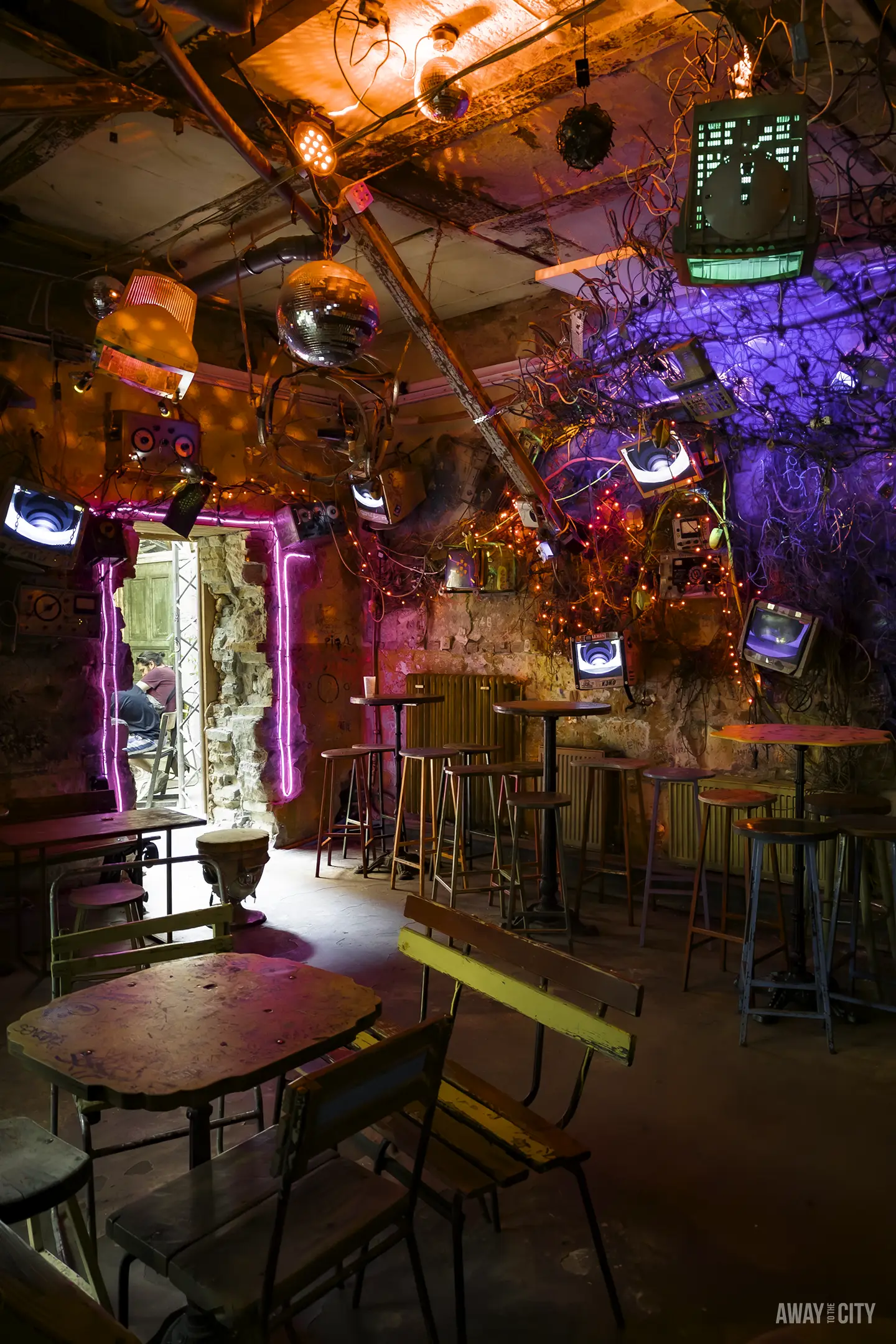
Instead, go when they open, typically around 4-6pm. We know going to a bar that early sound boring, but that's when you can actually explore.
The two ruin bars we like most are Szimpla Kert (also the most famous one) and Mazel Tov in the Jewish Quarter.

If you'd rather have a local show you around, this ruin bar pub crawl covers several spots in one evening.
11. Never hail a taxi on the street.
Some taxi drivers in Budapest target tourists with rigged meters, inflated fares, and long detours through the city.
We've seen one getting loud with a passenger who questioned the bill. It happens most around train stations, Váci Street (Budapest's main shopping street), and the nightlife areas.
The taxis to avoid are marked “Freelancer” or “Független” on the door. Avoid these at all costs! They're completely unregulated, and they'll usually always insist on cash.

Instead, order your taxi through Bolt or Uber… yep, you heard that right!
In Budapest, both apps partner with licensed taxi companies, so every ride is in an officially licensed vehicle with government-regulated fares. It's the same yellow taxi, just without the risk.
You might have read that Uber no longer works in Budapest. That was true until 2024, when it came back through a partnership with a licensed taxi operator. The app works again.
12. Try a smaller bath as well as (or instead of) Széchenyi.
Budapest has over a dozen thermal baths, and more than 60% of visitors try at least one. We love them, especially in winter.
One of our favourite Budapest memories is sitting in one of the heated outdoor pools at Széchenyi while snow was falling around us.
If you're visiting for the first time, we'd say start with Széchenyi Baths. It's the largest medicinal thermal bath in Europe with 18 pools, and it’s located in a gorgeous old building in Budapest’s City Park.
But it does get VERY crowded, especially on weekends.
The bath we enjoyed most is Rudas Thermal Baths. It's a 500-year-old Turkish bath with a beautiful domed ceiling and a much more local atmosphere, but it’s smaller than Széchenyi.
Lukács Baths is another good alternative if you want something quieter.
Just make sure to bring your own towel, flip-flops, and swimsuit. Otherwise, you have to buy them in the gift shop, and they’re quite expensive.
And if you want to swim laps in the pool sections rather than just soak in the thermal pools, you'll also need a swimming cap.
13. Ride Tram Line 2 for budget sightseeing.
Tram Line 2 is one of the best lesser-known things to do in Budapest. It runs right along the Danube on the Pest side, and it's one of the most scenic tram rides we’ve experienced.
For just 500 HUF (about US$1, €1, or £1) for a single ticket, you'll pass the Parliament Building and the Chain Bridge, and Buda Castle sits across the river the entire way.

It's a brilliant alternative to paying for a hop-on hop-off bus, and honestly the views are better because you're right at river level.
When we visited Budapest on our trip to some of Europe's best Christmas markets, this tram was completely decked out in festive lights and decorations. It looked absolutely gorgeous!
14. Take at least one of Budapest's great walking tours.
We're big fans of guided walking tours, and Budapest has some of the best selections we've come across. Across three trips, we've done several, and they always taught us things we'd have completely missed on our own.
This 3-hour Budapest highlights tour is a great starting point if you want to get your bearings quickly.

But the themed tours are where it gets fun. The Buda Castle Vampires & Myths night tour took us through Hungary's dark and bloody history, and it was weirdly entertaining and unsettling.
And the Buda Castle cave tour we took was one of our favourite discoveries in Budapest. We had no idea there was an entire underground cave system beneath the castle, and exploring it with a guide made it even better.
15. Carry a small amount of cash.
Budapest is very card-friendly. Almost every place we visited accepted card payments, even for small amounts. It's how we prefer to travel anyway, and we never had an issue here.

The ONE exception we encountered were public toilets. Most of them, including those at major squares and train stations, cost between 200 and 500 HUF (about US$1, €1, or £1) and often only accept coins.
We were glad we still had a few coins left over from previous trips.
Other than that, you can comfortably just bring your card over.
16. Choose the right side of the river to stay.
Budapest is split into two very different halves: Pest (on the east bank) is the livelier side with most of the restaurants, bars, and sights. Buda (on the west bank) is quieter, hillier, and more residential.

For a first visit, we'd personally lean towards District V in Pest. The area puts you within walking distance of almost everything, and we really liked the voco Budapest D8 by IHG there (it's super stylish, and the breakfast was delicious!).
That said, Buda on the west bank has some beautiful hotels with views you won't find on the Pest side. We stayed at the Hilton Budapest during one of our trips and fell in love with the panorama from our room.
We break down every area in our Budapest neighbourhood and hotel guide.

17. Hunt for Kolodko's mini statues around the city.
One of the quirky things to do in Budapest is tracking down the pint-sized bronze sculptures from guerrilla artist Mihály Kolodko. There are over 40 of them hidden on street corners, benches, and bridges.

We had no idea they existed on our first visit, but kept spotting them by accident so we looked them up. Once you know about them, every walk through the city turns into an unofficial scavenger hunt.
Our favourite mini statuue is Emperor Franz Josef lounging in a hammock on Liberty Bridge. It's so small you can easily walk right past it.
18. Check your bill for the service charge before tipping.
ALWAYS check the bill before you pay! The majority of restaurants in Budapest now include an automatic service charge, listed as szerviz on the receipt. It's typically 10-15%, which is pretty much what you'd tip anyway in Budapest.

The problem is that it's easy to miss, and if you add a tip on top, you're essentially paying twice for the same thing.
We're used to checking this in London where restaurants do the same thing, but it's just not something every visitor expects.
19. Look for the napi menü for a quality lunch at a low price.
A friend who lives in Budapest told us about this, and it's now one of our top tips for the city.
The “napi menü” (meaning “daily menu” in Hungarian) is a fixed-price lunch served at many restaurants on weekdays, usually between 11.30am and 2pm.
You'll get a two or three-course meal that changes daily, often based on seasonal ingredients, for somewhere between 2,000 and 3,500 HUF (about US$5-10, €5-9, or £4-7). That's an incredible price for a proper sit-down lunch.

It's mainly aimed at office workers and students, but there's no reason not to take advantage of it as a tourist. We did it twice on our last trip and were completely stunned by what we got for our money.
If you've ever enjoyed a menú del día in Spain or a plat du jour in France, it's the same idea.
20. Use a bank ATM (and avoid Euronet ATMs).
As mentioned earlier, you barely need cash in Budapest. But if you do want to withdraw some, make sure you use an ATM from a reputable local bank like OTP, Erste, or Raiffeisen.
The ones to avoid are the bright yellow and blue Euronet ATMs. You'll see them on almost every corner in the tourist areas, and they're hard to miss.
But the fees are significantly higher than what a local bank charges, and the convenience isn't worth the cost.
21. Skip the plastic bottles and drink the tap water.
We always google this when we arrive somewhere new, and yes, Budapest's tap water is perfectly safe to drink. Skipping the plastic bottles saves you money and one less thing to carry around.

If you do buy bottled water, here's a handy detail: pink lid means still, blue lid means sparkling.
22. Don't clink beer glasses.
This is one of the biggest mistakes tourists make in Budapest, and we almost made it ourselves.
On our first evening out, we raised our beers to toast with a friend who lives there. She immediately pulled her glass back. We had no idea what we'd done wrong.

It goes back to 1848, when Austrian generals reportedly clinked their beer mugs after crushing a Hungarian uprising. Hungarians refused to do it in protest, and the tradition stuck.
When we asked our friend if people still follow it, she said most of her younger friends still don't clink. Not as a political statement, but simply because nobody did it growing up.
The rule only applies to beer, though. Wine, pálinka, and everything else is fair game.
23. Stand on the right on escalators in the metro.
We use the Tube in London every day, so this is second nature to us. Stand on the right side of the escalator, leave the left side free for people walking past. Budapest has the same unwritten rule.
The difference is that people here are WAY more relaxed about it. In London, standing on the wrong side is probably the most serious crime you can commit on public transport. In Budapest, nobody's going to shout at you.
24. Make eye contact when toasting.
We already mentioned that Hungarians don't clink beer glasses. But there's another part of toasting etiquette that's just as important: look the other person in the eye when you raise your glass.
Our friend in Budapest told us that looking away while toasting comes across as distracted or rude. You're supposed to hold eye contact and say “Egészségedre!” (which means “to your health”).
Most locals won't be offended if you're a visitor, but getting it right earns you bonus points.
This tradition comes natural to us because we grew up in Germany, where the same rule applies. In the UK, it's a nice thing to do but not really expected. And in the US, people make brief eye contact but there's no strong etiquette around it.
Having lived in all three aforementioned countries, we can say it's very much a Central European thing. Hungary, Austria, Germany, Switzerland… they all take it seriously.
25. Expect “un-smiley” service (it's not personal).
Whenever we asked locals for directions or advice, they were always helpful and polite. But the general demeanour in Budapest is noticeably more reserved than what you might be used to in the US or the UK.

Don't expect glowing smiles or chatty welcomes from staff in cafés, restaurants, or on public transport. It's not unfriendliness. It's just not the norm here to smile at strangers, and constant cheerfulness isn't part of the Hungarian culture.
We noticed it within the first few hours and honestly, once you stop expecting it, you stop noticing it. The service itself was always perfectly fine.
26. Always carry your official ID.
This is one of those things that's easy to forget, especially if you're used to leaving your passport in the hotel safe.
In Hungary, there's a law that requires you to be able to present your passport or national ID at any time if the police legally ask you to.
We've never been asked personally, and frankly it's very unlikely to happen to a tourist just walking around. But if you can't show your ID, the police can detain you while they establish who you are, and that's an afternoon NOBODY wants.
27. Learn to pronounce Budapest correctly (with a ‘sh' sound).
The Hungarian pronunciation is “Budapesht”, with a soft “sh” at the end. That's how locals say it, and it's how we try to say it whenever we're talking about the city with our friend from Budapest or ask for directions.
Back home in London, we still slip into the anglicised “Budapest”. But the moment we land, we switch. It's a small thing, but we’ve feel that locals appreciate the effort when you ask for directions or chat about the city.
What to do with all of this
After three trips to Budapest, it never stopped giving us reasons to come back. It's affordable, incredibly beautiful, and easy to get around once you know the small things that trip up most first-time visitors.
And these 27 tips are the ones we actually wish someone had told us before our first visit.
The best thing you can do next is get the shape of your trip down:
Have the most brilliant time. We're a bit jealous you get to see it all for the first time.
🇭🇺 Plan Your Budapest Trip with Our Guides