
Seoul’s Ikseon-dong: Is It Worth Visiting? (+Tips to Get the Most Out of It)
This post may contain affiliate links, including from Amazon and other trusted partners. If you click a link and make a purchase, we may earn a small commission at no extra cost to you. That said, we only recommend products and services we genuinely use and love. Learn more in our Privacy Policy page.
Ikseon-dong in Seoul is one of those neighbourhoods that doesn't look like much from the outside. We could actually see it from our hotel room, and if we're being honest, the rooftops looked a bit rundown. But step into the alleys and it's a completely different world.
We've visited Ikseon-dong across four separate Seoul trips now, and it's become one of our favourite neighbourhoods in the city. The cafes are some of the most creative we've ever seen in Korea, the restaurants are really good, and the fact that all of it is packed into these tiny century-old hanok houses makes it feel like nowhere else in Seoul.
But is Ikseon-dong worth the hype? Yes, it's one of the best neighbourhoods we've been to in Seoul. But it can get VERY crowded (especially in the afternoon), and nothing here is cheap. If you go at the wrong time, the narrow alleyways can feel more stressful than charming.
This guide covers how to get the most out of your Ikseon-dong visit, including our favourite cafes and restaurants, the best time to go, and a few things we wish we'd known before our first visit.
Before you go!
What to know about visiting Ikseon-dong
What is Ikseon-dong?
Ikseon-dong Hanok Village (익선동) is a tiny neighbourhood of century-old hanok houses in Jongno-gu, right in the centre of Seoul.
It's a maze of narrow, lantern-lit alleys filled with independent cafes, restaurants, trendy shops, and self-photo studios, all built inside traditional Korean houses.

It was designated for demolition back in 2004, but the city reversed course and protected the area instead. Young entrepreneurs moved in, renovated the hanoks, and turned them into the trendy, creative spaces you'll find today.
One important detail that makes this place different from other popular areas is that larger franchises aren't allowed here.
You won't find a single Starbucks or chain cafe anywhere in Ikseon-dong (unlike Gyeongju or Daegu, where there's literally a Starbucks inside a hanok). Every cafe and shop here is independent, which is a big part of why it all feels so special.

Ikseon-dong is actually the oldest of Seoul's three main hanok villages, dating back to the 1920s. But it couldn't be more different from the other two.
Bukchon Hanok Village is more residential and traditional, Namsangol Hanok Village is more of an open-air museum with relocated Joseon-era houses. Ikseon-dong is the one where you go to eat, drink, and explore.
Where is Ikseon-dong and how do you get there?
Ikseon-dong sits right between Jongmyo Shrine (a UNESCO World Heritage site) and Insadong, in one of the most culture-rich pockets of Seoul.
The easiest way to get here is by metro. Take Line 1, 3, or 5 to Jongno 3-ga Station and use Exit 4. Once you're out, turn left and cross the street.
Look for the CU convenience store with the bright purple signboard, and the alley right next to it is your entry point into Ikseon-dong.

You can also walk from Anguk Station, but that's about a 10-minute walk.
We stayed at the Moxy Hotel Insadong, which is in the neighbouring Insadong area, and it was literally a two-minute walk to Ikseon-dong from our hotel. If you're already staying in Insadong, you don't even need the metro.
What you'll find in Ikseon-dong
Because our hotel was so close, we ended up visiting Ikseon-dong at least eight times during one of our Seoul trips and tried a lot of different food there (often for breakfast and dinner).
The Ikseon-dong neighbourhood is most famous for its cafes and bakeries, and rightly so. It's the best area for cafe-hopping in Korea, and the perfect place to experience Seoul's unique cafe culture firsthand.
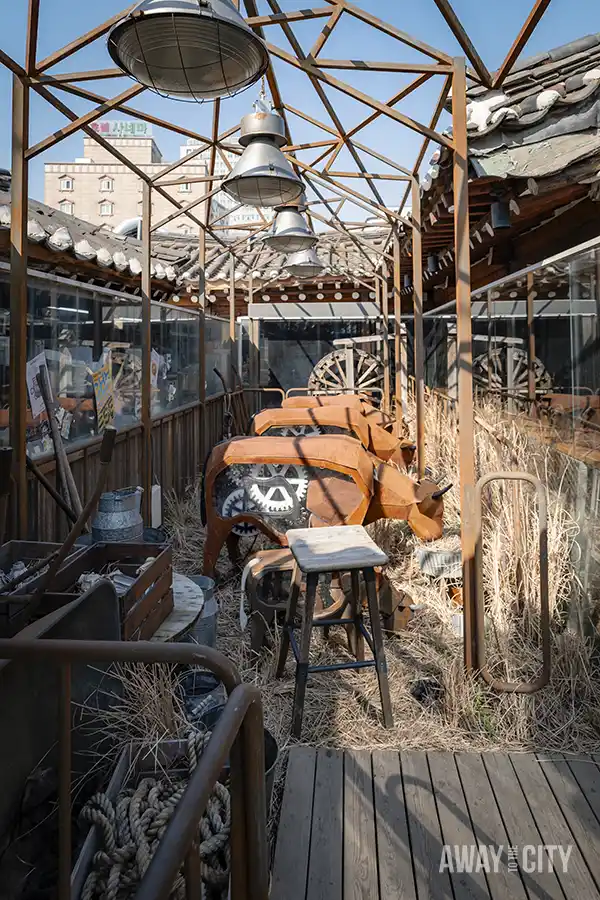

But unlike somewhere like Jeonpo Cafe Street in Busan, it's not just the cafes that are worth your attention here. The alleys themselves have real atmosphere, with interesting details, art installations, and photo spots around every corner.
Here's what you'll find in Ikseon-dong:
- Cafes and bakeries – from soufflé cakes to salt bread, the themed cafes and pastry spots here are some of the most creative in Seoul.
- Restaurants – both traditional Korean food and Western-Korean fusion, many of them set inside beautifully converted hanoks.
- Boutique shops and fashion – small, independent, and nothing you'd find on a high street.
- Self-photo studios – these are absolutely everywhere in South Korea (we saw them all over Seoul and Busan), and Ikseon-dong has its fair share too.
- A small arts market – easy to miss, but worth a browse.

After dark, the neighbourhood takes on a completely different energy. We cover that more in our tips below.
Now, the honest bit. Ikseon-dong is not cheap. Everything here, from the cafes to the boutiques, is priced at a premium. And the crowds, especially in the afternoon, can take away a lot from the experience.
The alleys are so narrow that even a moderate crowd can feel overwhelming. But there's nothing else quite like it in Seoul, and for us, that makes it worth the visit.
Ikseon-dong itself is free to explore too, so even if you don't spend a thing in the cafes, it's still one of the better free things to do in Seoul.

Best cafes in Ikseon-dong
Ikseon-dong has some of the best themed cafes we've come across in South Korea, and cafe-hopping here is easily one of the must-do things during a Seoul trip. Several have become quite famous on social media.
Our biggest tip before we get into specifics: don't get too attached to visiting one particular cafe!
We've been to Ikseon-dong multiple times across our four Seoul trips, and every single time, cafes had closed and new ones had opened. If your first choice has a massive queue, just try the one next door.
1. Cheong Su Dang 청수당
The entrance here is half the experience. A stepping-stone walkway surrounded by lanterns and greenery leads into a cool, dark hanok interior with water features running through it.
Fair warning though: that entrance has become THE spot for Instagram poses, so you may need to navigate past flowing dresses and phone tripods just to get inside.

Their signature is the soufflé castella, which is a super-fluffy, jiggly sponge cake made to order. We waited about 20 minutes for ours, and it was worth EVERY SINGLE minute.
On one of our Ikseon-dong visits, the queue for Cheong Su Dang ran halfway around the neighbourhood. If that happens, come back later or try the morning (that’s what we did!).
Address: 31-9 Donhwamun-ro 11na-gil, Jongno-gu, Seoul | Instagram
2. Soha Salt Pond 소하염전 익선
This is where you come for Seoul's famous salt bread. You'll spot it easily by the salt-flat courtyard out front, complete with a blue pond and a pile of salt. It looks a bit fake, but we think it's quite creative and actually cute.
We showed up about five minutes before opening and there was already a small queue. But after around 10 minutes, we were in.
Later in the day, we saw the lines stretch around the block, so go early if you can.
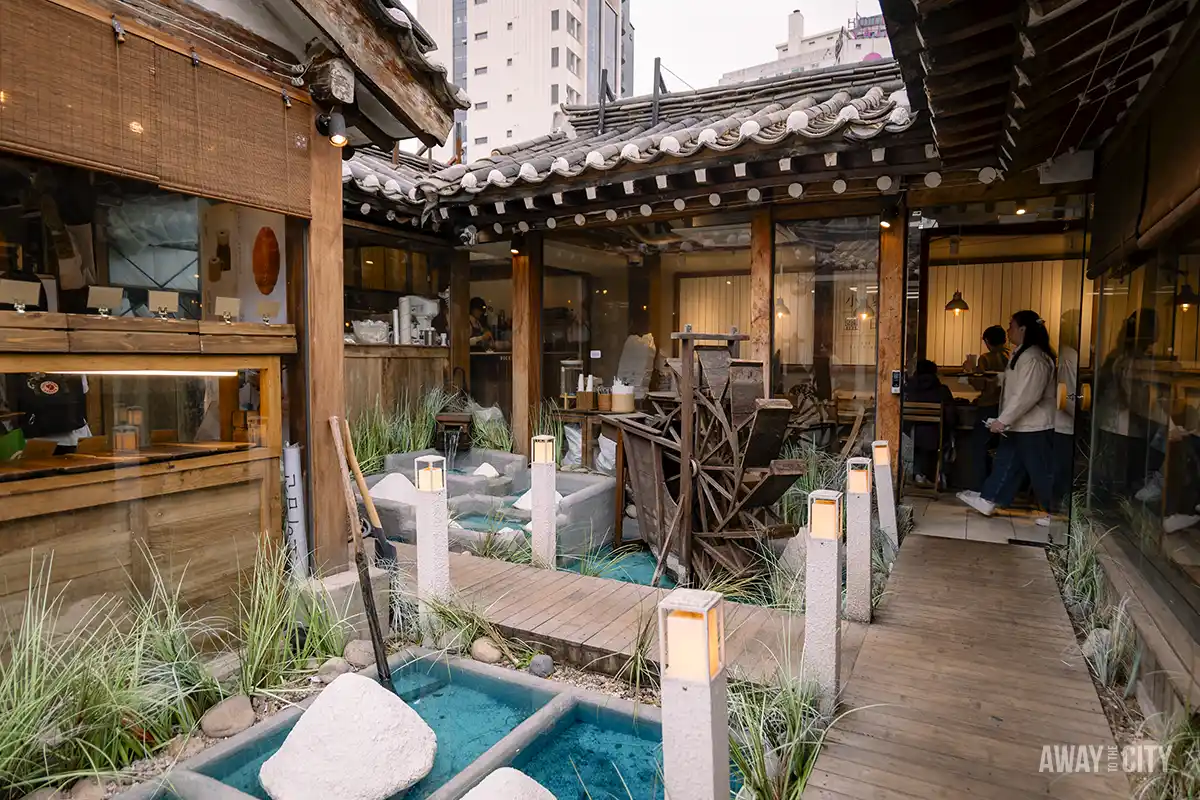
They have several salt bread varieties, but the melted cheese one was our favourite.

Our top tip: If you don't want to wait for a table, go for takeaway. It's much quicker, and the bread is just as good eaten while wandering the alleys.
Address: 21-5 Supyo-ro 28-gil, Jongno-gu, Seoul | Instagram
3. Nakwon Station Cafe 낙원역
This tiny hanok cafe leans fully into a train station theme, right down to the track running through the entrance. The desserts are displayed on a rotating conveyor belt, which makes choosing so much easier (and a lot more fun).

We tried the matcha cake, which was rich, earthy and not overly sweet. The double chocolate was really great too.
As for drinks, we loved the iced Peanut Cream Latte. The hojicha latte, though? Let's just say the latte art was the only good thing about that one.
Address: 33-5 Supyo-ro 28-gil, Jongno-gu, Seoul | Instagram
4. Flipper's Ikseon 플리퍼스 익선점
We actually fell in love with Flipper's at their original spot in Tokyo, so when we saw they had an outpost in Ikseon-dong, we obviously had to go.
They're a Japanese chain that specialises in soufflé pancakes, and in our opinion, they serve the fluffiest and most delicious ones in Seoul.
They do both sweet and savoury options, with plenty of fresh fruit toppings on the sweet side (well, that's our excuse for ordering them anyway).
Address: 31 Supyo-ro 28-gil, Jongno-gu, Seoul | Instagram
As we’ve mentioned before, cafes here do come and go. A few of our old favourites, including Cheese Industry and Donut Jungsu, have permanently closed.
You'll still find them recommended on other blogs and on YouTube. Worth knowing before you go looking for them.

Best restaurants in Ikseon-dong
Most visitors come to Ikseon-dong Hanok Village for the cafes, but the restaurants here are just as worth your time. The neighbourhood is one of THE best spots in Seoul for a proper sit-down meal, and these are the three we'd recommend.
1. Oncheonjip Ikseon 온천집 익선
Oncheonjip is all about shabu shabu, a Japanese-style hot pot where you cook thinly sliced meat and vegetables in a steaming broth at your table.
The whole restaurant is arranged around a foggy courtyard with a small pond, and every table has a view of it.
The little detail we loved? The broth comes with polar bear-shaped ice cubes. Adorable… while they last.

The food itself was seriously impressive. The tempura was as good as any we've had in Japan, and honestly better than some.
A local friend from Seoul told us afterwards that it's the most popular restaurant in Ikseon-dong. We can totally see why.
Address: 31-10 Donhwamun-ro 11na-gil, Jongno-gu, Seoul | Instagram
2. Songam Onban 송암온반
From the entrance alley, this Korean restaurant looks like any other hanok. That's the thing about Ikseondong though… you really can't tell what's on the other side of the door.
Step through and there's a beautiful central pond that completely changes the feel of the place.
We tried their signature dish (onban), which is a refined, savoury broth with tender boiled pork and rice. It was SOOO comforting, and easily one of the most memorable meals we had in the neighbourhood.
Address: 31-3 Donhwamun-ro 11na-gil, Jongno-gu, Seoul | Instagram
3. Ikseon Chwihyang 익선취향
There were only six dishes on the menu when we visited, which didn't exactly fill us with confidence. But then we started looking around at other people's plates, and everything looked incredible.

It's a Western-Korean fusion spot, and we tried two of their most popular dishes.
The Pork Belly Rosé Pasta was rich and indulgent and became our favourite (the waiter told us it's their most ordered dish). The Chicken Curry Risotto was creamy and mildly spiced. Both were really well made.
We went around 2pm and waited about 20 minutes. We saw locals and tourists queueing here a lot longer in the late afternoon and pretty much every time we walked past.
Address: 17-32 Supyo-ro 28-gil, Jongno-gu, Seoul | Instagram
Tips for visiting Ikseon-dong
 TIP #1 – Aim for around 11am. Cafes in Korea don't tend to open much earlier than that, but by late afternoon the alleys get seriously crowded. Because the streets here are so narrow, it actually feels more packed than bigger areas like Hongdae. We stayed just around the corner and walked through at different times of day, and the difference between 11am and 4pm was massive. If you want good photos, morning is the time.

TIP #2 – Come back after dark. Ikseon-dong at night is a completely different experience. The BBQ restaurants start opening in the late afternoon, and by evening, Gogi Street is filled with smoke and loud conversation. This is also when the makgeolli (Korean rice wine) bars and craft beer spots really come alive. If you can, visit once during the day for cafes and once in the evening for food and drinks.
TIP #3 – Download Naver Map before you go. Google Maps doesn't show walking directions in South Korea, so if you rely on it after leaving the station, you'll be completely lost. Naver Map works perfectly (download for iOS or Android). We cover all the essential travel apps for Korea in a separate post. English in Ikseon-dong itself is pretty good though, so you probably won't need a translation app here.

TIP #4 – Combine it with the surrounding area. Insadong, Bukchon Hanok Village, Jongmyo Shrine, and Myeongdong are all within easy walking distance. If you're planning to shop, do these areas first and save Myeongdong for last, or you'll be hauling bags through narrow alleys all day. In the evening, you could walk over to the DDP (it looks stunning when it's lit up) or head to nearby Gwangjang Market for this amazing night food tour.


Prefer to explore with a guide?
Two tours stand out for Ikseon-dong: if you want to eat your way through Jongno without guessing what to order, this street food tour takes you through Ikseon-dong and the surrounding neighbourhood with a local guide.
If you'd rather understand the history behind what you're seeing (and come away with professional photos of it), this hidden-gems walking tour pairs you with a historian and photographer for two hours through Ikseon-dong and a few of the most interesting corners of Jongno.
Where to stay near Ikseon-dong
If you're looking for a central base in Seoul that isn't overrun with foreign tourists (unlike Myeongdong), we'd recommend staying in Insadong. It's right next to Ikseon-dong Hanok Village, and it's our favourite area to stay in Seoul overall.
Moxy Seoul Insadong is our number one recommendation. We stayed here for five nights and loved it. It's funky, modern, very much that flashy poppy Seoul aesthetic, with a rooftop bar looking onto N Seoul Tower. The metro station is right outside the front door. But the real reason we'd pick it? Exit the hotel, cross the street… and you're in Ikseon-dong. Two-minute walk.


Hotel Ibis Ambassador Insadong is a more budget-friendly option. Family of ours stayed here after the 2025 renovation and were really impressed. Comfortable rooms, good soundproofing, a rooftop bar, and even a sauna and public bath in the building.
For more options and a full breakdown of the best areas, check out our guide to where to stay in Seoul.

Planning the rest of your Seoul trip
If we could go back and visit Ikseon-dong Hanok Village for the first time again, we'd go in the morning for one of the cafes and then come back the same evening for dinner and drinks. The daytime and nighttime vibes here are SOOO different, and most first-timers only visit once and miss half the experience.
It's one of our favourite neighbourhoods in Seoul, and a really great place to start your trip. But there's so much more to see.
We've put together a list of free things to do in Seoul that pairs well with a day here.
For a bigger-picture plan, our 3-day Seoul itinerary covers how to fit it all together.
And if you want to make sure you don't miss any time-sensitive bookings, have a look at what to book in advance in Seoul before you go.
🇰🇷 Plan Your South Korea Trip with Our Guides
📍 South Korea Essentials
📍 Seoul
📍 Busan