This post may contain affiliate links, including from Amazon and other trusted partners. If you click a link and make a purchase, we may earn a small commission at no extra cost to you. See our Privacy Policy for more information.
22 Free Things to Do in Seoul on a Budget

See our posts more often

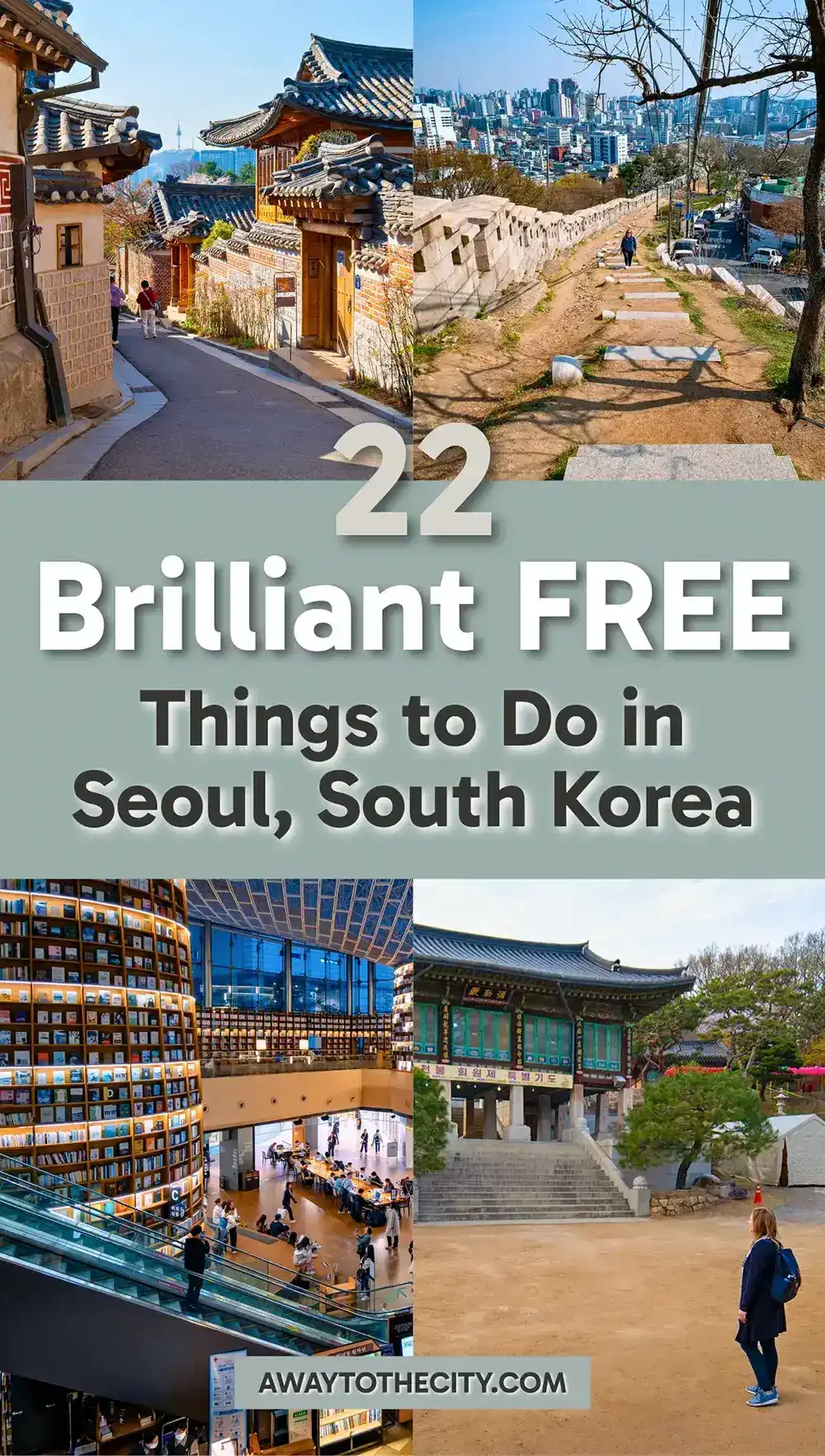


Seoul is one of our favourite cities in the world, and one of the reasons we keep coming back is how much you can experience without spending very much at all.
We’ve visited Seoul four times since 2015 and, while there are plenty of attractions worth paying for, some of our most memorable experiences have been completely free.
Walking along the Cheonggyecheon Stream at night, watching the changing of the guard at Deoksugung, hiking up to panoramic viewpoints, and wandering through centuries-old neighbourhoods cost us absolutely nothing.
If you’re planning a trip to Seoul on a limited budget, or simply want to balance a few bigger-ticket experiences with free attractions, Seoul offers far more free things to do than most major cities we’ve visited.
We’ve pulled together our 22 favourite free things to do in Seoul based on our own visits, with a short section at the end on a few paid experiences so cheap they’re worth knowing about, and some practical tips for keeping costs down while you’re there.
Don’t miss these!
The best free things to do in Seoul: what you need to know
Our 22 favourite free things to do in Seoul
We’ve split our picks into five categories to make it easier to plan your time. You can work through the full list or jump straight to the section you’re most interested in 👇:
Royal palaces and historic Seoul | Green spaces, rivers, and city walks | Free museums in Seoul | Architecture, design, and neighbourhoods | Free viewpoints
Royal palaces and historic Seoul
1. Explore Gyeongbokgung, Seoul’s largest royal palace
Wearing a hanbok (traditional Korean clothing) gets you into Gyeongbokgung for free, and it’s one of the most fun things we’ve done in Seoul. What makes it so special is that EVERYONE does this, tourists and locals alike.

You end up wandering through a palace surrounded by hundreds of people in traditional dress. We felt like we’d walked into a historical K-drama right in Seoul.

Our top tip: On our first visit to Seoul, we walked past so many hanbok rental shops near the palace that we had no idea which one to choose. On our second trip, we pre-booked our hanbok rental and it was a much easier experience. You’ll know exactly what you’re getting before you arrive, the price is set, and most rentals include accessories.
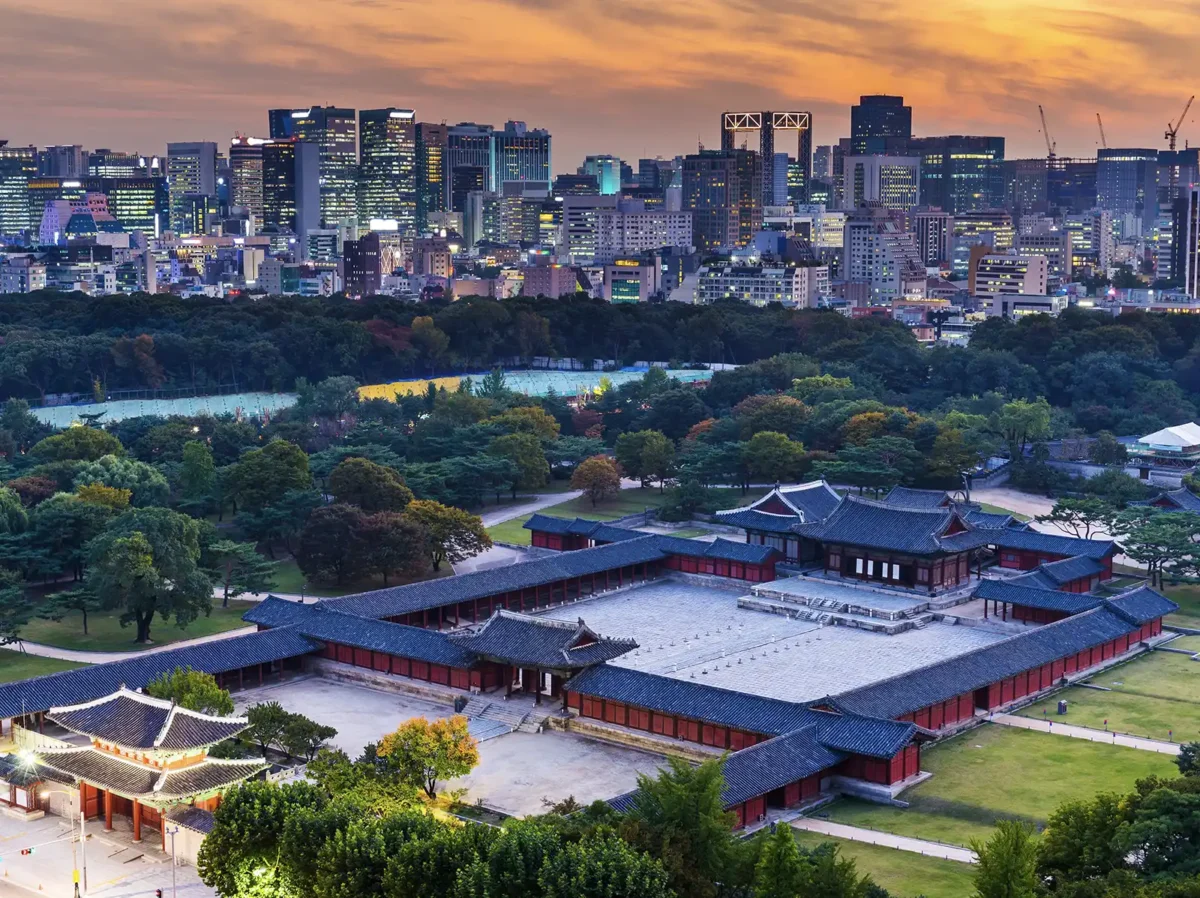
We’ve now visited all five royal palaces in Seoul, and while Changdeokgung is our favourite for sheer beauty, Gyeongbokgung is the largest and most prestigious, so it’s the one to visit first.

If you don’t want to spend a single won (₩), visit on the last Wednesday of the month (Culture Day). Admission is free for everyone, no hanbok needed. Just keep in mind the palace is closed on Tuesdays.
Either way, it’s one of the highlights of any Seoul visit.
2. Discover Gyeonghuigung, the palace the crowds miss
If the queues at Gyeongbokgung are putting you off, Gyeonghuigung is worth knowing about. When we visited, we had the grounds almost to ourselves, which felt slightly surreal given how close it is to one of Seoul’s busiest tourist sites.
Out of the five royal palaces, this is the only one with free admission (though it’s closed on Mondays).
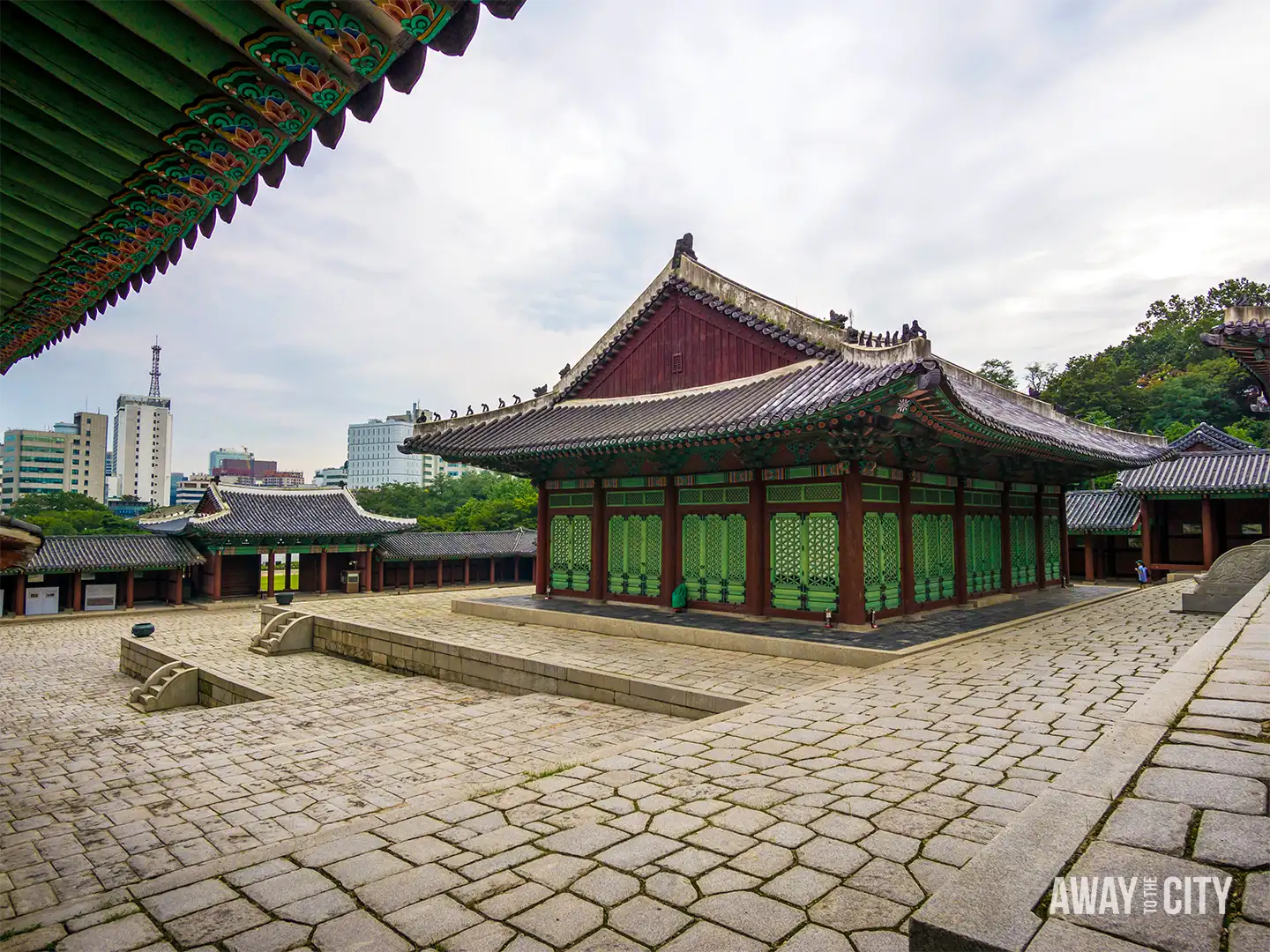
Only parts of the palace have been restored, and walking around it feels different from the grander palaces. It’s rawer and less polished.
We’d say Gyeonghuigung is not the most impressive palace in Seoul, but it’s the palace for when you want the history without the crowds.
The Seoul Museum of History sits on the same site and is also free. It covers how Seoul’s kings once ruled the country, and how the city survived through times of war and peace.
3. Watch the Changing of the Guard ceremony
Gyeongbokgung and Deoksugung are the two palaces in Seoul that host a changing of the guard ceremony, and both are free to watch.

We’ve been to both, and Deoksugung is the one we preferred. You get a closer view of the performers and there are more musical instruments. Plus, it’s less crowded than Gyeongbokgung, even in peak summer.
It’s one of the most memorable ways to experience Korean culture for free, and honestly more impressive than we expected.
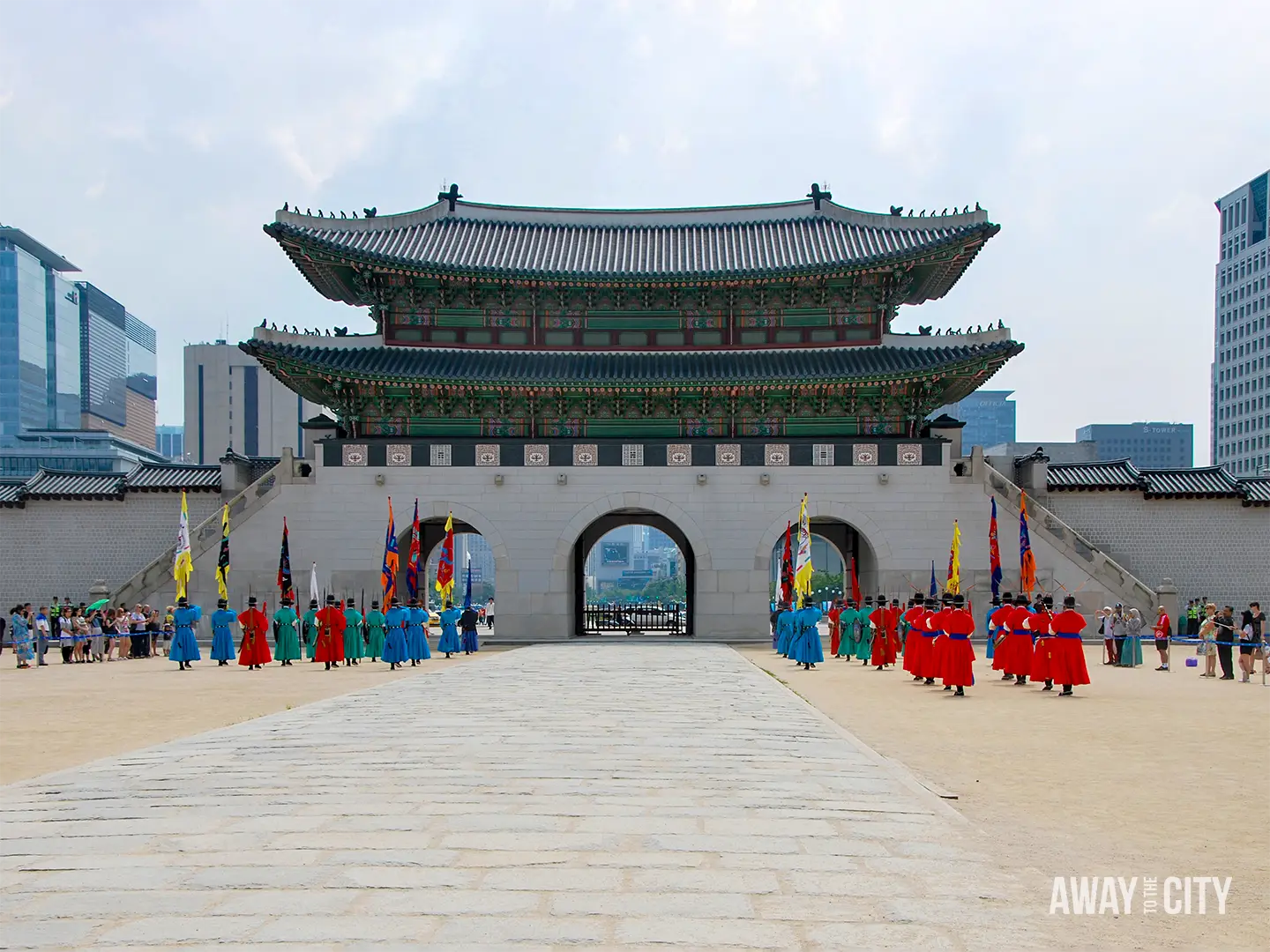
Oh, and stick around after it finishes too. You can take photos with the gatekeepers, which sounds touristy but is actually great fun.
- Changing of the Guard at Gyeongbokgung: 10am and 2pm daily, closed Tuesdays (around 20 minutes)
- Changing of the Guard at Deoksugung: 11am and 2pm daily, closed Mondays (around 30 minutes)
4. Stroll through Bukchon Hanok Village
Bukchon Hanok Village was a place we liked so much on our first visit that we came back and stayed for a few nights on our next trip. That probably tells you everything you need to know.

The village is home to over 900 traditional Korean houses, some dating back more than 600 years, and it’s free to wander through. The narrow stone alleys and views over the Seoul skyline make it one of the most visited spots in the city.
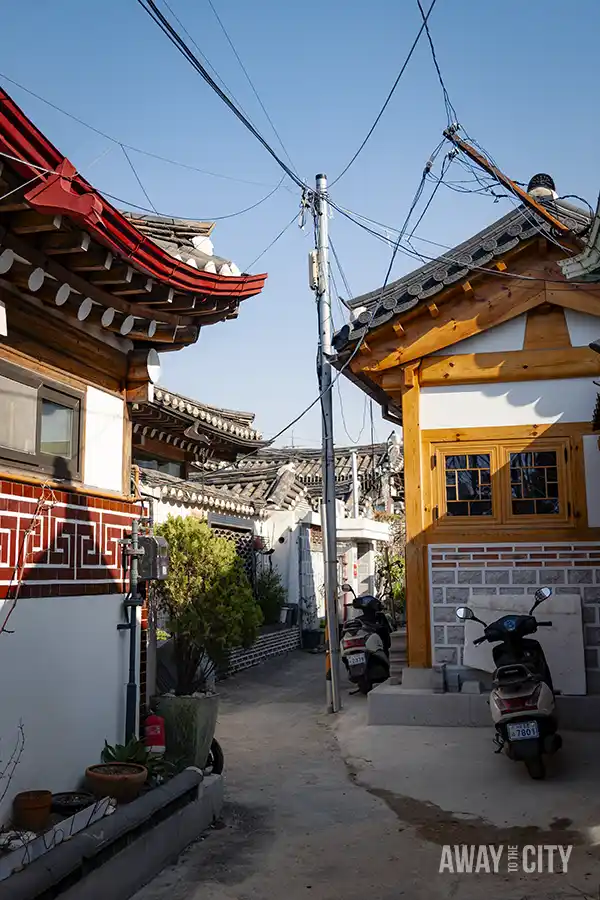

Worth knowing: since November 2024, the Seoul government has restricted visitor access to between 10am and 5pm. These rules don’t apply if you’re staying in the area.
The Hanok Hotel DAAM and Bukchon Binkwan by Rakkojae are two great options in the neighbourhood.
Because we stayed in the area, we were able to watch the sun go down over the Seoul skyline from the viewing point above the hanok rooftops.
5. Find peace at the historic Bongeunsa Temple in Gangnam
Most people know Gangnam from the famous K-pop song over a decade ago (yes, it’s that long ago!).
The reality is Gangnam is an ultra-modern, high-gloss district that honestly isn’t our favourite part of Seoul… but Bongeunsa Temple is the reason we recommend making the trip.
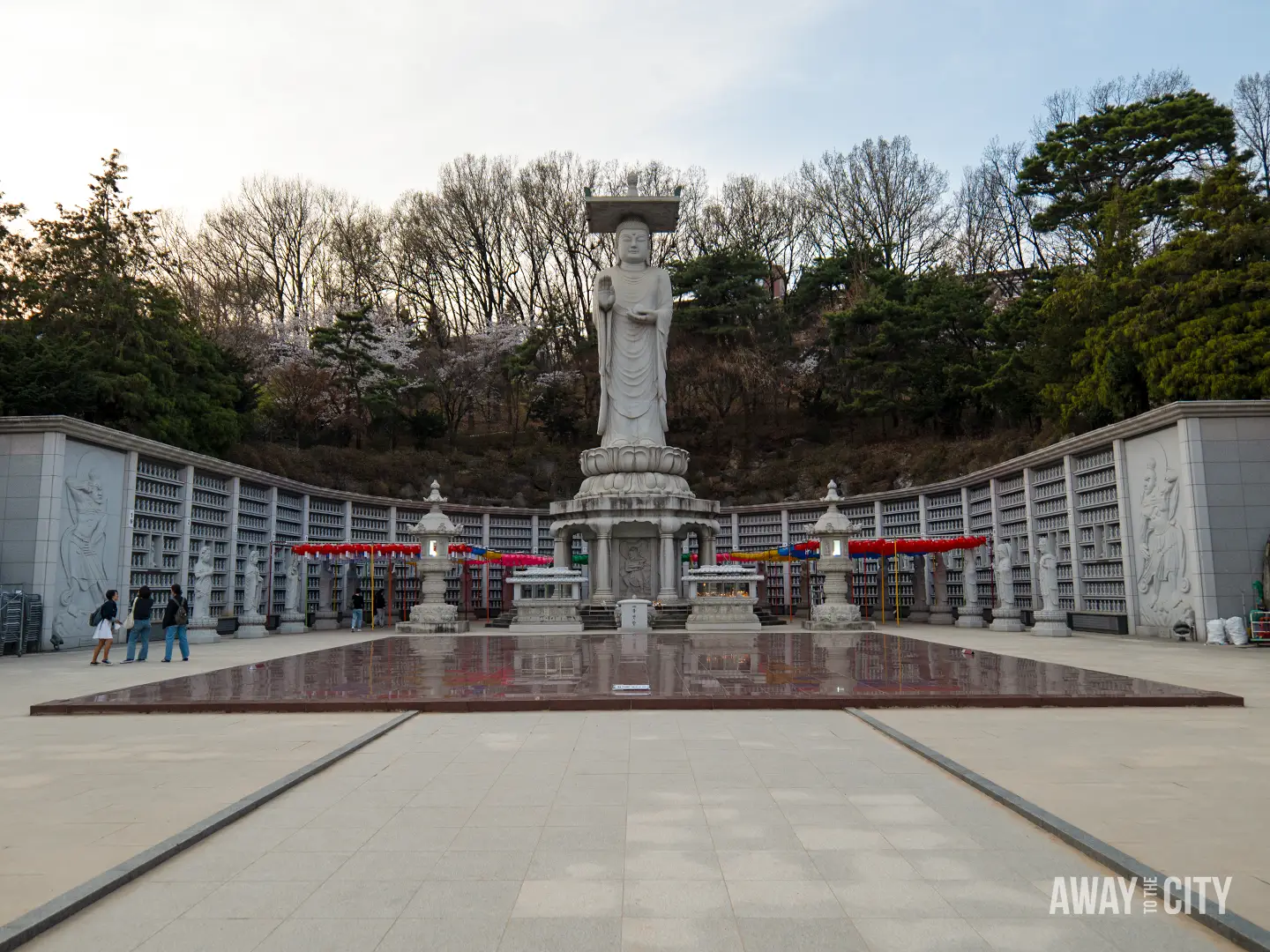
We were actually surprised by how few visitors were here. The temple complex dates back to 794 AD and is a really underrated place to visit in Seoul for free.
Wandering through its lantern-covered courtyards with Gangnam’s skyscrapers directly behind it is a unique thing to see in Seoul.

We’d combine the free Bongeunsa visit with a trip to the Starfield Library at COEX, which is a ten-minute walk away and also free (more on that later in this post).
6. Join a free walking tour
We’ve been to Seoul four times now, and we’ve done a walking tour on every visit. What walking tours give you, above all, is context.
You can wander Seoul on your own and have a great time, but a good guide adds history and culture that you simply won’t pick up from just walking around.
That’s why we do a walking tour in EVERY single city we visit.
Our Seoul walking tours have always been a good mix of free and paid ones (we liked the night market food tour and the nighttime hidden gems walking tour if you’re open to paid ones).
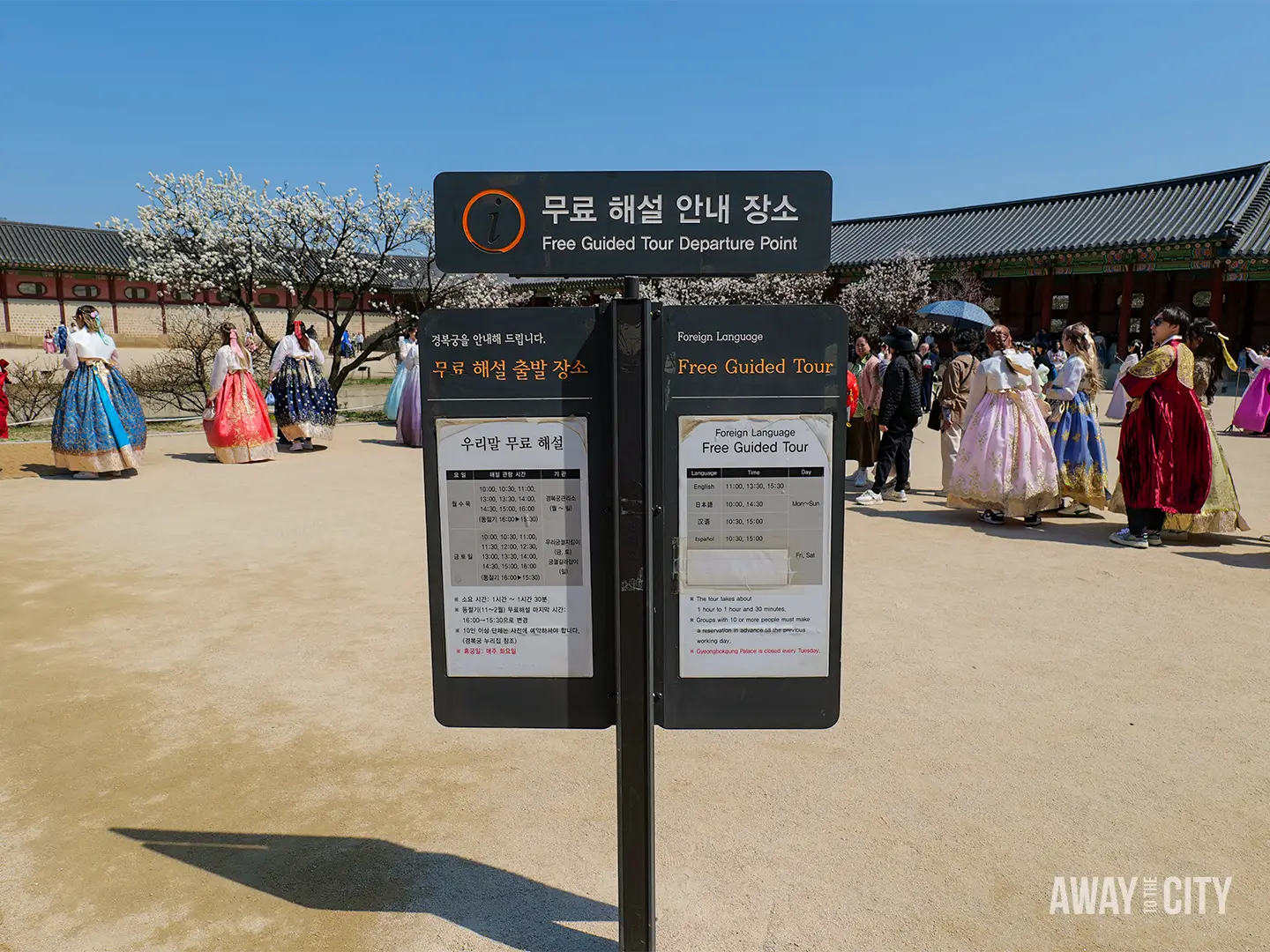
We’ve done free ones in Seoul with GuruWalk and Seoul Free Walking Tour, and enjoyed both.
One thing we really love is that Seoul’s Incheon Airport runs free transit tours for people with layovers under 24 hours.
Very few major airports in the world offer anything like this, and we think it’s a genuinely brilliant thing for Seoul to have.
Green spaces, rivers, and city walks
7. Walk along the Cheonggyecheon Stream
We love walking along rivers in (most) cities, and the Cheonggyecheon is one of the most beautiful we’ve come across. It runs for 11 km (6.8 miles) through central Seoul, sitting below street level.
We’ve never done the full stretch in one go, but we’ve walked plenty of smaller sections over multiple visits, e.g. the stretch between Myeongdong and Gwangjang Market.
Even with only three days in Seoul, a stretch of Cheonggyecheon is worth fitting in.

What’s great about Cheonggyecheon is how much it changes throughout the year.
In spring and autumn, a free outdoor library is set up along the banks on Fridays to Sundays (April to June, and September to November).
When we visited on a Friday evening, the banks were lined with people who’d clearly come straight from work, books open, and chatting between chapters.
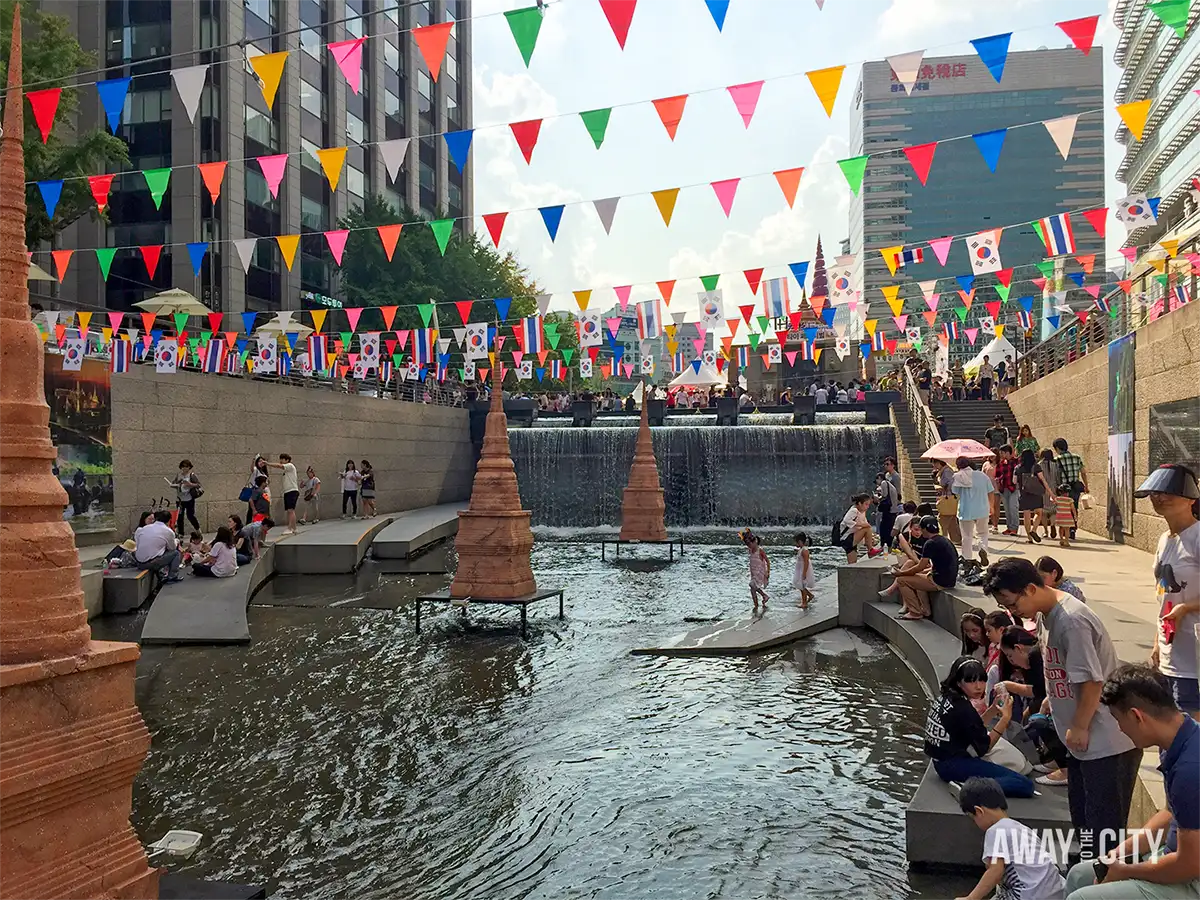
If you go in November, you might catch the Seoul Lantern Festival, which lines the stream with enormous illuminated sculptures (like dragons, tigers, folk characters) all reflected in the water.
8. Hike the Seoul City Wall
Few cities in the world have preserved their ancient fortress walls as well as Seoul. In London, we occasionally find small remnants of the old Roman wall and only because we know what to look for.
Seoul’s fortress walls have been standing since 1396 and are still largely intact, and very obviously visible.

The entire trail goes on for 18.6 km (11.6 miles), but you don’t need to walk all of it. We did the Naksan section, which takes around 40 minutes and starts at Heunginjimun Gate.
Within about a few hundred metres of walking uphill, we’d left most of the other visitors behind. After that it was just us, the wall, and views over the whole city with N Seoul Tower sitting in the hills behind us.
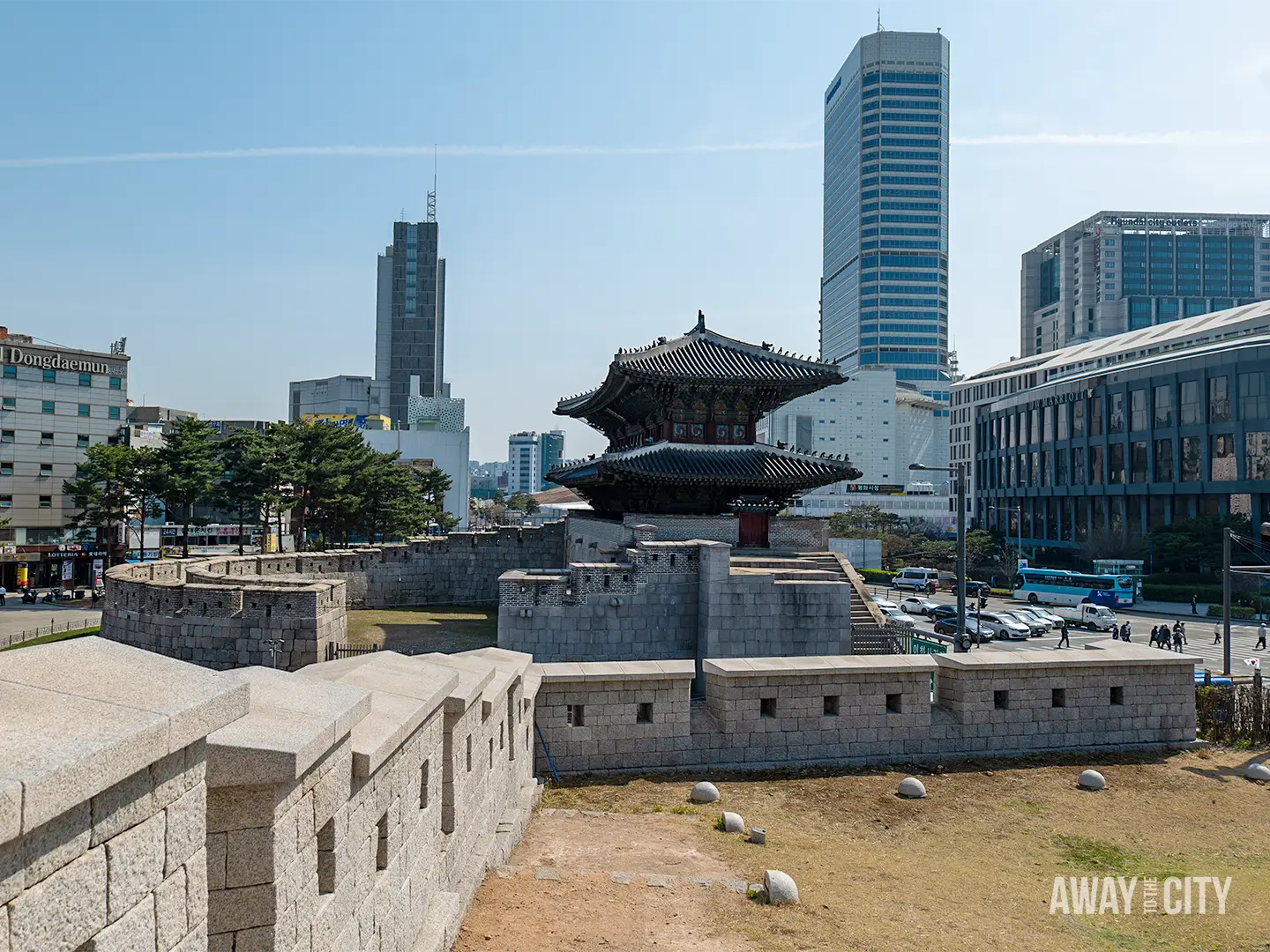
The free Seoul City Wall Museum sits at the start of this section too, if you want the history before the hike.
9. Explore one of the Hangang (Han River) Parks
There are eleven parks along the Han River. While they’re all worth visiting, Yeouido Hangang Park and Banpo are the two we’d start with for a first visit:
- Yeouido Park – best for riverside picnics and, in late March and early April, cherry blossoms along the water
- Banpo Park – best for the Rainbow Fountain show and night views along the Han River

One of our favourite evenings in Seoul was a picnic at Yeouido at sunset with friends who live in the city.
We picked up snacks from one of the nearby convenience stores, found a patch of grass by the river, and just relaxed after days of non-stop sightseeing.
If you go to Banpo, stay for the free Rainbow Fountain show. Coloured jets shoot from the bridge, synchronised to music, every 20 minutes from sunset until 10pm (March to October). We really enjoyed it!

10. Head to Seoul Forest
Seoul Forest is far larger and varied than we expected on our first visit. It’s divided into four distinct sections covering everything from a wetland eco garden and a butterfly garden to a ginkgo tree road, a footbridge over the park.
We went in for an hour and stayed most of the afternoon.

Our favourite thing about Seoul Forest was the deer park, where we saw deer grazing and chilling in the shade. They were completely unbothered by the people around them.
It reminded us of the deer in Richmond Park in London, except here we were surrounded by the Seoul skyline rather than the Surrey countryside.
It’s one of the best places in Seoul to spend a full day entirely for free!
Free museums in Seoul
11. Learn about Korean history at the National Museum
We’ve been to some spectacular museums around the world such as London’s Natural History Museum or the Museum of History in Hong Kong.
The National Museum of Korea isn’t quite as spectacular and immersive as these two, but we still recommend you make time for Seoul’s National Museum because it helped us to understand the country better.
The permanent collection has free entry and covers Korean history from ancient times to the modern era. It’s enormous, and seeing just the highlights will take at least two to three hours.
Spend enough time there, and we guarantee you’ll stumble across something you didn’t know before.
For us, it was learning that hand axes found in Korea in 1978 changed a long-held belief that advanced stone tools were not used in Paleolithic (old stone age) Asia.
12. Uncover Korea’s military history at the War Memorial
The War Memorial of Korea is a free museum dedicated to Korea’s military history.
It covers the topic with over 13,000 pieces of equipment and memorabilia on the grounds. We’ve seen fighter jets, tanks, and artillery outside that you can walk right up to.
Before visiting we had no idea that North and South Korea never signed a peace treaty. The fighting stopped after 1953, but the two countries are technically still at war today.

As Germans, we learnt what division can do to a country. Walking around Seoul, it hadn’t felt that way to us at all. The museum changed that.
Which is exactly why we’d go to the museum before booking a DMZ tour. Everything we’d learnt there gave the experience of standing at the border between North and South Korea a completely different weight.
13. Browse the Seoul Museum of Art (SeMA)
We almost didn’t go to Seoul’s Museum of Art. We’re not big modern art people, and SeMA wasn’t exactly top of our list for a sunny afternoon in Seoul… but it was raining, so we went.
And honestly, we didn’t leave as contemporary art converts. But we did like how the exhibits were presented. The curation was well done and the layout made the whole experience more interesting for us.
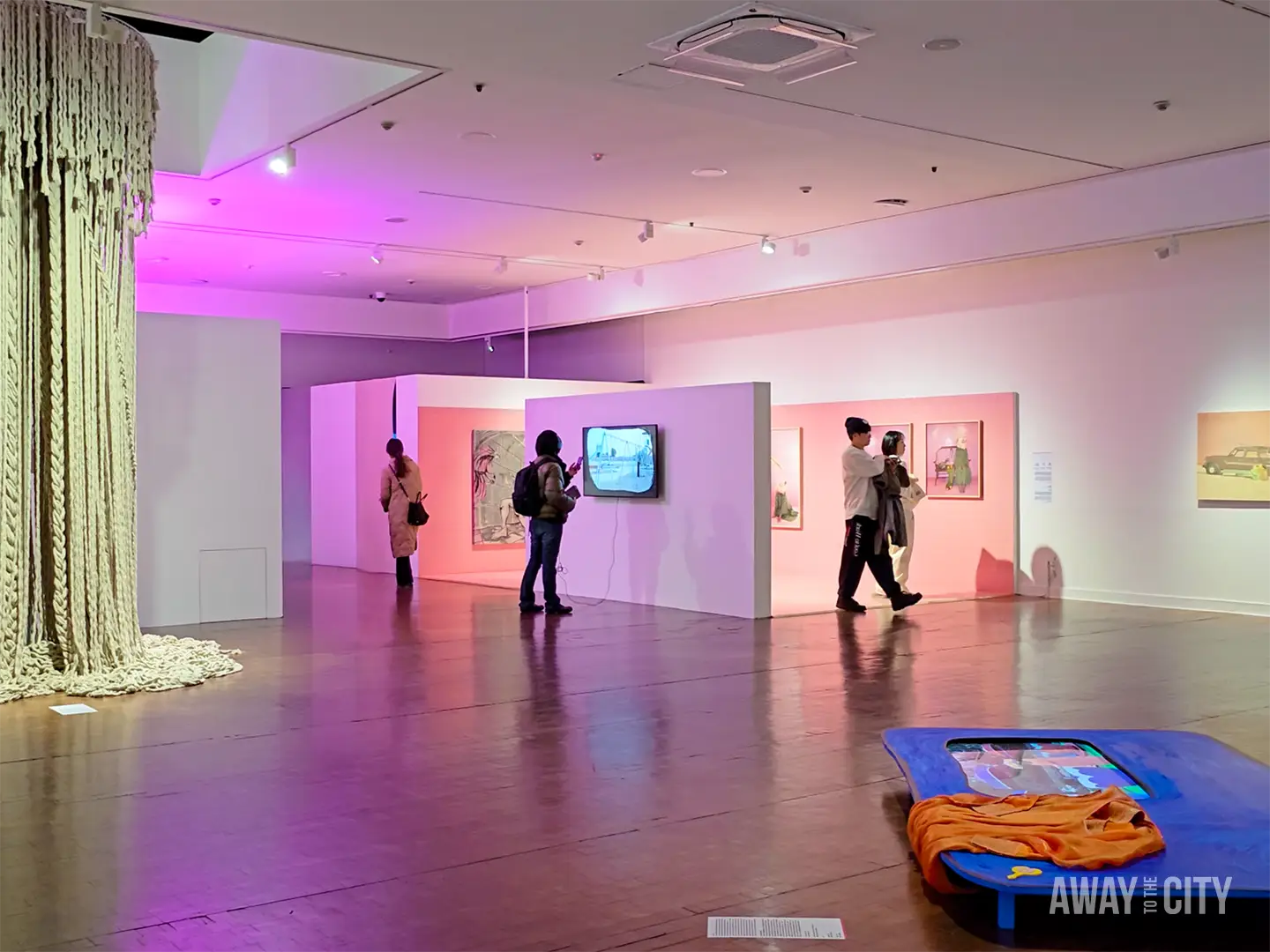
What kept us longer than expected were the illustrations and paintings. From traditional Korean illustration to contemporary styles, it was much stronger than we’d anticipated. So, if you actually appreciate modern art, you’ll love it here.
SeMA’s permanent collection is free to enter, and it sits just behind Deoksugung Palace, so it works well with a visit to the grounds next door.
14. Learn about Hangeul at the National Hangeul Museum
You probably already know that Koreans have their own letters, but did you know that someone actively invented them less than 600 years ago? We didn’t, and learnt it in Seoul’s National Hangeul Museum.
In 1443, King Sejong looked at the Chinese character system they were using and concluded it was far too complex.
So he designed a new alphabet, with just 24 letters. Compare that to the up to 50,000 Chinese characters or Japan’s THREE different writing systems. Quite revolutionary we think.
The result looks like this: 안녕하세요 (pronounced an-nyeong-ha-se-yo) meaning hello. To the western eye, that looks pretty cool, doesn’t it?


Note: The National Hangeul Museum is currently closed for restoration following fire damage and is not expected to reopen until the second half of 2028. We’re keeping it on this list because it’s one of the museums that impressed us most in Seoul, so it’s worth bookmarking for a future trip.
Architecture, design, and neighbourhoods
15. Wander through Insadong
Insadong is our FAVOURITE area in Seoul, and the one we come back to every time (we love the Moxy Hotel here!). What makes Insadong one of the best free things to do in Seoul is simple: the neighbourhood itself is the attraction.

It’s been Seoul’s centre for arts and crafts for centuries, and that identity is still very much alive. The streets are lined with antique shops, art galleries, pottery boutiques, and tea houses.
The reason we like Insadong so much is the evenings. The streets fill up with street food stalls, and the whole neighbourhood vibe changes.
We’d recommend grabbing some Korean food from the stalls there, finding a spot to sit, and just taking in Seoul happening around you.

While you’re there, stop by Jogyesa Temple. It’s one of the most important Buddhist temples in Seoul and free to enter. Just remember to take off your shoes at the entrance (a common mistake we see tourists make in South Korea).
16. Explore the alleys of Ikseon-dong
Ikseon-dong is just a short walk from Insadong, and we walked through this area every single day. And this area grew on us with its themed cafés. There are so many that we tried a different one each day.
Beyond the cute cafés, the narrow alleyways have hanok-era architecture (similar to Bukchon Hanok Village) lined with independent shops, coffee shops, bakeries, and restaurants.
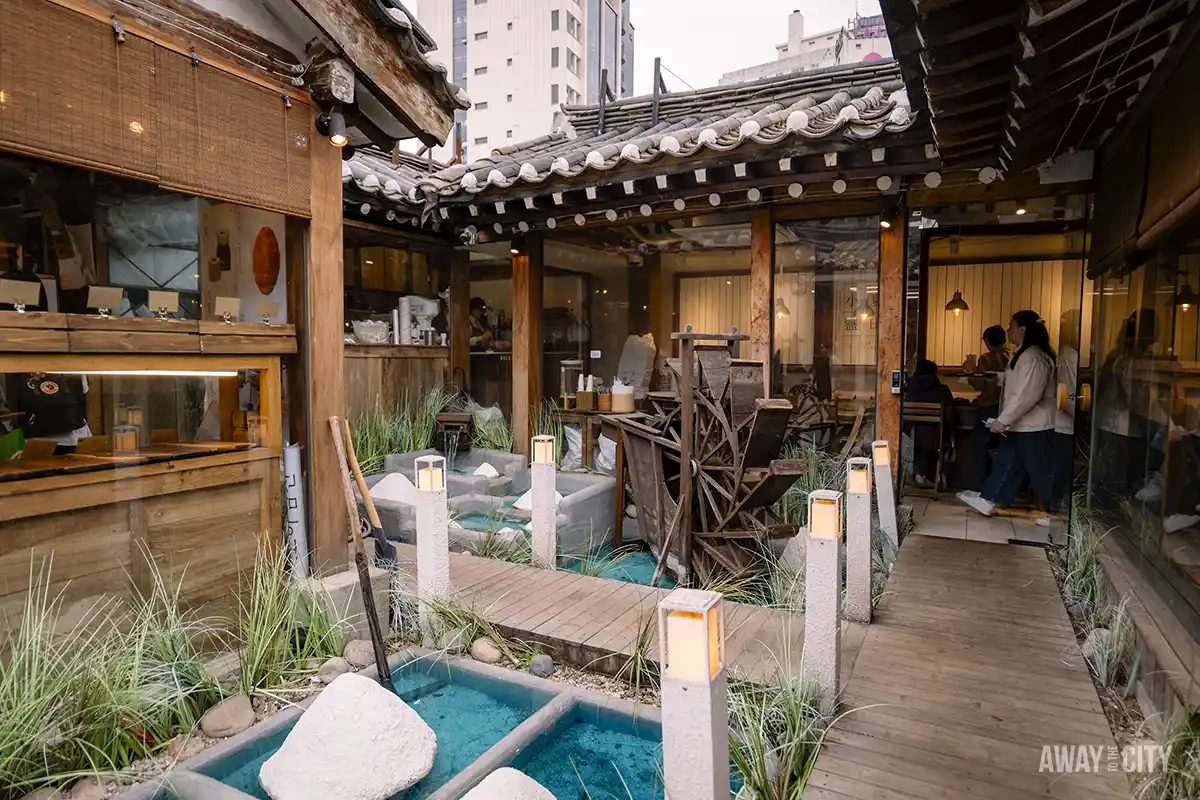
Browsing costs nothing, and with Seoul’s famous café culture being what it is, just wandering and peering into each one is an activity in itself.
If you do want to stop somewhere, we strongly recommend Soha Salt Pond, Mil Toast, and Cheong Su Dang Bakery. For more recommendations, check out our dedicated Ikseon-dong guide.
17. See the Dongdaemun Design Plaza (DDP)
We love architecture and we love everything futuristic. The DDP is both, and it’s one of the most visually striking buildings we’ve seen.
Designed by Zaha Hadid, the building looks like a spaceship that landed in central Seoul and decided to stay.
At night that ‘spaceship’ comes to life… the plaza lights up with a beautiful installation that makes the whole structure glow against the city skyline.

The surrounding grounds and rooftop park are free to explore 24/7. You can also walk inside between 10am and 7pm daily (closed Mondays), although some exhibitions charge a fee.
When you need a break, head down to the B1 food hall. We’ve tried a few things down there on different visits and found it decent enough.
It’s probably not the reason you’d cross the city, but perfectly good for a lunch stop if you’re already there.
18. Step inside the Starfield Library in COEX Mall
The Starfield Library is a unique, open-concept public library inside COEX Mall in Gangnam. It’s free to browse and one of the most photographed spots in Seoul.

In our opinion, the library alone isn’t worth a dedicated trip across the city since Gangnam is relatively far away from other major attractions in Seoul.
But with the library, the SEA LIFE COEX Aquarium, rotating exhibitions, and over 250 stores, we think it’s one of the most complete mall experiences in Seoul.
You can easily spend a few hours here, even if you’re not a lot into shopping.
19. Watch street performances in Hongdae
Hongdae is Seoul’s creative youth district, and the closest thing the city has to Shoreditch in London or Williamsburg in New York. On weekend nights, it turns into an open-air stage.
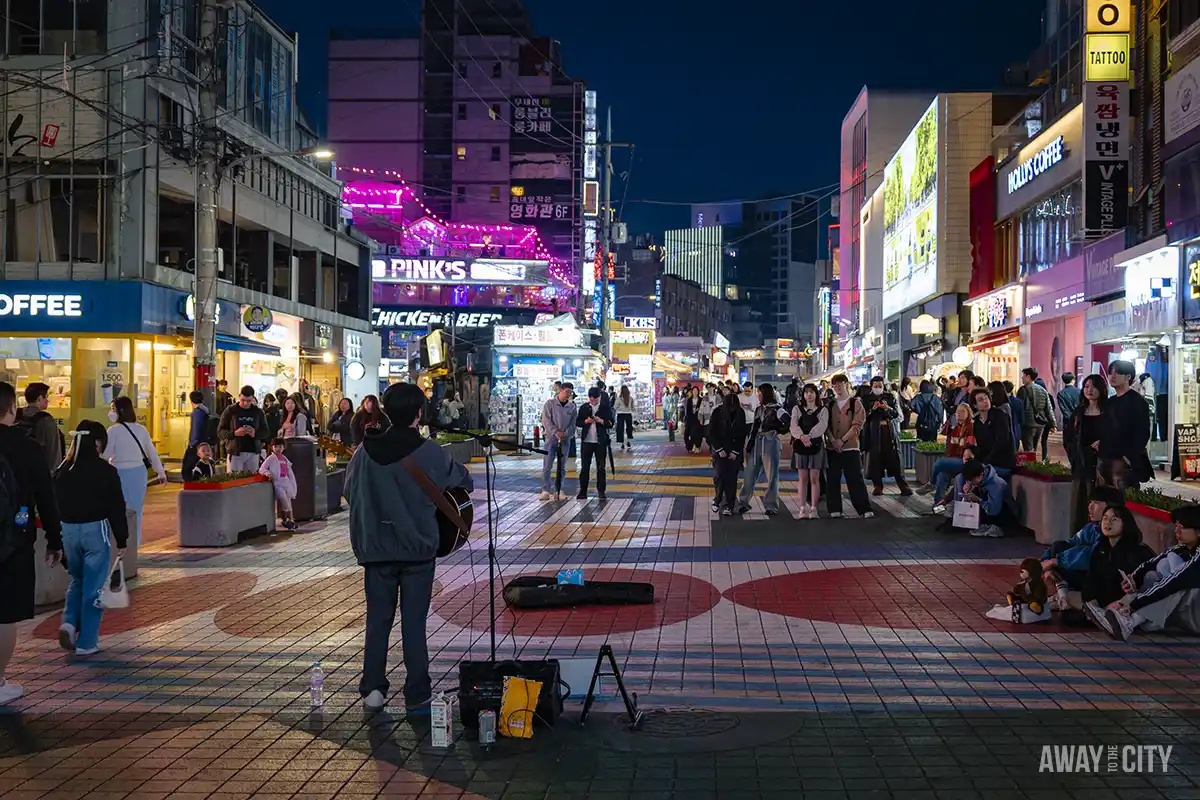
The buskers here aren’t your average street performers. On the nights we’ve been, we saw professional singers and multiple trained students from one of Korea’s top art schools. We were really impressed!
We browsed many of the stores there, heard karaoke spilling out of buildings, and spotted people playing a drum arcade game at speeds that we thought wouldn’t be humanly possible.

Free viewpoints
20. Hike Inwangsan Mountain for panoramic views
Remember Gyeongbokgung Palace we mentioned earlier in this post? The mountain sitting so dominantly in the background is called Inwangsan. We hiked it up and it gave us one of the best views over the city.
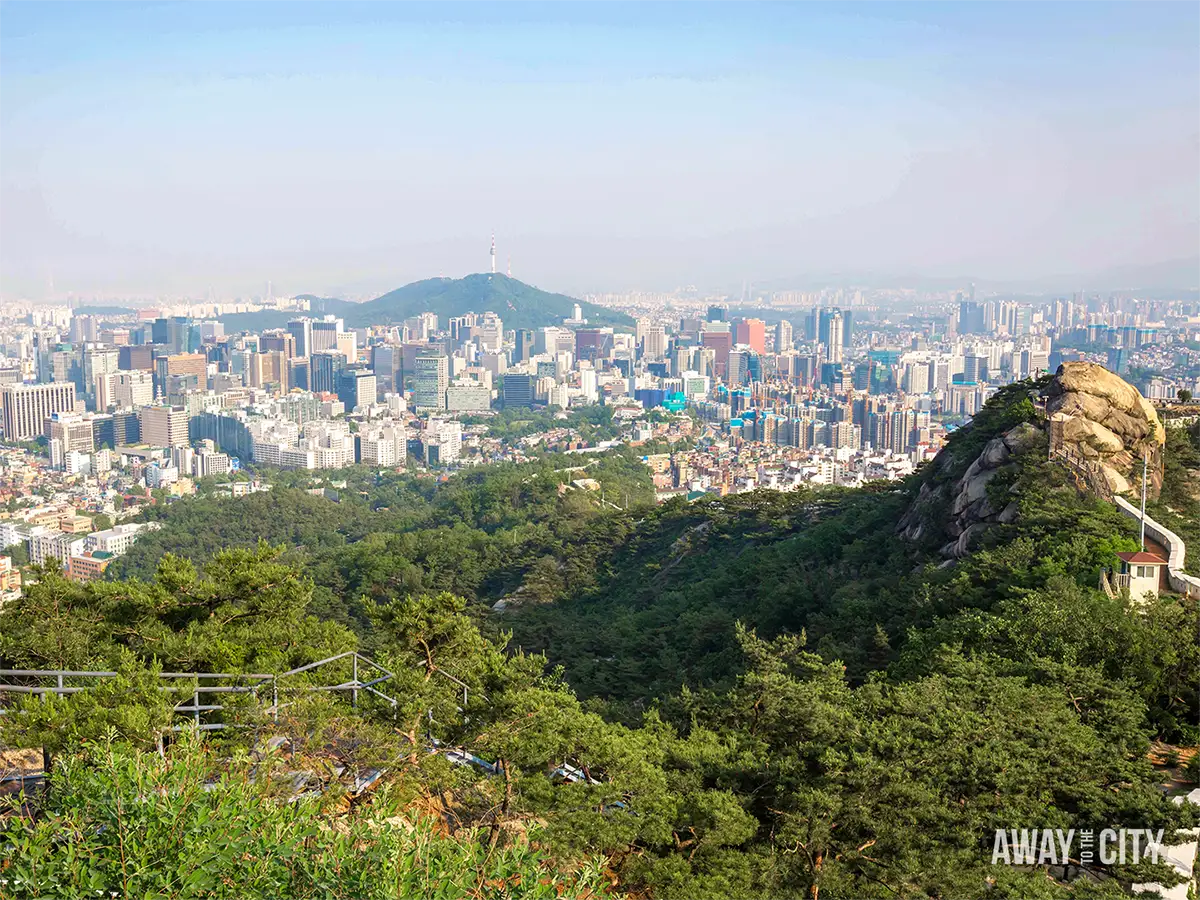
The hike takes about an hour, and the trail is well-maintained with paved paths and wooden stairs most of the way. We wore our trainers and it was perfectly fine.
21. Walk up Namsan Park (and skip the cable car)
Namsan Park is the forested hill in the heart of Seoul that the N Seoul Tower sits on top of, and from there you’ll get another excellent view over the city worth seeing.
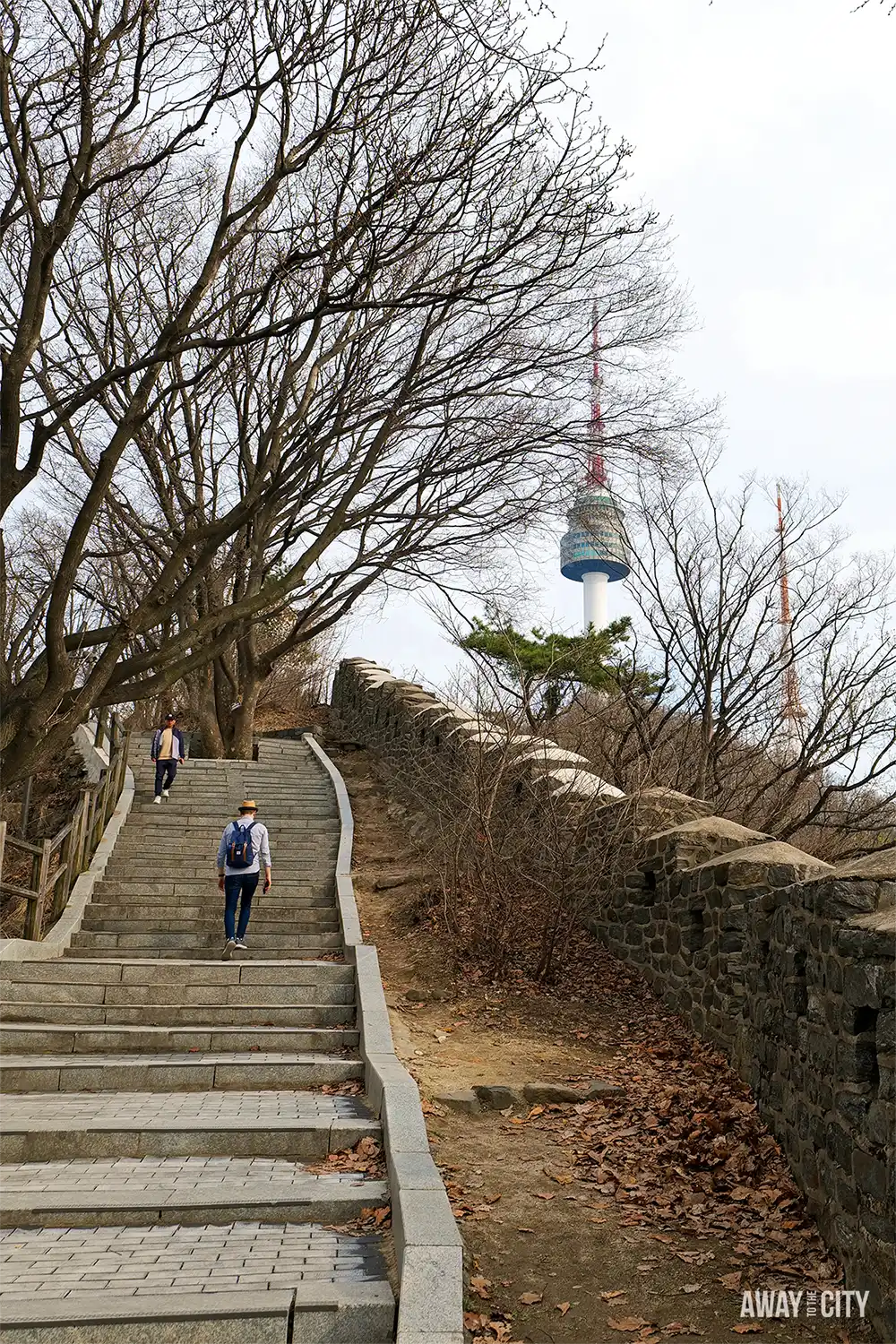
To get to the top, you can take the cable car or walk. On one visit we took the cable car and spent 40 minutes queuing for a three-minute ride.
One of our readers even waited 80 minutes on a weekend. We’ve also walked up, and honestly preferred it a lot more.

The hike takes about 35-40 minutes and is enjoyable in its own right. The path gets steep in places, but it’s clearly signposted with lovely photo spots throughout.
At the top, the outdoor platform, the love locks fence, and the panoramic views are all completely free.
If you’re happy to spend a little, the views from inside the N Seoul Tower are even better.

22. Find Seoul’s best secret viewpoint at Jeongdong Observatory
When it comes to free viewpoints, Jeongdong Observatory is one of Seoul’s best-kept secrets. It’s on the 13th floor of Seoul City Hall Seosomun building.
You can just walk to the reception, mention you’re here for the observatory, and they wave you through the security barrier. The view from up there looks straight down over Deoksugung Palace.
It closes at 5:30pm, so an afternoon visit works best. We went in autumn and the foliage around the palace grounds was spectacularly colourful from up there.
What are the best cheap things to do in Seoul?
Seoul’s free list is long, but a few paid experiences are cheap enough that we’d hate for you to skip them on budget grounds. Here are two we’d pick:
Professional baseball games
One of the surprising facts about Seoul is that baseball is the most popular sport in South Korea… we had absolutely no idea before we went.
We found out on our first visit to Seoul, when our friend who lives there took us to our first ever baseball game at Jamsil Stadium. And we absolutely loved it!

Even if you are not a massive sports fan, watching the game and the cheerleaders makes for a great evening out.
Tickets start from ₩7,000 (about £4, US$5, or €5). Skip the official team websites (like LG Twins and Doosan Bears) as they’re in Korean and have widely known issues with foreign cards.
Instead, we’d recommend buying on the day at the stadium kiosk. On weekdays tickets go on sale 1.5 hours before the game, on weekends and public holidays 2.5 hours before.
Our friend told us matches rarely sell out, so waiting for a sunny day is a perfectly reasonable strategy.
Jongmyo Shrine
Jongmyo is the oldest royal Confucian shrine in Korea, dedicated to the kings and queens of the Joseon Dynasty, and it costs just ₩1,000 (about £1, US$1, or €1) to enter.

We’ll be honest: we found it quite minimal visually. The long, simple wooden buildings feel nothing like the colourful palaces, and without context, it’s hard to know what you’re looking at.
The English guided tour that’s included in the ticket on weekdays completely changed that for us.
Once we understood the rituals and symbolism behind the site, we got so much more out of it.
The tour runs at 10am, 12pm, 2pm, and 4pm, and we’d recommend planning your visit around one of those slots rather than going on a weekend and exploring on your own.
Practical tips for exploring Seoul on a budget
Seoul is already one of the more affordable major cities in Asia, but a few simple habits will stretch your budget even further.
 Use free apps to navigate independently: Google Maps isn’t fully functional in Korea, so download Naver Maps for navigation and Papago for translations instead. Both are essential Korean travel apps and free, and getting around independently is a lot cheaper than relying on taxis when you can’t navigate.

Stay connected without breaking the bank: Purchase an eSIM before landing to have affordable data for navigation and translation and avoid roaming charges. We use Airalo and it’s always been reliable.
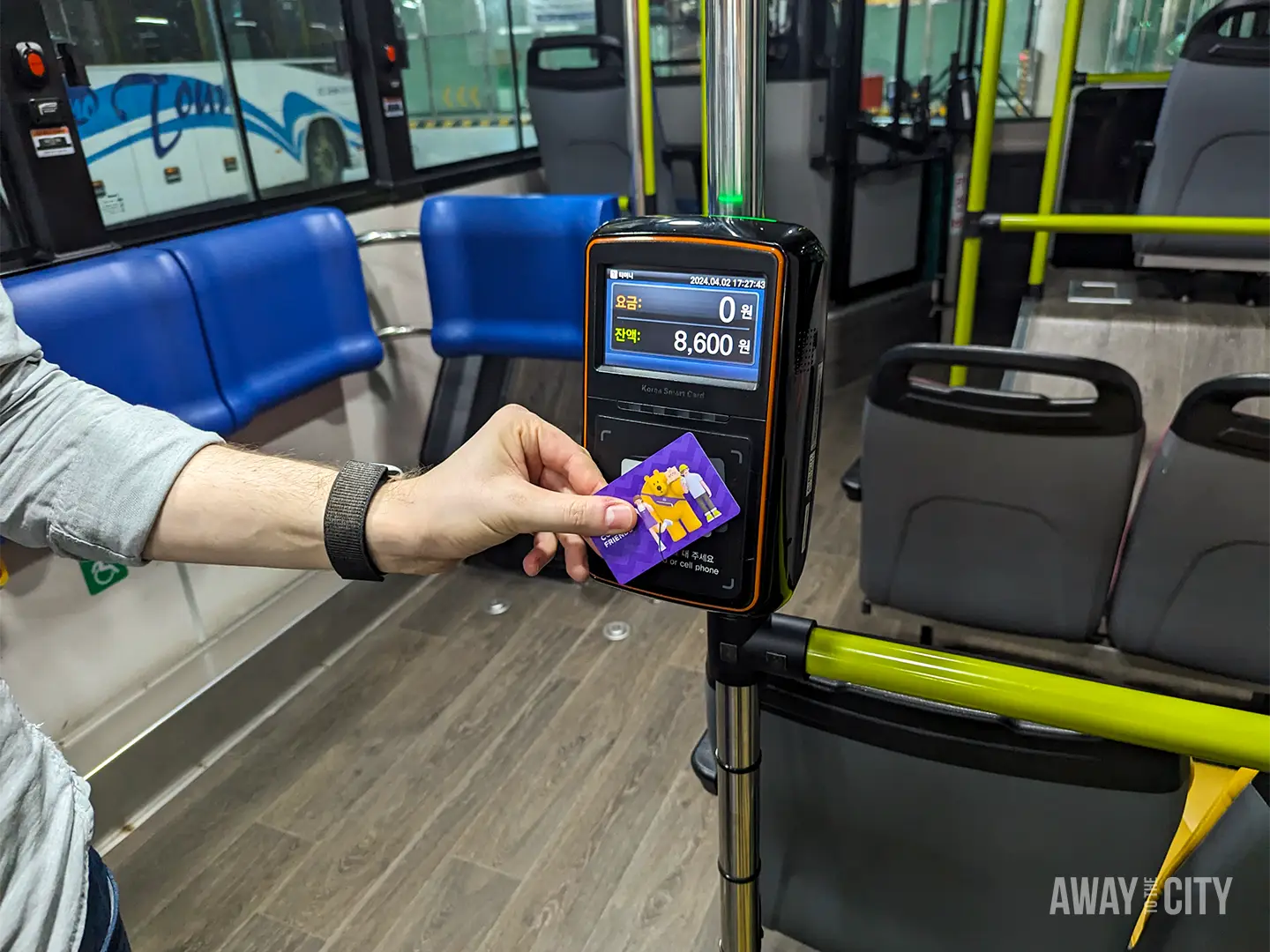
Use public transport, not taxis: Seoul’s subway and bus network is extensive and very cheap. You can pick up a T-money card (rechargeable prepaid transportation card) at the airport or a convenience store, or pre-order your T-money card on Klook and pick it up when you land. If you’re planning more than four subway rides in a day, consider the Climate Card instead, which offers unlimited rides.
Take advantage of Culture Day: The last Wednesday of every month, admission to all palaces and many museums is free for everyone, no hanbok required.
Do a free walking tour: If you’re exploring on a budget, free walking tours are one of the best things you can do in any city, and Seoul has good options. GuruWalk and Seoul Free Walking Tour both cover neighbourhoods like Bukchon and local markets.
Eat at local markets: Namdaemun Market and Gwangjang are some of the markets where locals actually eat, and a street food meal typically costs well under ₩8,000 (about £5, US$6, or €5). Restaurants aimed at tourists will cost you noticeably more for noticeably less atmosphere.

If you’re planning to mix free attractions with a few paid ones, the Klook Pass Seoul is worth looking at. It includes entry to a curated list of top attractions, is valid for 30 days, and works well if you’re adding the odd paid experience to an otherwise free itinerary.
FAQ: Budget-friendly Seoul
Is Seoul good for budget travellers?
Yes, very. Many of Seoul’s best historical and cultural attractions are either free or cost under ₩5,000 (about £3, US$3, or €3). The public transport network is extensive and cheap, street food meals at local markets come in well under ₩8,000 (about £4, US$5, or €5), and free walking tours are readily available. You can have a full few days in the city without spending much at all.
Can you visit Gyeongbokgung Palace for free?
Yes. Wearing a hanbok (traditional Korean clothing) gets you in for free, and hanbok rental shops are everywhere near the palace. Alternatively, if your visit falls on the last Wednesday of the month (Culture Day), entry is free for everyone. The palace is closed on Tuesdays.

Seoul on a budget: what’s next?
We’ve been to Seoul multiple times now and somehow our to-do list is longer than when we started. Every trip throws up something new, whether it’s from our own research, a recommendation from another traveller, or something we stumbled across on the ground.
And the fact that you can experience so much of Seoul for free makes it very easy to keep coming back.
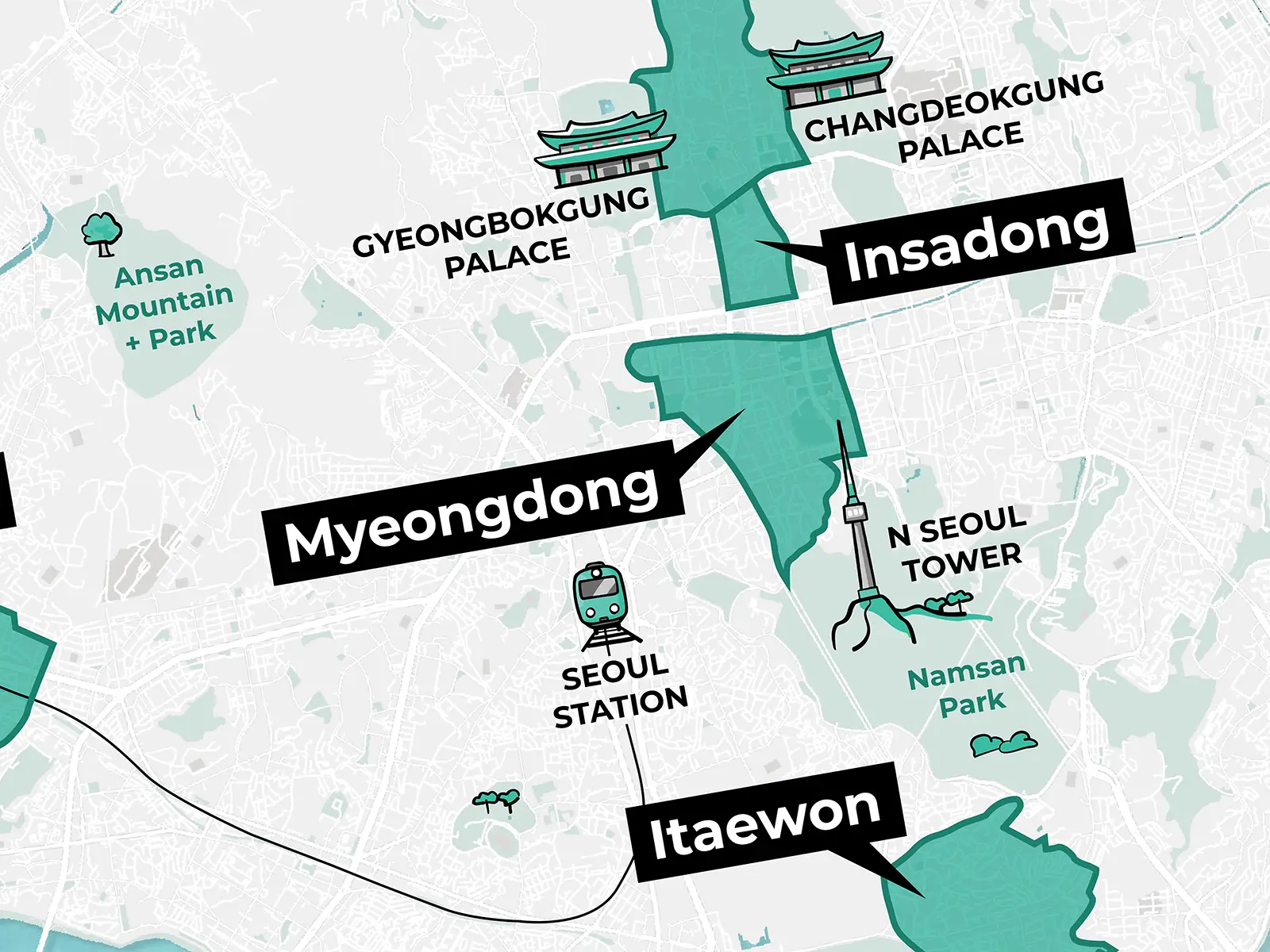
If you’re still sorting the logistics, our guide to the best areas in Seoul breaks down the five neighbourhoods we’d actually recommend for a first visit (including hotel recommendations).
And if you’re planning to mix in a paid experience or two, it’s worth checking what to book in advance so you don’t miss out once you’re there.
For everything to eat in between, our Korean food guide is a good place to start.
🇰🇷 Plan your South Korea trip with our guides
📍 South Korea essentials
📍 Seoul
📍 Busan