15 South Korean Foods You Must Try When Visiting
This post may contain affiliate links, including from Amazon and other trusted partners. If you click a link and make a purchase, we may earn a small commission at no extra cost to you. That said, we only recommend products and services we genuinely use and love. Learn more in our Privacy Policy page.


We fell in love with South Korean food before we ever set foot in South Korea.
A friend from Seoul introduced us to it while she was studying in London, and from the moment she sat us down in front of a grill loaded with samgyeopsal (pork belly), it was over.
When she moved back a few years later and we visited her in Seoul, she spent two weeks introducing us to local restaurants, street food stalls, and corners of the city we'd never have found without her.
We've been back four times since, and Korean food has become a regular fixture wherever we've lived and travelled. But nothing compares to eating South Korean food in South Korea itself.
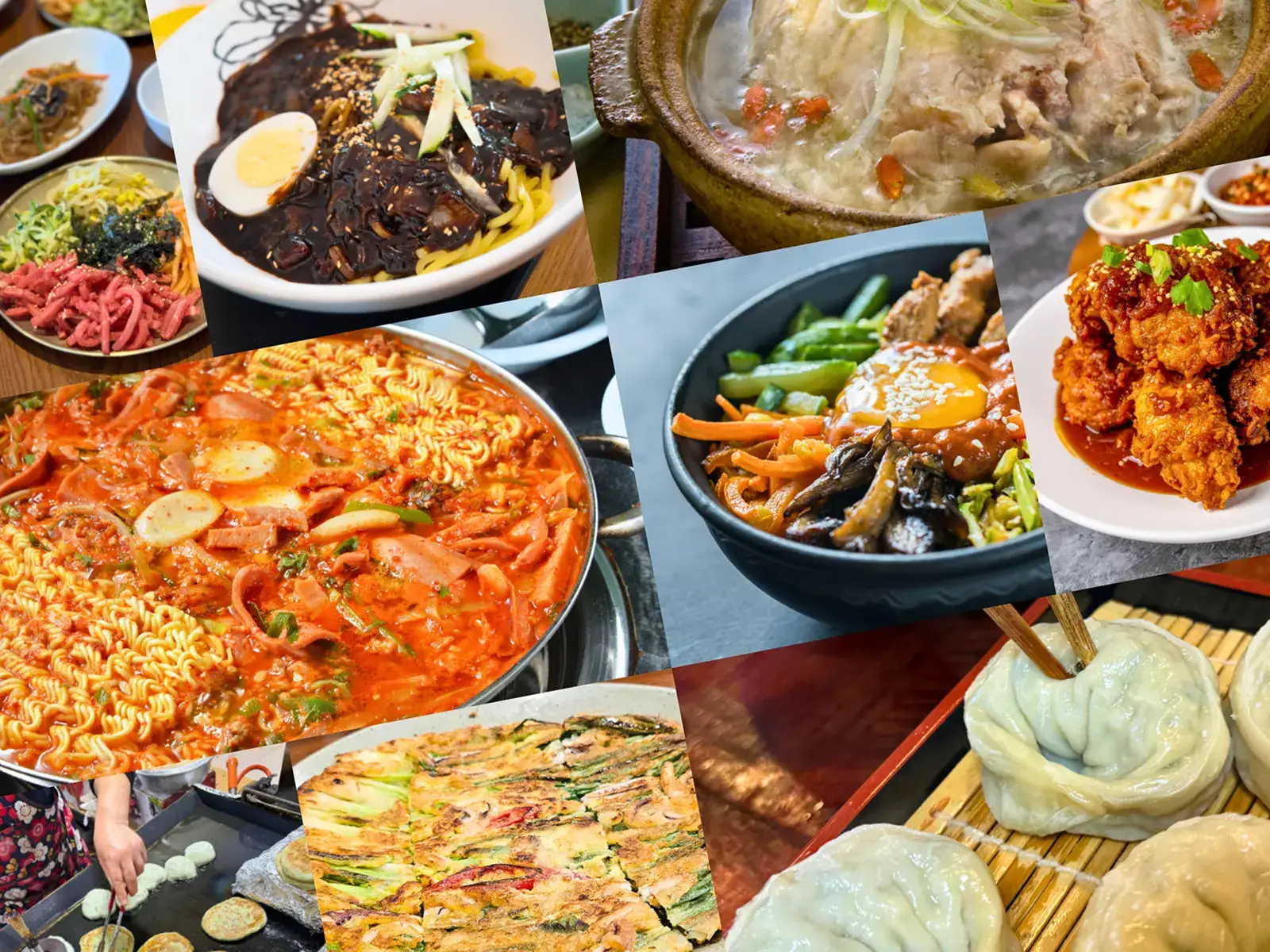
Out of the hundreds of Korean meals we’ve had, below are the 15 South Korean foods we'd tell any first-time visitor to try. It includes the dish we'd put above everything else on the list (Korean BBQ), our go-to weeknight dinner at home (bibimbap), and the street food we queued for with locals in Busan.

Don't miss these!
Our Top Picks For Eating Well In South Korea
South Korean food is one of the most exciting cuisines in the world. Here's where to start:
- The #1 not to miss: Korean BBQ (grilled meat cooked at your table)
- For chicken lovers: Korean fried chicken (double-fried)
- For street food lovers: Tteokbokki (spicy rice cakes)
- For soup lovers: Samgyetang (ginseng chicken soup)
- For vegetarians: Bibimbap (mixed rice bowl, go for the tofu version)
- For a sweet tooth: Hotteok (sweet filled pancake)
 Top food experiences in Seoul:
- Street food market tour (our #1 pick for first-timers, covers the most iconic Korean street foods in one evening with a local guide)
- KBBQ with a local host (a local takes you to their favourite Korean BBQ spot and shows you how to cook and eat it properly)
- Kimchi-making class (learn to make South Korea's most iconic food yourself from scratch)
What is South Korean food actually like?
South Korean food is bold, deeply savoury, and built around sharing. Almost every meal comes with banchan, small side dishes served automatically alongside your main.
Expect fermented flavours, sesame, chilli powder, and rice at the centre of almost everything.

One of our favourite things about eating in South Korea is the banchan. You pick one main dish, and suddenly the table fills with small plates, all free, all refillable.
At Korean restaurants outside Korea, you pay for every side. Here, it just keeps coming.
Kimchi is at the heart of it all. The fermented vegetables (the most popular version includes napa cabbage) took a few tries to win us over, but now we totally LOVE it and even made it a few times ourselves at home.
Fermented condiments like gochujang (chilli paste) and doenjang (soybean paste) show up in everything from stews to marinades.

Traditional South Korean foods have a reputation for being spicy, but most dishes sit at a comfortable heat level. The spice is there, but it rarely overwhelms.

Our top tip: Be prepared that many restaurants won't have an English menu, so download Papago before you go. It translates menus instantly using your camera (it’s better than Google Translate), and it's one of the most useful apps for travelling in South Korea.
15 South Korean foods you must try when visiting
From street food stalls to sit-down restaurants, these are the dishes we'd put on any South Korean food list without hesitation… whether you're just a day or 3 days in Seoul, or have an entire week to spare in Korea.
We haven't included specific restaurant recommendations here because this post covers South Korean food across the whole country, not just Seoul.

Just note that while most places don't require a booking, very popular or Michelin-recognised spots are worth booking ahead, and we have a full guide to what to reserve in advance in Seoul if that's your base.
Korean food staples
1. Korean Barbecue 고기구이
Korean BBQ, or gogi-gui (literally “grilled meat”), is the first Korean dish we ever tried, and if someone could only eat ONE thing in South Korea, we'd tell them to make it this one.
KBBQ a style of dining where you cook meat directly at a table-top grill and eat it wrapped in lettuce with garlic and dipping sauces. The main cuts are samgyeopsal (pork belly), galbi (short ribs), and bulgogi (marinated beef).

Every time we've been to South Korea, the restaurants are packed every evening, even on weekdays. You cook together, pass dishes around, top up each other's drinks, and it feels less like a meal and more like an event.
Honestly, it's very hard to have a bad KBBQ in Korea. The competition is fierce enough that mediocre places don't last long.

Our top tip: KBBQ is one of those meals that's best enjoyed as a shared, social experience, and this guided KBBQ experience in Seoul delivers exactly that. A local host takes you to one of their current favourite spots and eats with you, so it works perfectly whether you want someone to show you the ropes or just don't want to navigate it alone.
It's also one of the best things to do in Seoul we'd put near the top of any first-time list.
2. Bibimbap 비빔밥 (mixed rice bowl)
Bibimbap is a rice bowl topped with seasoned vegetables (like carrots, mushrooms, spinach, daikon, and bean sprouts), meat or tofu, a fried egg, and gochujang (a fermented chilli paste to give it a real kick).
You stir everything before eating while the ingredients continue to sizzle in the scorchingly hot stone bowl.

The hot stone bowl is called dolsot bibimbap and is actually our preferred version.
The raw egg arrives on top and slowly cooks from the residual heat while you eat, and by the time you get to the bottom, the stone has crisped up the rice into these incredible crunchy bits at the bottom of the bowl… SO delicious!
Our Korean friend once pointed out that bibimbap is traditionally eaten with a spoon. Chopsticks feel like the natural instinct, but the spoon is the way to go.
While you must try KBBQ at least once, bibimbap is our go-to dish and the one we could eat on a regular basis.
3. Korean fried chicken 치킨
Korean fried chicken, or KFC (no, not that one), is a dish that completely reframes what you thought fried chicken could be.
Each piece is typically double-fried, which gives it a phenomenally crispy exterior that holds up even as you eat, with juicy meat inside.

The sauces are where it gets interesting. You'll find everything from a sticky gochujang glaze to soy garlic and honey butter variations, and most places let you mix and match.
Then there's chimaek, the Korean tradition of combining fried chicken with a cold beer.
We had a HUGE portion alongside Cass beers just before we went to see a baseball game at Jamsil Stadium in Seoul, and it was some of the crispiest, most flavourful chicken we've ever eaten.
The food alone made the entire game so much better.
4. Jjajangmyeon 짜장면 (black bean noodles)
Jjajangmyeon is a bowl of thick noodles coated in a rich, dark black bean sauce with pork and vegetables. It's extremely savoury, mildly sweet, and (unusually for Korean food) not spicy.

If you've watched K-dramas, you've almost certainly seen it.
It's the comfort food Koreans order on Black Day (the day dedicated to people who are not in a relationship), when single people gather to eat jjajangmyeon together in solidarity. We LOVE that this exists.
Honestly though, black bean noodles aren’t our favourite. There are other dishes on this list we'd reach for first. Still, we think it's worth trying at least once.
There seems to be an endless amount of both noodles and sauce, so make sure to mix it all together before you start eating.
Soups and stews
5. Kimchi jjigae 김치찌개 (kimchi stew)
Kimchi jjigae is a stew made from kimchi, pork, tofu, and gochujang, simmered together into a savoury, tangy broth. It's one of the most commonly eaten everyday dishes in South Korea.

We already mentioned earlier that we’re obsessed with kimchi and spicy food, so kimchi stew is right up our alley.
It’s so satisfying when you lift the lid on a bubbling pot of red broth and you find chunks of pork or tofu hiding underneath.
This meal is the kind of dish that stew lovers will go back to again and again. If that's not your thing, there are other dishes on this list that might suit you better.
Our top tip: Kimchi shows up in almost every Korean meal, either as the main ingredient or as a side dish. If there's one thing worth learning while you're in Seoul, it's HOW to make it. This kimchi-making class is taught by a local, and it's one of the most hands-on things you can do in Seoul.
6. Sundubu jjigae 순두부찌개 (soft tofu stew)
Of all the stews on this list, sundubu jjigae is the one we find ourselves ordering most often.
While kimchi jjigae gets its deep, tangy flavour from aged fermented kimchi, sundubu jjigae is a tofu stew built around silky tofu in a spicy seafood broth. This makes it slightly lighter and smoother in flavour.

When we want something that doesn’t sit too heavily, we typically go for the meat-free version. Though, it’s not fully vegetarian because the broth will likely still be seafood based.
The bowl it’s typically served in retains heat so well that it's still cooking when it reaches your table, and you have to wait a minute (or two) before you can even start eating.
Oh, and the best restaurants make their tofu from scratch, and you can taste the difference immediately.
7. Samgyetang 삼계탕 (ginseng chicken soup)
Samgyetang is Korea's answer to chicken soup, but considerably more ambitious.
A WHOLE chicken (albeit young and therefore smaller), stuffed with rice, ginseng, and garlic. It's simmered low and slow until the broth is incredibly aromatic and the chicken practically melts off the bone.

We fell in love with it from the very first sip. The broth is rich and herbal, somewhere between a good stock and something that makes you feel better after a long day of sightseeing.
The strangest thing about samgyetang is that South Koreans eat it most enthusiastically in summer. The idea is that it keeps your energy levels up through the heat.
We tried it on a 35°C (95°F) summer day, but failed to appreciate the logic. Personally, we'll continue to reach for an iced coffee or bingsu (more on that further down) to cool down.
8. Budae jjigae 부대찌개 (army stew)
Budae jjigae has the best backstorie of all the dishes on this list.
After the Korean War, food was scarce, and locals started using surplus ingredients from American military bases.
Things like Spam (canned meat), baked beans, and processed cheese were thrown into a Korean stew with kimchi, ramen noodles, and gochujang.

What started out of necessity is now a dish Koreans genuinely love.
Definitely come hungry as the portions are enormous and it's very much a communal dish, so bring people.
And despite that bright red broth, it's actually a lot milder than it looks.
We'll be honest though: Budae jjigae is not for us. Spam is central to the whole thing, and we really did try to get on board multiple times… still not there.
If you're a Spam fan, this one’s for you. If not, there are fourteen other dishes on this list.
Street food and snacks
9. Tteokbokki 떡볶이 (spicy rice cakes)
Koreans really like chewy food, and it’s fair to say that tteokbokki is the pinnacle of it. The dish includes chewy rice cakes cooked in a thick, spicy-sweet gochujang sauce. They're Korea's most iconic street food.

The first time we saw them, we thought they looked like some kind of pasta. They're a bit like gnocchi, but it’s the closest comparison we have.
We’re so into this dish now that we regularly buy the ingredients at our local Asian supermarket in London.
The street versions in Korea tend to be sweeter and aimed at younger crowds. If you want the better, spicier and more savoury versions (they often come with extras like fish cakes), go to a restaurant.
10. Mandu 만두 (dumplings)
Every great food culture has its own version of a dumpling, and after 50+ countries we've tried a fair few of them. Poland has pierogi, Japan has gyoza, and Italy has ravioli.
In South Korea, that version is mandu, and we think it's up there with the best of them.

Our preferred version is steamed. Mandu are larger and rounder than their Japanese cousins, with a thicker, chewier dough and generously packed fillings of pork, kimchi, tofu, glass noodles, or vegetables.
Everything inside is incredibly tender and moist, soft and flavourful all the way through. Dip them in the soy sauce and vinegar sauce that comes alongside and eat them as hot as you can handle.
The fillings vary from place to place, which means you can order mandu again and again and get a completely different taste each time. We did exactly that.
11. Gimbap 김밥 (seaweed rice rolls)
Most people seeing gimbap for the first time assume it's Japanese sushi. That’s an easy mistake, but they’re quite different.
Gimbap (also called kimbap) arrived in Korea during the Japanese occupation in the early 20th century.
But the Koreans deliberately made it their own by swapping rice vinegar for sesame oil and replacing raw fish with cooked fillings like bulgogi, egg, pickled radish, cucumber, and carrots.

Our first gimbap came from a supermarket, and we weren't convinced. Then we tried it at a Korean restaurant and the difference was night and day. Freshly made gimbap is a completely different thing.
It arrives still warm, dusted in toasted sesame seeds, and once you've had it that way, the supermarket version doesn't really compare.
The bulgogi version is our go-to, but the kimchi version is fantastic too.
12. Pajeon 파전 (spring onion pancake)
Chances are that when you hear pancake, you're picturing the thick, fluffy version, drizzled in syrup. Pajeon is the opposite. It's a savoury, pan-fried pancake where spring onions are the star.
The most popular variation is haemul pajeon, a seafood version made with shrimp, squid, and octopus, which you'll find at most Korean restaurants alongside the classic spring onion version.
The batter (wheat flour and egg mixture) is specifically made so that the outside gets golden and crunchy, while the inside stays soft, moist and chewy. We find this combination hard to resist.

When we tried the spring onion pancake in Seoul's Ikseon-dong neighbourhood, our local friend told us that pajeon is best eaten when it rains.
She explained that the sound of oil sizzling in the pan closely mimics the sound of rainfall. Who are we to argue with weather-based pancake science?
Pajeon is also one of the snacks that’s commonly eaten while drinking alcohol. The most common pairing is makgeolli, a milky, lightly sweet rice wine. Makgeolli is our favourite Korean alcoholic drink.
If you want to go deeper on Korean pancakes, bindaetteok (mung bean pancake) is the other variety worth trying. It’s crispy, dense, and packed with flavour.
13. Hotteok 호떡 (sweet filled pancake)
Hotteok is a filled, pan-fried street pancake with a warm, gooey centre of brown sugar and cinnamon. The fried dough keeps it from being too sweet, and gives it a satisfying crispy shell.
They're traditionally a winter snack in South Korea, but we had it during all other seasons of the year and can tell you that it fits ANY time of year.

When we went to Busan, we found ssiat hotteok (a seed-stuffed take on the classic Korean sweet pancake) at BIFF Square.
We did a food tour here, and our guide told us that this is the Busan-style hotteok. It's so famous that people think of seed hotteok when they think of Busan.
So, we queued for it along with locals and it was one of the best street snacks of the entire trip. So if you make it to Busan, definitely try the seed version.
There's also a version with sweet red beans that you can find in Korea and we often buy in our Asian supermarket here in London.
Desserts and sweets
14. Bingsu 빙수 (shaved ice)
At first glance, bingsu looks like a mini snow-covered mountain with creative toppings.
And, frankly, that’s exactly what it is. The ‘mountain’ is finely shaved milk ice, piled high with toppings like red beans, nuts or fruits. The ice texture is best described as freshly fallen snow and the result is extremely fluffy and refreshing.

On our first trip to South Korea our Korean friends introduced us to bingsu. We liked it so much we had one almost every day with a different flavour.
Strawberry, mango, chocolate, blueberry, red bean… and cheese. Sounds strange, and yet it's still amazing.
Don't be put off by the size. Once melted, the whole thing would fit into a large Starbucks cup. It's mostly air and water, so you can order one without guilt.
15. Dalgona 달고나 (honeycomb toffee)
Dalgona is a Korean street candy made from just two ingredients: melted sugar and baking soda.
If it looks familiar, it's because Netflix’ Squid Game made it globally famous (specifically the challenge of carving a shape out of the brittle toffee without breaking it).

We think it's worth trying, but to be honest it's a lot simpler than the hype suggests. The flavour is straightforward caramel, and on its own, we found it a little underwhelming.
The upgrade though is a dalgona coffee, and it's a lot more exciting. Together, the bitter, frothy coffee and the sweet crunchy toffee complement each other really well. That's the one we'd go with.
What are the best food tours in South Korea?
The best food tours & experiences in South Korea are concentrated in Seoul and Busan. (👉 Not sure which city to visit first? Our Seoul vs Busan breakdown will help you decide.)
In Seoul, a night market street food tour is the best starting point for first-timers, while a guided KBBQ experience with a local host is the one to book if that's your priority.
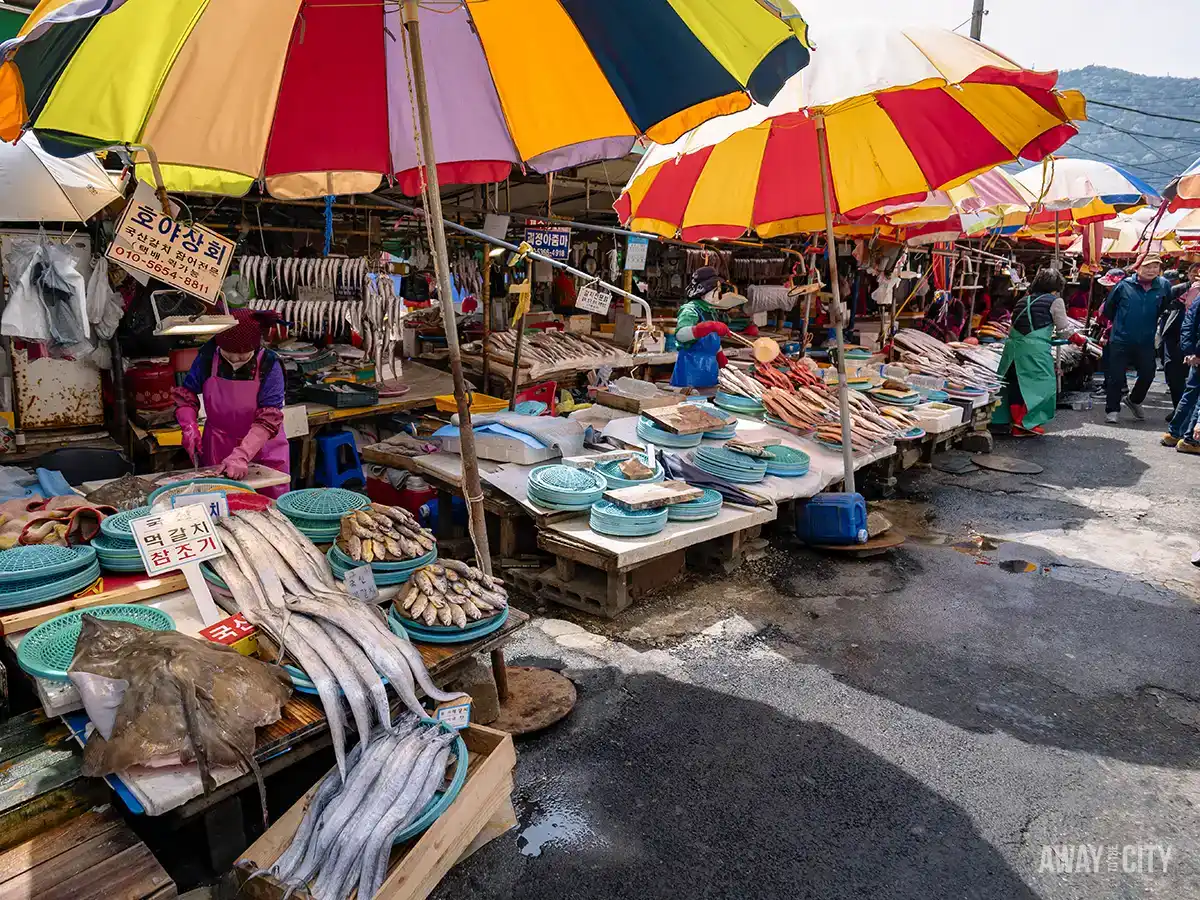
In Busan, the Jagalchi fish market tour is the standout for seafood lovers.
Our Seoul food tour picks

Our Busan food tour picks
If you're heading somewhere other than Seoul or Busan, or just want to browse more options, here's the full list of food tours across South Korea.
FAQ: South Korean food
What is the most popular food in South Korea?
Korean BBQ (KBBQ) is widely considered the most popular food in South Korea, followed closely by bibimbap (mixed rice bowl), tteokbokki (spicy rice cakes), and kimchi jjigae (kimchi stew). Street foods like tteokbokki and gimbap (seaweed rice rolls) are especially popular as everyday snacks, while Korean fried chicken has grown into a cultural institution, particularly paired with beer.
Is South Korean food spicy?
South Korean food has a reputation for being very spicy, but most dishes sit at a comfortable heat level. Gochujang (Korean chilli paste) and kimchi (fermented vegetables) are staples, so some heat is present in many dishes. That said, plenty of options like gimbap (seaweed rice rolls) and samgyetang (ginseng chicken soup) are milder or not spicy at all.

What is banchan?
Banchan are the small side dishes served automatically alongside every Korean meal. They typically include kimchi (fermented vegetables), pickled vegetables, seasoned spinach, and egg, among others. They're typically free and refillable. You order one main dish and the table fills up around it.

Is Korean food healthy?
According to Healthline, Korean food is generally considered one of the healthier cuisines in the world. Most dishes are built around vegetables, fermented foods, lean proteins, and rice. Kimchi (fermented vegetables) in particular is rich in probiotics. However some dishes are high in sodium, fat, or calories, like Korean fried chicken and street snacks, which are more indulgent.
What is a typical Korean breakfast?
A typical Korean breakfast looks a lot like any other Korean meal. Rice, soup, and banchan are the standard, often including kimchi (fermented vegetables), pickled vegetables, and a light broth. It's savoury from the start. Western-style breakfasts are available in hotels and cafes, but the traditional version is worth trying at least once.
Is Korean food vegetarian-friendly?
Korean food can be tricky for vegetarians. Many dishes that appear meat-free, including some broths and banchan, contain fish sauce or anchovy stock. That said, tofu-based dishes like sundubu jjigae and vegetable bibimbap are widely available. Dedicated vegetarian and vegan Korean restaurants exist, particularly in Seoul, and are worth seeking out.

Ready to eat your way through South Korea?
If you only try ONE thing in South Korea, make it Korean BBQ. It's the dish that started our love affair with the Korean cuisine over a decade ago, and it hasn't faded since.
And if you want help navigating the food scene on your first visit, this Seoul night market food tour is the best starting point we'd recommend.
We're already planning our fifth trip to South Korea, and honestly, the food is a big part of why.
Luckily Korea has so many dishes beyond this list that we never run out of new things to try. But the ones on this list are some of the most famous Korean dishes in the country, and a great place to start.
For everything else you need before you go, the biggest mistakes to avoid in South Korea is worth a read, and our full guide to the best things to do in Seoul will help you build the rest of your trip around the food.
🇰🇷 Plan your South Korea trip with our guides
📍 South Korea essentials
📍 Seoul
📍 Busan