This post may contain affiliate links, including from Amazon and other trusted partners. If you click a link and make a purchase, we may earn a small commission at no extra cost to you. See our Privacy Policy for more information.
Haedong Yonggungsa Temple: Why We Almost Regretted Going (and Why We Went Back)

See our posts more often



We lasted about 20 minutes at Haedong Yonggungsa Temple before we turned around and left. That was our first visit. Our second is why it’s now one of our favourite temples in Busan.
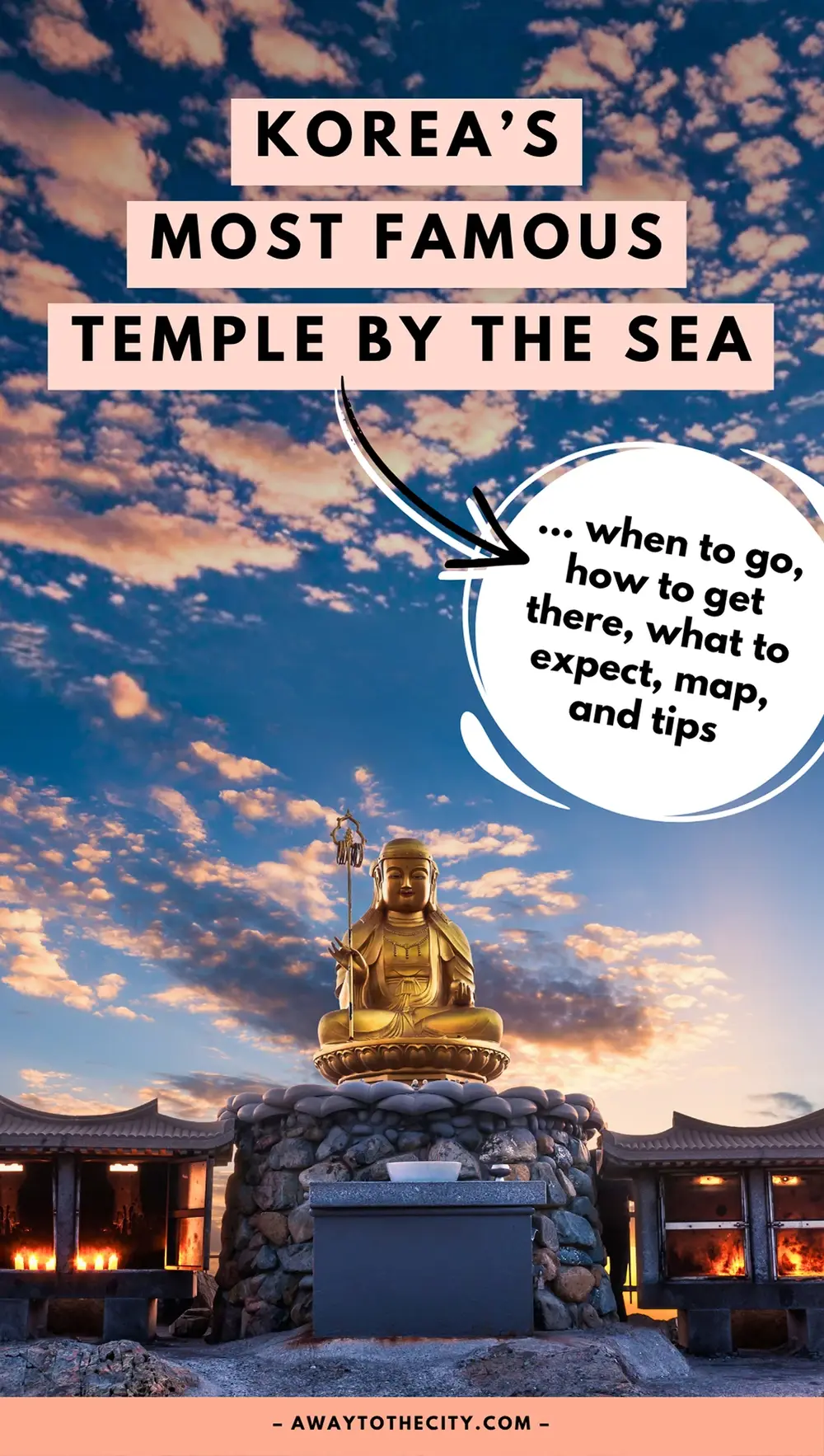
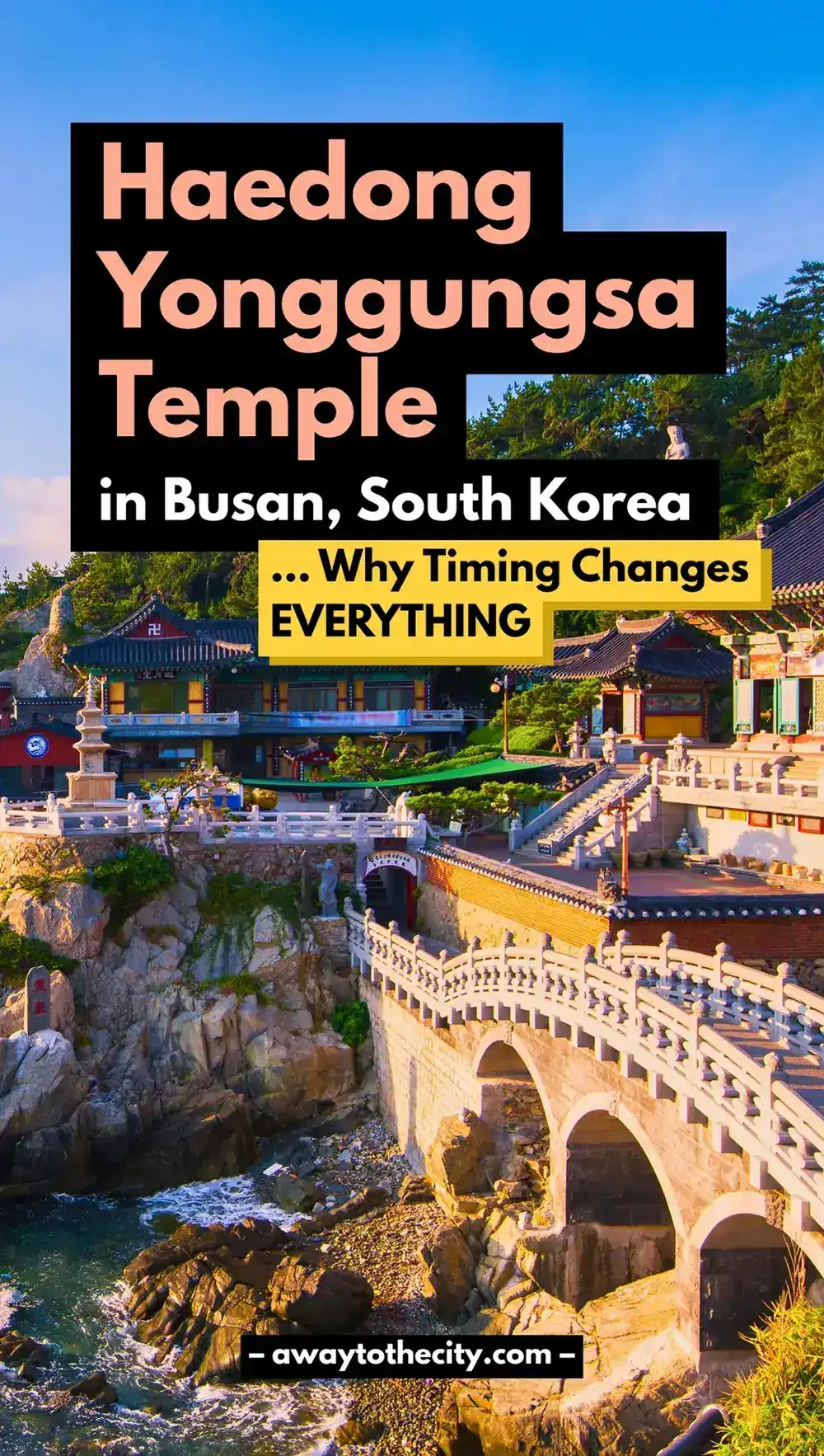
The difference had nothing to do with the temple itself. With the cliffs, crashing ocean and golden statues, it’s every bit as dramatic and photogenic as the photos suggest.
What nearly put us off for good was the timing. Get it wrong, and it’s one of the most frustrating experiences in Busan. Get it right, and it becomes one of the best.
We’ve been twice now: once by bus on a packed Saturday afternoon and once by Uber on a quiet weekday morning. The two visits felt like completely different places. If you only have a few days in Busan, timing this properly really matters.
In this post, we’ll share our honest verdict, explain exactly what to expect from the layout, show you the best times to visit using our interactive crowd chart, and give you the practical tips we wish we’d had before that first frustrating visit.
Short on time?
Everything you need to know about Haedong Yonggungsa
 Go early on a weekday: Haedong Yonggungsa is one of the most visited tourist attractions in Busan, and the crowds at peak times can get really overwhelming. Before 9am on a weekday, you’ll have the place almost to yourself.
 Take an Uber, not the bus: From Haeundae, an Uber takes about 20 minutes and costs around 10,000 KRW (about £6, US$7, or €6). The bus takes around 45 minutes. If you only have one or two days in Busan, we recommend this Busan highlights tour that includes the temple alongside Gamcheon Culture Village and Jagalchi Market, with no logistics to figure out.
 Pair it with a full Haeundae day: The temple is in the far northeast of Busan, close to Haeundae Beach and the Sky Capsule, so you can combine them comfortably into one day.
 Stay in Haeundae: It’s the best base for the temple and for Busan in general. The L7 Haeundae by Lotte Hotels is our favourite hotel in Busan. It’s a brand-new beachfront hotel with gorgeous ocean views, comfy beds, and a rooftop bar we had a hard time leaving.
What is Haedong Yonggungsa Temple?
Haedong Yonggungsa (Korean: 해동 용궁사) is a Buddhist temple on the northeastern coast of Busan.
It’s built into the cliffs above the East Sea and is one of the few temples in Korea set directly by the ocean (hence why it’s often called the Busan temple by the sea), which is exactly what makes it so photogenic and so popular.

It’s been here since 1376, founded during the Goryeo Dynasty by a Buddhist monk called Naong Hyegeun. Back then it was known as Bomun Temple.
The Japanese invasions of the late 1500s destroyed it, but it was rebuilt in the 1930s and renamed Haedong Yonggungsa in 1974. That name translates roughly as “Korean Dragon Palace Temple”.

Did you know? The name Haedong Yonggungsa Temple is technically redundant. Yonggung means Dragon Palace, and sa already means temple in Korean, so adding temple at the end is like saying “Temple Temple”. The correct name is actually Haedong Yonggung Temple or Haedong Yonggungsa. Most English sources get this wrong, but because it’s so widely used, you’ll see both versions in this post.
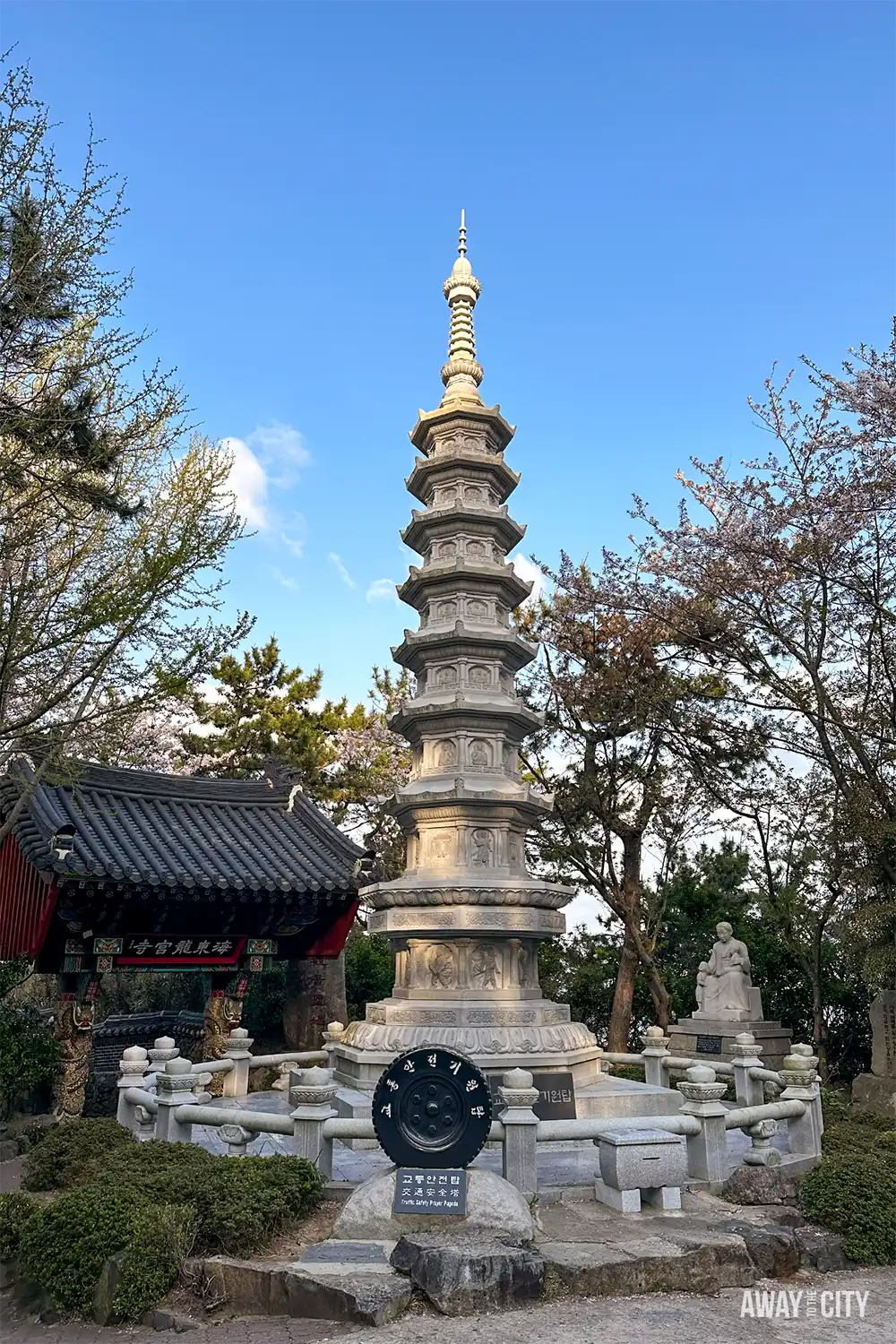
The temple is dedicated to Avalokiteshvara (Gwaneum in Korean), the Bodhisattva of Compassion.
The story goes that Gwaneum appears near the sea riding a dragon, which is why this temple ended up on a clifftop above the East Sea rather than inland like most others.
Today it’s best known for its sunrise views, coastal scenery, and that rare combination of Buddhist architecture and crashing ocean.
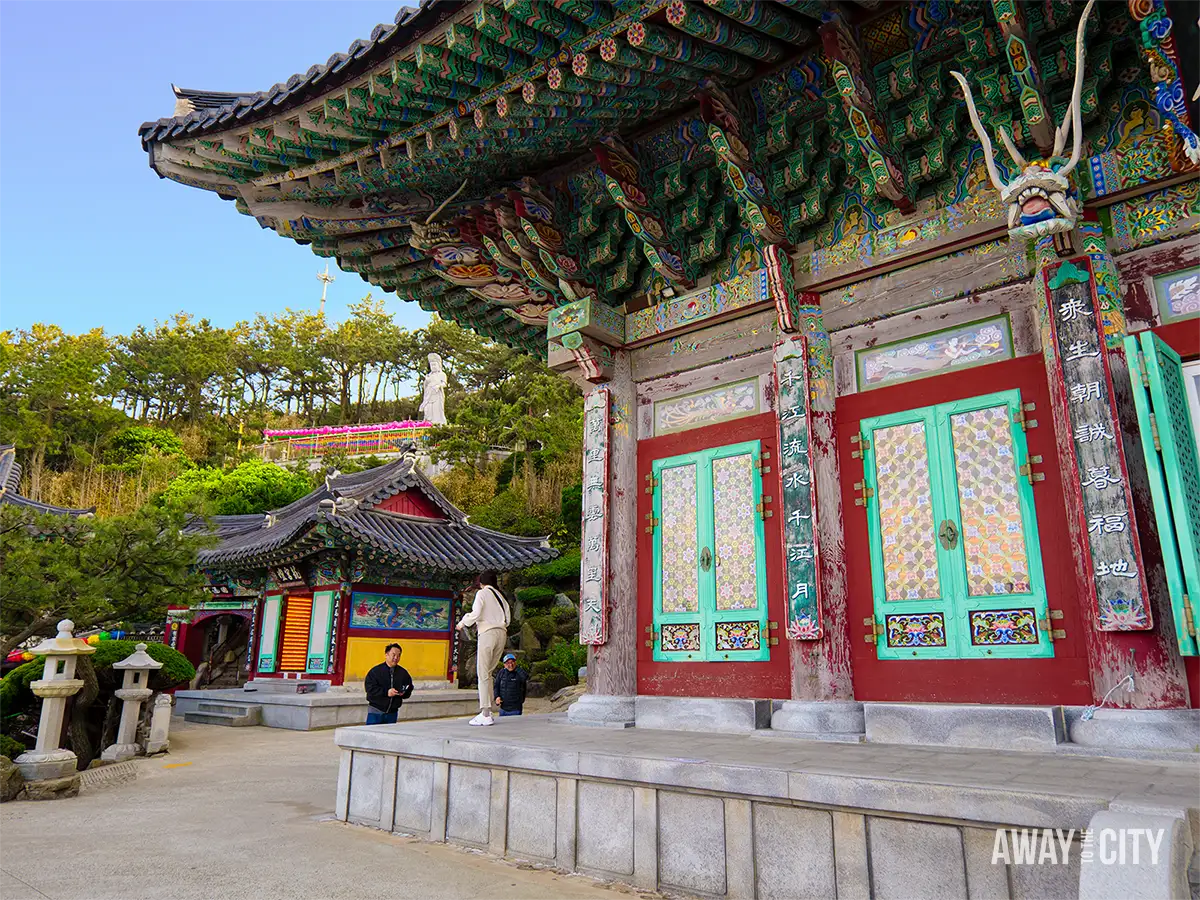
Why we almost gave up on Haedong Yonggungsa (and why we went back)
Our first Haedong Yonggungsa visit was a Saturday at 2pm. We’d seen the photos, read dozens of blog posts and watched videos during our research, and were expecting something serene and spiritual.
What we got was COMPLETELY different, closer to a theme park than a temple (there’s even a dedicated selfie stand at the entrance).
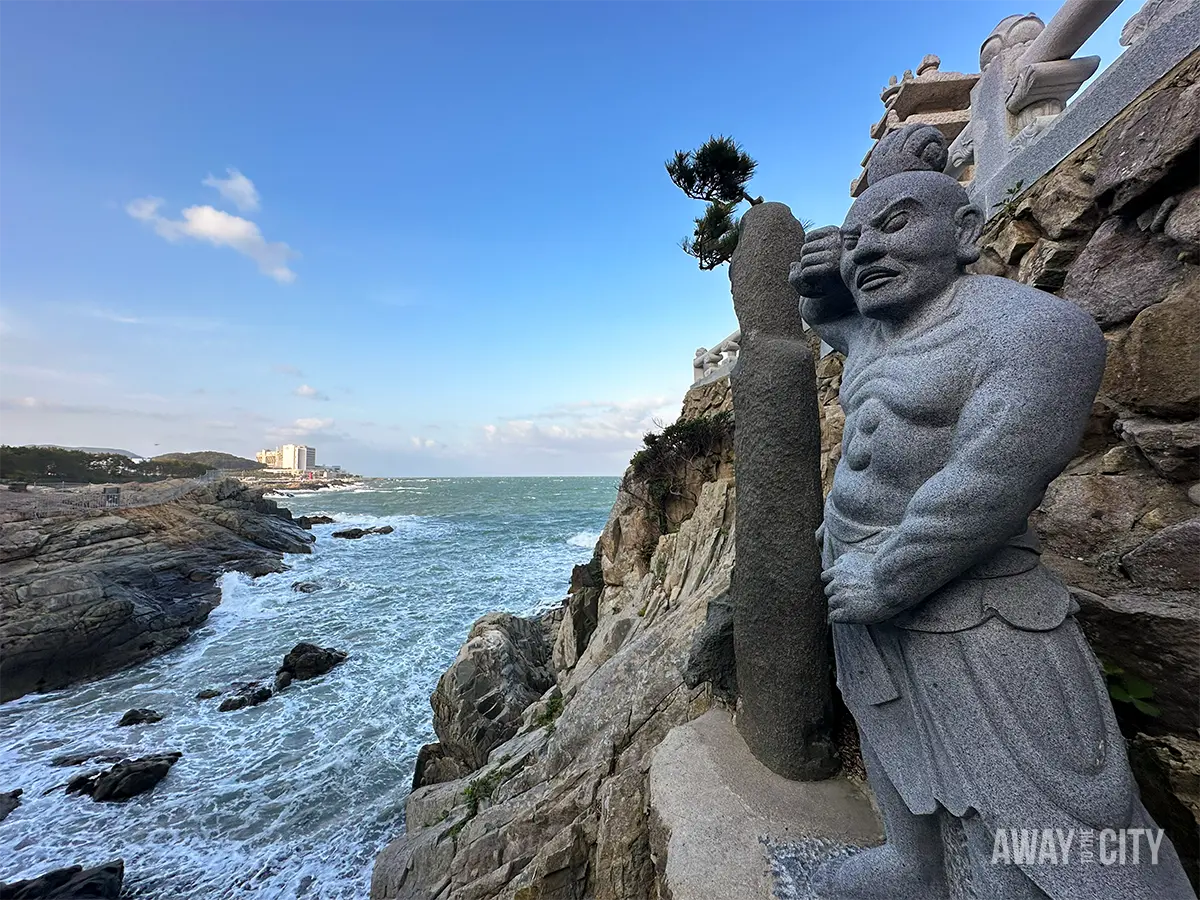
We took the bus and had to walk about 10 minutes up a hill to the temple entrance. Further up the hill, the path started to be lined with food stalls and herb sellers, which we’re already used to from many visits to temples in Asia.
What we didn’t expect was the aggressive selling by the locals. We were shouted at multiple times to buy things as we were trying to get through. That was new, even for us.
South Korea generally has relatively low-pressure street selling, very polite and far less persistent than the aggressive selling we’ve encountered across Southeast Asia. Not here though.

Once inside the complex, the crowds got so dense we could barely see the path ahead, all the way down to the sea. The noise levels were something you’d associate with a festival, not a temple.
Every other decent vantage point had multiple camera tripods on it and couples got visibly angry when anyone walked into their shot. Kids were running and screaming, parents were shouting. It was FRANTIC.
We lasted about 20 minutes and left.
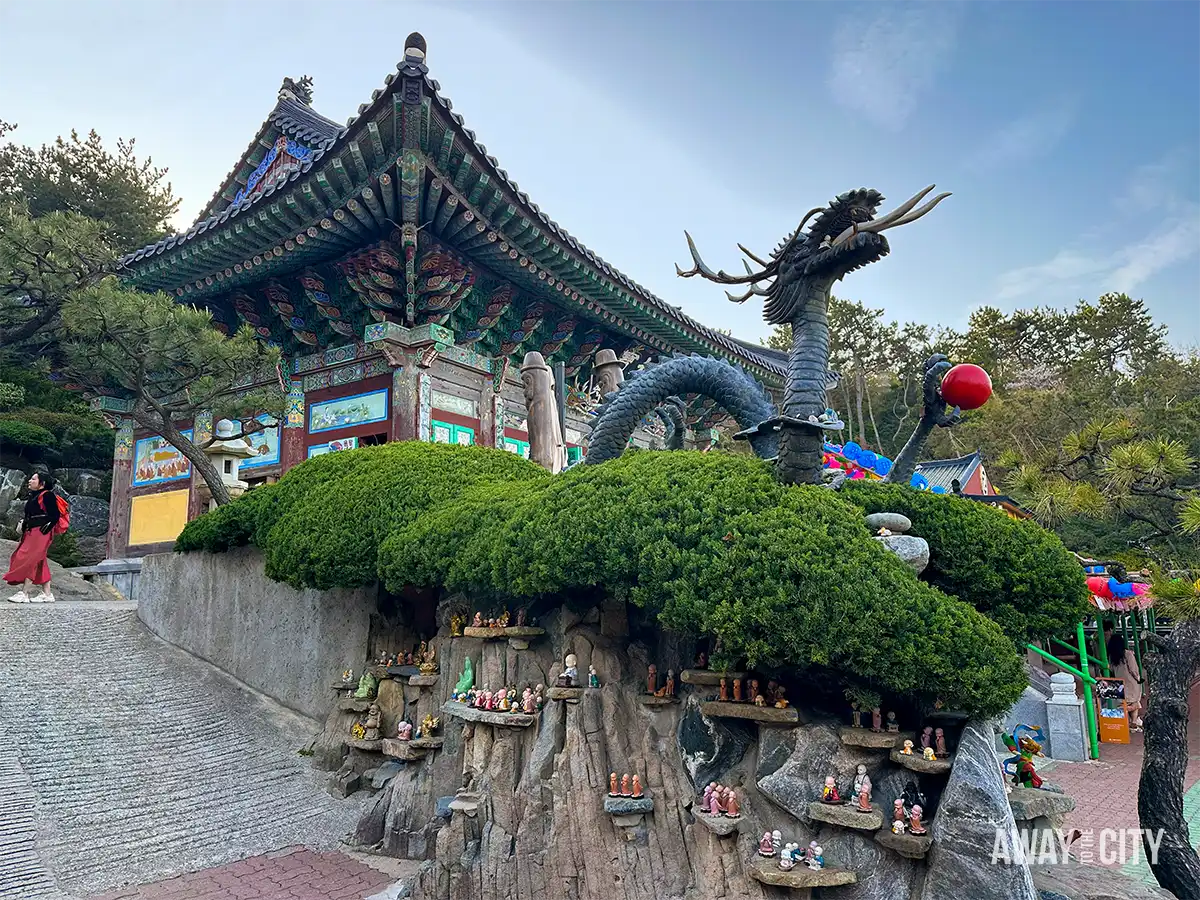
That same night, we did some research. We simply couldn’t believe that what we’d just walked through was the definitive version of this place.
For the coastal setting and those early morning photos though, it’s absolutely worth the trip. We’ll cover the best times to visit in more detail below.
Nothing in any photo or any review matched the chaos we’d experienced. It slowly dawned on us that visiting on a Saturday afternoon had been our biggest mistake.
Since we stayed at the L7 Lotte Hotel in Haeundae close by (about 20 minutes from the temple by Uber), going back felt doable. Anywhere further and we probably wouldn’t have tried again.
So two days later, early on a weekday morning, we went back.

The temple felt like an entirely DIFFERENT place. It was quiet enough to actually hear the sea, and we could count the other visitors on two hands.
Even the sellers weren’t there yet, and neither were the tripods or the selfie queues. Just us, the pagoda, the golden statue out on the rocks, and the waves doing exactly what we’d hoped they’d do.
So is it worth visiting?
Yes, without a doubt! But the experience depends almost entirely on timing. Before 9am on a weekday, it’s peaceful and photogenic, and one of the most picturesque temples you can visit in South Korea.
At midday or on weekends, the crowds make it hard to enjoy, to the point where we’d genuinely say skip it, because Busan has so many other great things to do.
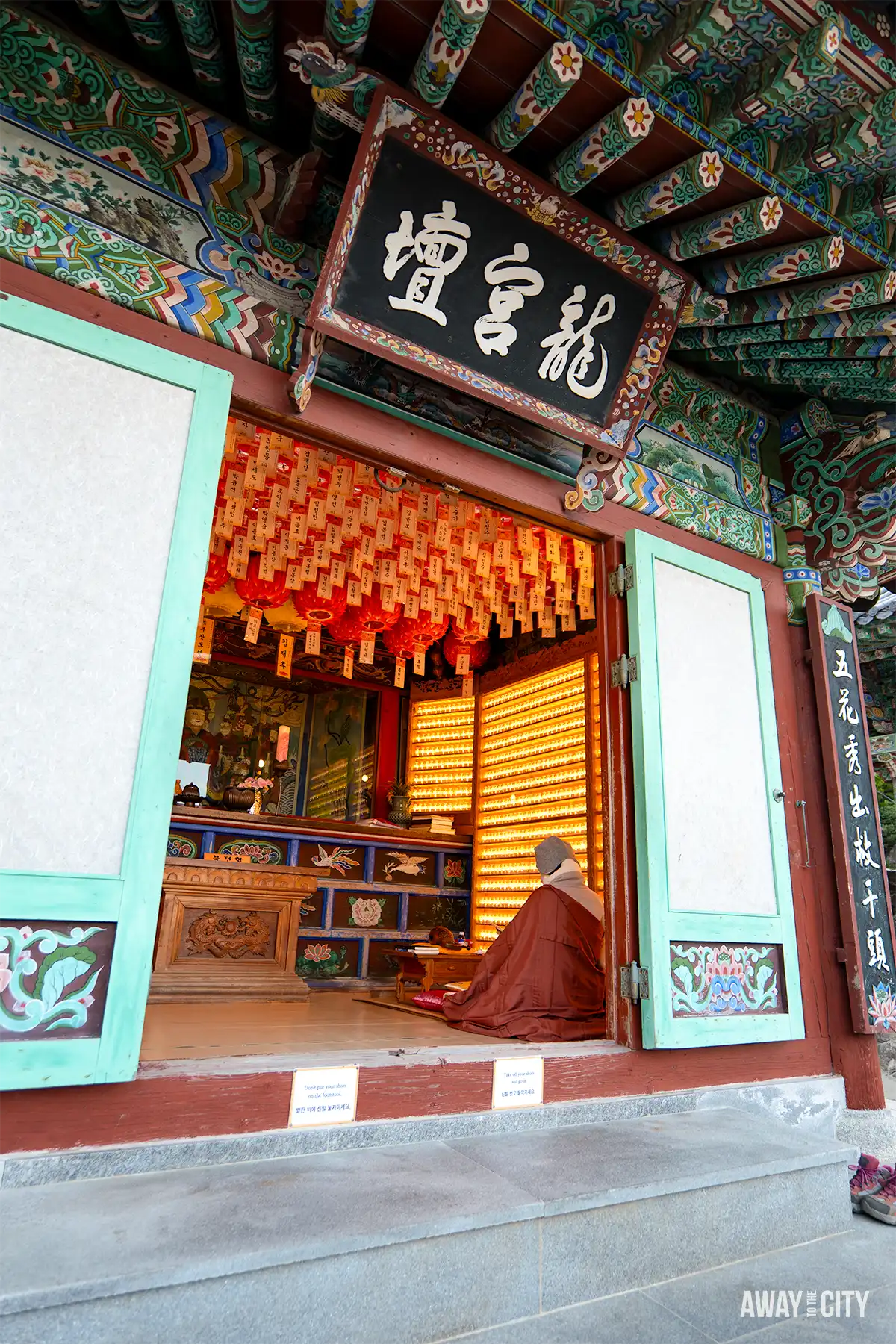
One thing worth managing regardless of when you go: if you’re visiting for something spiritual, keep your expectations in check.
It is a working temple, but it’s also one of the most visited tourist attractions in Busan, and those two things don’t always sit comfortably together.
The layout of Haedong Yonggungsa
Haedong Yonggungsa is free to visit and laid out as a one-way walk downhill toward the sea. It’s a fairly compact site. We explored it comfortably in about 1.5 hours.
To help you get your bearings before you arrive, we put together the illustrated map below showing the key landmarks across the Haedong Yonggungsa complex:
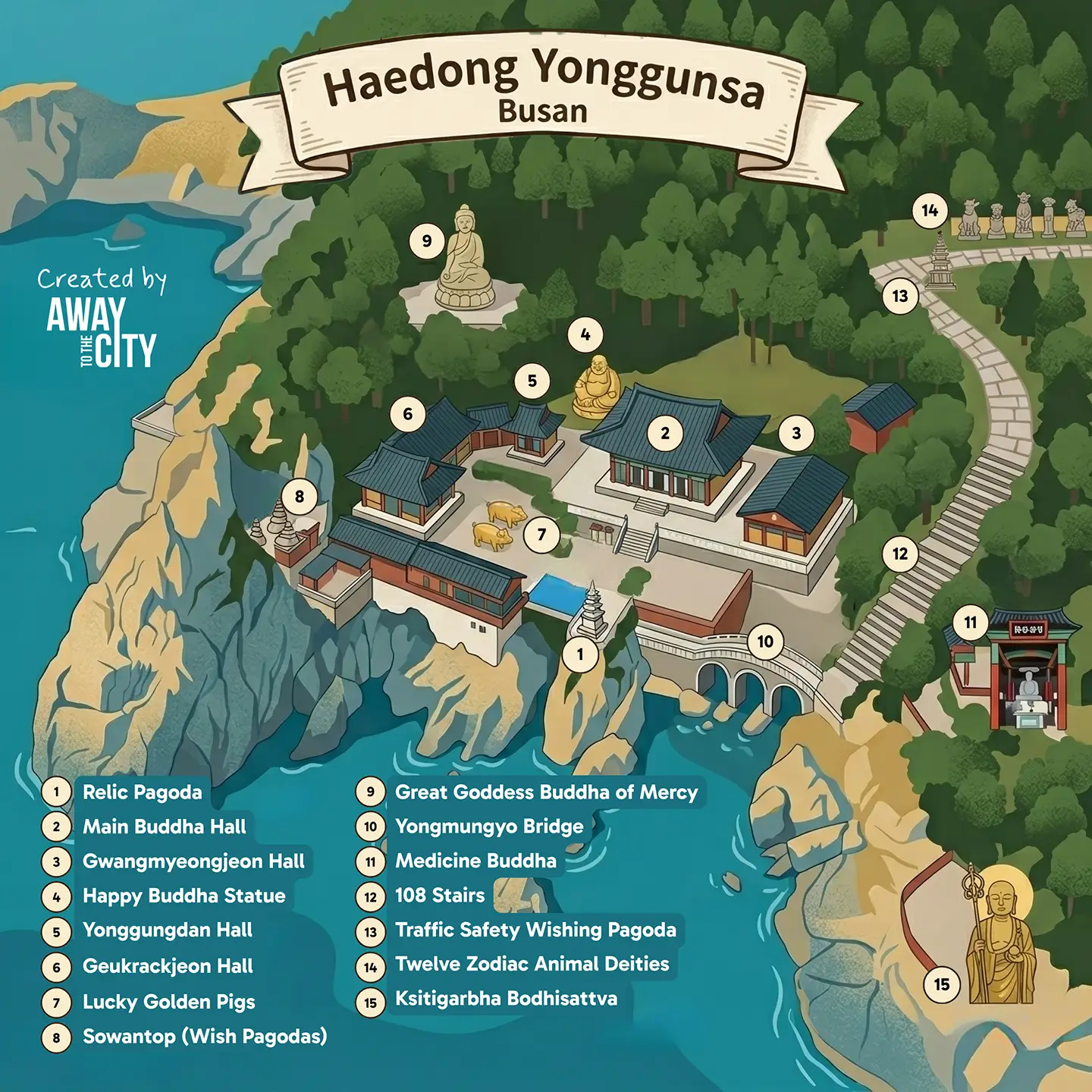
Here’s roughly what to expect:
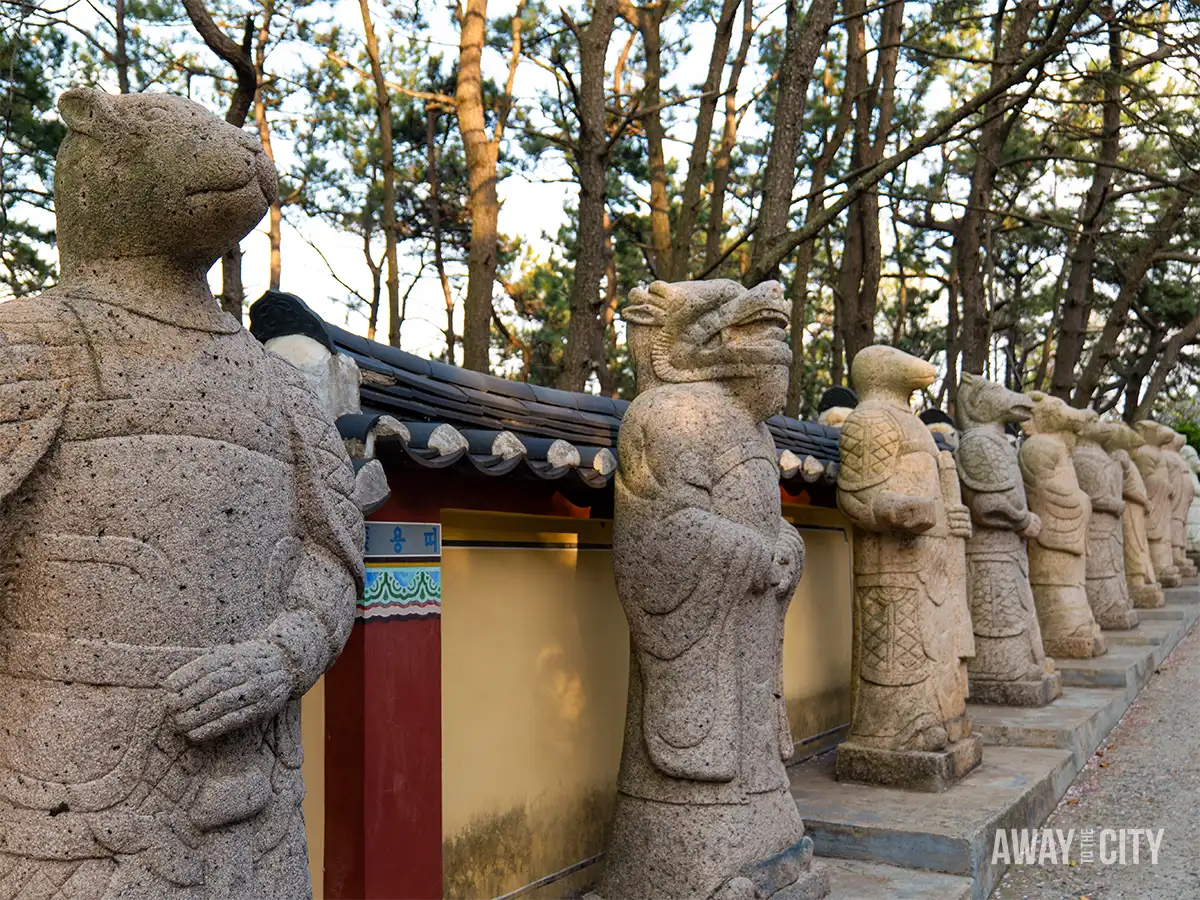
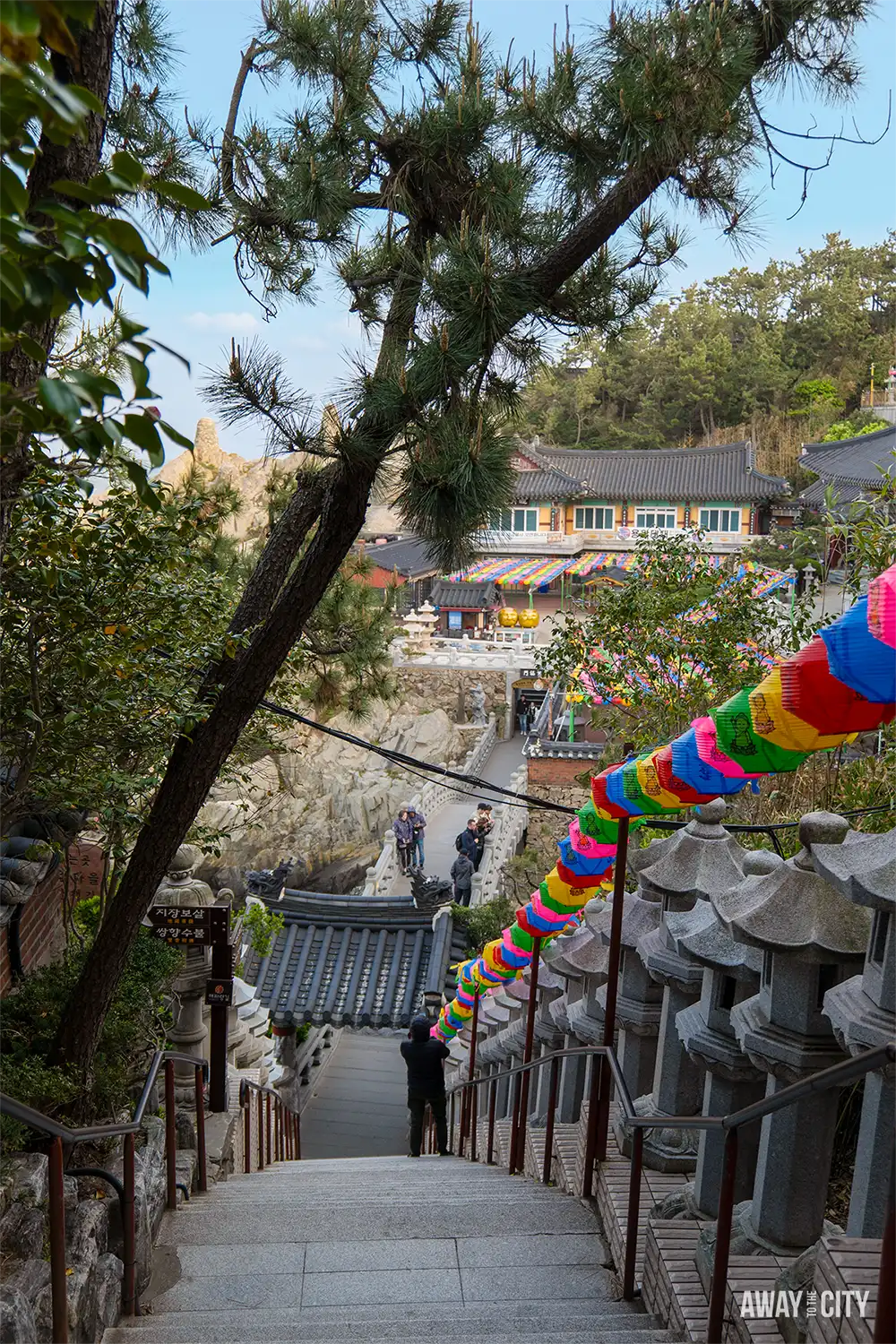


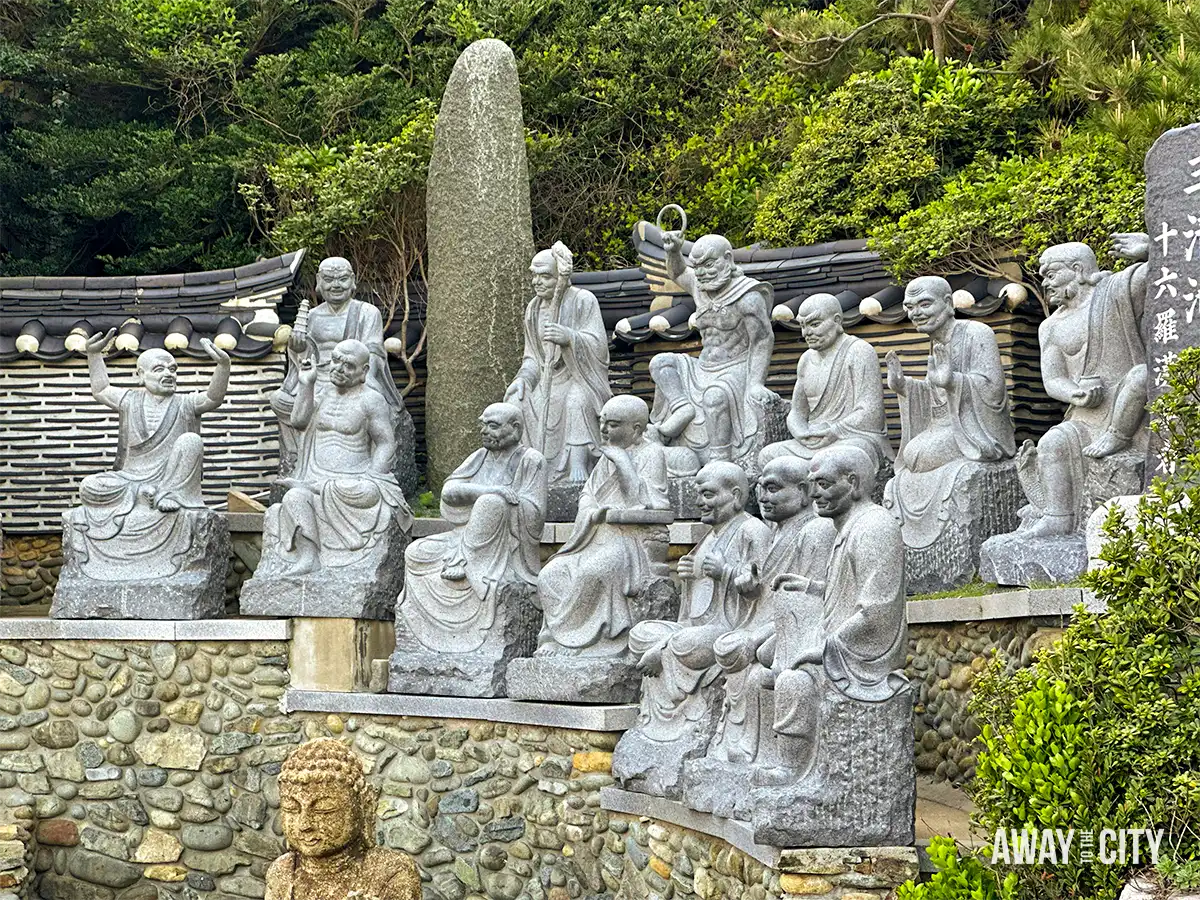
Expect a lot of stairs and uneven paths throughout. It’s more a series of viewpoints and photography spots than a meditative space, which is fine once you know that going in.
When is the best time to visit Haedong Yonggungsa Temple?
Haedong Yonggungsa is open daily from around 5am to 7pm. If you can only go once, aim for before 9am on a weekday. Crowds build steadily from 10am onward, and peak hours between 10am and 5pm are best avoided entirely. Early evening on a weekday is a solid alternative.
If you’re visiting during cherry blossom season in April or around Buddha’s birthday, expect significantly bigger crowds than usual.
These are two of the busiest periods of the year at this Busan temple, and queues to get into the grounds can get long. Going early matters even more during these times.
Since crowd levels vary so much by day and time, we put together this interactive crowd chart using Google Maps popularity data.
Crowd levels here can make or break the experience, especially around the coastal viewpoints and main staircase, so this should make it easier to plan your visit.
Best time to visit Haedong Yonggunsa Temple
Source: Google Maps popular times · awaytothecity.com
The chart shows a few patterns worth knowing:
- Quietest days: Tuesday, Wednesday, Thursday
- Busiest day: Sunday by a clear margin, followed by Saturday
- Peak hours: 10am-5pm across all days
That’s why our personal recommendation is to go around 8am on any weekday. That’s as close to having the place to yourself as you’re likely to get (without getting up crazy early).
How do I get to Haedong Yonggungsa from Busan?
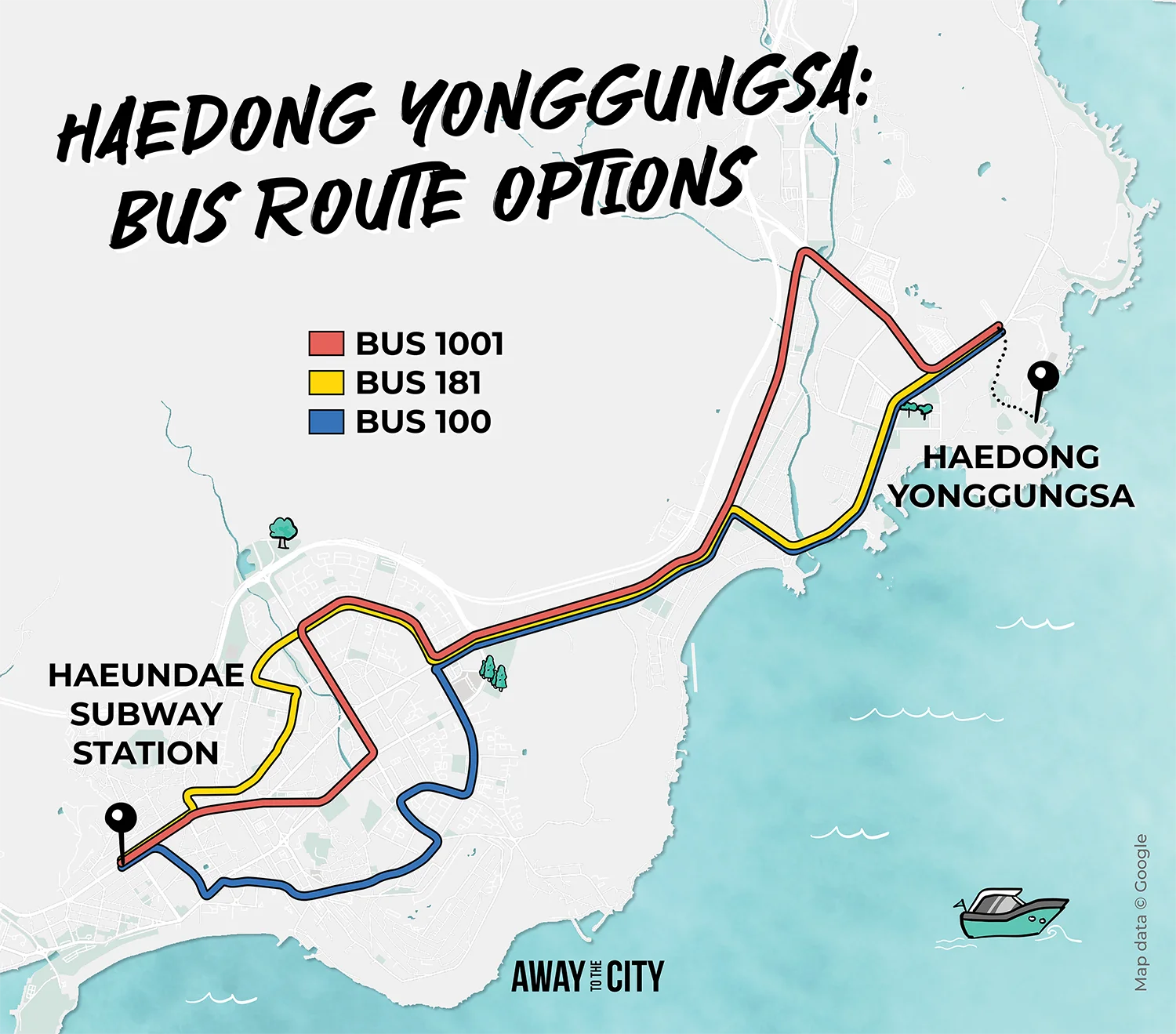
Haedong Yonggungsa is about 8 kilometres (5 miles) from Haeundae, but the journey time varies a lot depending on how you travel, anywhere from 20 to 45 minutes. From central Busan, allow over an hour. There’s no direct subway connection, so your only options are bus, taxi, Uber, or a guided tour.

The temple address is: 86 Yonggung-gil, Gijang-eup, Gijang-gun, Busan. Drop that into Naver Maps or Uber, and it’ll take you straight there.

Our top tips for visiting Haedong Yonggungsa
Here are a few things we wish we’d known before our first visit:
 TIP #1 – Go early, and on a weekday: This is the SINGLE best thing you can do. Before 9am, the crowds are non-existent, and it’s the only version of the temple that actually matches the photos. Opening hours are 5am-7pm daily, so an 8am arrival is well within reach. Based on Google’s popular times data, Monday and Tuesday around 8am are the quietest times of the week. Midday, especially on a Saturday, is the time we’d actively tell you to avoid.
TIP #2 – Dress modestly: Buddhist temples are sacred places where monks and nuns live and work, and dressing modestly is a sign of respect. You don’t need anything special; just avoid sleeveless tops and shorts on the temple grounds.


TIP #3 – Bring 100 KRW coins: For tossing into the stone ponds at the bottom of the steps. Tradition says a clean landing means your wish comes true. We overheard a group at the ponds who only had their cards on them and were upset they couldn’t join in.
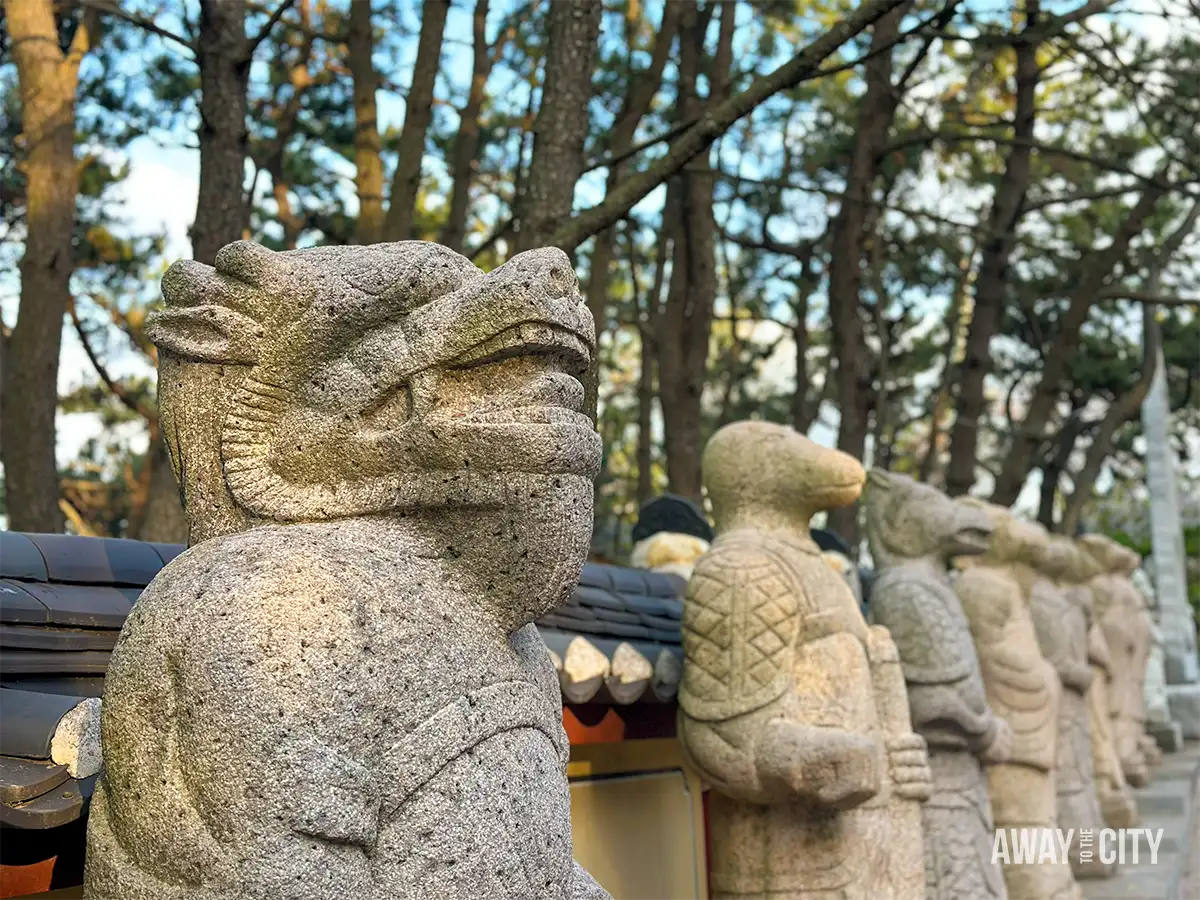
TIP #4 – Find your zodiac animal: The twelve stone statues just before the main gate each represent one of the zodiac animals. Find yours and take a picture for good luck. You can find your birth-year animal here.
TIP #5 – Allow at least 1.5 hours: The entire area is not just the one main temple. There are stairs, multiple levels, side paths, pagodas, statues, shrines, and coastal viewpoints… you’ll constantly find something to photograph. Crowds add time on top of that, especially from mid-morning onward. 1.5 hours means you can enjoy the place rather than rush through it.
TIP #6 – Free lunch on Sundays: Visiting on a Sunday is not a great idea because of the aforementioned crowds. BUT if you can’t avoid Sunday, then we recommend timing your visit around lunch time where they are offering free noodles and kimchi between 11:30am and 12:30pm.
TIP #7 – Take a short hike to Haedong Zen Centre: Just past the traffic wishing pagoda at the entrance, a stone path leads up through a bamboo forest to Haedong Zen Centre. Most visitors never find this small temple. Look for the sign at the path entrance that says “Haedong Zen Centre” and just follow it. It only takes about 5-10 minutes, but it’s such a peaceful temple hidden away in the middle of the peninsula.
TIP #8 – Make it a full east Busan day: Haedong Yonggungsa pairs naturally with Haeundae Beach and the Haeundae Sky Capsule (one of the cutest things you can do in Busan). The three attractions sit close enough together to combine comfortably. Just make sure you book your Sky Capsule ticket in advance because they sell out regularly, especially at weekends.

Can you do a temple stay at Haedong Yonggungsa?
No, Haedong Yonggungsa doesn’t offer a temple stay programme. For an overnight temple experience in Busan, Beomeosa in the north of the city is the most accessible option. You can browse certified temple stay programmes across Korea through the official Templestay website.
Where to stay near Haedong Yonggungsa Temple
Stay in Haeundae. It’s the best base for the temple and for Busan in general. You’re 20-25 minutes away by Uber, you’re on the beach, and you have everything you need on your doorstep. The only alternative closer to the temple puts you in a very remote part of the city with little else around.
Busan is vast and spread out, so where you stay really matters. From Nampo, Seomyeon, or anywhere near the city centre, you’re looking at over an hour each way to the temple. That adds up fast, especially if you’re going early to beat the crowds.
Here are our hotel picks:
Same temple, two completely different experiences
Our first visit to Haedong Yonggungsa left us wondering what all the fuss was about. Our second reminded us exactly why it’s on every Busan list worth reading.
Is it worth visiting? Yes, without a doubt. But you HAVE TO get the timing right. Before 9am on a weekday, it’s everything the photos promise. Leave it until the afternoon on a weekend and you’re setting yourself up for disappointment.
If you’re still building your Busan itinerary, have a look at Busan’s must-do experiences. A few of those attractions can sell out, so check which ones are worth booking before you arrive.
And if you haven’t sorted out where to stay yet, our Busan neighbourhood and hotel breakdown will help you pick the right base.
🇰🇷 Plan your South Korea trip with our guides
📍 South Korea essentials
📍 Seoul
📍 Busan