This post may contain affiliate links, including from Amazon and other trusted partners. If you click a link and make a purchase, we may earn a small commission at no extra cost to you. See our Privacy Policy for more information.
3 Days in Seoul: The Perfect Itinerary for First-Timers

See our posts more often


Three days in Seoul isn’t enough to see everything. This is one of those cities where you could spend weeks exploring different neighbourhoods, trying new cafés, and walking through palace grounds, and still leave with a list of things you want to come back for. That’s definitely been our experience after four trips!
But three days is enough to fall in love with Seoul.
This 3-day Seoul itinerary is exactly how we’d plan a first visit today. We’ve learned which places really deserve the hype, which ones are worth skipping when time is tight, and how to avoid wasting hours crossing the city.
You’ll see grand royal palaces, traditional hanok neighbourhoods, buzzing markets, and some of Seoul’s most exciting modern districts. And we’ve saved the last day for one of our most memorable experiences in all of South Korea… a day trip to the DMZ.
It’s the route we’d recommend to any first-time visitor who wants to experience both the historic and modern sides of Seoul without spending half their holiday on the metro.

Seoul first-timer tips: things to know before you go
Before you get into the itinerary, here are a few practical things that will make your three days in Seoul a lot smoother:
Where is the best area to stay in Seoul for 3 days?
We found this really hard to work out before our first trip to Seoul. But after four visits, we have a very clear answer: with just three days in Seoul, stay in Insadong (our #1 pick) or Myeongdong.
Both areas are right next to each other, both are central, and both have multiple metro lines within a short walk.
You can reach the main royal palace, Bukchon Hanok Village, Ikseon-dong’s trendy café area, and the Myeongdong night market on foot.

And most of the day tours pick up from Myeongdong Station, which comes in handy for the DMZ day tour we’re recommending for Day 3 on this itinerary.
The reason we’d choose Insadong over Myeongdong is that Myeongdong gets very busy, especially at night. Insadong is quieter, has more character, and you can walk over to Myeongdong in a few minutes anyway.
Our favourite hotel in Seoul is the Moxy Seoul Insadong. We stayed here for five nights and LOVED it. It’s funky and modern, very much that flashy poppy Seoul aesthetic, with a rooftop bar looking onto N Seoul Tower.
The metro station is right outside the front door, which made it super easy for us to get around the city every single day.


If you’d rather be right in the middle of Myeongdong, the Four Points by Sheraton Myeongdong has amazing skyline views and is one minute from the subway.
For a more affordable option, we recommend the ibis Ambassador Insadong (which was also recently renovated in 2025).
One note on Gangnam: while the area has become very popular due to Psy’s song Gangnam Style, it’s south of the river and far from everything on this itinerary.
With only three days, you’d spend too much time on the metro just getting around. Save it for a longer trip.
For the full breakdown of Seoul’s best areas and more hotel picks, we have a dedicated post.
3-day Seoul itinerary: quick overview
3-day itinerary
Here’s how the three days in Seoul break down at a glance:
Day 1: Historic Attractions & Myeongdong
Your first day in Seoul is all about the city’s historic areas. Everything today is within walking distance, so you won’t need the metro much, but you’ll cover a lot of ground on foot.
Something that surprised us on our first morning was how late Seoul wakes up. Koreans are night owls, and most cafés and shops don’t open until 10am.

If your hotel doesn’t include breakfast, there are a few spots we love in the Insadong and Myeongdong area that open early.
If you’re up by 7am, Isaac Toast & Coffee does freshly made Korean toasties (delicious!) and opens first. Gyeol by Bean Brothers opens at 7:30am and has become our go-to when we just want great coffee with pastries.
For a later start, Mil Toast Ikseon (from 8am) is known for its incredibly soft steamed bread with sweet and savoury spreads.
And if you can hold out until 9am, our favourite breakfast spot Soha Salt Pond opens. It serves the salt bread Seoul has become so famous for. We really LOVED it there!
Morning: Royal Guard Changing Ceremony & Gyeongbokgung Palace
Gyeongbokgung Palace is THE perfect way to start your first day in Seoul. It’s the largest and most impressive of the city’s five royal palaces. It dates back to 1395, and the grounds are huge.

The palace opens at 9am, but we’d recommend arriving at 9:45am at the south gate instead. The Royal Guard Changing Ceremony starts at 10am, and this is something you don’t want to miss!
Performers reenact the guard changing procedure from the Joseon Dynasty, and we loved the ceremony with the brightly coloured costumes in red, yellow, blue and green, and the tall black hats worn by the guards.
It felt quite theatrical… the flags fluttered in the wind, the drums set the beat across the courtyard (one of the huge drums was right next to us), and then we heard the boots on the cobblestones.

The whole thing lasts around 20 minutes, and for us it was one of the most memorable ways to experience Korean culture.
Make sure you stick around after the ceremony finishes, too. You can take photos with the gatekeepers, which sounds touristy but is actually great fun.
The ceremony happens outside the ticketed area, so you can watch it first and then get your ticket for the palace afterwards.
What makes the whole visit even better is that so many people dress up in hanbok (traditional Korean clothing) to explore the grounds.
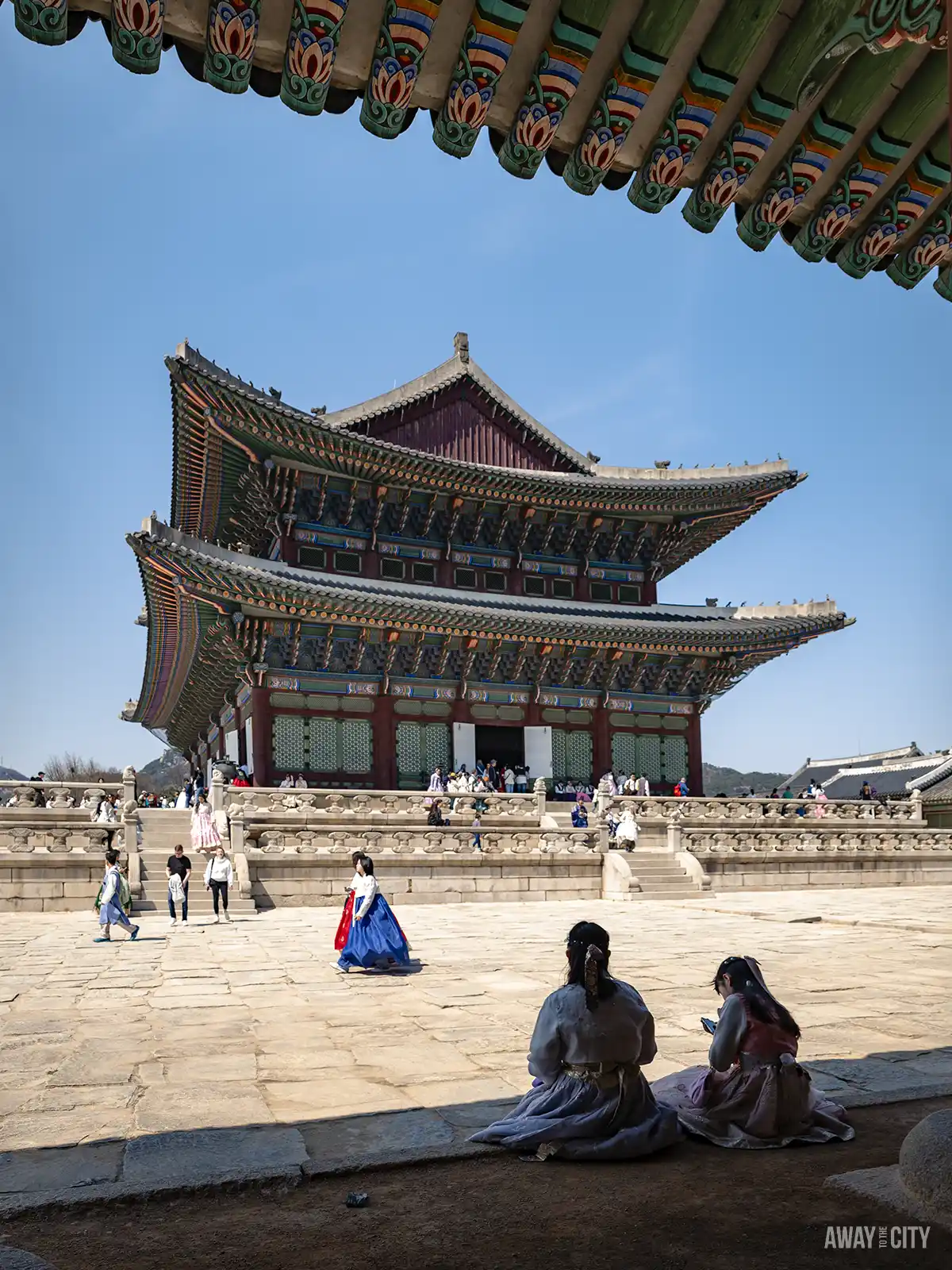
The palace itself is less fairytale castle, more a huge park with gates and traditional buildings spread across the grounds. Seeing hundreds of people in full hanbok walking through it all is what makes it feel alive.
Here’s a good reason to join them. If you wear a hanbok, there’s free entry to Gyeongbokgung. Without one, the ticket is only around ₩3,000 (about US$2, €2, or £2), so it’s not about saving money. It’s about the experience.


Our top tip: On our first visit, we walked past so many hanbok rental shops near the palace that we had no idea which one to pick. On our second trip, we pre-booked our hanbok rental and it was a much easier experience. The price is set, and you know exactly what you’re getting before you arrive.
Once inside, plan on around two hours. The Hyangwonjeong Pavilion on the lake is the highlight for us, and on a clear day the Bugaksan Mountains right behind the palace look incredible.

The National Folk Museum is also free and inside the grounds if you have time.
Just one important note: Gyeongbokgung is closed on Tuesdays. If your first day falls on a Tuesday, swap Day 1 and Day 2 of this itinerary for Seoul.
Early Afternoon: Bukchon Hanok Village
From the palace, it’s about a 20-minute walk east to Bukchon Hanok Village. We liked this neighbourhood so much on our first visit that we stayed here for a few nights on our second trip.

The village has over 900 traditional Korean houses (hanoks), and we learned on a guided tour that this was one of Seoul’s most prestigious areas during the Joseon Dynasty.
Because the area is right next to the royal palace, the families who lived here were high-ranking officials and aristocrats.
Today, Bukchon’s position on a hill gives you beautiful views of the modern skyline (even N Seoul Tower) in contrast with the centuries-old architecture… gorgeous! It’s easily one of the best free things you can visit in Seoul.
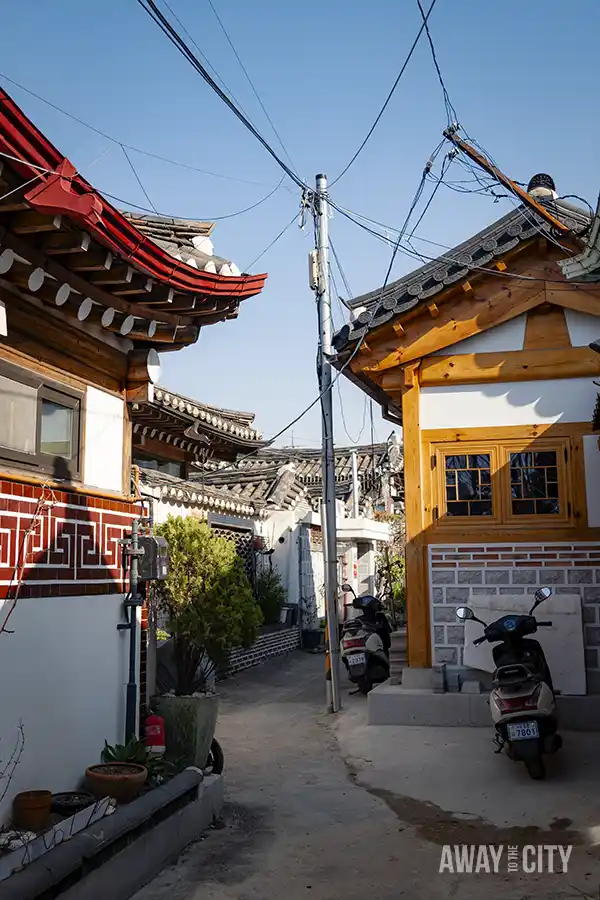

There’s advice that 99% of travel blogs give you that’s completely WRONG. Do not go there early in the morning. Since November 2024, visitor access is restricted to between 10am and 5pm.
Visiting outside these hours can result in penalties of up to ₩100,000 (about US$70, €65, or £55). We can think of a 100 better ways to spend ₩100,000 in Seoul. A penalty for visiting Bukchon at the wrong time is not one of them.
So just head over once you’re done at the palace. Since the access restrictions, there’s not that much wiggle room anyway.
Mid-Afternoon: Insadong & Jogyesa Temple
After Bukchon, stroll south toward Insadong. The area is full of art galleries, craft shops, and traditional tea houses.

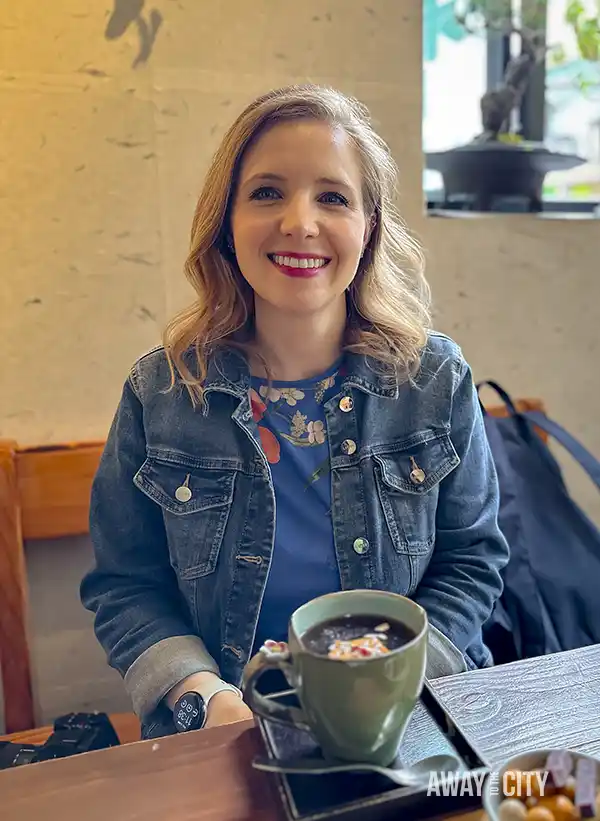
A friend who lives in Seoul told us we had to try a proper Korean tea ceremony, so we did. The traditional sweets they serve alongside the tea are completely different to anything we know from the UK, the US, or Germany.
Two of our favourite teahouses were Yetchatjip and Banjjak Banjjak Binnaneun.

Along the main street (Insadong Culture Street), you’ll find Ssamziegil. It’s a very unique spiral shopping mall with many cool cafés and independent shops selling stationery, handmade gifts and jewellery.
We’d also recommend a quick stop at Jogyesa Temple. It dates back to 1395 and is one of Korea’s most important Buddhist temples. It’s not huge, but it’s beautiful.
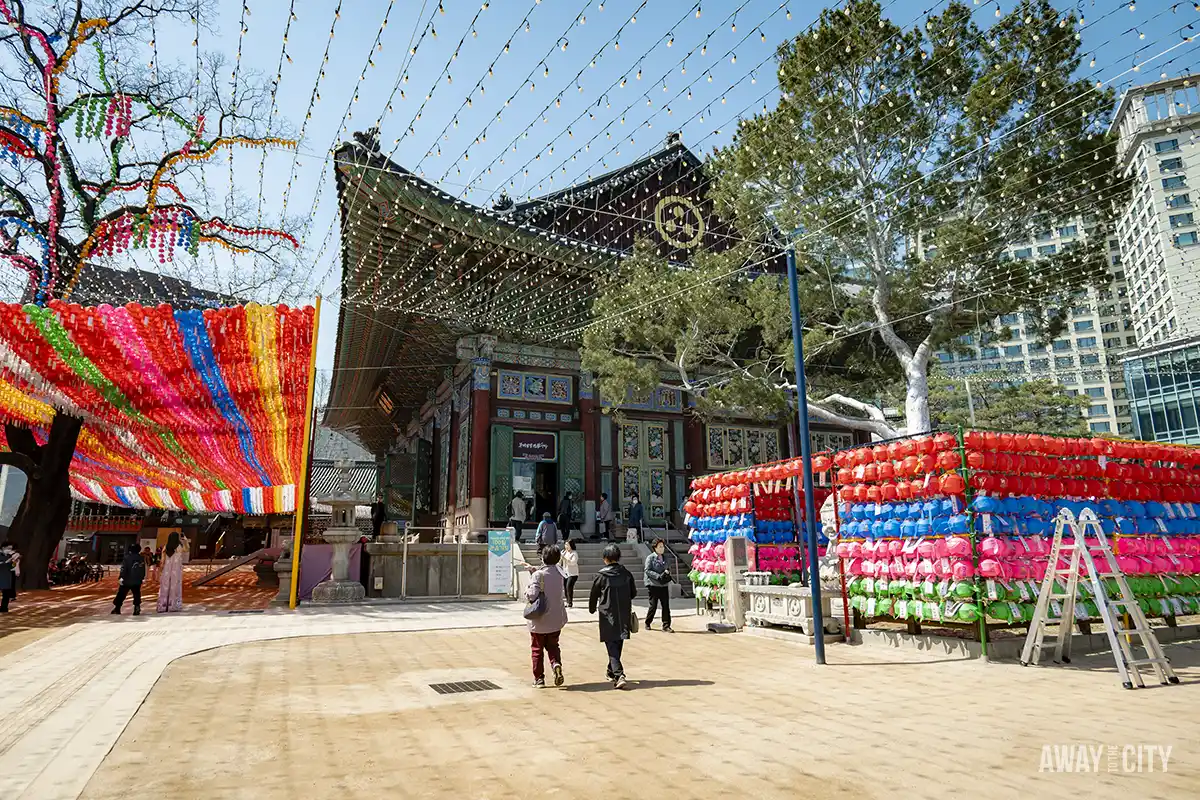
Because our hotel (the Moxy Insadong) was so close, we ended up passing Jogyesa at different times of day. During the day, colourful lanterns are strung across the courtyard. At night, the whole temple is illuminated and much quieter.
Late afternoon: Ikseon-dong
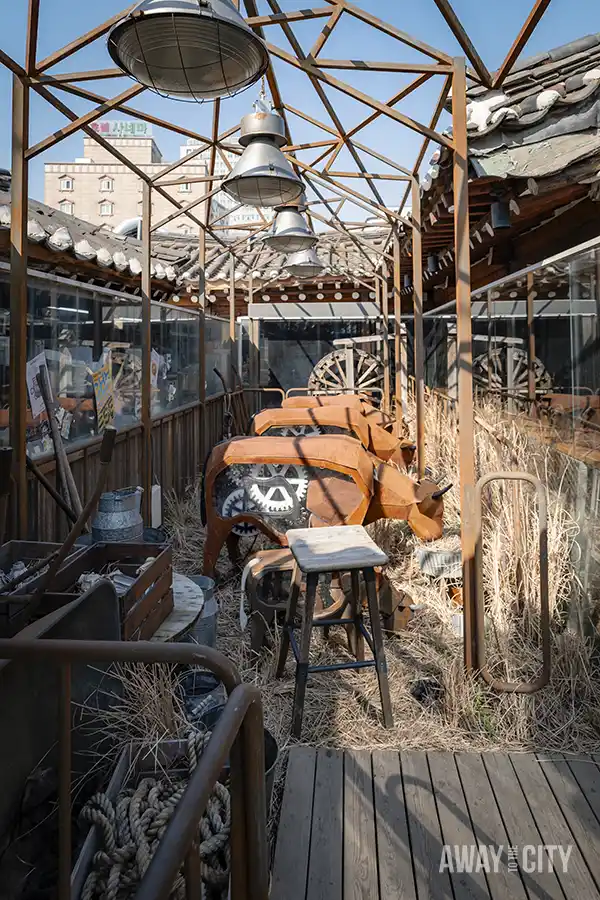
Ikseon-dong is right next to Insadong and one of our favourite neighbourhoods in all of Seoul. It’s the city’s oldest hanok village, but the traditional houses have been transformed into quirky cafés, cocktail bars, and hidden restaurants.
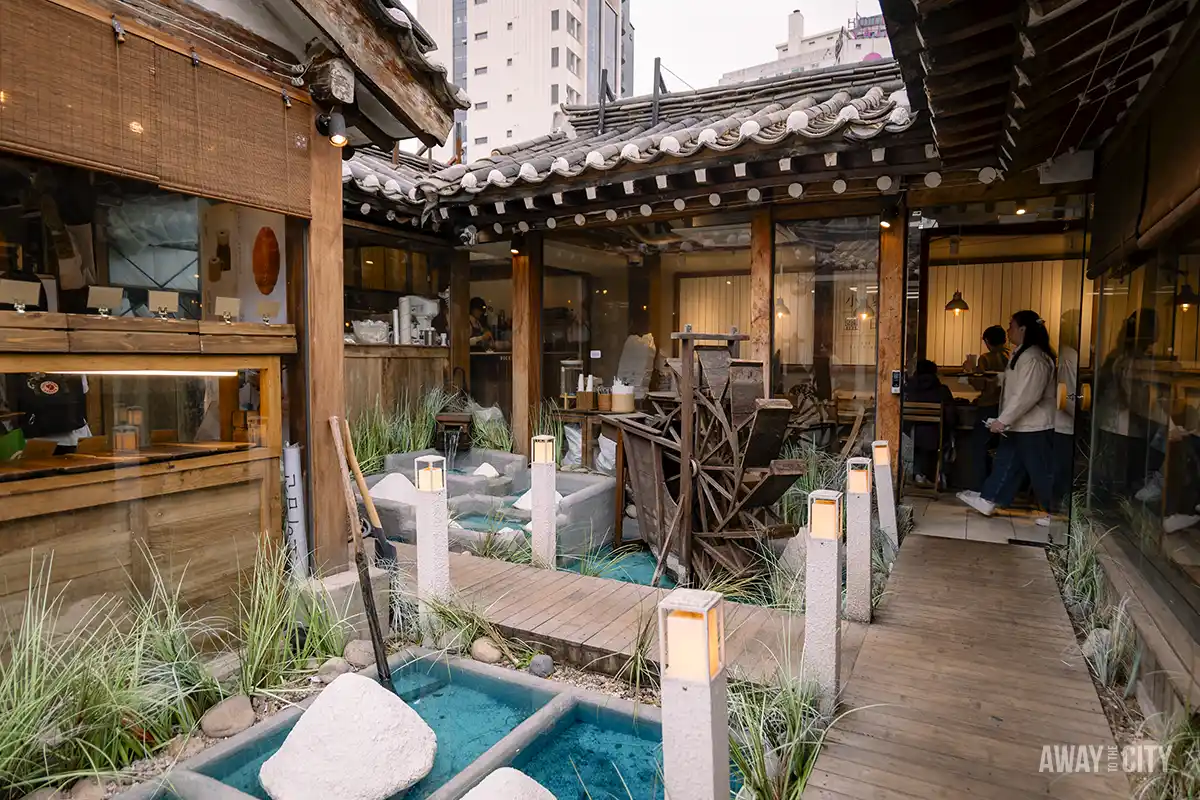
(Quick Korean lesson: the “-dong” (동) in Ikseon-dong or Insadong just means neighbourhood. You’ll see it everywhere while you’re in South Korea.)
The area is quite small. It’s just a few narrow alleyways that you could wander through in 30-60 minutes, but you’ll probably stay longer… we did!

Because our hotel was just two minutes away, we ended up in Ikseon-dong every single day and tested a different café or restaurant each time.
From salt bread cafés and fluffy pancake shops to coffee shops with a train track running through them, we can’t get enough of this area. We’ve been back to Seoul four times now, and Ikseon-dong is ALWAYS on the list.
For café and restaurant recommendations, check out our dedicated Ikseon-dong guide.

Evening: Myeongdong Night Market
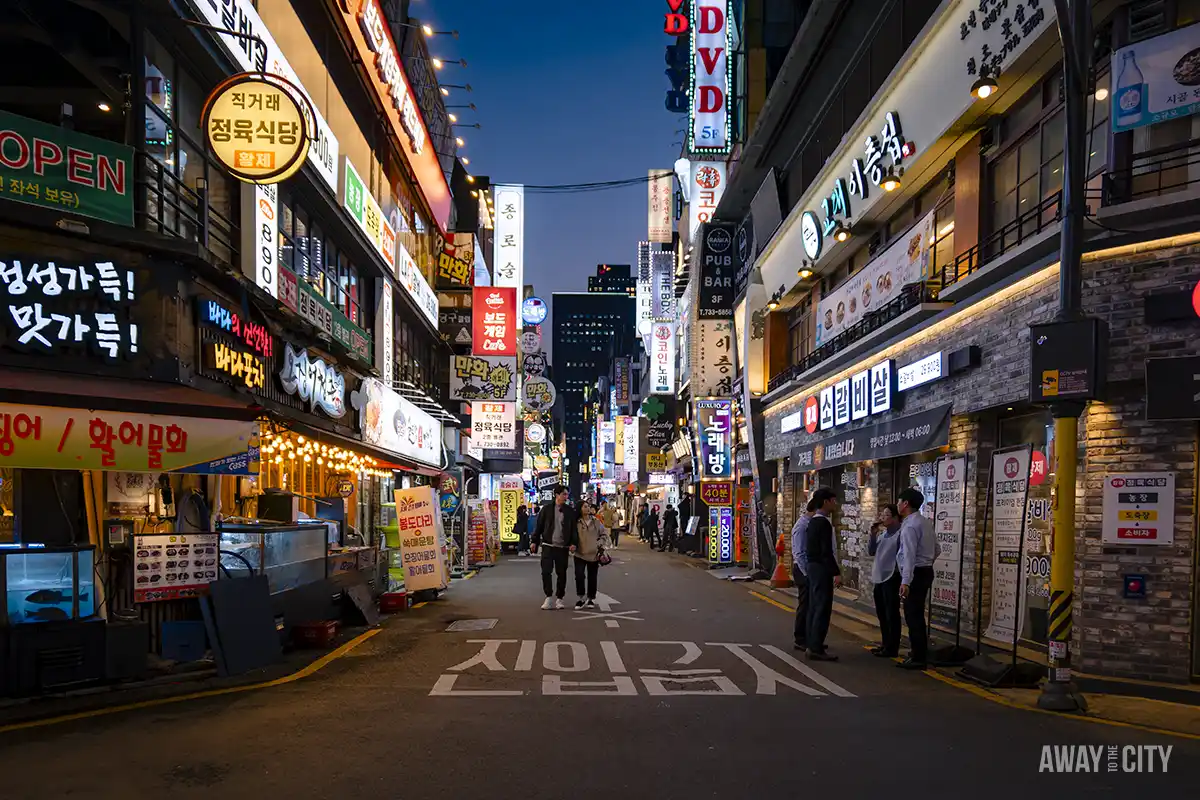
In the evening, head over to Myeongdong. During the day it’s Seoul’s main shopping district, with streets full of actually good shops (instead of the usual souvenir shops).
From around 5pm to 11pm, the whole area transforms into a huge night market that’s known for its street food.

We’ve always come here when we’re in Seoul and have eaten SOO much good South Korean food. We love night markets, and Myeongdong is one of our favourite ones (right in line with Taipei’s night markets).
We usually go for tteokbokki (spicy rice cakes), hotteok (sweet pancakes), mozzarella corn dogs, gyeran-ppang (warm egg bread), and mandu (dumplings)… just follow the queues and try whatever looks good.
While you’re here, Myeongdong Shopping Street is also the perfect place in Seoul to stock up on K-beauty products.
Olive Young is the Korean equivalent of Ulta Beauty in the US or Boots in the UK, and the Myeongdong flagship is the biggest store in Seoul.
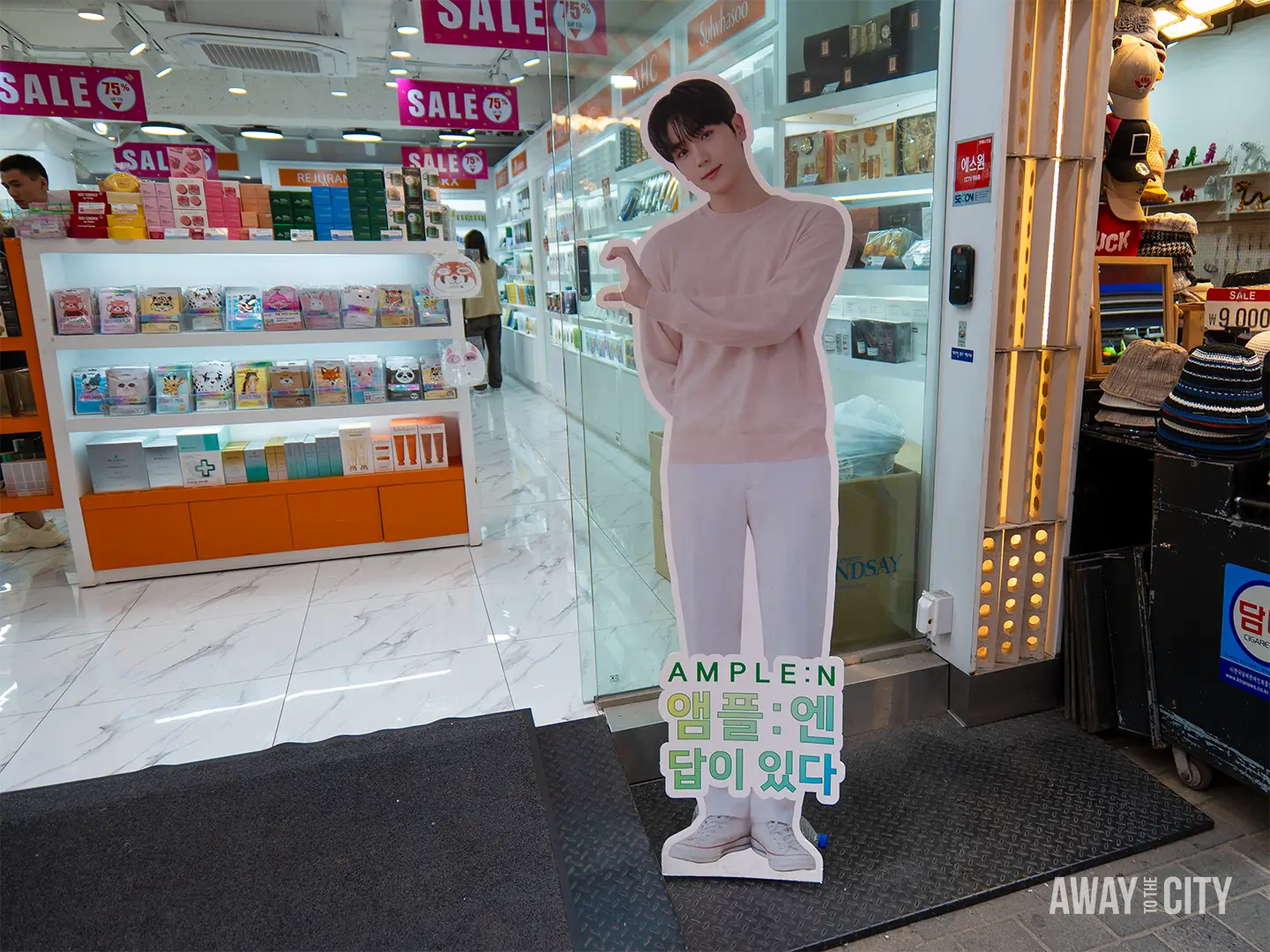
Viola had a great time stocking up on skincare here. Most shops offer tax-free shopping on purchases over ₩30,000 (about US$21, €19, or £17), so bring your passport.
It’s loud, it’s bright, and it’s always busy. But we wouldn’t have it any other way!
Day 2: Modern Seoul & student energy
After a full day exploring Seoul’s historic side, Day 2 is more modern, more youthful, and involves even more yummy food (obviously).
You’ll also get the best views of Seoul from up high, and end the evening in one of the most entertaining neighbourhoods in the city.

Morning: Dongdaemun Design Plaza (DDP)
Of all the modern architecture in Seoul, we like the Dongdaemun Design Plaza (DDP) the most. It looks like a spaceship that landed in central Seoul and decided to stay.

It’s Seoul’s cultural and exhibition centre designed by Zaha Hadid, and like most of Seoul’s attractions (remember the night owls?), it opens at 10am.
You won’t need long for the exterior, maybe 30-45 minutes, but going inside is just as good.
The DDP Design Store sells products from Korean designers, and we brought home a wallet and sunglasses that still remind us of our Seoul trips every time we use them.

Check the DDP events page before you visit becasue there’s usually an exhibition running. We once caught a Christian Dior “Designer of Dreams” exhibition there, and even though we’re not particularly into fashion, it was fascinating.
Morning: Cheonggyecheon Stream
From DDP, stroll north to Cheonggyecheon Stream.
It’s an 11-kilometre (7-mile) stream, and just over 20 years ago it was buried under a six-lane elevated highway. Seoul tore that down and turned it into this instead, one of the best urban transformations we’ve come across anywhere.
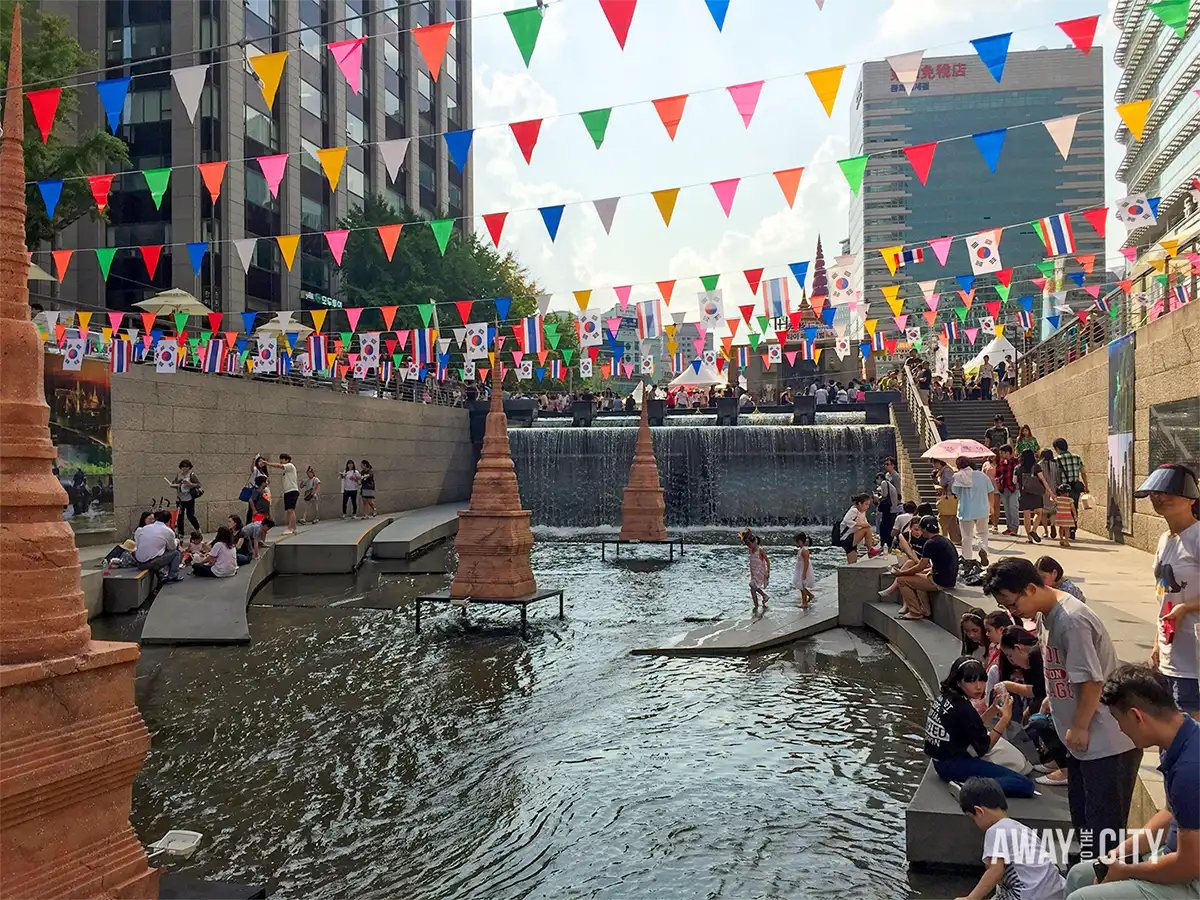
We’ve walked so many different stretches of Cheonggyecheon over our visits to Seoul. Because it sits below street level, you’re cut off from the traffic. You don’t really hear any cars or horns… just the sound of the water as you walk.
Grab a coffee before you get here and sip it as you walk. It’s about a 15-minute stroll from here to our next stop, Gwangjang Market.
Midday: Gwangjang Market
If you only have time for one food market in Seoul, make it Gwangjang Market!
Since our first visit in 2015, it’s become a bit more touristy, but you’ll still hear FAR more Korean than English around the stalls.
Gwangjang is one of Seoul’s oldest markets, and it hits a sweet spot between authenticity and accessibility.

A neighbourhood market like Mangwon can be wonderful, but on day two, you’ll likely spend more energy figuring out how to order than enjoying the food.
At Gwangjang, some of the stalls have English menus or photos, so it’s far less intimidating.
You’ll likely arrive around 11:30am to 12pm, so why not have lunch here?
Don’t overthink which stall to pick… most serve the same classics, so just grab a spot wherever one opens up. We’d go for gimbap (seaweed rice rolls) or bibimbap (mixed rice bowl) if you haven’t tried them yet at Myeongdong. For more ideas, check out our list of Korean foods to try.

Our top tip: If a Korean food market feels like a lot to take in on your own, this Gwangjang Market food tour is a great way in. A local guide explains the food and the culture behind it as you go, and the tour typically runs a noon slot (perfect timing for this stop!). Having a local friend show us the ropes on our first visit made us far more comfortable, and if that sounds like you, this is a good substitute.
Oh, and bring cash! While several vendors accept cards at markets these days, plenty still don’t.
Afternoon: Namsan Park & N Seoul Tower
If there’s one thing we NEVER skip in a new city, it’s finding the best view over it. In Seoul, that’s N Seoul Tower, which is short for Namsan Seoul Tower because it sits on top of Namsan Mountain.

We’ve tried several viewpoints across the city, and this is the best viewpoint we found (just ahead of the views from Naksan Park).
From the outdoor plaza, you get views over Seoul’s royal palaces, skyscrapers, and the mountains beyond… it’s gorgeous!
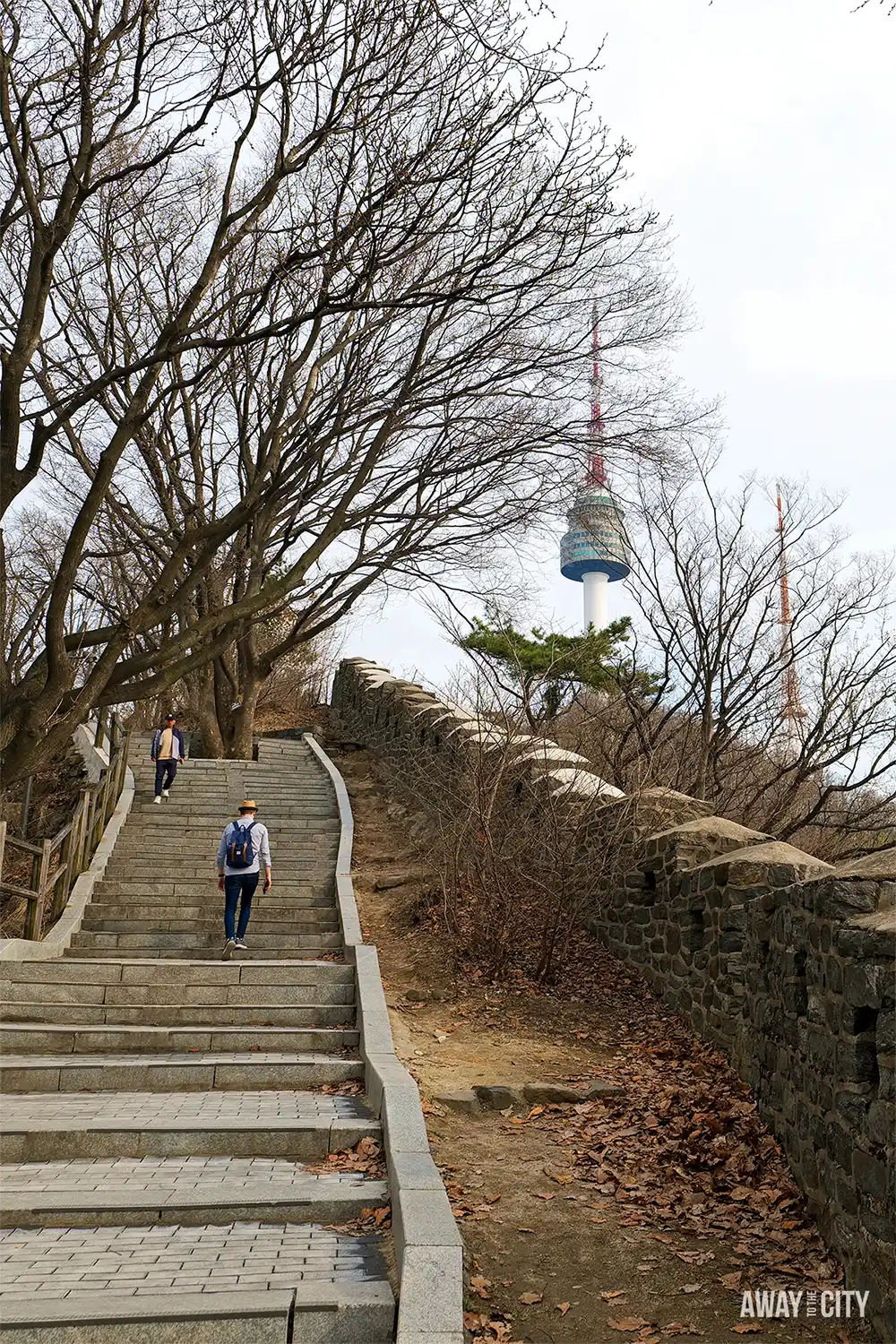
You can reach the plaza by cable car, or by hiking through Namsan Park, which takes around 35-40 minutes. We’ve done it both ways, but we prefer the hike.
Once you’re up there, you’ll spot thousands of love padlocks along the plaza railings. If you watch K-dramas, we’re sure you’ve seen them before.

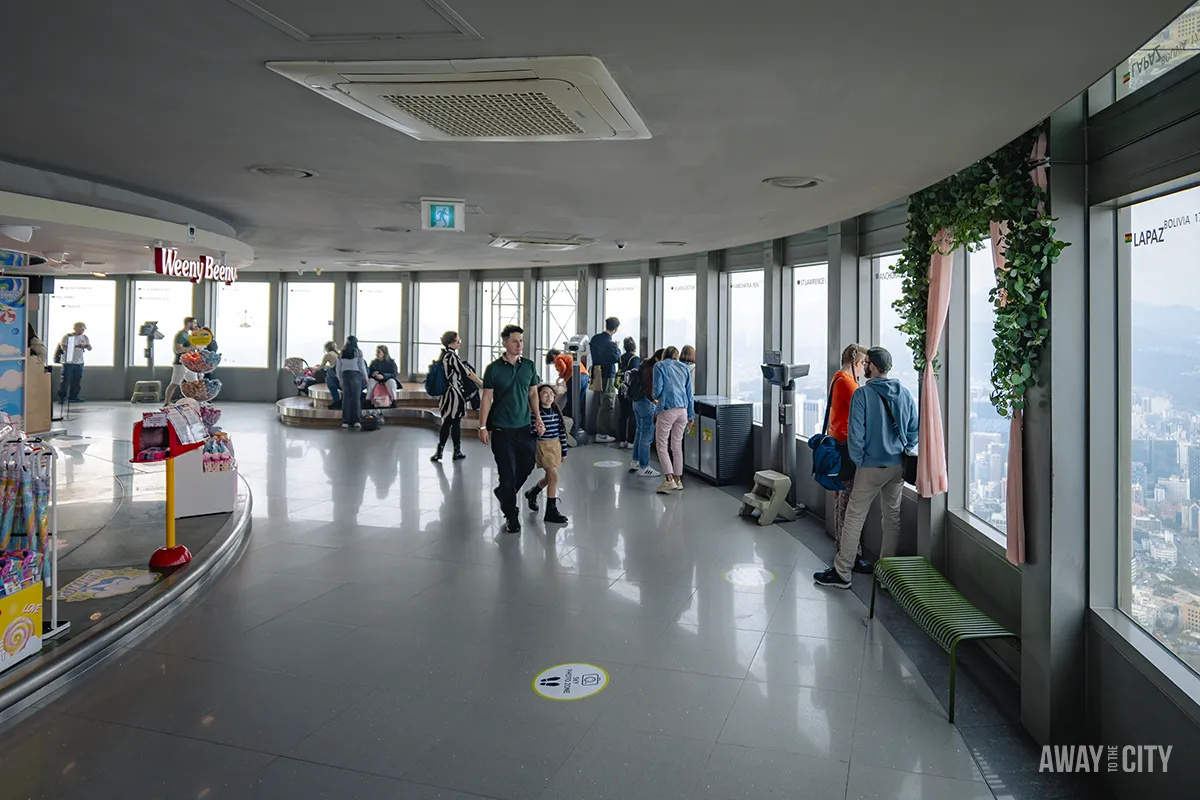
The views from the plaza are already excellent, but if you’re open to pay ₩29,000 (about US$21, €19, or £17) for the N Seoul Tower, you’ll get even better views.
Pre-booking your N Seoul Tower ticket through Klook can save you a bit, as they sometimes run discounts compared to the price at the door.
Late afternoon/evening: Hongdae and KBBQ dinner
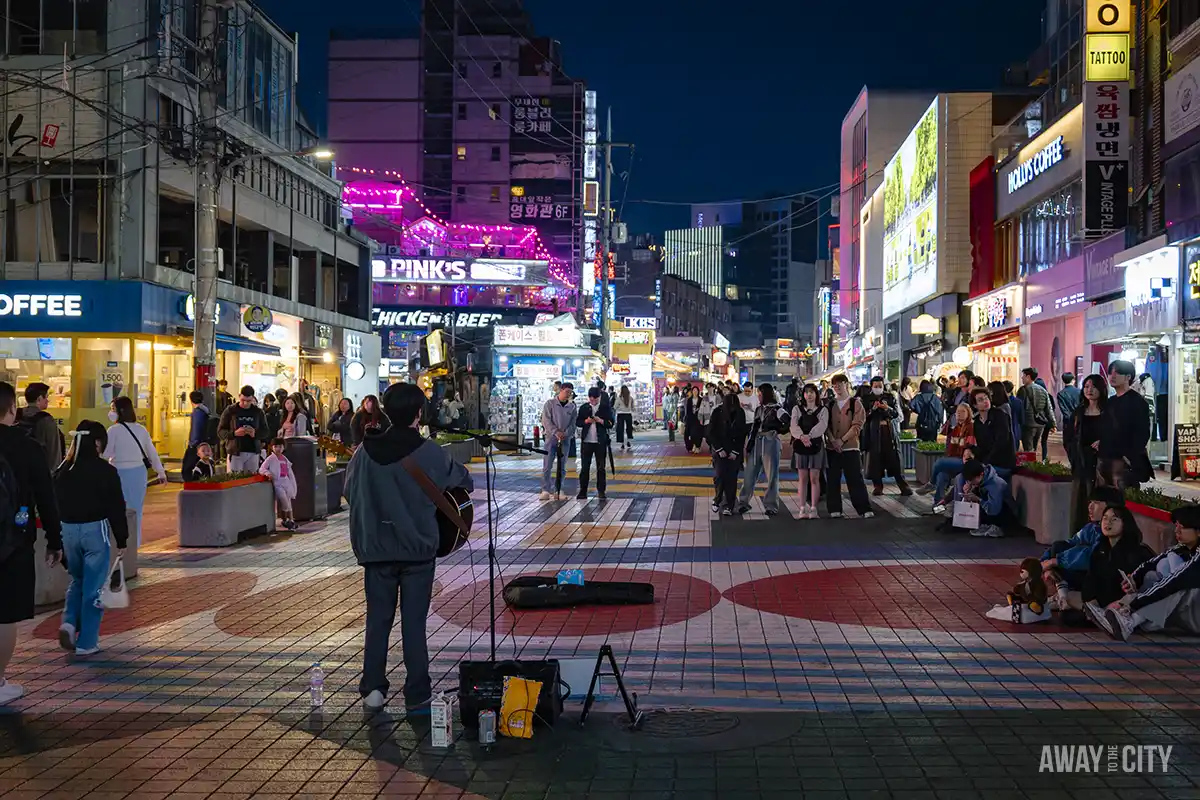
By this point, you’ve seen Seoul’s historic side, its shopping streets, its modern architecture, and its best view over the whole city. Hongdae is where you see a completely different side of it.

It’s Seoul’s creative youth district, the closest thing the city has to Shoreditch in London or Williamsburg in New York.
Hongdae is made for wandering without a plan.

We browsed the market stalls here that lined the main streets, heard karaoke spilling out of every second building, and watched someone smash a drum arcade machine at a speed we didn’t think was humanly possible.
Just sit down somewhere and grab a drink because this is one of the best PEOPLE-WATCHING spots in the whole city.
One thing you have to do in Korea is Korean barbecue (KBBQ), and Hongdae is a brilliant spot for it. You grill your own meat at the table and eat classics like samgyeopsal (pork belly) and galbi (short ribs)… it’s sooo delicious!
Two places we really liked in Hongdae were Saemaeul Sikdang and Obok Potlid. Honestly though, we’ve never had a bad KBBQ anywhere in Korea. The competition is so fierce that mediocre places simply don’t survive.

If you want some help with what cuts to order, how long to grill each one, or what to do with the fifteen side dishes in front of you, you can join this guided KBBQ evening.
A local will show you exactly how it’s done, so every KBBQ after that feels effortless.
Day 3: trip to the Demilitarised Zone (DMZ)
On your last day, you could stay in Seoul, explore another neighbourhood, or squeeze in a theme park.
But there’s ONLY ONE place on earth where you can stand at the most heavily militarised border in the world, and watch North Koreans going about their lives, completely unaware of what’s happening just across the divide.
That’s the Korean Demilitarised Zone (DMZ).

The DMZ is a 250-km (155-mile) buffer zone separating North and South Korea. The two countries have been divided since the Korean War armistice in 1953, and they’re technically still at war today.

We’ll be honest, we were nervous before we went. This is an active military zone between two countries where tensions still make the news.
But out of everything we’ve done in South Korea across four trips, this DMZ tour was one of the most memorable experiences of the whole trip.

What to expect on a DMZ tour
You can NOT visit independently. Every visitor has to join a certified tour, and the DMZ tour we did took around 7 hours (including the transfer from Seoul).
Here’s how our day broke down:
- Pickup from Myeongdong Station: Our tour picked us up from Myeongdong Station, which was a 30-minute walk from our hotel, Moxy Insadong. We could have taken the metro instead (just 12 minutes), but we love to walk. Tours typically run a few different pickup times, often 7am, 8am, and 9am.
- Imjingak Park: Our first stop, and a gentle way to ease into a heavy day. The Freedom Bridge here was built in 1953 for the return of prisoners of war, and it’s the emotional centre of the park. The fences alongside it are covered in thousands of colourful ribbons and handwritten notes from families still hoping for reunification.

- The Third Tunnel: A secret tunnel dug by North Korea beneath the DMZ, 1.6 km (1 mile) long, discovered by South Korea in 1978. It was designed to move 30,000 soldiers per hour towards Seoul for a surprise attack. When we walked down the relatively narrow tunnel, it was incredibly hard to imagine that number.

- Dora Observatory: From the rooftop viewing platform, we looked through free binoculars that point straight across the empty DMZ and into North Korea. On our visit, we could see North Koreans working in fields and riding bicycles. It felt so quiet and ordinary, and yet oddly unsettling.
- Live Q&A with a North Korean defector. This was our optional add-on, and alongside Dora Observatory, it was the highlight of the entire day. Hearing directly from someone who lived in North Korea and managed to leave turned the experience into something completely different, more honest and more human than anything we’d seen in a documentary. Where else will you ever get that opportunity?
- Dropoff at Myeongdong Station: We arrived back in Seoul at around 4pm.

There are a few tour variations. Some add a suspension bridge, others the JSA museum. But the DMZ tour with defector Q&A is the one we’d always choose, because no other format gives you that kind of direct, personal conversation.
Our top tip: Book at least two weeks ahead. Daily visitor numbers into the DMZ are capped, and the defector sessions have limited spaces. Friends of ours tried to book two days before and couldn’t get on.
For everything else you need to know about the day, including a full breakdown of each stop, our dedicated DMZ tour guide covers it all.
Alternative: a day trip to Nami Island
If the DMZ is not your cup of tea, we’d send you to Nami Island instead.
We did this Nami Island day trip and really liked it. It’s a completely different pace from the DMZ (and even Seoul in general).

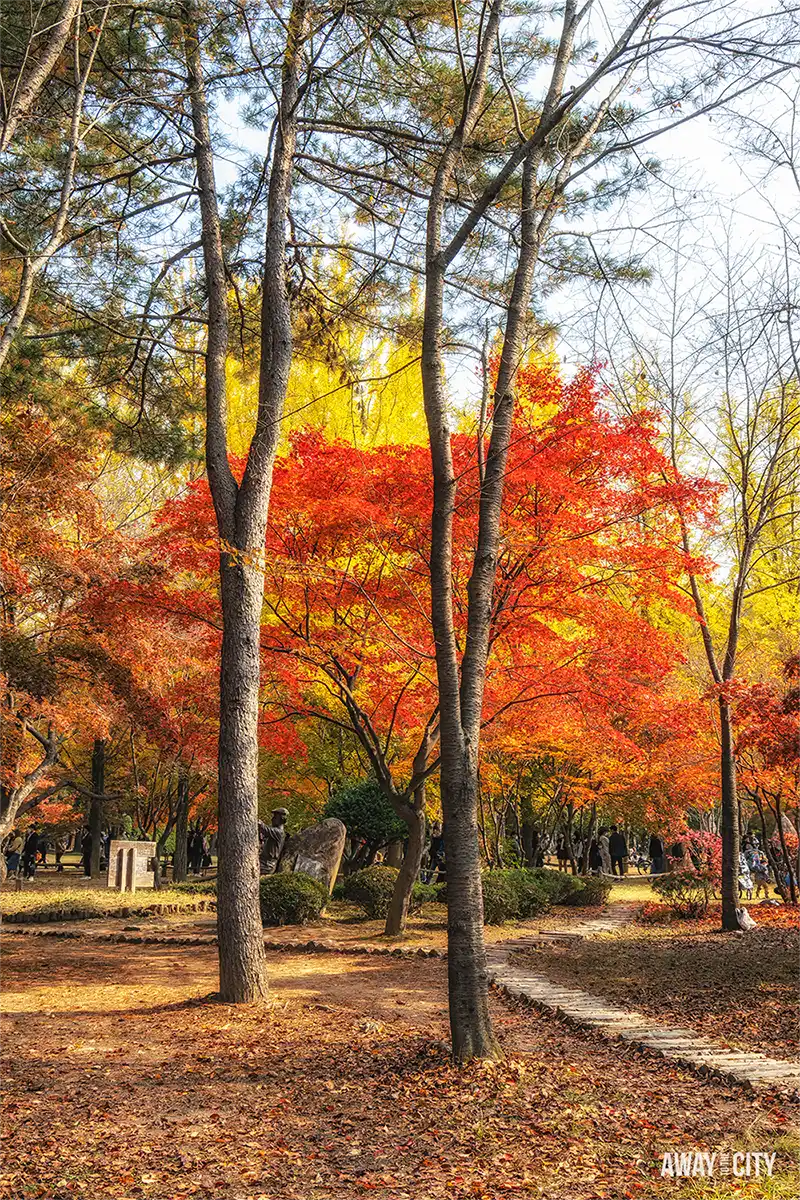
Nami Island itself is famous for its tree-lined paths, and depending on when you visit, you’ll get cherry blossoms in spring or deep red and gold in autumn.
But the tour covers more than just the island. Our tour also included Alpaca World and the Garden of Morning Calm, which spreads across 20 different themed gardens.
Our favourite stop, though, was the Gangchon Rail Bikes. You ride along an old railway line and pass through tunnels lit up with disco lights and bubbles. We had so much fun!
What we’d skip with only 3 days in Seoul
We’ve been to South Korea’s capital city four times now, and there are a few attractions that look great on paper but we’d save for a longer trip:
Starfield Library – It’s a lovely open-concept library that’s become one of the most photographed spots in Seoul. But it’s in Gangnam, which is quite far from most other Seoul attractions, and the visit itself is just a 5-15 minute photo stop. We don’t think the travel time is worth it with only three days.

Lotte World – This is the biggest indoor theme park in the world, and it’s a lot of fun! But you can visit theme parks in other cities. You can’t visit the DMZ, Bukchon, or Gwangjang Market anywhere else. Save this for a repeat Seoul visit!
Seoul Sky observation deck (Lotte World Tower) – At 555 metres (1,821 feet), it’s undeniably impressive. But when we were up there, the city below looked so far away that it felt like we were on a plane. We much preferred N Seoul Tower on Namsan, where the views are lower, outdoors, and actually feel like Seoul.
Palace-hopping beyond Gyeongbokgung – Seoul has five royal palaces, and we’ve now visited all of them. Our two favourites are Gyeongbokgung (the biggest, with the Royal Guard Changing Ceremony) and Changdeokgung (smaller, quieter, and more beautiful). But trying to squeeze in more than one palace in three days takes time away from seeing completely different sides of the city. Pick one and move on.
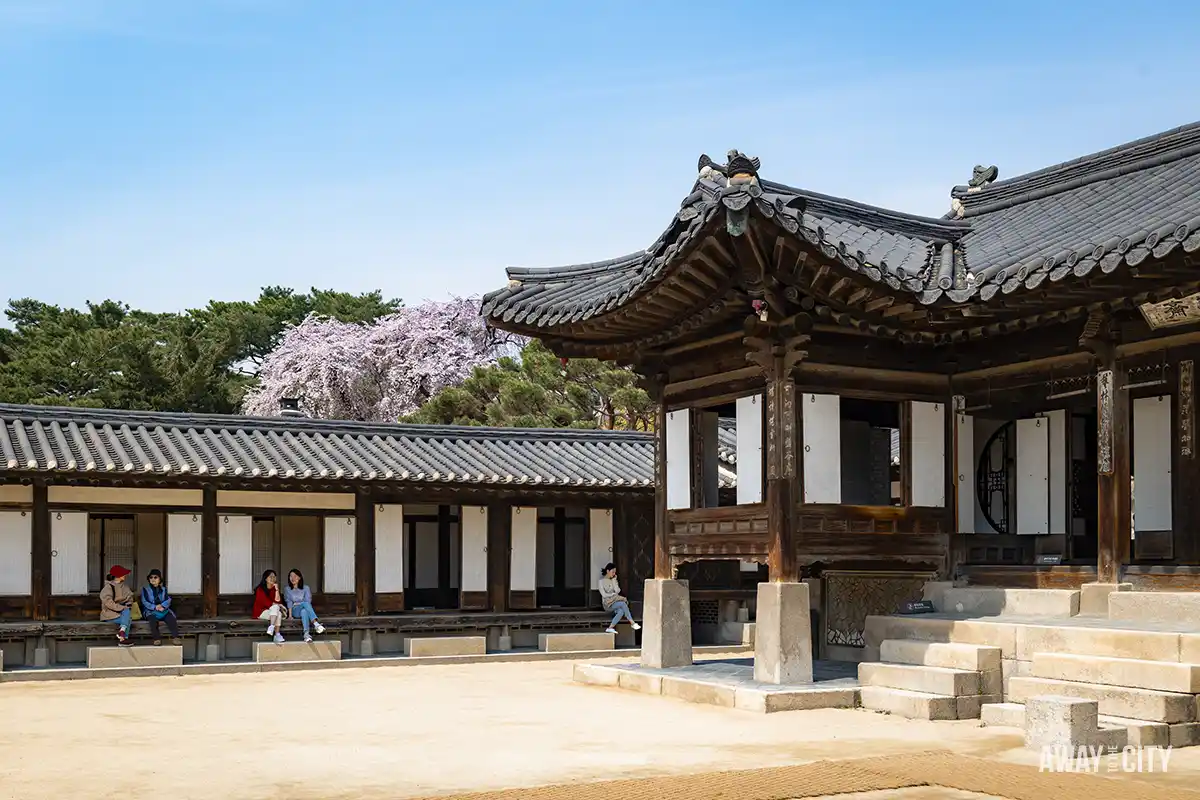
Seongsu-dong – Seongsu is a cool, creative neighbourhood that’s become one of Seoul’s trendiest areas. But like Gangnam, it’s quite far from everything else on this itinerary. We’d save it for a return trip when you can explore it properly, rather than rushing through it on Day 3.
What to book for this 3-day Seoul itinerary
These are the only things you need to sort before you go. Everything else on this itinerary is free or pay-on-the-day.
Add-ons worth booking ahead
These all feature in the itinerary, and each one makes your three days in Seoul even better.
FAQ: Seoul in 3 Days
These are the questions we get asked most often about visiting Seoul for three days. Here are our honest answers, based on four trips to the city.
Is 3 days in Seoul enough?
Three days won’t cover everything, but it’s enough to experience some of Seoul’s main highlights. It give you just enough time to balance traditional sights like Gyeongbokgung Palace and Bukchon Hanok Village with modern districts like Myeongdong and Hongdae, eat great Korean food, and even see the DMZ.

What is the best area of Seoul to stay in?
Insadong is the best area to stay in Seoul for a first visit, with Myeongdong a close second. Both are central, well-connected by metro, and within walking distance of Gyeongbokgung Palace, Bukchon, and each other. Insadong is a bit quieter with more character, while Myeongdong puts you right in the buzz.
Is it expensive to visit Seoul?
No, Seoul is more affordable than most Western capitals, and cheaper than Tokyo too. Accommodation, public transport, and food all sit at a comfortable middle ground. It’s more expensive than Southeast Asian cities like Bangkok, but you’ll spend far less than you would in London, New York, or Paris.
Many of the best sights, like the royal palaces, are usually ₩1,000-3,000 (about US$1-2, €1-2, or £1-2). Plus, there are plenty of free things you can do in Seoul, like visiting Korea’s War Memorial museum, exploring the Dongdaemun Design Plaza (DDP), or hiking Seoul’s historic city wall.
Is Seoul English-friendly?
Seoul is very accessible for English-speaking travellers. The metro has English signage throughout, and younger Koreans, hotel staff, and workers in tourist areas generally communicate well in basic English. It’s not universally spoken, but a translation app like Papago covers most gaps. For context, South Korea ranks 4th in Asia for English proficiency, well ahead of Japan.
Planning your first Seoul trip
We’ve put this three-day itinerary together based on four trips to Seoul, and we hope it gives you a really good starting point for your own first visit.
These are the things we’d prioritise if we were doing our first trip all over again, and they cover as many different sides of Seoul as we could reasonably fit into three days.
There are a few things worth sorting before you go. Have a look at the essential apps for travelling South Korea so you’re not fighting Google Maps on day one, and we’d also recommend reading through the biggest mistakes to avoid on your South Korea trip before you land.
And if you can stretch your trip to four days, adding a day trip from Seoul to Busan could be a great way to see a completely different side of Korea in a single day. It’s easier than most people think.
Happy planning, and enjoy Seoul!
Save this post for later:


🇰🇷 Plan your South Korea trip with our guides
📍 South Korea essentials
📍 Seoul
📍 Busan