This post may contain affiliate links, including from Amazon and other trusted partners. If you click a link and make a purchase, we may earn a small commission at no extra cost to you. See our Privacy Policy for more information.
Best Things to Do in Luxembourg City: Our Top 12 Picks

See our posts more often

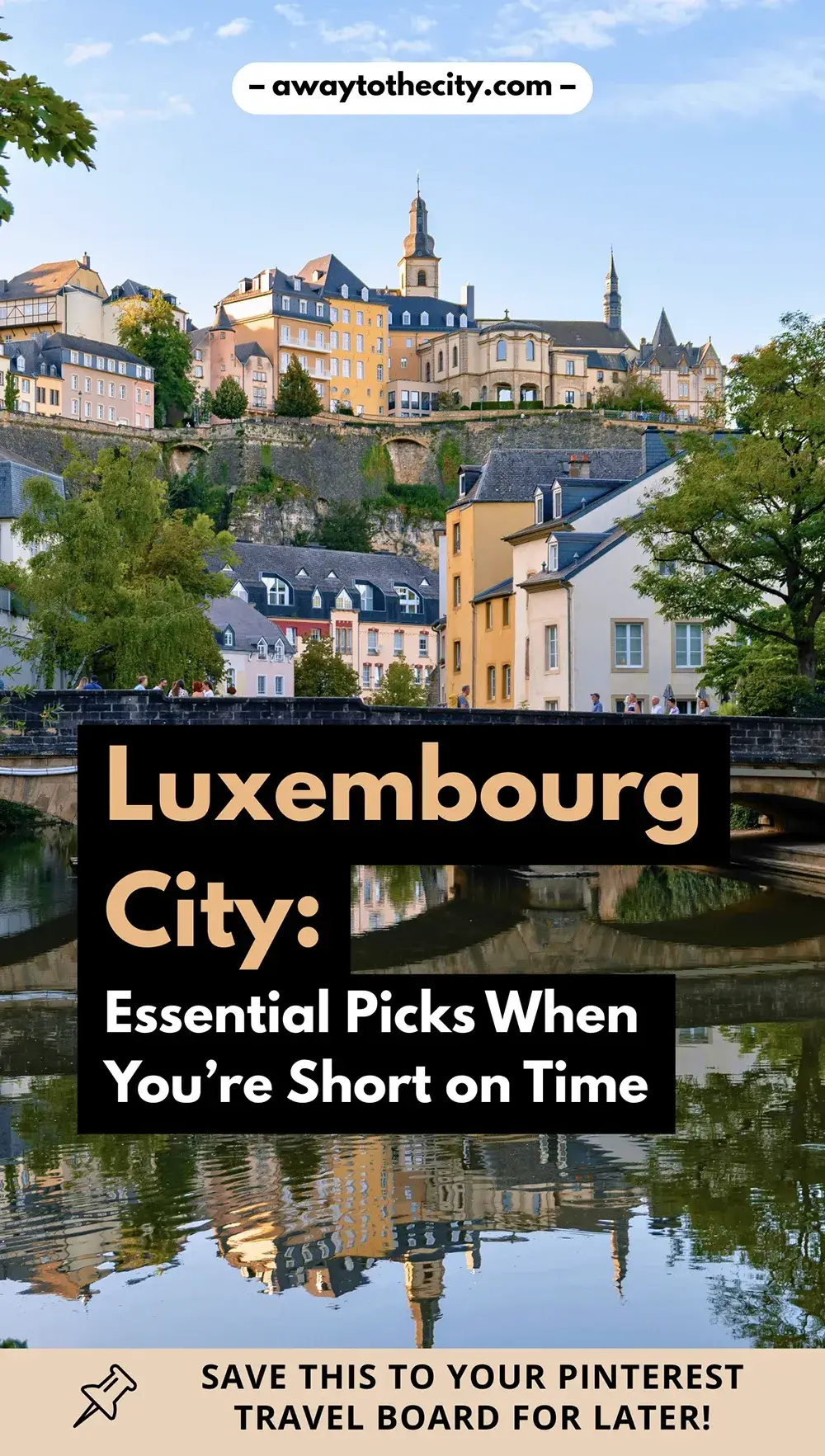


Luxembourg City doesn’t usually make anyone’s European bucket list. Mention it as your next trip, and you’ll get more raised eyebrows than excited nods… we certainly did!
After exploring more than 450 cities across the globe, we’ve become pretty selective about the places we recommend. Luxembourg City didn’t make our list of favourite European cities. But that doesn’t mean you should skip it entirely.
This small capital isn’t packed with famous sights, but it makes up for it with charm, centuries-old fortifications, and one of the most unique city layouts we’ve seen anywhere in Europe.
Walking through the picturesque Grund district, exploring the vast Bock Casemates beneath the city, and taking a trip to the spectacular Vianden Castle convinced us Luxembourg City deserved a proper visit.
In this guide, we’ll share the very best things to do in Luxembourg City. These are the things we’d prioritise if you’ve only got a day or two before moving on.
Don’t miss these!
Our top picks for your Luxembourg City trip
Luxembourg City is compact enough to see in a day or two, so it’s worth locking in your top picks before you go. Here’s what we’d book:
 Top experiences in Luxembourg City
- Old Town walking tour (our #1 pick, the easiest way to understand how this small fortress town became an EU capital)
- 3-hour food tour of Luxembourg City (perfect for foodies keen to try real Luxembourgish dishes)
- E-bike highlights tour (perfect for covering more distance without the legwork)
 Best places to stay in Luxembourg City
- Mama Shelter Luxembourg (we LOVED the rooftop and the colourful, playful design of this boutique hotel)
- Novotel Suites Luxembourg (spacious, apartment-style suites with room to spread out)
 Want to explore more of Luxembourg? Click here to check rental car options for more flexibility.
12 things we’d prioritise on a visit to Luxembourg City
Here’s what actually made the cut… these are the top things to do in Luxembourg City if your time is limited. Some are must-dos, others we’d only add with a full two days rather than one.

Did you know? Public transport is completely free across Luxembourg. In 2020, it became the first country in the world to offer free access to every mode of public transport. That includes buses, trains and trams (so even from and to Luxembourg Airport), which we think is a genuine perk for both residents AND visitors.
1. Explore the underground tunnels of the Bock Casemates
We’re history buffs, so the Bock Casemates were always going to be a highlight for us. This maze of 17th-century tunnels is Luxembourg City’s biggest tourist attraction.

The temperature drops the second you step underground, several degrees cooler than the streets above. At their peak, the tunnels stretched for 23 kilometres (14 miles) beneath the fortress and sheltered over 1,200 soldiers.
We’ve been in different casemates across Europe (like Gibraltar, Valletta, and Dover), but we’d never seen one as beautifully lit as the one in Luxembourg City.
Purple and warm yellow lit up the rock in places, and it completely changed the vibe down there.

What impressed us most were the views over Luxembourg from the Bock Casemates. Standing above the valley and looking out over the old fortifications was truly STUNNING.


Gibraltar‘s tunnels are on another scale, roughly double the length of Luxembourg’s Bock casemates, and cut deep into an entire mountain rather than along a cliff face. But we still think this is a Luxembourg must-see that you shouldn’t skip!
2. Walk the lower deck of the Adolphe Bridge
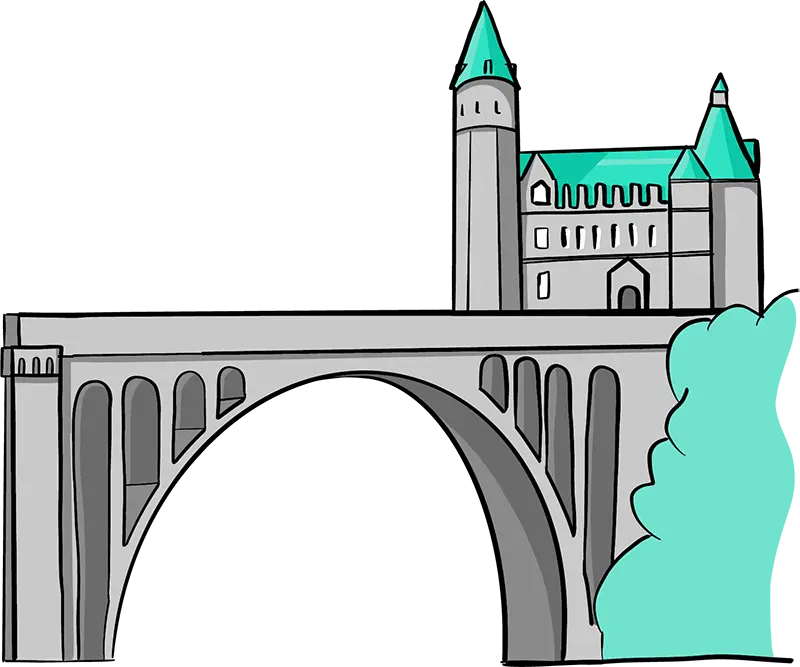
Adolphe Bridge (or Pont Adolphe) has been part of Luxembourg City’s skyline since 1903. Its stone arch was the largest of its kind in the world when it was built.

We realised how unusual Luxembourg’s layout is the moment we crossed this bridge. It’s a city built high above dramatic gorges carved by the Alzette and Pétrusse, rather than around them.
Our top tip: Most visitors only ever walk the upper deck. Head down to the lower deck instead. It opened in 2018, with its own path for pedestrians and cyclists, and it’s far quieter. Look out for the stairs leading down. From there, the views over the Pétrusse Valley were brilliant, some of the best we found in the whole city.

3. Stroll along the charming streets of the Grund District
We spotted the Grund area from up at Chemin de la Corniche, looking down at the river and thinking we needed to get down there. And we weren’t wrong.
Once a trading hub along the Alzette, Grund has kept its cobbled streets, colourful houses, and a genuinely local feel. It’s now a UNESCO World Heritage Site and very much postcard-perfect, but without the crowds to match.

We spent a good 2-3 hours wandering the alleyways, stopping for coffee, and poking around a small gallery or two.
It was quiet down here, almost residential, despite sitting right below the busiest part of the city.

Definitely walk as far as Neumünster Abbey, part of an old monastery and one of the buildings you’ll probably recognise from countless Luxembourg City photos. It has a large courtyard worth stepping into.
Our top tip: If walking the whole city feels like a lot, this e-bike tour covers all of Luxembourg’s highlights in one go, including the Grund district, Pfaffenthal lift, funicular, Grand Ducal Palace, and Kirchberg. We think it’s a great option if you’d rather “cruise” past the highlights than trek between them.

4. Make a half-day trip to Vianden Castle
Luxembourg might be small, but there are more than 50 castles… and Vianden Castle was one of the standouts for us. In our opinion, it’s one of THE best places to visit in Luxembourg as a whole.

We’ve seen some brilliant castles over the years, from Himeji Castle in Japan to Windsor Castle in the UK. And Vianden holds its own! CNN even listed it as one of the world’s 21 most stunning castles (and we couldn’t agree more!).
A lot of the castle is fairly bare. But a handful of rooms have been furnished as they would have looked centuries ago. The bedroom was one of our favourites.

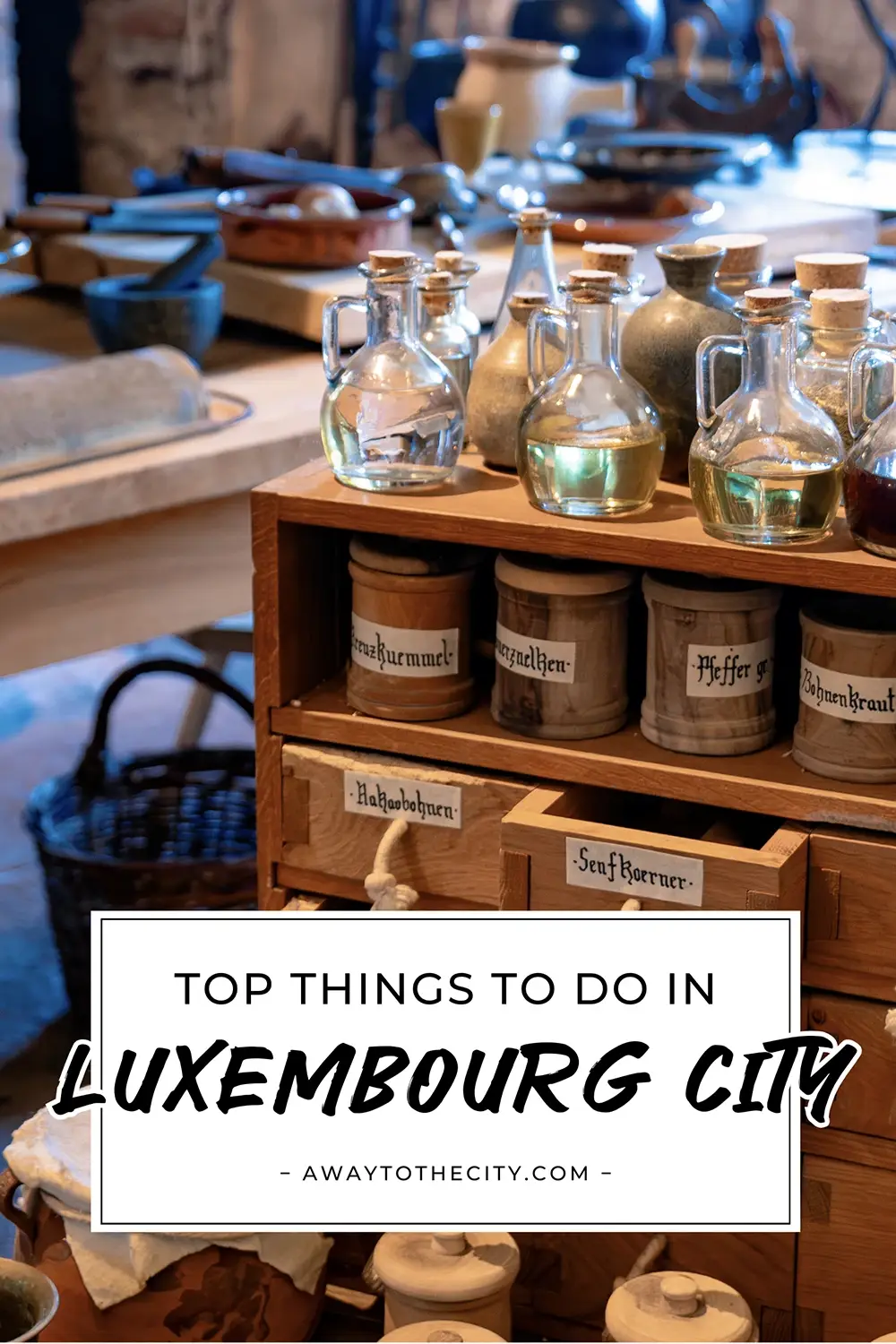
The kitchen impressed us most. Every drawer is labelled by hand with the herb or spice inside. Glass bottles of oils and tinctures line the shelves above.

Our top tip: Take 10-15 minutes to stroll the streets before heading up. It’s a nice way to take in the town before the climb.
It takes under an hour to get to Vianden Castle from the city centre by public transport. If you’re exploring further, like the Moselle Valley with its vineyards or castle-hopping in the north, renting a car could be worth it.

5. Discover Luxembourg’s past at the City History Museum
In every city we visit, we almost always start with a walking tour. For us, it’s always THE best way to get your bearings and understand a city’s history from someone who actually lives there.
We did exactly that in Luxembourg with this highlights walking tour, which we really enjoyed.
But if you’d rather explore at your own pace (or want to go even deeper into Luxembourg’s past), the City History Museum (or Lëtzebuerg City Museum) is where we’d send you.

The museum sits right in the centre, inside a former munitions depot. It walks you through the city’s whole story, from a small medieval fortress to the international, EU-hosting city it is today.
It’s also a great pick for a rainy day, since you can easily spend an hour or two moving through the exhibits without needing to step outside.


The exhibitions are well put together. Interactive displays, multimedia screens, and well-chosen artefacts made the history easy to follow rather than a wall of text to get through.
Our top tip: If you happen to be in town on a Thursday, pop in between 6pm and 8pm. Entrance to the museum is free during that time!
6. Experience modern Luxembourg in the Kirchberg District
Kirchberg doesn’t look or feel anything like the Old Town. This is Luxembourg’s modern side, all glass buildings, open green spaces, and big-name banks.
It’s also where a lot of the European Union offices are based, which explains the corporate energy up here.

We liked the architecture more than we expected to. The Philharmonie Luxembourg was a standout for us (more on that one later in this post).
And the contrast between the sleek newer buildings and the historic fort sitting right in the middle of it all is pretty striking.

One thing worth knowing: it was noticeably quieter at the weekend. Not much going on, and a lot of the restaurants and cafés felt like they cater more to the weekday office crowd.

Several of the newer hotels are based in Kirchberg though, including Mama Shelter where we stayed. We loved it, but if you’re after evening atmosphere, you might want to head into the centre after dark.
The free tram from the city centre makes getting here really easy. While you’re up there, have a look at Fort Thüngen, a historic fort from 1732. It’s also where you’ll find Mudam, Luxembourg’s contemporary art museum.

7. Take a guided tour of the Philharmonie’s stunning architecture
We mentioned the Philharmonie in the Kirchberg section, but it really does deserve its own entry… especially if you’re into architecture or music! This was one of the biggest surprises of our trip.
From the outside, 823 white columns wrap around the building like a transparent shell. It looks incredible, but the inside is where it gets interesting.


We did the guided tour, which takes you through the whole building from front to back, including the backstage areas. Our guide was brilliant.
You could tell they properly loved the place, and they explained everything from how the acoustics work to how performances are planned.

There are three performance spaces inside. The Grand Auditorium seats 1,500, the Chamber Music Hall fits 300, and there’s a smaller electro-acoustic hall for 120. With over 500 performances a year, there’s almost always something on.
We do love a good building tour when the architecture is worth it, and this one absolutely was. Christian de Portzamparc’s design is seriously impressive once someone walks you through the thinking behind it.

Tours only run a few times a month, which is part of why we think this is one of the hidden gems in Luxembourg. Check the Philharmonie website ahead of time if you’re keen.

8. Tour the Grand Ducal Palace and see where the Grand Duke resides
Luxembourg is the world’s only remaining sovereign grand duchy, and the Grand Ducal Palace is where the Grand Duke actually lives and works. That alone makes it worth a visit.
The building started out as a town hall in the 16th century before becoming the official residence. The country’s parliament still meets right next door in the Chamber of Deputies.
The outside is lovely, but the guided tour is what made this one for us. You walk through rooms like the Salle des Fêtes, where state banquets are held, and climb the elegant Stairs of Honour.
The whole thing felt properly grand without being stuffy.

No photography allowed inside, so you won’t see any interior shots here. But it’s all the more reason to go and see it yourself.
At €18 (about US$20 or £16), it’s the priciest attraction on this list, but we’d still say it’s worth it.
The palace is only open for guided tours during a few weeks each summer (typically mid-July to the end of August), and tickets sell out fast. If you want to visit, book through the official website well ahead of time.
9. Ride the Panoramic Elevator of the Pfaffenthal
Just a short walk from the Old Town, there’s a glass elevator that connects the lower Pfaffenthal with the upper town. It climbs 71 metres (233 feet) in a few seconds, and the views on the way up are genuinely great.

It’s free, takes no time at all, and the platform at the top is worth a quick stop for photos. We wouldn’t go out of our way for it, but if you’re nearby, it’s an easy add.
One thing to know though: the free elevator closes one day per month for maintenance. Check the official website before heading over so you don’t arrive to a locked door.

10. Walk the “Most Beautiful Balcony of Europe” on Chemin de la Corniche
This is where we first looked down and spotted the Grund (and immediately decided we needed to get down there).
Chemin de la Corniche runs along the edge of the cliffs above the Alzette River, and it’s often called the “Most Beautiful Balcony of Europe“.
Bold claim, and we’d say it earns it.

A corniche, if you’re wondering, is a walkway where the ground rises steeply on one side and drops away on the other.
The Chemin de la Corniche follows the line of the city’s old defensive walls and dates back to the 17th century. These days, it’s one of those spots where you’ll see locals and visitors side by side, all just quietly enjoying the view.

It’s a gentle, flat walk, and it gives you one of the best perspectives on how Luxembourg City is built. The Old Town sits high above deep valleys, and from up here, you really get a feel for that unusual layout.
If you only have time for one walk in the city, this would be ours.
11. Relax in the greenery of Pétrusse Parks
We weren’t expecting much from a city park, but Pétrusse turned out to be a proper highlight. It stretches just over a kilometre (0.6 miles) along the river, with steep slopes, dramatic rock faces, and traces of old fortifications lining the edges.

It’s right next to the centre, but it doesn’t feel like it. The noise drops off almost immediately once you’re down there.


What we liked most was how much was going on. There are play areas, outdoor gym equipment, a skate park, and even a mini-golf course near the entrance. It didn’t feel like a manicured city park at all.
If the weather’s good and you need a break from sightseeing, this is where we’d go.

12. Admire the Gothic interior of Notre-Dame Cathedral
We’ve seen a lot of cathedrals across Europe, and Notre-Dame in Luxembourg isn’t the most grand. But it’s a beautiful one, and it’s completely free to visit, which is one of the reasons we’ve included it here.
Construction of Cathédrale Notre-Dame (or the Cathedral of the Blessed Virgin) started in 1613.
And over the centuries, different architects have added their own touches. The pointed arches, intricate stonework, and Gothic details inside are well worth a look.

It’s also Luxembourg’s only cathedral, so it still plays a big role in the country’s cultural and religious life. National events and celebrations are regularly held here.
It won’t take long to see, but if you’re walking through the Old Town anyway, pop in.

Interactive map of Luxembourg City’s must-see spots
We’ve put together an interactive map with all the spots from this post. It’s a handy way to plan your route and see how close everything is to each other (spoiler… Luxembourg City is very walkable).

How to use this map: Click the icon in the top left to see the full list of locations. For a bigger view, open it in a new tab via the top-right icon. You can also save it to your own Google Maps by clicking the star next to the map title.
Other sights and activities in Luxembourg City
When it comes to Luxembourg attractions, we always focus on the experiences we think are genuinely worth your time. But if you’ve got a bit longer in Luxembourg City, here are a few extras we’d consider.
Place Guillaume II (William II Square) – A wide square in the centre with a statue of King William II, who ruled Luxembourg from 1849 to 1890. Pleasant enough, but not somewhere we’d go out of our way for.

Luxembourg American Cemetery Memorial – The final resting place of over 5,000 Americans who died in World War II. If you’re American or it’s something that resonates with you, it’s worth the visit.
Mudam Luxembourg – The collection of this modern art museum won’t be for everyone, but the building itself is worth seeing. It sits right next to Fort Thüngen in Kirchberg, which we mentioned earlier.
Place d’Armes – The main square for bars and restaurants. It gets busy and touristy, and the square itself isn’t all that exciting, but if you need a quick bite between sights, it does the job.
Monument of Remembrance – Known locally as “Gëlle Fra” (Golden Lady), this memorial honours those from Luxembourg who served in both World Wars and the Korean War. It’s a simple, moving monument… though its setting right in the middle of a busy car park doesn’t quite do it justice.

What is the best time to visit Luxembourg City?
The best time to visit Luxembourg City is between May and September, when temperatures sit around 15°C to 23°C (59°F to 73°F) and the longer days make it easy to spend most of your time outdoors. May is the sweet spot, with around six hours of sunshine a day and noticeably fewer crowds than the summer months.
April can also work, though it’s a bit cooler and less predictable.

From October to February, sunshine drops to around three hours or less a day.
The festive season has its own appeal though, with Luxembourg’s Christmas markets usually opening in late November, so it’s worth weighing that against how much cold and grey weather you’re happy to deal with.
If you’re still in the early stages of planning a trip, May is where we’d start.
How long should you stay in Luxembourg City?
Two full days is the right amount for Luxembourg City. That’s enough to explore the Bock Casemates, wander the Grund, visit a museum or two, and take in the beautiful views from Chemin de la Corniche without rushing.
We spent an entire week in Luxembourg and found that two days in the city itself hit the right balance. Any less, and you’d have to cut corners. Any more, and you’d start running out of things to do.
If you’re not planning to visit the Philharmonie or take a tour of the Grand Ducal Palace (or if you can’t get tickets), you could manage in one full day, but it would feel tight.
We’d also recommend setting aside 4-6 hours for Vianden Castle. It’s easy to reach and one of the highlights of the whole trip for us.
Our recommended places to stay in Luxembourg City
Kirchberg is where we’d point you for a place to stay, well connected to the centre by the free tram and home to both of our picks below.
Luxembourg is on the pricier side though, so the earlier you can book, the better your chance of landing a good deal.


FAQ: Visiting Luxembourg City
Is there much to do in Luxembourg City?
Yes, but don’t expect a packed schedule. Luxembourg City has enough to fill two solid days, including the Bock Casemates, the Grund district, a walking tour, and a few museums. It’s not overwhelming, which we actually liked. You can see the highlights without rushing.
Is Luxembourg City worth it?
We think so, especially if you’ve already visited the bigger European capitals. It’s not a city that’ll blow you away, but the mix of cliff-top views, underground tunnels, and free public transport makes it a really enjoyable stop for a day or two.
What languages are spoken in Luxembourg?
Luxembourg has three official languages: Luxembourgish, French, and German. Most people you’ll meet also speak English, so getting around as a visitor is easy.

Is Luxembourg a walkable city?
Very. The city centre is compact and easy to cover on foot. And all public transport in Luxembourg is completely free, including buses, trams, and trains. It’s one of the only countries in the world where that’s the case.
Is Luxembourg expensive for tourists?
Hotels and restaurants are pricier than most European cities, so budget accordingly. But public transport is free, many of the top sights don’t charge entry, and if you time it right, even the City History Museum is free on Thursday evenings.
Why is Luxembourg so famous?
Luxembourg punches well above its size. It’s home to several EU institutions, its old fortress and casemates are UNESCO-listed, and it’s the world’s only remaining sovereign grand duchy. It also became the first country to make all public transport free in 2020.
Where to go after Luxembourg City
We spent an entire week in Luxembourg and think that two full days in Luxembourg would be the right amount. Any less, and you’d rush the Bock Casemates, the Grund, and Vianden Castle. Any more, and you’d probably start running out of things to do.
If you’re planning to combine it with another country in Western Europe (which we’d recommend), Germany, France, and Belgium are the easiest next stops.
We’ve been several times to Belgium now and love the country. Have a look at the Belgian cities we’d recommend exploring if you’re thinking of heading that way.
And if you’re still deciding where Luxembourg fits into a bigger European trip, we’ve put together a list of our absolute favourite cities to visit in Europe based on everywhere we’ve been. It’s a good place to start if you’re weighing up options.
Luxembourg won’t be the highlight of a European trip. But it’s a solid stop, and we’re glad we made the effort.